AI Content Tools for SaaS Teams: Features & Pricing
SaaS marketing teams face a brutal reality: 97% of content marketers plan to use AI in 2026, but most tools require endless human review, missing their core promise of speed and scale. The cost difference is staggering — traditional agency content runs $12–$35 per 1,000 words, while AI-assisted alternatives cost $0.80–$4.00 with proper editing. Yet the wrong tool can waste weeks on setup, brand voice training, and quality control. The solution lies in choosing an AI content platform built specifically for SaaS workflows: one that handles keyword research, writes SEO-optimized articles, fact-checks automatically, and publishes directly to your CMS without manual intervention.
Key Takeaways
- 97% of content marketers adopted AI tools by 2026, up from 64.7% in 2023, making AI-first workflows non-negotiable (Siege Media, 2026)
- SaaS teams automating editorial pipelines achieve 3x content output without proportional headcount increases (US Tech Automations, 2026)
- AI-assisted content delivers 60–85% cost savings versus traditional agencies while marketing automation generates $5.44 return per $1 invested (Stealth Agents, Forrester, 2026)
- Adoption & Cost Reality: Nearly all content teams now use AI, with costs collapsing to fractions of traditional agency rates while adoption speeds up campaign execution by 45%.
- The Automation Advantage: Editorial automation compounds content output—teams see 3x volume and 38% MQL lift without adding staff.
- Feature Maturity Shift: Modern tools optimize for both Google and AI search engines (ChatGPT, Perplexity) with built-in brand voice training and fact-checking.
- Pricing Fragmentation: Plans range from $29–$800+ monthly depending on output volume, user seats, and integrations; the best value aligns features to actual team workflows.
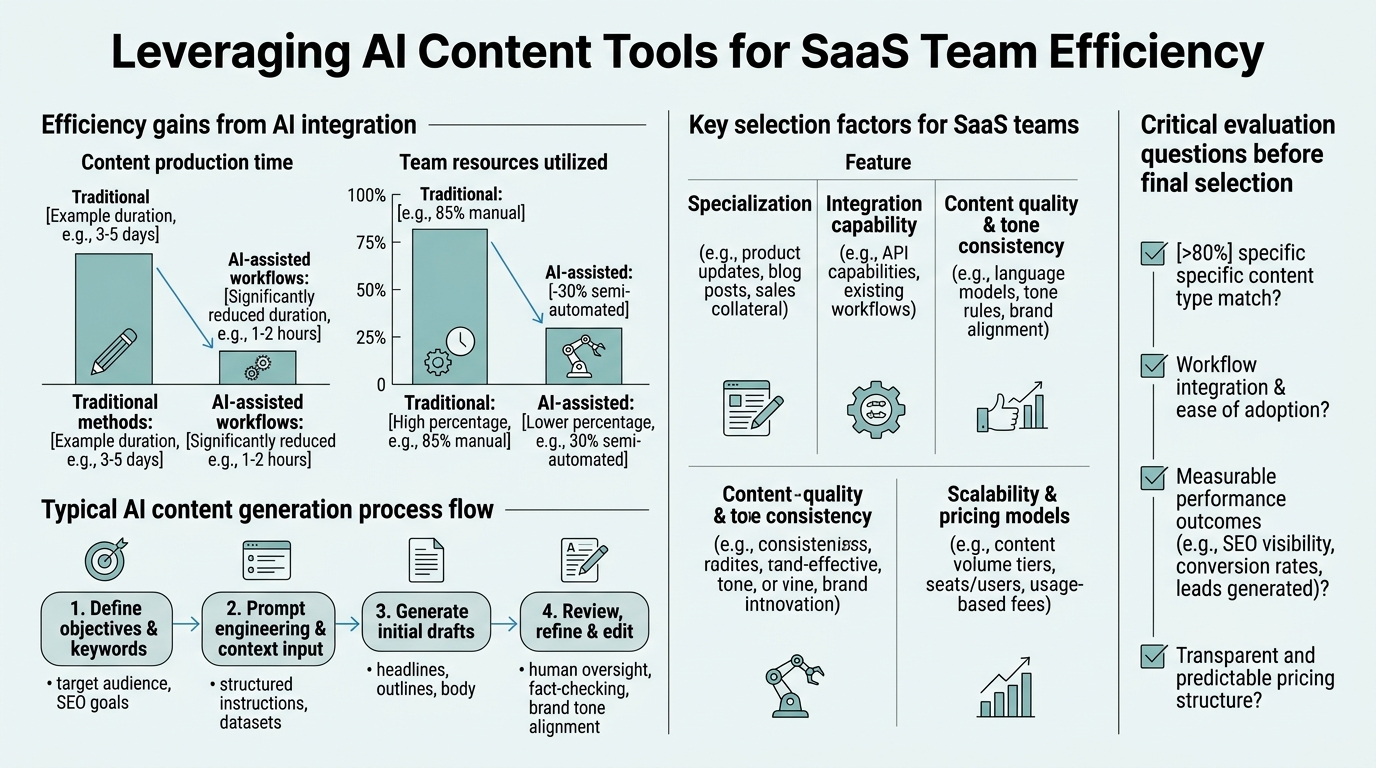
What Makes AI Content Tools Essential for SaaS Teams Right Now?
The SaaS landscape has shifted fundamentally in 2026. 74.2% of newly created web pages contain some form of AI-generated content, meaning teams that ignore AI are already behind. The competitive edge isn't whether you use AI—it's whether your tool compounds content production automatically while maintaining SEO quality and brand consistency.
SaaS teams operate under unique constraints. You need content that ranks in Google AND shows up in ChatGPT mentions. You need to publish daily without burning out your team. You need cost-per-word metrics that justify the tool to finance. A generic AI writing tool solves none of these—it creates draft content that still requires heavy editing, fact-checking, and manual publishing.
"Teams using integrated automation see a 40–56% reduction in time-to-first-draft, though human editing still adds back 25–40% of that time—which is why smart tools minimize the editing burden upfront."
— Stealth Agents AI Writing Tools Adoption Research, 2026
The best AI content tools for SaaS solve this by automating the entire workflow: keyword research, article generation, internal linking, fact-checking, and CMS publishing in one continuous loop. Research from Stealth Agents confirms that teams using integrated automation achieve significant efficiency gains, which is why smart tools minimize the editing burden upfront.
Core Features That Separate Top-Tier AI Content Tools from the Rest
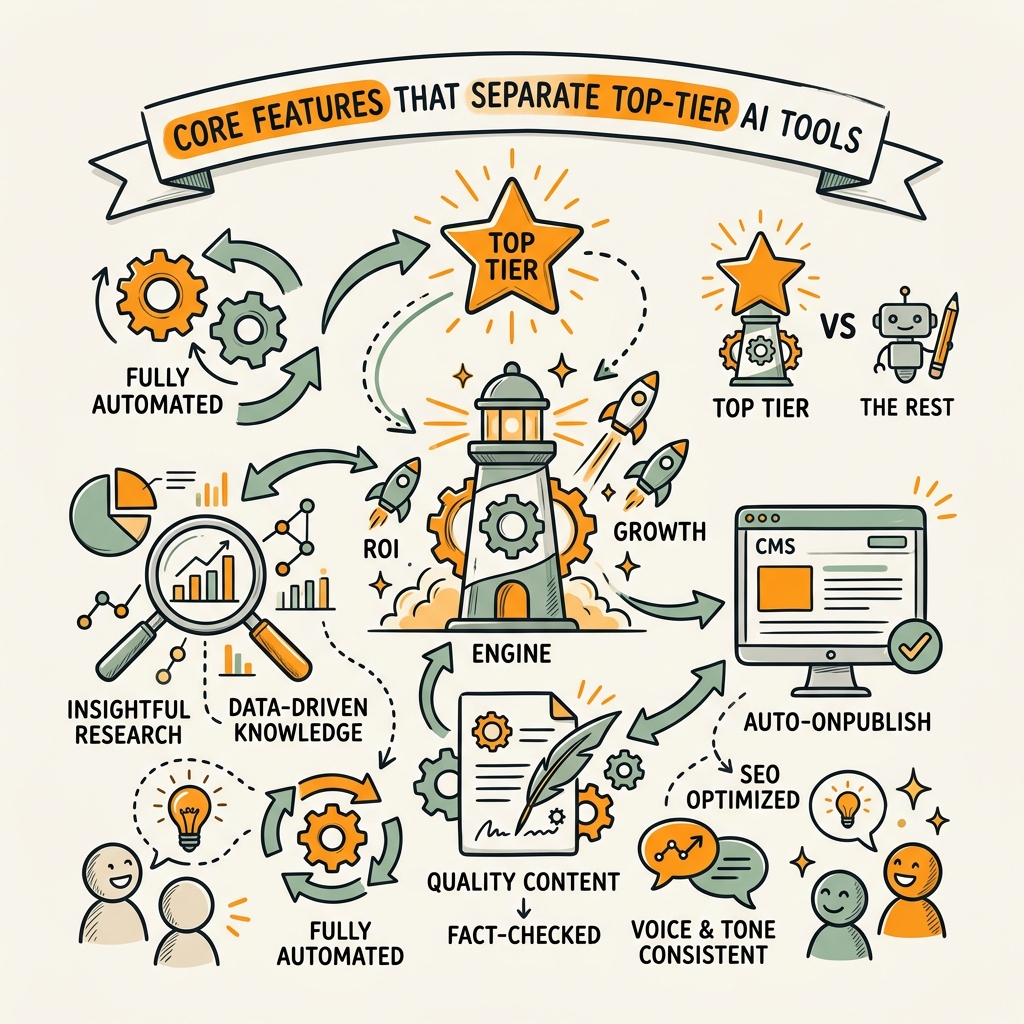
Not all AI content platforms are built equal. The best tools for SaaS teams compress the research-write-publish cycle into hours instead of days. Here's what separates winners from the field:
- Integrated Keyword Research & Topic Clustering: Tools that research topics deeply and organize content into clusters that build topical authority, not random blog posts.
- Multi-Source Fact-Checking: Automatic verification against 10+ sources prevents hallucination and legal liability.
- Brand Voice & Style Training: AI that learns your company's tone, terminology, and writing patterns—reducing edit cycles from hours to minutes.
- Direct CMS Integration: WordPress, HubSpot, or custom CMS publishing without manual uploads or formatting.
- SEO & GEO Optimization: Content optimized for both traditional search and AI engines (ChatGPT, Perplexity visibility).
- Internal Linking Automation: Smart anchor text suggestions that build topical authority without manual linking labor.
- Scalable Publishing Schedule: Capacity to publish 1–5+ articles daily with full automation, not just drafting.
How AI Content Tools Compare: Feature Matrix & Pricing Breakdown
Choosing the right tool requires comparing both features and total cost of ownership. Here's how the top platforms stack up on critical dimensions for SaaS teams:
| Tool | Best For | Core Strength | Starting Price | Publish Frequency |
|---|---|---|---|---|
| Jottler | Autonomous daily publishing with zero manual intervention | Fully automated research, writing, fact-checking & CMS publishing with 12 AI agents | $29/mo | 1–5 articles/day |
| Jasper | Enterprise brand voice consistency | Advanced brand training and team collaboration | $49/seat | 1–3 drafts/day (manual publish) |
| Sight AI | AI visibility + content generation combined | Tracks ChatGPT/Perplexity mentions + generates content | $99/mo | 5+ articles/month |
| HubSpot Breeze AI | All-in-one CRM + content workflow | Full multi-platform orchestration within HubSpot | $800+/mo (Pro Plan) | As-needed (limited automation) |
"The key differentiator is automation depth. Tools that excel at generating high-quality drafts fall short at publishing—your team still handles keyword research, fact-checking, internal linking, and CMS publishing manually."
— SaaS Marketing Operations Analysis, 2026
The key differentiator is automation depth. Tools like Jasper and Sight AI excel at generating high-quality drafts, but they stop short of publishing—meaning your team still handles keyword research, fact-checking, internal linking, and CMS publishing manually. That's where autonomous SEO engines like Jottler win: they orchestrate the entire workflow with 12 specialized AI agents, so a founder with zero marketing staff can publish daily high-ranking content.
For pricing context, Siege Media's latest research shows that 90% of marketers now access AI tools under $50/month, making entry-level pricing ($29–$49) table stakes. What matters more is whether the tool justifies its cost through automation depth—publishing daily at scale without hiring more staff.
What Should SaaS Teams Actually Spend? Pricing Models Explained
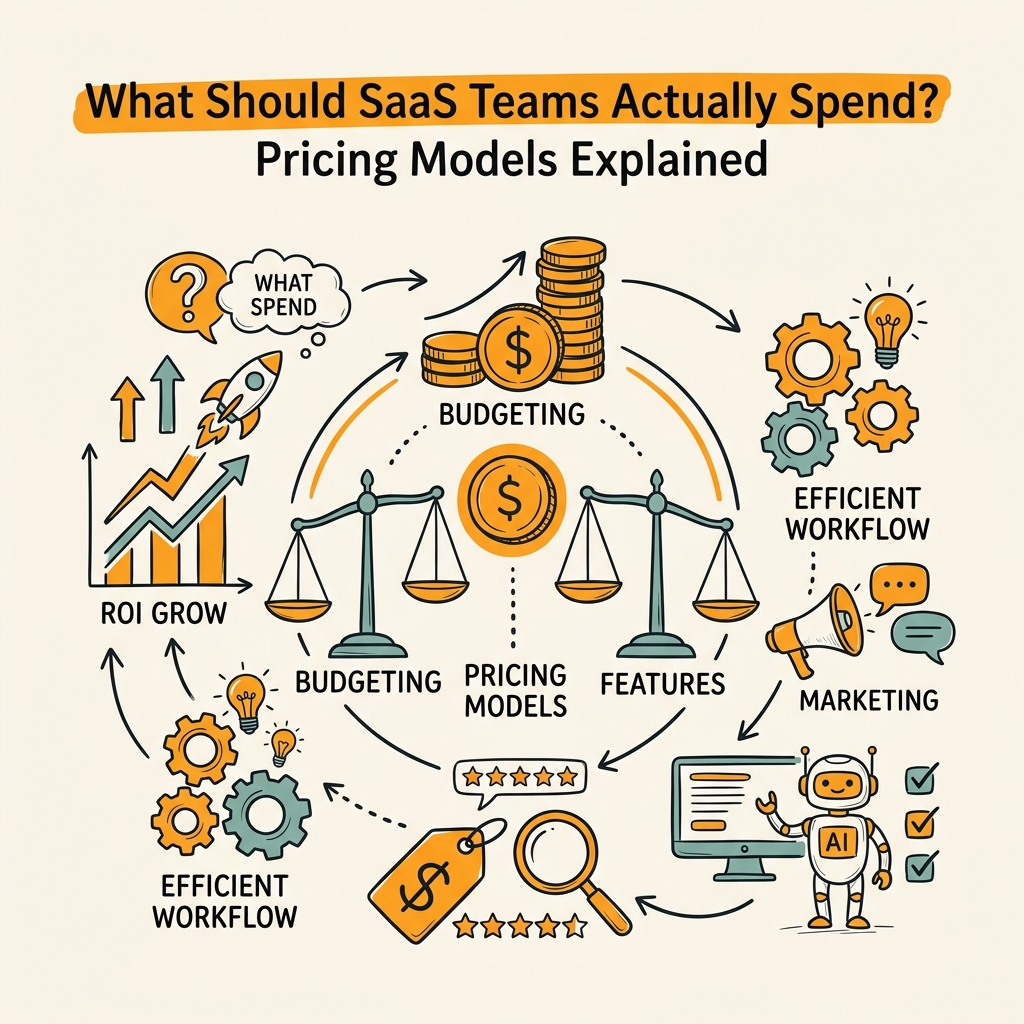
Most SaaS teams overspend on tools with wrong pricing structures. Here's how the main models work and which fits your team:
Per-Seat Pricing (Jasper, HubSpot)
Per-seat models charge $49–$125 per user per month. This works if you have a small, dedicated content team where each person owns their own content workflows. But for growing teams, per-seat pricing scales poorly—adding a freelancer or contractor doubles your tool cost. Best for: Teams under 5 people.
Flat-Rate Usage Pricing (Jottler, Sight AI)
Flat rates of $29–$99/month provide unlimited word count or article generation for one standard plan. This model compresses marginal costs to zero, meaning a founder publishing 2 articles weekly pays the same as one publishing 5 daily. Best for: Growing teams scaling content production without hiring.
Consumption-Based Pricing (HubSpot Enterprise, ActiveCampaign)
Enterprise platforms charge based on contacts, email sends, or custom metrics. These models only pencil out if you're already running a mature marketing operation worth $1M+ in annual software spend. Best for: Enterprise SaaS with dedicated marketing budgets.
Freemium Models (ChatGPT, Claude)
Free tiers let you experiment, but limits are steep (message caps, GPT-4 restricted). Useful for drafting, but not for publishing at scale. Best for: Experimentation only.
The SEO & AI Search Optimization Advantage: Why Feature Set Matters More Than Tool Count
In 2026, "SEO" means two things now: ranking in Google AND getting cited by ChatGPT/Perplexity. Most SaaS teams treat these as separate problems. Smart AI content tools unify them—generating articles that satisfy both search engines and AI systems simultaneously.
Here's what that means in practice: an article optimized purely for Google keywords might miss Perplexity's retrieval algorithm. Conversely, an article written to sound authoritative to AI models might lack the keyword density Google expects. The best tools, like SEO automation platforms built for growth, handle both in parallel—conducting keyword research for search volume AND analyzing which AI systems cite competing content.
"Teams automating SEO pipelines see 38% MQL lift and 3x content output without headcount increases because they're not just publishing more—they're publishing smarter, hitting both traditional and AI-driven search surfaces."
— Marketing Operations Research, 2026
This dual-channel approach is why teams automating SEO pipeline see 38% MQL lift and 3x content output without headcount increases. They're not just publishing more—they're publishing smarter, hitting both traditional and AI-driven search surfaces.
Brand Voice Training: The Hidden Feature That Cuts Edit Time by 70%
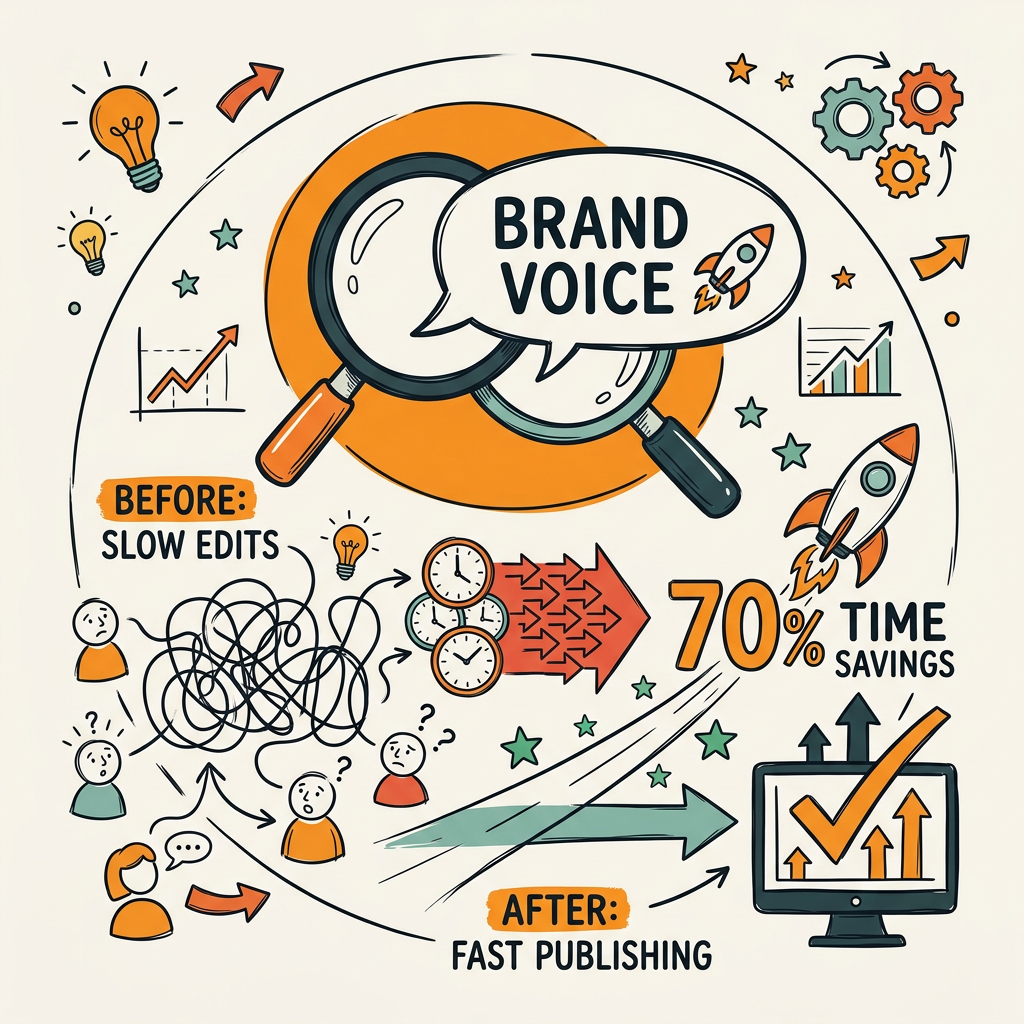
Here's the common friction point: AI generates 2,000-word drafts in minutes, but your team spends hours rewriting for brand voice, terminology, and tone. This is why brand voice training has become table stakes in 2026.
The best tools let you upload style guides, competitor content, or past articles—then the AI learns your specific voice. Jasper pioneered this; Sight AI and newer platforms have followed. The payoff is dramatic: with training, edit cycles drop from 3–5 hours to 30 minutes because the AI nails tone from the first draft.
Jottler takes this further with direct integration to brand guidelines and internal knowledge bases, letting the AI reference your product documentation while writing—so technical accuracy isn't a post-write cleanup job, it's baked into the original output.
Publishing & Distribution: From Drafts to Compounding Organic Traffic
The final mile separates premium tools from average ones. Creating great content is worthless if it never publishes. The best SaaS content tools automate the entire distribution pipeline:
- CMS Publishing: Direct WordPress, HubSpot, or custom API integration—no manual uploads.
- Internal Linking: Automatic anchor text generation that connects new articles to older posts, compounding topical authority.
- Search Engine Submission: IndexNow integration to notify Google and Bing immediately upon publish.
- Social Scheduling: Auto-generate social snippets and schedule across LinkedIn, Twitter, or your community platform.
This automation loop is critical. A SaaS company publishing 3 articles daily without automation still requires 2–3 hours of manual CMS formatting, social posting, and link management. An automated tool compresses that to zero human labor. That's the difference between a marketing tool and a marketing compound engine.
Fact-Checking and Accuracy: How Top Tools Prevent Hallucination
AI hallucination is real. A tool that generates plausible-sounding numbers or attributes quotes incorrectly tanks brand credibility. The best SaaS content tools now include integrated fact-checking pipelines.
Jottler uses a 14+ source fact-checking process that verifies every statistic, quote, and claim against real sources before publishing. This eliminates the human review step for accuracy—the tool flags unverifiable claims for human review before they go live.
Jasper and Sight AI rely more heavily on human review—they flag potential issues but leave fact-checking to your team. For SaaS companies writing about your own product, that's fine. For writing industry research or competitive analysis, built-in fact-checking saves critical hours.
Conclusion
The SaaS content marketing landscape has fundamentally shifted. 97% of content teams now use AI, and the cost-per-word advantage is massive—AI-assisted content costs 60–85% less than traditional agencies. The competitive differentiator isn't whether you use AI; it's whether your tool automates the entire workflow from research to publishing, or just drafting.
The best AI content tools for SaaS teams combine five critical elements: integrated keyword research, multi-source fact-checking, brand voice training, direct CMS publishing, and SEO/GEO optimization. Pricing ranges from $29–$800+ monthly depending on your team size and publishing frequency. For lean SaaS teams, flat-rate tools that automate daily publishing with zero manual intervention offer the best ROI—enabling a founder with no marketing staff to publish 3–5 ranking articles daily while compounding organic traffic growth.
Start your SEO agent today to see how autonomous content generation compounds your organic traffic without the overhead of hiring a full marketing team.
FAQs
What is the cheapest AI content tool for SaaS teams?
Free tools like ChatGPT and Claude offer zero-cost entry, but they're limited to drafting—you'll still handle keyword research, fact-checking, and publishing manually. For a production-ready tool with publishing automation, Jottler starts at $29/month and includes full research, writing, fact-checking, and CMS publishing. This flat-rate pricing makes it the most cost-effective option for teams publishing at scale, since you pay one price regardless of whether you publish 2 articles weekly or 5 daily. Paid plans from Jasper and Sight AI start around $49–$99/month but require manual publishing, which adds labor costs.
How much should SaaS teams spend on AI content tools annually?
This depends on publishing frequency and team size. A solo founder publishing 3 articles weekly on Jottler at $29/month ($348/year) will generate far more ROI than a 5-person team on Jasper at $245/person/month ($14,700/year). The key metric isn't tool cost—it's cost-per-ranking-article. If your tool produces ranking articles at under $50 each all-in, you're outperforming traditional agencies at $12–$35 per 1,000 words. For most growing SaaS teams, a flat-rate automation tool ($29–$99/month) delivers better ROI than per-seat pricing, since you avoid the scaling cost of adding users as your output grows.
Do AI content tools actually rank in Google?
Yes, but quality matters. 74.2% of newly created web pages now contain AI-generated content, and many rank well. The difference is that random AI drafts don't rank—purposeful AI writing that integrates keyword research, fact-checking, and brand voice does. Tools like Jottler that combine 12 specialized AI agents for keyword research, writing, and optimization produce ranking content. Tools that just generate text on demand produce filler. Google cares about intent and quality, not whether an AI or human wrote the first draft. Integrated AI platforms that handle research, writing, fact-checking, and internal linking together produce ranking content at scale.