AI Writing Tools for Blog Content: Expert Review
85.1% of bloggers now use AI to generate content, yet most focus on ideation and outlining rather than full automation (2026, Siege Media + Wynter survey). The challenge isn't whether to adopt AI—it's selecting the right tool for your workflow and ensuring output meets SEO quality standards. Here's what separates genuinely useful tools from the noise: the best platforms integrate keyword research, fact-checking, and publishing automation, so you're not stitching together a five-tool stack just to ship one article.
Key Takeaways
- 97% of content marketers plan to use AI for content marketing in 2026 (Siege Media), with 74% using it for ideation, 61% for outlining, and 44% for drafting (2026).
- Only 2.5% of newly created pages are fully AI-written with no human edits (Ahrefs), meaning human-in-the-loop workflows dominate.
- Specialized tools matter when teams need brand consistency, SEO optimization, and CMS integration—generic AI models alone leave crucial workflow gaps.
- How AI Tools Fit Into Your Content Workflow: Most teams use AI for ideation and first drafts, then layer in human editing and fact-checking before publishing.
- What Separates Premium Tools From Free Alternatives: Dedicated platforms automate keyword research, internal linking, and CMS publishing—tasks generic AI models require manual setup.
- Evaluating Tools by Your Publishing Scale: Solo creators benefit from low-cost tiers; growing teams need automation that compounds daily output without added overhead.
- SEO-First Content Requires More Than Just Text Generation: Ranking content demands integrated research, fact-checking, and smart linking—not just raw AI writing capacity.
How AI Tools Fit Into Your Content Workflow
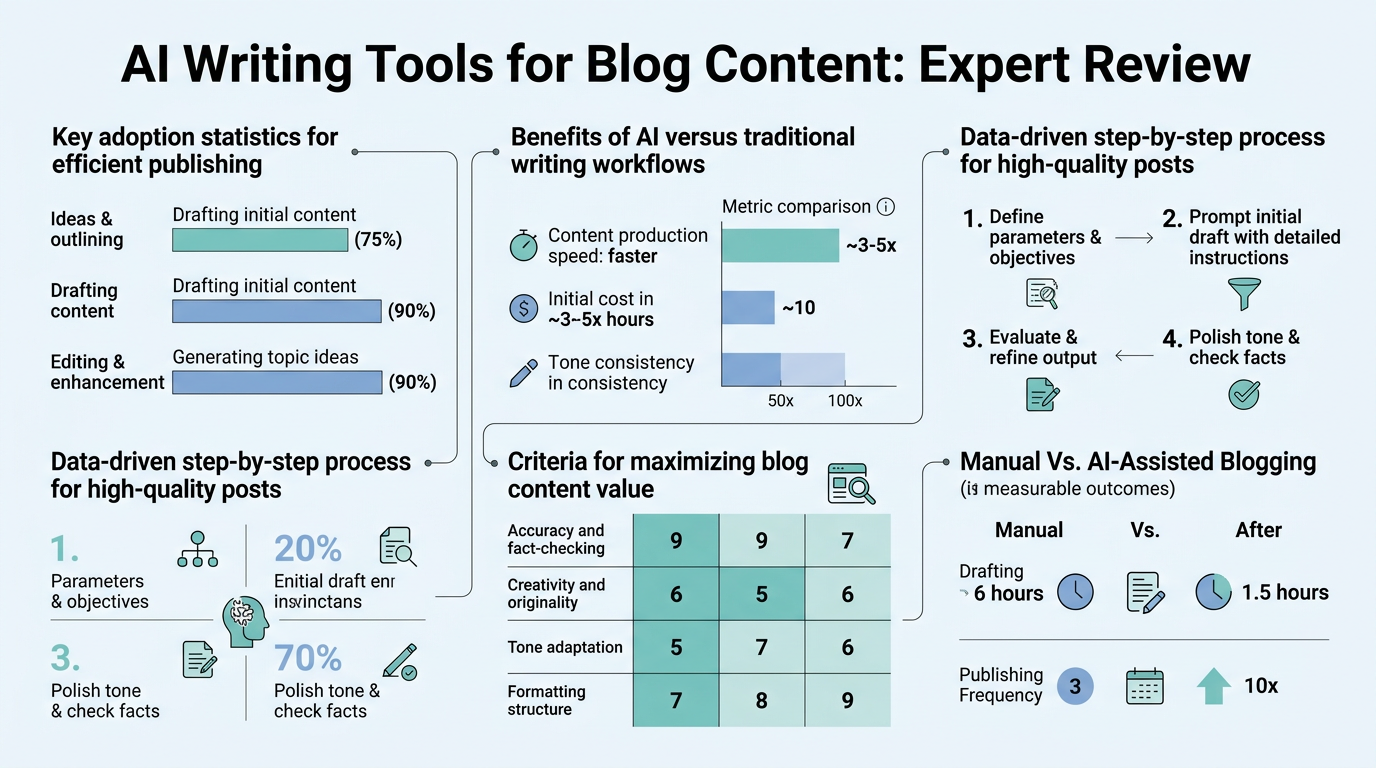
Most teams don't use AI as a full-write solution—they use it to accelerate ideation, outlining, and draft creation. According to the 2026 Siege Media survey, 74% of content marketers use AI for ideation, 61% for outlining, and 44% for drafting. The follow-through work—editing, fact-checking, and optimization—remains the bottleneck. This is where platform design matters. A tool that forces you to copy-paste output into a spreadsheet, then manually check facts, then manually add keywords is slower than just writing yourself.
"The most effective AI writing tools embed the workflow steps together—research, generation, verification, and distribution—so your team focuses on strategy and editing, not busywork."
The most effective AI writing tools embed the workflow steps together:
- Research phase: AI pulls keyword data, competitor analysis, and source material in one step.
- Generation phase: The tool writes a draft using that research, maintaining SEO structure automatically.
- Verification phase: Built-in fact-checking flags unsupported claims before publishing.
- Distribution phase: Direct CMS publishing, internal linking, and metadata tagging eliminate manual handoffs.
Tools that break this chain—requiring you to manually verify facts, add internal links, and publish—create more work than they save. The best platforms automate these connective steps so your team focuses on strategy and editing, not busywork.
What Separates Premium Tools From Free Alternatives
ChatGPT and Claude are excellent for brainstorming and draft acceleration. But they're generic. They don't know your internal linking structure, your keyword targets, or your brand voice guidelines. Dedicated AI writing platforms for content teams add three critical layers:
- Built-in SEO intelligence: Integrated keyword research, SERP analysis, and on-page optimization guidance.
- Fact-checking and source attribution: Automatic verification against primary sources to prevent hallucinations.
- CMS automation: Direct publishing, metadata generation, and smart internal linking without manual effort.
"Content marketers using AI for editing jumped from 19% in 2025 to 38% in 2026, reflecting growing reliance on AI to refine human drafts—not replace them. Platforms that automate the edit loop move faster than standalone generation tools."
Tools like Jasper and Copy.ai offer templates and brand voice consistency but lack the research-to-publish pipeline. General-purpose models like ChatGPT require you to manually handle keyword research, fact verification, and publishing. The gap is in orchestration. A 2026 Siege Media analysis found that content marketers using AI for editing jumped from 19% in 2025 to 38% in 2026, reflecting growing reliance on AI to refine human drafts—not replace them. Platforms that automate the edit loop (suggest improvements, apply changes, verify accuracy) move faster than standalone generation tools.
Pricing isn't always a signal of capability. Grammarly starts at $12/month and excels at editing. Jasper runs $39–$59/month for marketing teams. Copy.ai sits at $29–$49/month for short-form content. The question isn't which is cheapest—it's which tool eliminates the most manual work for your specific use case. If you're publishing 10 blog posts per month, a $50/month tool that saves 5 hours of editing and linking per post ($120+ in hourly labor) pays for itself.
Evaluating Tools by Your Publishing Scale
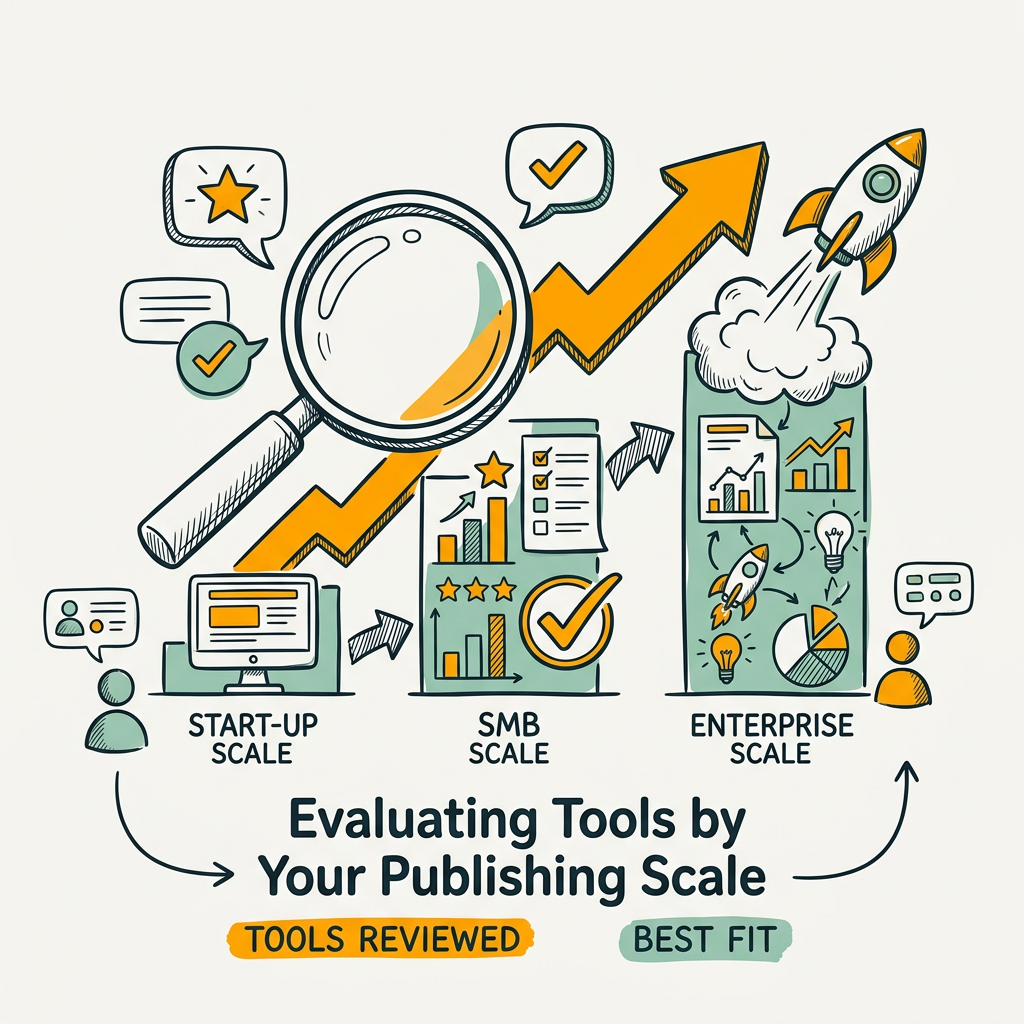
Your publishing frequency determines which platform gives you the best ROI. A solo creator publishing two posts monthly has different needs than a marketing team shipping daily articles.
| Publishing Scale | Best Fit | Key Requirement | Typical Cost |
|---|---|---|---|
| 1–3 posts/month (solo) | ChatGPT + Grammarly | Simple draft assistance + editing. Manual research acceptable. | $20–$30/mo |
| 4–10 posts/month (small team) | Jasper or Copy.ai | Templates, brand consistency, draft speed. Some manual SEO work. | $39–$59/mo |
| 10+ posts/month (growing team) | Jottler or dedicated SEO platform | Full automation: keyword research, writing, fact-checking, publishing, internal linking. No manual handoffs. | $29–$299/mo (based on volume) |
| 50+ posts/month (enterprise) | Multi-agent system (Jottler) | 12+ AI agents handling research, writing, optimization, fact-checking, linking, publishing in parallel. | Custom pricing |
Solo creators benefit from low-cost tiers. If you're writing 2–3 posts monthly, ChatGPT ($20/mo) plus Grammarly ($12/mo) is sufficient and cheap. You'll handle keyword research in 30 minutes, write a ChatGPT draft in 20, refine it in 10, publish manually. Total time: ~1 hour per post.
Small teams publishing 4–10 posts monthly hit the cost-effectiveness ceiling of mid-tier tools. Jasper excels here because its templates reduce decision-making and its brand voice training accelerates drafting. But you'll still manually validate keywords, check facts, and add internal links. That's 2–3 hours of overhead per post.
Growing teams at 10+ posts monthly need systems that move the needle without adding headcount. This is where autonomous SEO engines become essential. Jottler, for example, automates the entire pipeline: it researches keywords, writes optimized articles, fact-checks claims against sources, generates metadata, builds internal link networks, and publishes directly to your CMS. At 10+ posts daily, manual tools become a bottleneck. Automation compounds.
SEO-First Content Requires More Than Just Text Generation
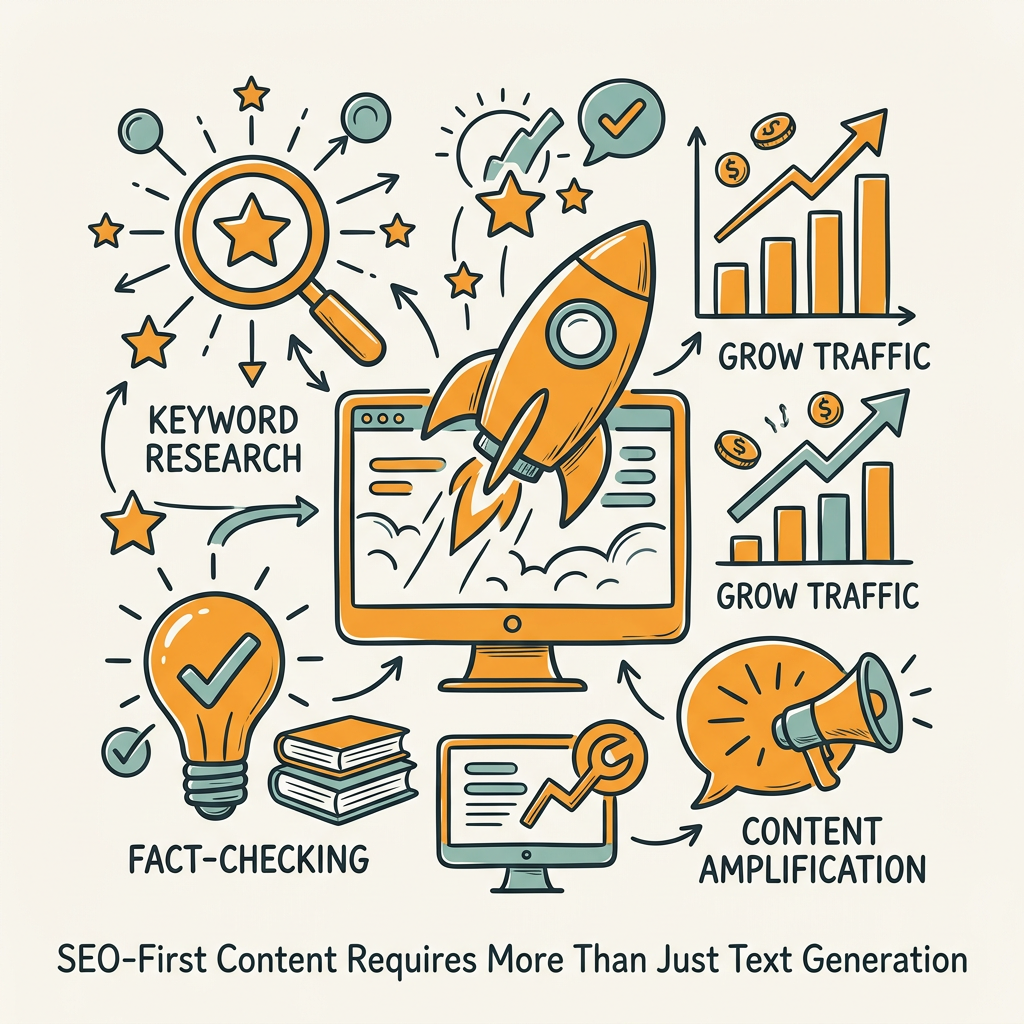
74.2% of newly created web pages contain some AI-generated content, but only 2.5% are fully AI-written with zero human edits (Ahrefs, 2025). This gap reveals a hard truth: AI-generated text without SEO rigor doesn't rank. Most AI writing tools generate readable text but miss the connective tissue that search engines reward: keyword alignment, topical depth, internal linking strategy, and fact verification.
"AI generates text efficiently, but the SEO framework determines ranking potential. Tools that bundle keyword research, SERP analysis, and smart internal linking eliminate the gap between finished blog post and ranking blog post."
SEO-ready content requires:
- Keyword research integration: The tool must identify target keywords AND related terms, then structure the outline to address search intent at each heading.
- Topical authority building: Content must link to and from related posts in your cluster, reinforcing topical depth. Manual linking after writing defeats this.
- Fact-checking with attribution: Every claim must be verifiable. Tools like Jasper or ChatGPT can hallucinate statistics. Dedicated platforms verify against sources before publishing.
- E-E-A-T signals: Experience, Expertise, Authoritativeness, Trustworthiness. AI can assist with expertise signals, but requires human oversight and real sourcing.
When you write blog posts purely with ChatGPT, you get readable content that ranks for nothing because it's missing keyword intent alignment and internal link networks. TheStacc's 2026 analysis of AI blog writing found that AI-first approaches rank best when paired with SEO infrastructure: keyword research, competitor analysis, and topical clustering. The AI generates text efficiently, but the SEO framework determines ranking potential.
This is why platforms with research pipelines matter. Tools that bundle keyword research, SERP analysis, and smart internal linking suggestions eliminate the gap between "finished blog post" and "ranking blog post." A solo ChatGPT user adds 30–45 minutes of manual SEO work per post. A platform that integrates AI content generation with SEO optimization reduces overhead to zero.
Comparing Top AI Writing Tools for Blog Content
No single tool wins across all dimensions. Each solves a different problem. Here's how the top platforms compare for blog-specific workflows:
Jasper: Strongest for Marketing Teams With Brand Requirements
Jasper is purpose-built for marketing teams that need consistent brand voice across campaigns. It excels at long-form content generation with template-driven workflows. The editing interface is intuitive, and its "Boss Mode" gives fine control over tone, keyword integration, and structure.
Strengths: Templates reduce decision fatigue. Brand voice training allows consistent tone across team members. Integration with tools like Zapier extends workflow automation. Fast draft generation—many users report 10-minute blog outlines.
Limitations: No integrated keyword research (you must bring your own from Ahrefs or SEMrush). No fact-checking layer. No automatic CMS publishing. These gaps mean a 2,000-word blog still requires 30–45 minutes of manual SEO work post-generation.
Price: Starts at $39/month for individuals; team plans at $59+.
Copy.ai: Best for Sales Copy and Short-Form Content
Copy.ai excels at generating short-form, high-conversion copy: email sequences, landing pages, ad copy, social posts. For long-form blog content, it's less specialized than Jasper. It's faster at ideation than drafting.
Strengths: Fast ideation. Strong email and sales copy templates. Good for GTM workflows and campaign acceleration. Affordable at entry-level ($29/month).
Limitations: Limited long-form structure guidance. No integrated SEO toolkit. No fact-checking. Blog writing requires significant post-generation editing to meet SEO standards.
Price: From $29/month for individuals.
Grammarly: Best for Editing, Not Generation
Grammarly is not a writing tool—it's an editing layer. It improves clarity, tone, and grammar in text you've already written. For blog workflows, it's complementary, not primary.
Strengths: Ubiquitous integration (works in Gmail, Google Docs, WordPress, etc.). Fast corrections. Tone detection helps match brand voice. No setup friction.
Limitations: Can't generate blog posts from scratch. No SEO guidance. No keyword integration. Best paired with a generation tool, not used standalone.
Price: From $12/month (Premium).
Jottler: Complete Pipeline for High-Volume SEO Content
Jottler is an autonomous SEO engine designed for teams that need to scale blog output without scaling headcount. Unlike traditional writing tools, Jottler uses 12 AI agents working in parallel to handle research, writing, fact-checking, optimization, linking, and publishing—all automated end-to-end.
Strengths: Full research-to-publish pipeline with zero manual handoffs. Integrated keyword research and SERP analysis. Fact-checking against 14+ sources prevents hallucinations. Smart internal linking builds topical authority automatically. Publishes directly to your CMS. Compounds daily: ship 3,000+ word articles daily. Pricing starts at $29/month, scaling with volume.
Limitations: Requires CMS connection (WordPress, custom API). Best for teams publishing 5+ posts weekly; overkill for solo creators at 2 posts monthly.
Ideal For: Growing SaaS, agencies, publishers, and marketing teams who need consistent, SEO-optimized content at scale without adding editorial staff.
How AI Writing Tools Impact Organic Traffic
The best measure of an AI writing tool isn't draft speed—it's ranking potential and traffic growth. Content teams using AI for editing doubled from 19% in 2025 to 38% in 2026, reflecting a shift from "generate and publish" to "generate, refine, and optimize" workflows. Tools that automate this refinement loop move the ranking needle faster.
Consider the compound effect: a team using an automated platform publishes 10 SEO-optimized blog posts monthly. Each post targets a keyword with 500+ monthly searches. Over 12 months, that's 120 posts with organic traffic potential. Even at conservative 10% average ranking position (top 10 SERP), that's 50–100 monthly clicks per post after 6 months, or 6,000–12,000 monthly organic visitors from a 12-month content effort. The platform cost ($200–$500/month) is trivial against that revenue impact.
The math changes if your tool forces manual SEO work. A team using ChatGPT + manual keyword research publishes 10 posts monthly but requires 3–4 hours of optimization per post. At $50/hour labor, that's $1,500–$2,000 monthly in hidden costs. A platform that automates this workflow saves money and accelerates ranking timeline.
Conclusion
AI writing tools aren't binary—they're a spectrum from draft assistance (ChatGPT) to full automation (Jottler). The right choice depends on your team size, publishing frequency, and tolerance for manual workflows. Solo creators benefit from cheap, simple tools: ChatGPT plus Grammarly covers most needs. Small teams publishing 4–10 posts monthly gain ROI from mid-tier platforms like Jasper, which reduces draft time and enforces brand consistency. Growing teams at 10+ posts weekly need automation that handles research, writing, optimization, and publishing in one pipeline—otherwise, manual overhead scales faster than output.
The core insight from 2026 data: 97% of content marketers plan to use AI in 2026, but only 2.5% of pages are fully AI-written. The gap isn't capability—it's quality assurance. AI generates text efficiently. Platforms that integrate SEO research, fact-checking, and smart linking determine whether that text ranks. If you're scaling blog content without adding editorial headcount, automation isn't optional—it's the foundation of sustainable content marketing. Start your SEO agent and let autonomous systems compound your content ROI.
FAQs
Can AI write a blog post that actually ranks on Google?
Yes, but only with structure and oversight. 74.2% of newly created pages contain some AI-generated content, yet only 2.5% are fully AI-written with no edits. The difference: pages that rank layer AI drafts with human editing, fact-checking, keyword optimization, and internal linking strategy. Raw AI output reads well but lacks the topical depth and link architecture search engines reward. Tools that automate the research-to-optimization pipeline (keyword alignment, SERP analysis, fact verification, smart linking) dramatically improve ranking potential. ChatGPT alone won't rank; ChatGPT plus structured SEO work will.
How much time do AI writing tools actually save?
Depends on your workflow. For drafting, AI tools save 50–70% of writing time—a 2,000-word blog that takes 3 hours manually might take 45 minutes with AI assistance. But time savings vanish if you manually handle keyword research, fact-checking, and CMS publishing. A tool that automates the full pipeline (research → writing → verification → publishing) saves 5–6 hours per post compared to manual workflows. Platforms like Jottler compress this further by handling 10+ posts daily, letting teams shift from content production to strategy.
Is Jasper or ChatGPT better for blog writing?
Jasper is better if you need speed and consistency. ChatGPT is free and more flexible but requires more manual setup. Jasper's templates and brand voice training reduce decision-making and ensure tone alignment across team members, making it ideal for marketing teams. ChatGPT is better for exploratory drafting or one-off posts where you don't need rigid structure. For teams publishing 4+ posts monthly at scale, Jasper's workflow automation justifies the cost. For solo creators or occasional writing, ChatGPT plus Grammarly is sufficient and far cheaper.