AI Writing Tools for Marketing Teams Compared
97% of content marketers plan to use AI in 2026, up from 90% in 2025. Yet most marketing teams still struggle to choose the right tool—not because AI doesn't work, but because the market has bifurcated into generalists (ChatGPT, Claude) and specialists (Jasper, Writesonic, Anyword), each solving different problems. The cost of picking wrong? Wasted budget, generic output that tanks quality, and missed SEO opportunities. Here's a straightforward breakdown of how to match your team's actual workflow to the tool that will work.
Key Takeaways
- 97% of marketers plan AI adoption in 2026, with 74% using AI for ideation, 61% for outlining, and 44% for first drafts (Siege Media, 2026)
- Marketing teams show the highest AI adoption at 84%, compared to 71% in sales and 68% in customer support (Stealth Agents, 2026)
- Organizations using AI writing tools report 67% faster content production and 45% improvement in quality scores
- General-Purpose LLMs: ChatGPT and Claude dominate ideation and outlining, but lack team governance and SEO optimization—best for individual writers, not scaling teams
- Enterprise Brand Tools: Jasper and Copy.ai prioritize brand consistency, approval workflows, and collaboration—ideal for teams producing 100+ pieces monthly
- SEO-Focused Engines: Writesonic and Anyword optimize for search rankings and conversion metrics—critical for content marketing and performance teams
- Quality Assurance Layers: Grammarly Business doubles as both editing tool and governance mechanism—increasingly used as the QA check for enterprise teams
- The Stack Approach: Successful teams use 3–4 tools in combination, not one all-in-one solution
How Is the AI Writing Tool Market Structured?
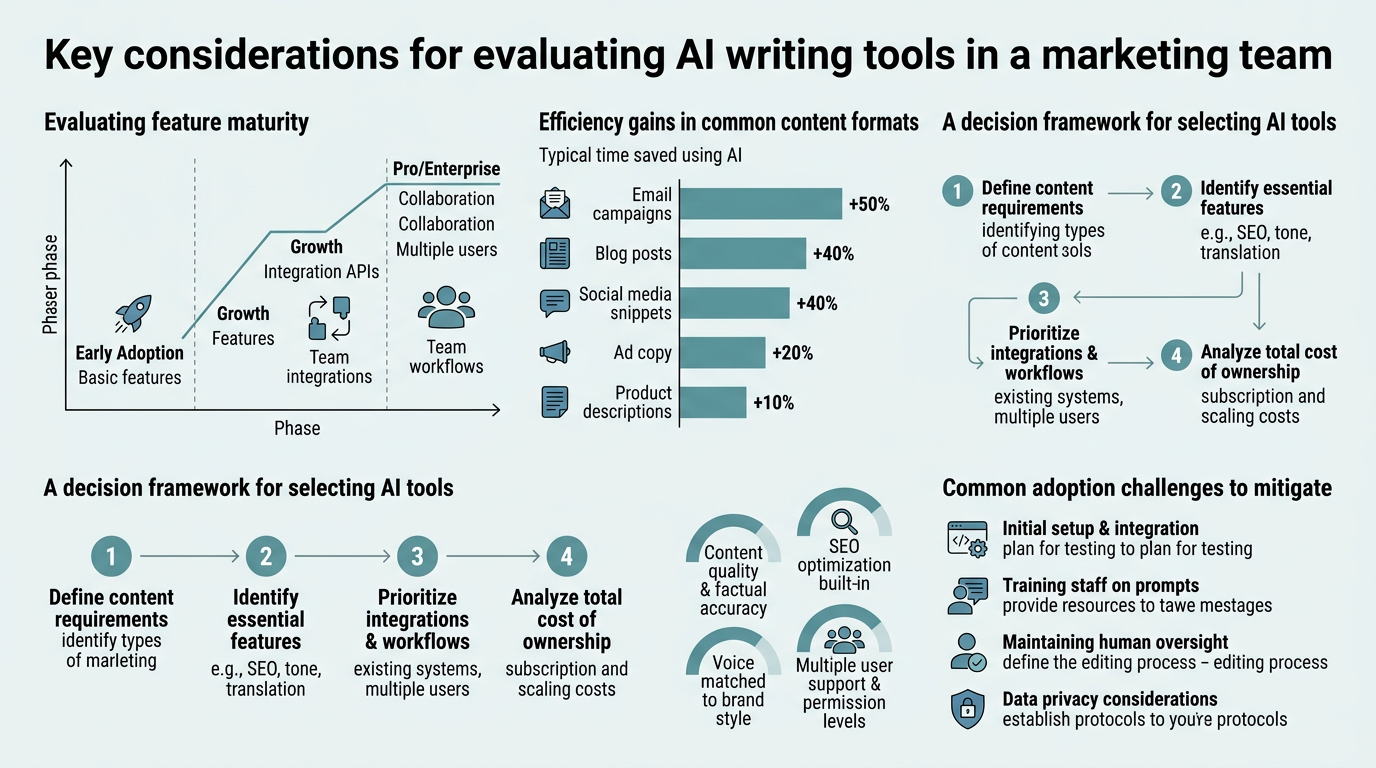
The market has fundamentally shifted from 2023's "one tool for everything" mentality to a specialized ecosystem. Siege Media's 2026 research shows ChatGPT leads at 80% selection rate among marketers, followed by Claude at 55%. But these numbers mask a deeper truth: general-purpose LLMs are strongest for ideation and outlining, while dedicated marketing tools survive by specializing in brand voice, SEO, and workflow automation.
"The best teams aren't asking for one perfect tool. They're building a specialized workflow where each tool handles what it does best—ChatGPT for brainstorming, Jasper for voice consistency, Writesonic for SEO optimization, and Grammarly for final polish. This stack approach scales far better than chasing the next all-in-one solution." — Industry consensus from Siege Media's 2026 marketing automation study
This bifurcation matters because it changes how teams make buying decisions. You're no longer asking "What's the best AI writing tool?" You're asking "What part of my content workflow is broken?" Let's map that out:
- Ideation & Brainstorming: ChatGPT and Claude (free or $20/month)
- First-Draft Generation at Scale: Jasper ($49–$125/month per seat) or Copy.ai ($36–$249/month)
- SEO Optimization: Writesonic, Anyword, or specialized tools ($99–$199/month)
- Quality & Brand Consistency: Grammarly Business ($15/month per seat) combined with editorial review
- Performance Prediction: Anyword ($99/month) for teams optimizing conversion
What Are the Leading General-Purpose AI Writing Tools?
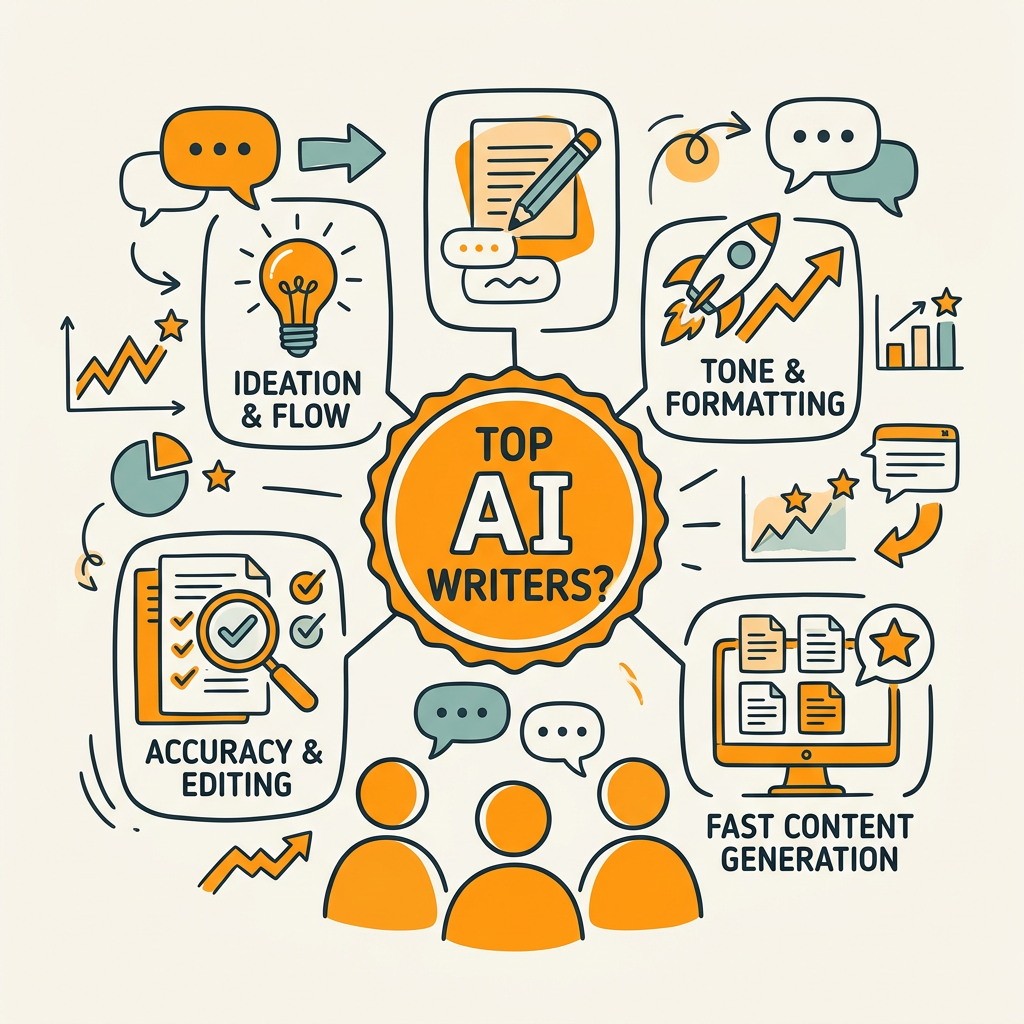
ChatGPT and Claude dominate general writing, with ChatGPT trusted by 80% of marketers and Claude preferred by writers prioritizing prose quality (2026 data). But for marketing teams, "general-purpose" is both strength and weakness: maximum flexibility, minimum specialization. According to Siege Media's 2026 analysis, the trend is shifting toward using AI for editing and quality control rather than pure generation.
ChatGPT: Broad Adoption, No Team Features
ChatGPT remains the most recognizable AI writing tool, and for good reason. Its ability to handle ideation, outlining, rewrites, and editing in a single interface means marketers can avoid jumping between platforms for ad-hoc tasks. 300 million weekly users speak to accessibility and ease of use. The free tier and $20/month ChatGPT Plus tier make it the lowest-barrier entry point.
The limitation? No team collaboration, no brand voice training, no content governance. If you're a solo founder or freelancer, ChatGPT is sufficient. If you're managing a 5+ person marketing team, you'll spend hours copying between outputs, enforcing consistency, and managing approvals manually. For scaling teams, ChatGPT is a utility, not a content platform.
Claude: Superior Prose for Complex Outlines
Claude (Anthropic) excels at long-form coherence and nuance. Professional writers and content strategists often prefer it for first drafts of 2,000+ word pieces because it maintains narrative thread better than ChatGPT. At $20/month, it costs the same as ChatGPT Plus.
Like ChatGPT, Claude lacks team features, brand voice configuration, and SEO optimization. It's also slower at processing, which matters if your team runs on velocity. Best use case: complex, long-form editorial content written by experienced copywriters who'll edit aggressively.
Which Tools Are Built for Marketing Team Workflows?
This is where the comparison gets decisive. Marketing teams with 3+ writers need tools designed for collaboration and brand consistency, not just generation. Enterprise adoption has moved toward platforms that embed approval workflows, voice profiles, and campaign management—features that general-purpose LLMs will never have because they're not optimized for teams. Stealth Agents reports that marketing and content teams have an 84% adoption rate for AI writing tools, the highest across all business functions.
Jasper: Enterprise Brand Consistency at Scale
Jasper has evolved into the de facto standard for Fortune 500 marketing teams. Its core innovation is sophisticated brand voice modeling: ingest your style guide, high-performing content, and brand assets, and Jasper learns not just tone but sentence structure, vocabulary patterns, and rhetorical preferences. Campaign management organizes output around coordinated initiatives rather than individual pieces, enabling product launch teams to maintain consistency across blog, email, social, and ad copy simultaneously.
"When we implemented Jasper with proper brand voice training, our content approval cycles dropped from 5 hours per piece to 45 minutes. The ROI hit in month two when we realized we could deploy the same team to 3x the output without hiring." — Marketing leader, B2B SaaS company with 8-person content team
Pricing is approximately $125 per user monthly for enterprise, with custom tiers above 50 seats. Implementation requires 2 weeks of brand voice configuration—skip this, and you get generic output. ROI for high-volume teams (100+ pieces monthly) materializes in the first quarter. Integration with HubSpot, Salesforce, and WordPress makes adoption frictionless within existing stacks.
Weaknesses: Expensive for small teams. Learning curve steeper than ChatGPT. Requires consistent upfront investment in voice setup.
Copy.ai: Workflow-First Collaboration
Copy.ai positions itself as the most accessible enterprise tool, pricing at $36–$249 monthly depending on team size and content volume. Where Jasper emphasizes brand voice, Copy.ai emphasizes workflow: templates for email, landing pages, social posts, and blog content guide writers toward finished output in fewer iterations.
The collaboration model is simpler than Jasper's. Create a piece, comment inline, assign for review, approve—familiar to teams using Google Docs or Notion. Best for marketing teams that prioritize speed over voice precision. Weakest at maintaining consistent tone across a distributed team; strongest at rapid ideation and variation generation.
Pricing and team fit make Copy.ai the pragmatic choice for growing teams that can't justify Jasper's per-seat cost but need better structure than ChatGPT provides.
How Do SEO-Focused Tools Differ from General Writers?
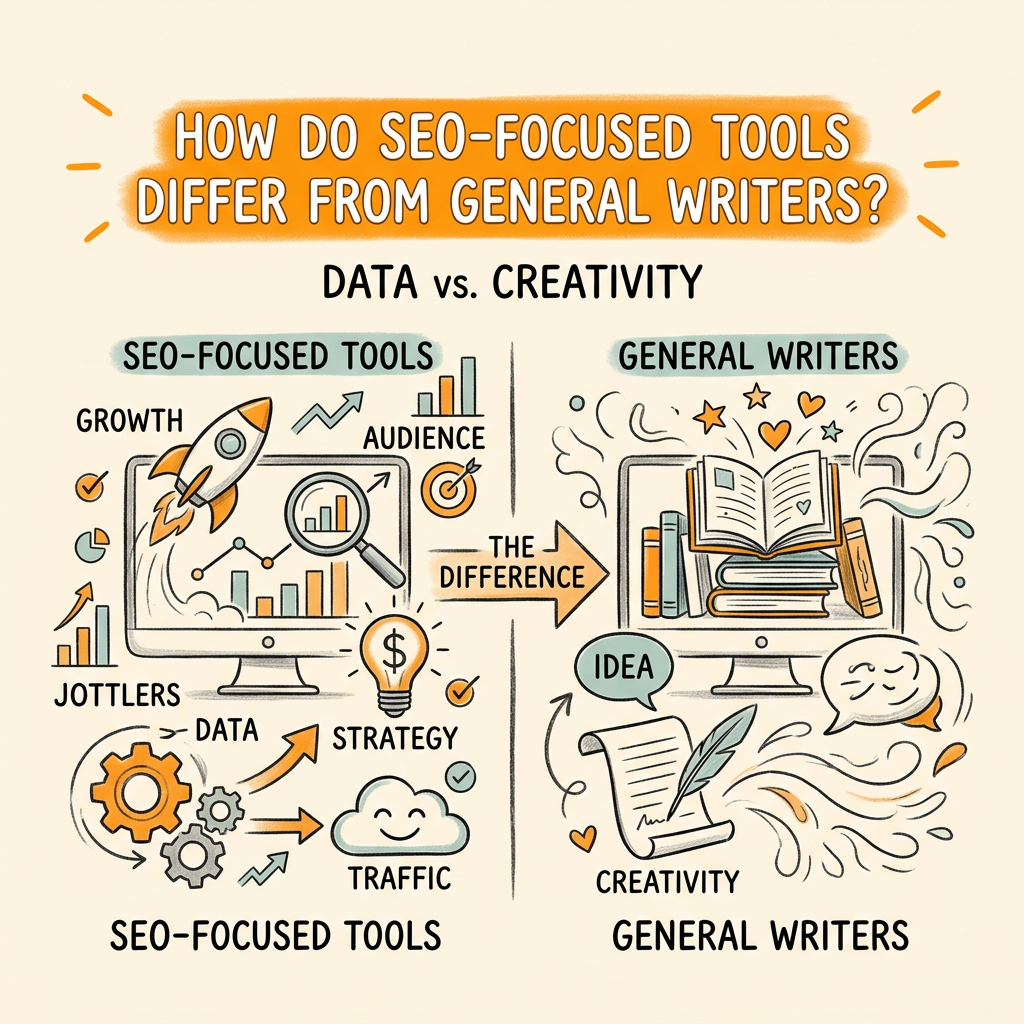
The biggest divergence in the market is SEO optimization. 38% of marketers now use AI for editing in 2026, up from 19% in 2025—and that shift reflects a move from "generate content fast" to "generate content that ranks and converts." SEO-first tools embed keyword optimization, readability scoring, and search intent analysis directly into the writing interface. According to Hangryfeed's 2026 comparison guide, successful teams increasingly pair general writers with specialized SEO tools to optimize for search performance.
Writesonic: SEO Engine for Content Teams
Writesonic is purpose-built for content marketers. It analyzes top-ranking articles for your target keyword, recommends structure and word count, suggests internal linking opportunities, and scores your draft's SEO readiness in real-time. For teams where organic traffic is the primary metric, this workflow integration saves dozens of hours per quarter.
The trade-off: voice consistency is minimal compared to Jasper. Writesonic treats each piece as independent. Ideal for content teams that value SEO performance over brand voice uniformity—typical in SaaS marketing, affiliate, and niche content strategies. Content marketing automation platforms like this have become essential for teams managing complex content calendars at scale.
Anyword: Predictive Performance Scoring
Anyword uniquely predicts engagement and conversion likelihood before publishing. Write a social post or landing page copy, and Anyword scores your variant against historical performance data from similar campaigns. This predictive layer appeals to performance-driven teams where every word impacts ROI.
Price point is $99–$199 monthly. Best for conversion-focused marketing: paid ads, landing pages, email subject lines. Less suited for organic content where long-term SEO value matters more than immediate click metrics.
Building a Comparison Table of Core Features
| Tool | Best For | Brand Voice Control | Team Collaboration | SEO Optimization | Price (Starting) |
|---|---|---|---|---|---|
| ChatGPT | Solo writers, ideation | None | Manual only | None | Free–$20/mo |
| Claude | Long-form editorial | None | Manual only | None | $20/mo |
| Jasper | Enterprise marketing teams | Advanced (custom voice profiles) | Campaign workflows, approval loops | Basic | $49–$125/user/mo |
| Copy.ai | Growing teams, rapid iteration | Moderate (style guides) | Template-driven, inline feedback | Basic | $36–$249/mo |
| Writesonic | Content and SEO teams | Minimal | Limited | Advanced (top-ranking analysis, keyword optimization) | $99+/mo |
| Anyword | Performance marketing, conversion focus | Minimal | Limited | Predictive performance scoring | $99+/mo |
| Jottler | Autonomous scaling of SEO content | Advanced (multi-source research depth) | Automated publishing & internal linking | Advanced (AI agents for fact-checking, keyword alignment) | $29+/mo |
Jottler stands apart in this landscape because it's not a writing assistant—it's an autonomous SEO engine. While ChatGPT writes one article at a time and Jasper helps teams manage voice consistency, Jottler automates the entire content pipeline: research, writing, fact-checking, and publishing. For founders and scaling marketing teams that can't maintain daily content output manually, this removes the bottleneck entirely. The platform connects to your website, sets publishing frequency (1–5 articles daily), and AI agents handle keyword research, deep fact-checking across 14+ sources, and internal linking structure. At $29/month, it's the most cost-effective solution for teams trying to scale organic traffic without hiring additional writers.
What Are the Trade-offs Between Specialization and Generalization?
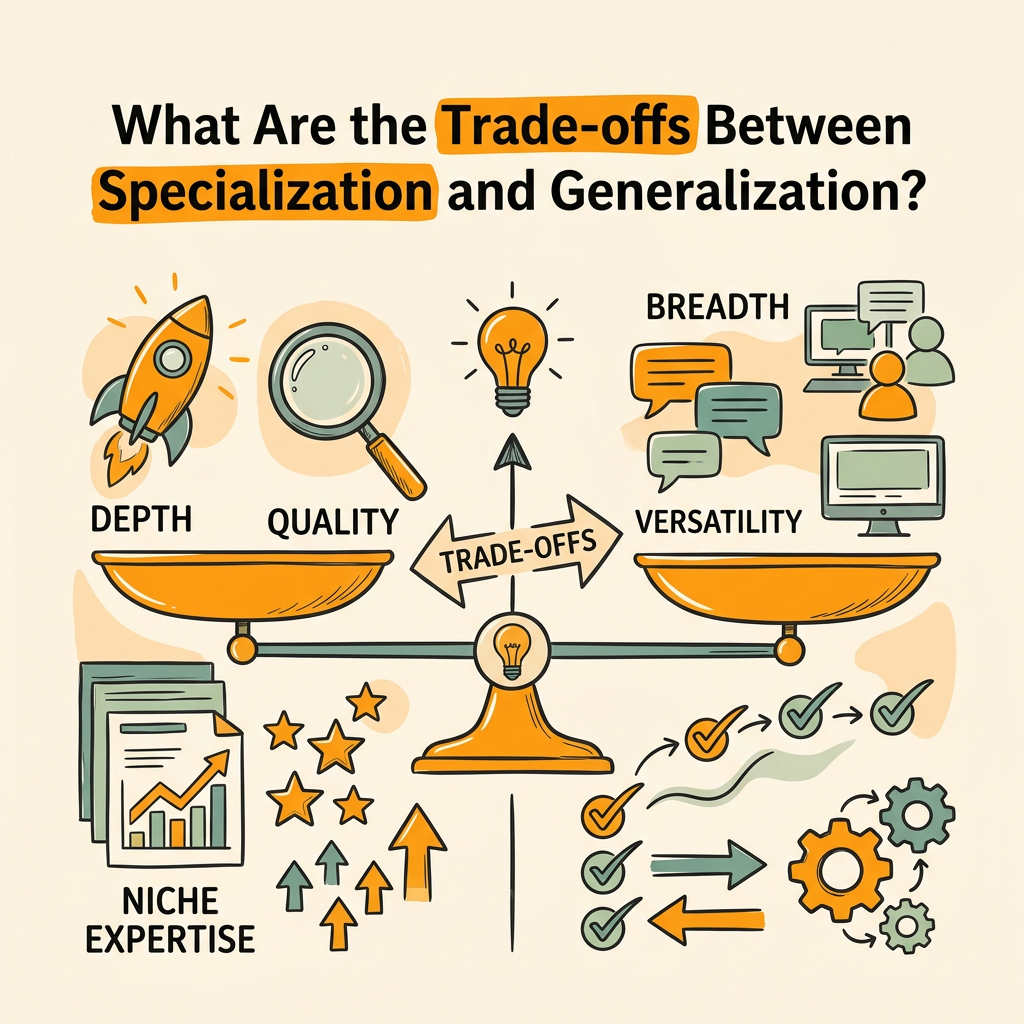
The core strategic question is whether to use one general tool or build a specialized stack. Data shows successful teams use 3–4 tools in combination. A typical high-performing setup looks like:
- ChatGPT or Claude for rapid ideation and outlining (free or $20/month)
- Jasper or Copy.ai for brand-consistent first drafts at scale ($36–$125/user/month)
- Writesonic or SEO-focused tool for keyword alignment and search optimization ($99–$199/month)
- Grammarly Business for final editing and tone consistency ($15/user/month)
This stack costs $50–$60 per writer per month for full-service coverage. A solo alternative is an autonomous SEO content generator like Jottler, which consolidates research, writing, optimization, and publishing into one platform. The difference: traditional stacks require human oversight at every step. Autonomous platforms handle the repetitive workflow so humans only review and publish.
Generalization works only if your team is small (1–2 writers) or your content strategy is simple (one format, one tone, basic SEO). At scale, specialization always wins because each tool's constraints force better workflow discipline.
How Should You Evaluate Tools for Your Specific Team?
Choosing between these options depends on three variables: team size, content volume, and primary success metric.
If Your Team Is 1–3 Writers and Budget-Conscious
Start with ChatGPT Plus ($20/month) for ideation and outlining. If you're producing more than 8 articles monthly, add an SEO-focused tool for optimization. Grammarly Business ($15/user/month) handles final review. AI SEO optimization tools provide additional polish for teams with higher publication velocity. Total cost: $50–$65/month for solid results. This approach works because small teams have faster feedback loops and can manually enforce brand consistency.
If Your Team Is 5+ Writers and Organic Traffic Matters
Invest in Jasper ($125/user/month) or Copy.ai ($50–$100/month for team tier) for brand consistency and collaborative workflow. Layer in Writesonic ($99/month) for SEO optimization. Expected output: 20–30 pieces monthly with minimal brand drift. ROI for teams producing 100+ pieces monthly materializes within three months as you reduce editing cycles and rework.
If Your Team Lacks Time and Needs Consistent Publishing
This is Jottler's target: busy founders and marketing teams that understand SEO compounds but don't have capacity for daily content production. Connect your site, set topics and publishing frequency, and AI agents research, write, fact-check, and publish automatically. At $29/month, it costs less than one month of a junior writer's salary and removes the need for manual content scheduling entirely. Teams report 3,000+ word articles daily with proper internal linking and SEO alignment.
What Mistakes Do Teams Make When Selecting AI Writing Tools?
The most common failure is buying a single "best" tool instead of designing a workflow. Teams pay for Jasper but never configure brand voice, then complain the output is generic. They use ChatGPT for everything, then wonder why their content lacks SEO optimization. The fix? Map your workflow first: where are the biggest friction points? Too much research? Too much outlining? Weak first drafts? Poor SEO? Buy for the pain point, not the feature list. SaaS content marketing platforms help teams avoid these pitfalls by automating the workflow from start to finish.
Second mistake: overestimating AI quality out of the box. Every tool requires human iteration. ChatGPT generates 60% of what you'll publish; Jasper gets you to 75%; Jottler handles research and publishing so you only review for accuracy and voice fit. Expect to spend 15–30 minutes per piece on editing, regardless of tool.
Third: ignoring team adoption friction. The best tool means nothing if your writers don't use it. Jasper requires two weeks of setup. Copy.ai has a learning curve. ChatGPT is instant. For teams with low AI literacy, start simple and upgrade after you've built the habit of using AI in your workflow.
Conclusion
The AI writing tool market no longer has a single winner. ChatGPT leads in trust and adoption at 80% among marketers, yet 97% of content teams now use AI in specialized ways: 74% for ideation, 61% for outlining, and 44% for drafting. The teams winning are those treating AI as a workflow tool, not a magic button. They use ChatGPT for brainstorming, Jasper or Copy.ai for on-brand drafting, Writesonic for SEO optimization, and Grammarly for final polish. For busy founders who can't sustain daily content output, autonomous platforms like Jottler eliminate the coordination overhead entirely—research, write, optimize, and publish 3,000+ word articles daily with minimal manual intervention.
Your next step: define your workflow bottleneck. Where does content creation slow your team most: research, drafting, editing, or publishing? Buy the tool that solves that problem first. You'll discover that specialization beats generalization at scale, and a focused two-tool stack beats an all-in-one solution every time.
Start your SEO agent to automate research, writing, and publishing so your team focuses on strategy instead of execution.
FAQs
Which AI writing tool is best for marketing teams in 2026?
There's no single "best" tool because teams have different needs. ChatGPT works for solo writers and ideation, but lacks team features. Jasper and Copy.ai excel for brand consistency and collaborative workflows—ideal for 5+ person teams. For SEO-driven content, Writesonic or similar specialized tools rank pages faster. The most successful teams use a 3–4 tool stack: one for ideation (ChatGPT), one for drafting with brand control (Jasper), one for SEO optimization (Writesonic), and Grammarly for final review. For autonomous scaling without daily manual oversight, platforms built for content automation handle the entire pipeline from research through publishing.
How much does AI writing software typically cost for a marketing team?
Pricing varies widely by tool and team size. ChatGPT costs $20/month per user. Jasper runs $49–$125 per user monthly depending on tier. Copy.ai ranges $36–$249/month as a team plan. Writesonic and Anyword start at $99/month. For a small team using a three-tool stack (ChatGPT + Jasper + Writesonic), expect $60–$80 per writer per month in software costs. Specialized autonomous platforms cost significantly less: Jottler starts at $29/month and eliminates the need for manual coordination across multiple tools.
Can AI writing tools replace human writers on a marketing team?
Not entirely. AI tools produce first drafts, ideation, and optimized structure, but human review is essential for brand voice, fact accuracy, and strategic alignment. The real value of AI is velocity: teams can produce 3–5x more content in the same time. Expect to spend 15–30 minutes editing AI output per piece regardless of tool quality. The best use case for AI is scaling content production without hiring additional writers—handling the repetitive parts (research, outlining, first draft) so experienced writers focus on strategy and editing. Autonomous systems like content agents eliminate some of this manual review by pre-checking facts and alignment, reducing human effort to final approval only.