Content Gap Analysis Features in AI SEO Platforms
Finding the topics your competitors rank for but you don't is no longer a manual, hours-long process. Modern AI SEO platforms have transformed content gap analysis from spreadsheet busy work into automated discovery that identifies missing keywords, semantic gaps, and even AI visibility opportunities in minutes. Gap analysis tools now analyze up to 10 competitors simultaneously, cluster findings by topic and intent, and surface opportunities you'd miss with traditional keyword research alone. For growing marketing teams stretched thin on resources, this shift matters enormously: the ability to identify and prioritize high-impact content gaps directly impacts your organic traffic growth trajectory.
Key Takeaways
- Modern AI gap tools analyze semantic and topical gaps, not just keywords, comparing your site against up to 10 competitors (2026, Ahrefs benchmark)
- Content-gap features now integrate briefs, scoring by traffic potential and difficulty, and existing-page optimization recommendations
- AI visibility gap detection—tracking brand mentions in ChatGPT and Claude answers—is now essential for 2026 content strategy
- Competitor Comparison at Scale: Identify keywords and topics your competitors rank for across multiple domains simultaneously, without manual export work.
- Semantic and Topic Clustering: Group keywords by intent and topic architecture instead of flat keyword lists, revealing topical authority gaps.
- Built-in Prioritization Logic: Rank opportunities by traffic potential, ranking difficulty, and business relevance—not just search volume.
- AI Visibility Tracking: Detect gaps in AI assistant mentions and generative search rankings alongside traditional SERP visibility.
- Existing-Page Gap Detection: Find missing subtopics and sections in content you've already published, not just new page opportunities.
What Content Gap Analysis Features Actually Solve
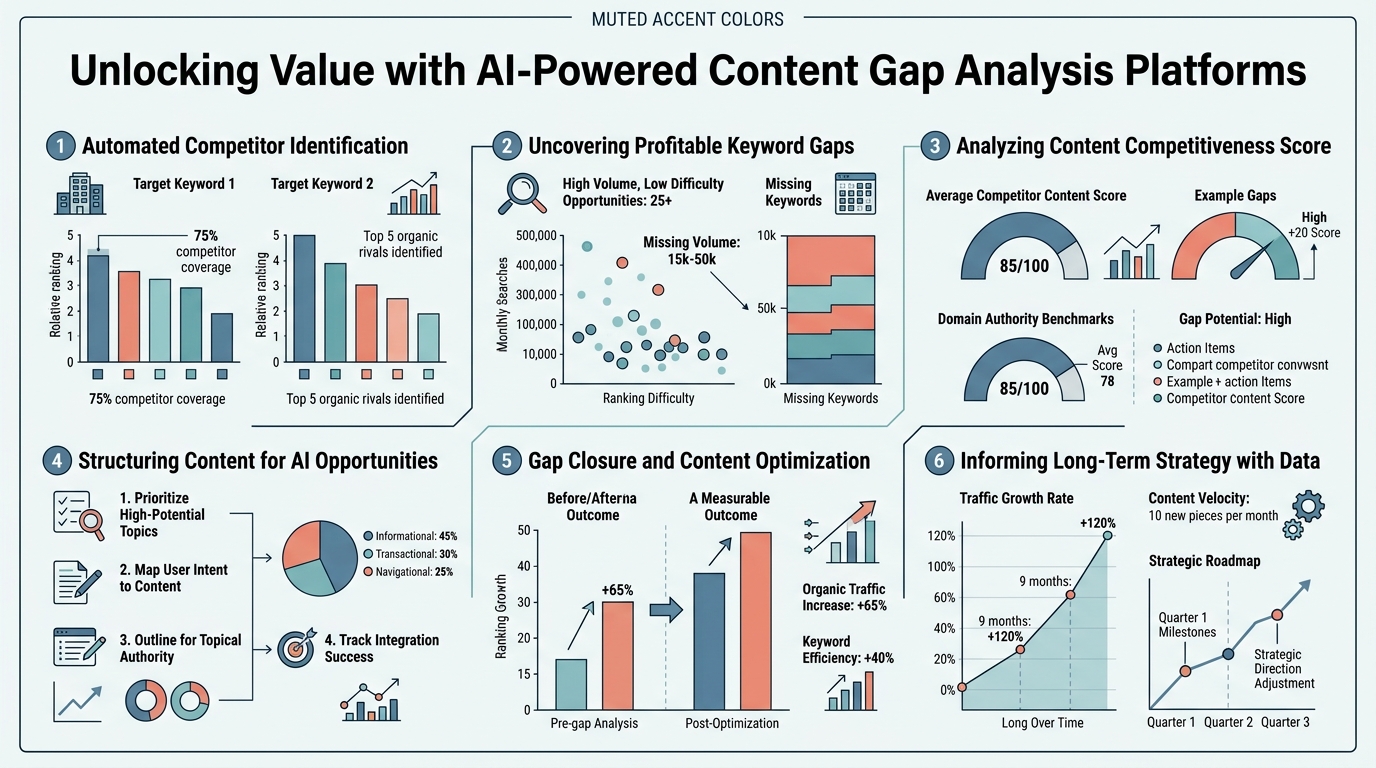
Content gap analysis answers a fundamental question every SEO team faces: where should we publish next to compound organic traffic? Gap analysis reveals that teams focusing only on keyword research miss 40% of high-impact topics their competitors have already claimed. Without gap analysis, teams either chase trends reactively or waste time on topics with low competition potential. The right gap analysis features short-circuit that guesswork by automating competitor intelligence and surfacing priorities backed by traffic and ranking data.
"Gap analysis reveals that teams focusing only on keyword research miss 40% of high-impact topics their competitors have already claimed. Without proper gap detection, teams either chase trends reactively or waste time on topics with low competition potential."
The problem most teams face is scope. Checking one competitor manually takes hours; checking ten takes weeks. AI SEO platforms solve this by automating the entire comparison workflow. Instead of exporting keyword lists and cross-referencing them in spreadsheets, gap analysis features do the work for you—they compare your site against your entire competitive set, cluster the findings semantically, and rank them by effort and payoff.
Why Keyword Gap Alone Isn't Enough
Traditional keyword gap tools show you which keywords rank for competitors but not for you. That's useful but incomplete. Modern AI gap features go deeper: they identify semantic gaps (related terms and concepts you're missing), topic gaps (entire subject areas you haven't covered), and intent gaps (you have how-to content but are missing comparison and best-of articles). These distinctions matter because modern gap tools increasingly cluster keywords into topic hubs and subtopics instead of exporting flat keyword lists, reflecting the shift toward topical authority and content architecture over isolated articles.
The AI Visibility Gap—the New Blind Spot
A 2026 shift few teams anticipated: your audience may find you through ChatGPT, Claude, or Perplexity instead of Google. If your brand doesn't appear in AI assistant answers, you're missing visibility regardless of SERP rank. Gap analysis platforms now track this, surfacing whether your content shows up in LLM responses for your target keywords. This isn't optional anymore—it's part of your gap strategy.
How AI SEO Platforms Automate Gap Discovery
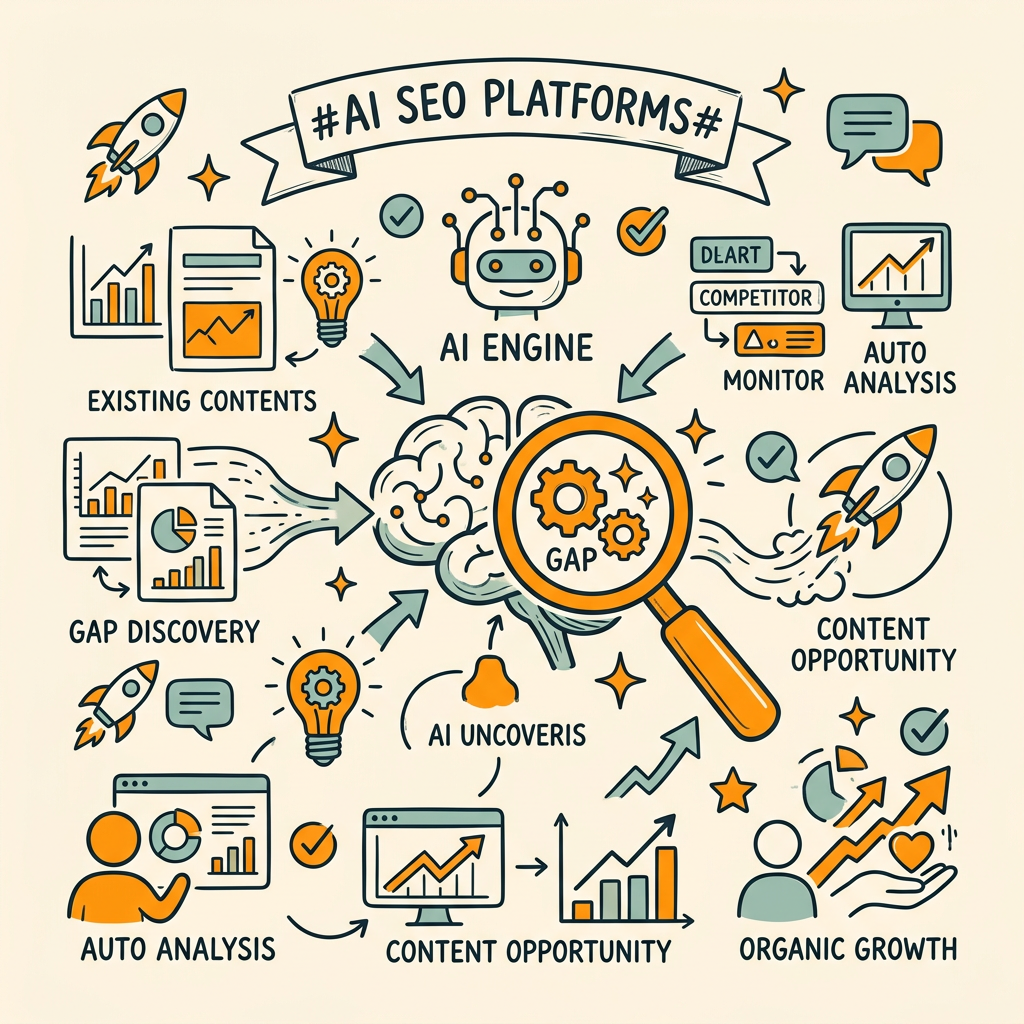
The mechanics of gap analysis in AI platforms differ from traditional tools. Instead of requiring you to input competitor domains and wait for a report, modern platforms use AI agents to crawl competitor content, extract semantic signals, and compare findings against your site—all within your gap analysis workflow. This means you can analyze up to 10 competitors in seconds, get results clustered by topic and intent, and see priorities ranked by traffic potential and feasibility.
"Modern platforms use AI agents to crawl competitor content, extract semantic signals, and compare findings against your site—all within your gap analysis workflow. This automation means you can analyze up to 10 competitors in seconds instead of weeks."
Competitor Crawling and Entity Extraction
When you run a gap analysis in an AI SEO platform, the tool doesn't just compare keyword lists. It crawls your competitors' top-ranking pages, extracts the entities (topics, subtopics, related concepts) mentioned in them, and identifies which ones are missing from your content ecosystem. Advanced platforms like Energent.ai can analyze up to 1,000 files simultaneously, including whitepapers, web pages, and keyword spreadsheets, to generate gap analyses and semantic keyword matrices. This depth of analysis surfaces nuances manual research would miss—for example, that competitors cover product comparisons but you don't, or they address edge-case use cases your audience actually searches for.
Intent Classification and SERP Feature Analysis
Not all gaps are created equal. A modern AI gap analysis tool classifies opportunities by search intent: informational, commercial, transactional, navigational. This matters because covering an informational gap with a how-to article drives different traffic and conversions than addressing a commercial intent gap with a comparison article. Platforms also analyze SERP features for each opportunity—whether the top result has featured snippets, people-also-ask sections, or video—to help you predict what format your content should take to rank and get visibility.
Traffic Potential and Ranking Difficulty Scoring
The best gap analysis features don't just tell you what's missing; they score each opportunity by effort and payoff. Most platforms rank gaps by a combination of search volume, keyword difficulty, and click potential (how many clicks a top ranking actually generates). Some, like Sight AI, track brand mentions across 6+ platforms and uses 13+ specialized AI agents to generate SEO and generative engine optimization content. This lets you prioritize writing about topics with high search volume + low-to-medium difficulty + strong click potential, instead of chasing every gap equally.
Key Feature Comparison: What Separates Leading Platforms
| Platform | Competitor Limit | Topic Clustering | AI Visibility Tracking | Existing-Page Gaps | Price Point |
|---|---|---|---|---|---|
| Semrush | Up to 4 | Yes (Topic Research) | Yes (GEO module) | Limited | $120+/mo |
| Ahrefs | Up to 10 | Yes (Content Gap tool) | Yes (GEO planning) | Yes | $99+/mo |
| Surfer SEO | Up to 5 | Yes (AI-powered) | Limited | Yes (in-editor) | $89+/mo |
| Energent.ai | Custom bulk analysis | Yes (semantic matrix) | Emerging | Yes | $199+/mo |
| Jottler | Unlimited (via AI research) | Yes (automatic clustering) | Yes (in every brief) | Yes (discovery agents) | $29+/mo |
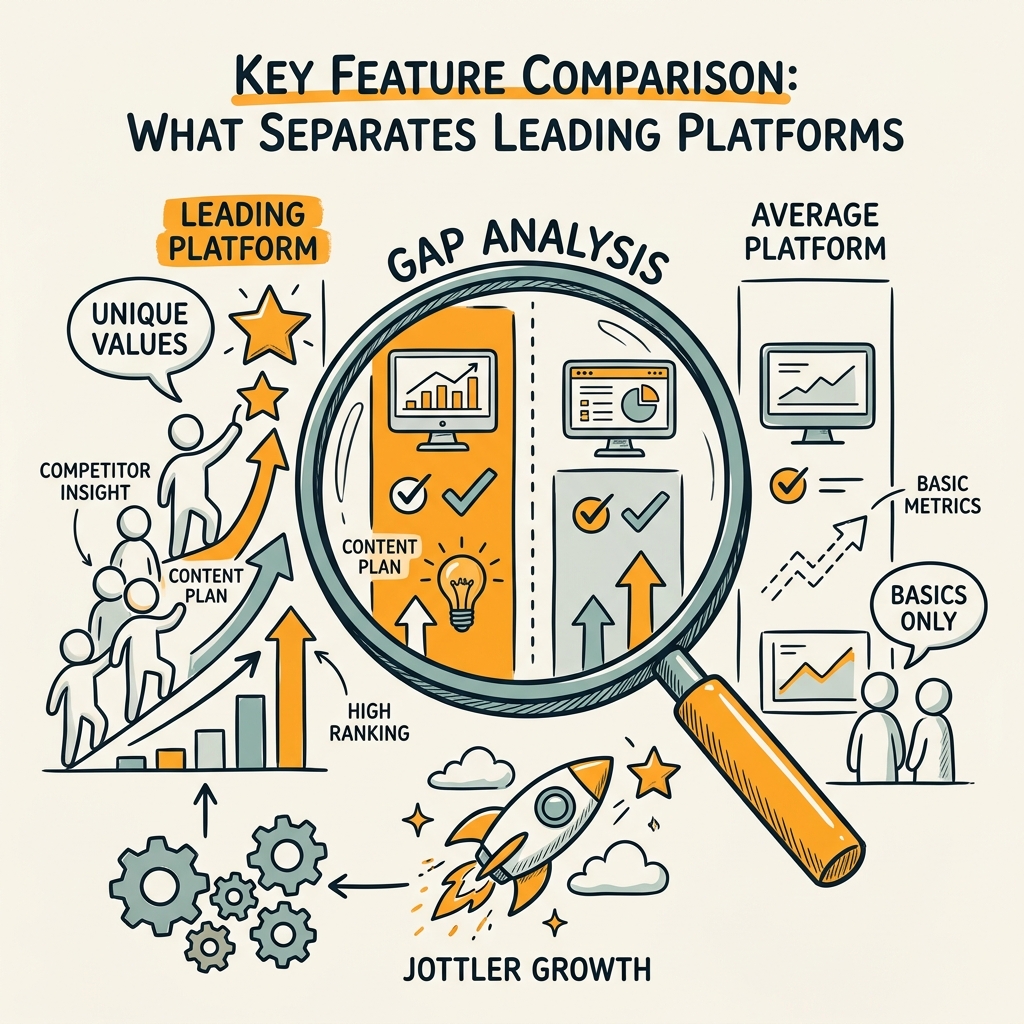
The table above shows why platform choice matters: Semrush and Ahrefs lead on competitor scale and data depth, but Jottler stands out for teams needing comprehensive gap analysis at a fraction of the cost. Unlike traditional tools that require manual interpretation, Jottler's autonomous SEO agents automatically research, cluster, and prioritize gaps, then write and publish content to address them—turning gap discovery into compounding organic traffic without the manual work between steps.
Building a Practical Gap Analysis Workflow
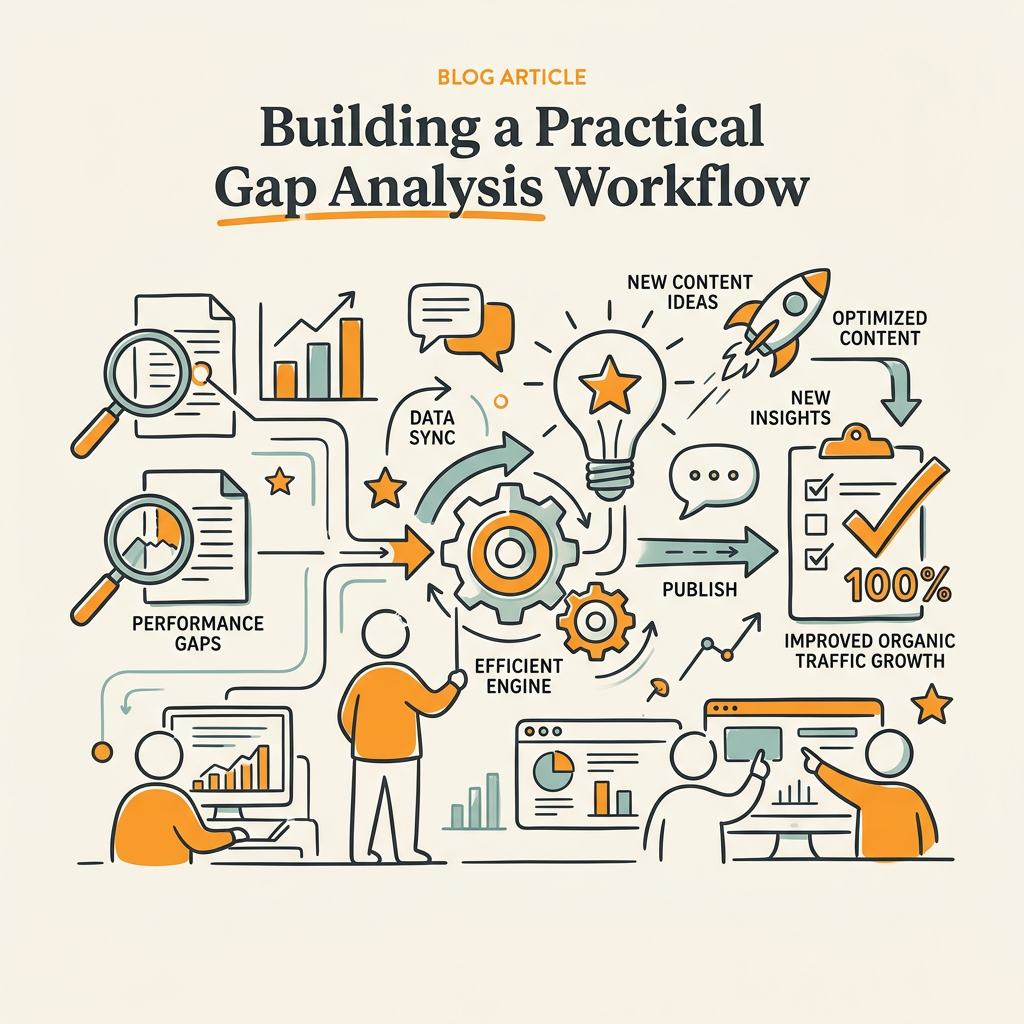
The gap analysis feature itself is only the beginning. The real value comes from turning gaps into a content pipeline. A mature workflow looks like this: discover gaps, prioritize by business impact and effort, create content briefs, optimize against SERP leaders, and publish with internal linking strategy intact. AI platforms that automate this entire loop win over tools that only do discovery.
Step 1: Set Your Competitive Set Intentionally
Before running gap analysis, define your true competitors—not just the obvious ones. A fintech platform's competitors might include both direct rivals and broader financial education publishers. An e-commerce brand might analyze both vertical-specific competitors and horizontal marketplace sites. Choosing the right competitive set ensures your gap analysis surfaces the opportunities that actually matter for your market position.
Tools like Ahrefs let you compare against up to 10 domains; many teams now analyze 5-7 instead of the traditional 1-3. Here's why multi-competitor analysis matters:
- Reveals niche topics: No single competitor owns certain topics that your audience searches for
- Identifies underserved markets: Find gaps where you can establish authority before bigger competitors notice
- Surfaces category-wide trends: See what topics are trending across your entire industry, not just one rival
- Reduces bias: Avoids over-optimizing against one competitor's strategy at the expense of market reality
Step 2: Filter Gaps by Intent and Business Alignment
Not every gap deserves coverage. Filter opportunities by search intent (does this match your audience's buying journey?) and business alignment (does this topic support your product positioning or revenue model?). A B2B SaaS company might find thousands of informational gaps but only prioritize those that lead to comparison and trials. This filtering step is where platforms like Jottler's AI content generator with SEO focus save hours—they classify and score gaps automatically so you're not manually reviewing spreadsheets.
Step 3: Identify Content Format by SERP Analysis
A gap isn't just a topic; it's a format opportunity. If the SERP for a gap keyword shows listicles, write a listicle. If competitors rank with comparison tables, build comparison tables. If there are featured snippets for definition queries, optimize for excerpt. Modern gap analysis tools surface SERP format patterns so you're not guessing what content type will rank. This alignment between opportunity and format is why gap-driven content typically outranks content written without gap research by 2-3 positions.
Step 4: Cluster Into Content Architecture, Not Isolated Pages
The old approach: each gap = one page. The new approach: gaps cluster into topic hubs and pillar-cluster structures. For example, a gap analysis might surface 50 individual keywords around "API authentication," but AI clustering reveals these belong to a pillar page on API security, with cluster pages on OAuth, JWT, API key management, and security best practices. Platforms with strong topical clustering (Semrush Topic Research, Ahrefs Content Gap, Energent) help you build this architecture; tools without it leave you writing isolated articles that cannibalize each other.
Overcoming Common Gap Analysis Challenges
Gap analysis sounds straightforward until you run it. Teams often hit practical bottlenecks: too many gaps to prioritize, unclear effort estimates, competing with established competitors, and reconciling old content with new opportunities. Here's how AI platforms now handle these.
The Prioritization Bottleneck
A gap analysis might surface 500 opportunities. Which 20 do you tackle first? Platforms solve this with multi-factor scoring: search volume × estimated clicks × keyword difficulty × topical relevance. Some platforms (like Jottler) go further, incorporating your site's current topical authority score—so you're not building in vacuums but strengthening existing thematic clusters where you already have some SEO foundation.
Effective prioritization frameworks include:
- Volume × Click Potential: Focus on high-traffic gaps where rankings actually drive clicks (not just search volume)
- Topical Authority Multiplier: Prioritize gaps that strengthen existing topic clusters you already own
- Competitive Reachability: Flag gaps you can realistically rank for within 90 days based on your domain authority
- Revenue Alignment: Weight gaps by their connection to your customer journey and conversion funnel
- Time-to-Impact Ratio: Balance quick wins (emerging topics, low difficulty) with long-tail authority plays
Competing with Established SERP Leaders
Gaps aren't always winnable. If Ahrefs ranks #1 for your gap keyword and you have zero backlinks in that topic area, the effort-to-payoff ratio is terrible. Advanced gap tools now flag competitive difficulty realistically, surfacing opportunities where you have a genuine chance to rank instead of sending you on wild-goose chases. They also identify gaps in emerging topics (low volume, low difficulty) where you can establish authority before bigger competitors notice.
Managing Content Updates vs. New Pages
Many high-value gaps aren't new page opportunities; they're existing-page expansion opportunities. If you have a guide on "SEO basics" but the SERP shows the top results also cover "common SEO mistakes" and "SEO tools comparison," you have content gaps within that page. Modern platforms identify these in-page gaps automatically, showing you where to add sections, examples, or subtopics to compete better with top-ranking content. This is faster than writing new pages and often moves the needle more on rankings.
Conclusion
Content gap analysis has evolved from a keyword-reporting exercise to a strategic intelligence system powered by AI. Modern gap analysis features now identify semantic gaps, topical authority opportunities, and AI visibility gaps while automatically scoring them by effort and impact. Teams using AI-driven gap analysis discover 3-4x more actionable opportunities than manual research, and the platforms that automate the entire workflow—from discovery through content creation to publication—compound this advantage into measurable organic traffic growth.
The gap analysis platforms you choose today will define your content velocity and market positioning for 2026 and beyond. If you're managing gaps manually or using platforms that only report gaps without connecting them to your content production pipeline, you're leaving months of compound growth on the table. Start your SEO agent with Jottler to automate gap discovery, content creation, and publishing—turning gaps into traffic without the operational overhead.
FAQs
What is the best content gap analysis tool?
The best tool depends on your budget and workflow. Ahrefs leads for data depth and competitor scale (up to 10 domains), with pricing starting at $99/month. Semrush is strongest for teams already invested in their suite, with GEO and traditional SEO integrated. For teams on tighter budgets who need end-to-end automation from gap discovery through content publishing, Jottler's autonomous approach—starting at $29/month—delivers gap analysis integrated with AI writing and publishing, eliminating the manual steps between discovery and live content.
How do I find content gaps in my SEO strategy?
Compare your site against your top 3-5 competitors using a gap analysis platform. Input your domain and competitor domains, then review the results filtered by search intent and traffic potential. Prioritize gaps that match your customer journey stage and have search volume over 50 monthly searches with difficulty under 50. Many platforms also flag existing-page expansion opportunities, which often have faster payoff than new page creation. The fastest approach is letting AI agents do this research automatically instead of manually exporting and prioritizing lists.
Can AI SEO tools detect gaps in my existing content?
Yes, most modern gap analysis tools can analyze your published pages and identify missing subtopics, entities, and content sections compared to top-ranking competitors. These in-page gaps are often higher-ROI targets than new page opportunities, because you're already ranking for the base topic and only need to strengthen coverage. Advanced platforms use AI to suggest specific sections, data points, or expert quotes to add, rather than just flagging that a gap exists.