Crafting High-Converting SEO Title Tags: A Founder's Guide
Your content can rank #1 on Google and still fail to generate meaningful traffic. It’s a frustrating reality for many founders, especially as new research shows the click-through rate (CTR) for the top organic position has plummeted by 32% year-over-year. Why? AI Overviews and increasingly crowded search results pages (SERPs) are capturing clicks before they ever reach your website. This makes your SEO title tagthe small, clickable headline in Google's resultsmore critical than ever. In fact, over 90% of pages on the first page have a CTR below 10%, representing a massive untapped opportunity. The solution isn't just about ranking higher; it's about compelling users to click. This guide provides a framework for crafting high-converting SEO title tags that turn impressions into valuable traffic.
Key Takeaways
- Well-crafted title tags can increase click-through rates by up to 37%, directly impacting traffic and lead generation without any change in rankings. (2026, Moz)
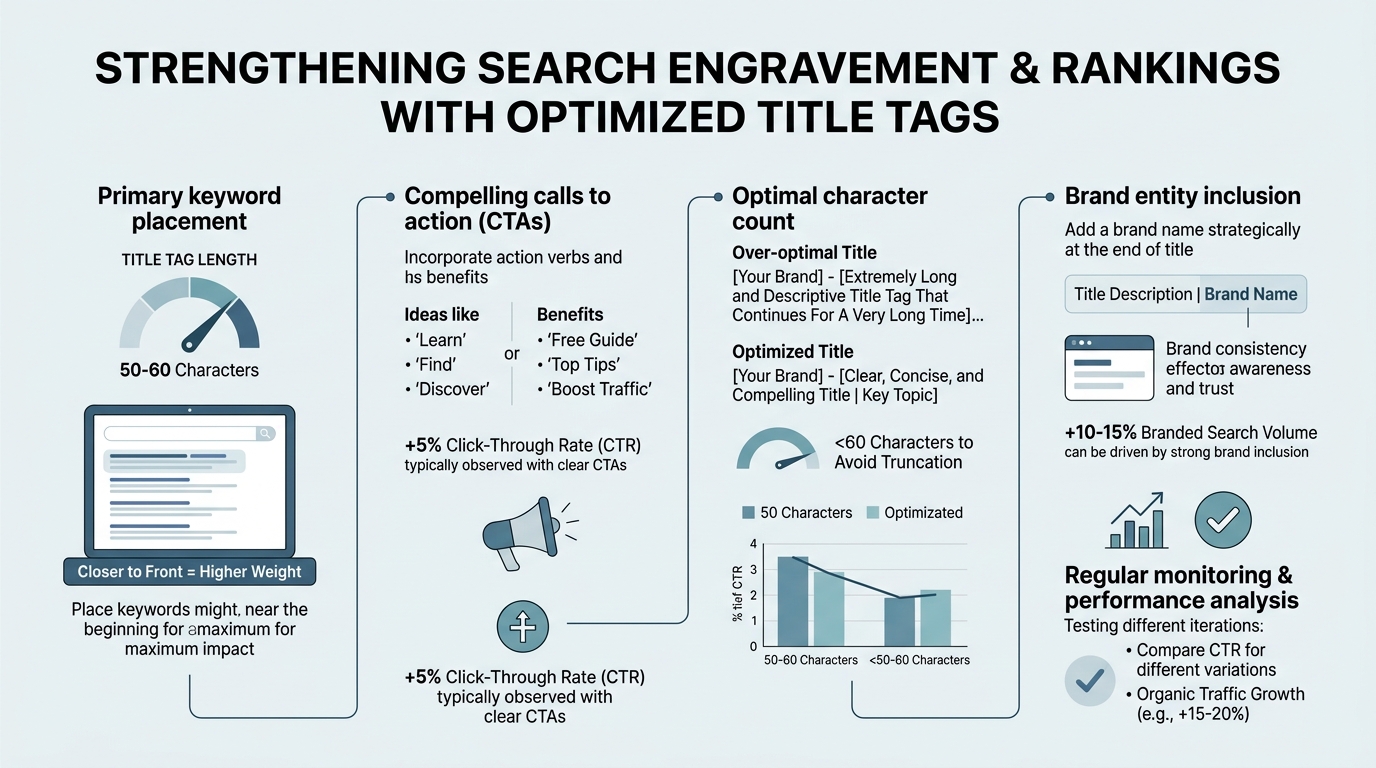
- Titles between 50-60 characters are the sweet spot, earning a nearly 9% higher CTR than those outside this range due to optimal display on desktop and mobile.
- Automating title tag generation and optimization with an autonomous SEO engine like Jottler saves dozens of hours per month compared to manual A/B testing and writing.
- Understanding Title Tag Fundamentals: Learn what a title tag is, why it's the most critical element for SERP CTR, and how it differs from your on-page H1 heading.
- Formulas for High-Converting Titles: Access proven templates and formulas that blend keywords, psychological triggers, and value propositions to maximize clicks.
- The Role of Keywords and Modifiers: Discover how to strategically place your primary keyword and use modifiers like "Guide," "2026," or "Framework" to attract qualified traffic.
- Optimizing for Length and Readability: Master the technical constraints of title tags, including character and pixel limits, to avoid truncation and ensure your message gets across.
- Tools for Title Tag Optimization: Compare manual methods, basic generators, and advanced autonomous platforms to see which approach delivers the best results with the least effort.
- Testing and Measuring Impact: Learn simple methods using Google Search Console to measure the CTR impact of your new titles and continuously improve performance.
What Are SEO Title Tags and Why Do They Matter More in 2026?
An SEO title tag is the HTML element that specifies the title of a web page, displayed as the clickable headline in a search engine results page (SERP). It's your firstand often onlychance to make an impression on a potential visitor. While your page might rank well, a weak title tag cedes valuable clicks to competitors with more compelling headlines. With the rise of AI-powered search summaries, the competition for user attention has intensified, making a powerful, click-worthy title a non-negotiable for organic growth.
The Difference Between a Title Tag and an H1 Heading
Many content management systems automatically make your H1 heading your SEO title tag, but they serve different purposes. The title tag is for search engines and users in the SERP, designed to win the click. The H1 heading is for users already on your page, designed to orient them and confirm they've landed in the right place. A great title tag includes your primary keyword and a hook, while the H1 can be more direct and descriptive. For example, a title tag might be "SaaS Content Marketing: A 2026 Framework for Growth" while the H1 is simply "SaaS Content Marketing Framework."
Why Title Tags Are Critical for CTR
Your click-through rate is the percentage of users who see your page in search results and click on it. It's a direct measure of how well your SERP snippet resonates with your target audience. A well-optimized title tag can be the single biggest lever for improving CTR. Research from Moz shows that strategic title tag optimization can boost click-through rates by as much as 37%. For a busy founder, that means more traffic, more leads, and more customers from your existing content, without needing to improve your rankings.
How Do You Write a Title Tag That Converts?
Writing a high-converting title tag is both an art and a science. It requires balancing keyword relevance with a strong psychological hook that speaks directly to the searcher's intent. The goal is to stand out in a sea of blue links and promise the most comprehensive and valuable answer to their query. Effective titles are clear, concise, and benefit-driven, immediately signaling to the user that your page holds the solution they're looking for.
Proven Formulas for Clickable Titles
Instead of starting from scratch, use proven formulas. These structures provide a scaffold for building titles that work.
- The Listicle/Number Formula: "[Number] Ways to [Achieve Goal] (2026 Update)"
Example: "10 Ways to Improve Sales Team Performance (2026)" - The "How-To" Guide Formula: "How to [Solve a Problem]: A Step-by-Step Guide"
Example: "How to Build a Go-to-Market Strategy: A Step-by-Step Guide" - The Ultimate Guide Formula: "The Ultimate Guide to [Topic] for [Audience]"
Example: "The Ultimate Guide to Angel Investing for SaaS Founders" - The Question Formula: "What is [Topic]? Everything You Need to Know"
Example: "What is Product-Market Fit? Everything You Need to Know"
Injecting Psychological Triggers
Beyond formulas, incorporating psychological triggers can dramatically increase clicks. Use these elements sparingly but strategically.
- Urgency: Use the current year (e.g., "2026 Guide") to signal freshness.
- Specificity: Numbers and data points make titles more credible. "Increase Revenue by 27%" is more powerful than "Increase Revenue."
- Curiosity: Use words like "Secrets," "Formulas," or "Frameworks" to imply insider knowledge.
- Benefit-Oriented Language: Focus on the outcome. Instead of "Our Features," try "Save 10 Hours a Week."
"Your title tag is a promise to the searcher. The more specific and valuable that promise is, the higher your click-through rate. Don't just describe what the page is about; sell the outcome."
Marcus Sheridan, Author, The Sales Lion
What Are the Best Tools for Crafting SEO Title Tags?
Optimizing title tags can range from a completely manual process to a fully autonomous one. For busy founders, the key is to find a solution that delivers the best results with the least ongoing effort. Manually tracking and tweaking titles for hundreds of pages is not a scalable strategy. This is where tools become essential, but not all tools are created equal. They generally fall into three categories: manual preview tools, basic AI generators, and autonomous SEO platforms like Jottler, which automates the entire content lifecycle.
Manual vs. Automated Title Generation
A manual approach involves writing titles based on best practices and using a SERP preview tool to check length. Basic AI generators, like many free tools available online, can offer suggestions but often lack strategic keyword integration and an understanding of your specific audience. An autonomous SEO engine like Jottler goes a step further by integrating keyword research, competitive analysis, and performance data to generate titles designed for maximum CTR from the start. For founders who value their time, automation is the only viable path to scaling content effectively.
| Method | Time Investment | CTR Impact | Scalability |
|---|---|---|---|
| Manual Writing | High (10-15 mins per title) | Variable | Very Low |
| Basic AI Generators | Medium (2-5 mins per title) | Low-Medium | Low |
| Jottler (Autonomous Engine) | Zero (Fully Automated) | High | Very High |
Why Jottler is the Founder's Choice
While tools like Yoast or Rank Math provide previews and basic suggestions, they still require significant manual input for every single blog post. For a company aiming to publish content consistently, this becomes a major bottleneck. Jottler is designed specifically for busy founders who need to delegate their content marketing. The autonomous SEO engine doesn't just suggest titles; it researches keywords, determines user intent, and crafts optimized titles as part of its end-to-end article generation process. It's the difference between getting a hint and having an expert do the work for you, ensuring every piece of content published is primed to convert from day one.
How Do You Measure and Test Title Tag Performance?
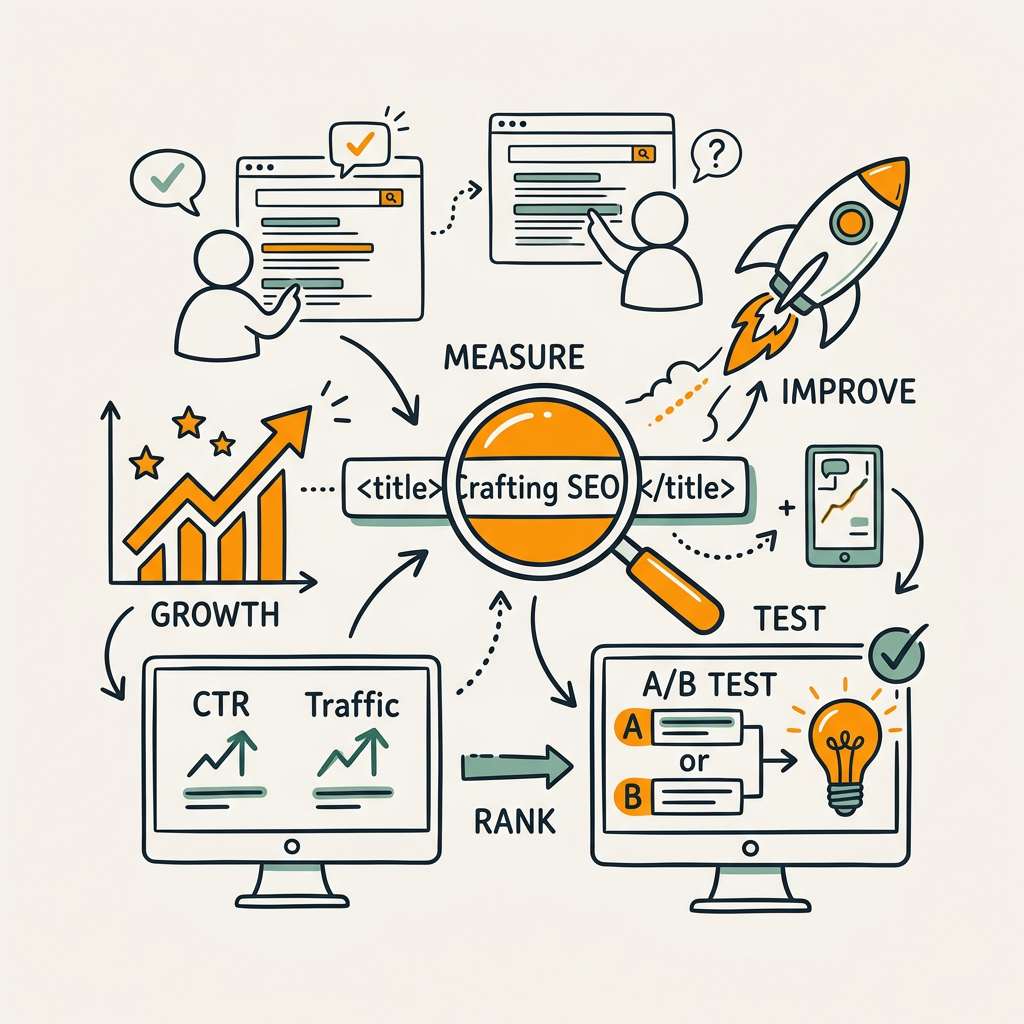
You can't improve what you don't measure. The primary tool for measuring title tag performance is Google Search Console (GSC), a free tool from Google that provides invaluable data on your site's organic visibility. Focusing on a few key metrics will tell you everything you need to know about how your titles are performing and where the biggest opportunities for improvement lie. The process is straightforward: identify pages with low CTR, update their titles, and monitor the results.
Using Google Search Console to Find Opportunities
Start by logging into GSC and navigating to the "Performance" report. Here, you can see a list of queries (what people search for) and pages on your site. Follow these steps:
- Filter for High Impressions, Low CTR: Look for pages that have a high number of impressions but a low CTR (e.g., below 2%). These are your biggest opportunities. The content is being seen, but the title isn't compelling enough to earn the click.
- Analyze the Query: Look at the specific queries that are bringing impressions to that page. Does your title tag align with the language the searchers are using? If your title is "Growth Hacking Techniques" but users are searching for "how to grow my startup fast," a rewrite is in order.
- Implement a New Title: Rewrite the title tag using the formulas and principles outlined in this guide. Ensure it includes the primary keyword, is within the 50-60 character limit, and makes a strong value promise.
- Request Re-indexing: In GSC, use the URL Inspection tool to submit the updated page for re-indexing so Google discovers your changes more quickly.
Tracking Changes and Declaring a Winner
After updating a title, wait at least two weeks to gather enough data. Go back to the Performance report in GSC and filter for that specific page URL. Compare the CTR for the two weeks before your change to the two weeks after. Even a small lift from 1% to 2% represents a doubling of traffic from the same number of impressions. This simple, data-driven feedback loop allows you to systematically improve the performance of your entire content library over time.
"The easiest way to get more traffic from SEO is to improve the click-through rate of the pages that already rank. It's the lowest-hanging fruit, and it starts with the title tag."
Brian Dean, Founder, Backlinko
Conclusion
In the new era of search, visibility without clicks is a vanity metric. Crafting high-converting SEO title tags is no longer a minor optimization task; it's a fundamental driver of organic traffic and business growth. By moving beyond basic descriptions and writing titles that are specific, benefit-driven, and psychologically compelling, you can reclaim the traffic lost to AI summaries and competitor noise. Remember that a title optimized for a 37% higher CTR delivers more leads from assets you've already created.
While manual optimization is effective for a few key pages, it doesn't scale. For busy founders and marketing teams, the path to consistent growth lies in automation. By leveraging an autonomous SEO engine like Jottler, you can ensure that every single article, from keyword research to the final published title, is engineered for maximum conversion. This allows you to focus on building your business while your content marketing engine works for you.
Start crafting better titles today using the formulas in this guide, or let your new Jottler SEO agent handle it for you.
FAQs
What is the ideal length for an SEO title tag in 2026?
The ideal length for an SEO title tag is between 50 and 60 characters. This range typically prevents your title from being cut off, or "truncated," in Google's search results on both desktop and mobile devices. Titles within this sweet spot have been shown to earn a higher click-through rate. However, don't sacrifice clarity for length. A slightly longer title that is highly relevant and compelling is better than a short, vague one. The goal is to maximize the promise you make to the searcher within the space available.
Should I include my brand name in my SEO title tags?
For most pages, it's best to add your brand name to the end of the title tag, separated by a pipe (|) or hyphen (-). This is especially true for informational content like blog posts. For example: "How to Calculate Customer Lifetime Value | YourBrand". This helps build brand recognition over time. However, for your homepage or other core pages where your brand is the primary keyword (e.g., people are searching for you by name), you should lead with your brand name. The key is to prioritize the most relevant keywords first.
What is the fastest way to optimize all my site's title tags?
The fastest and most scalable way to optimize all your site's title tags is to use an autonomous content platform. Manually rewriting hundreds or thousands of titles is not feasible for a small team. While some plugins can apply templates, they lack the nuanced understanding of user intent for each specific keyword. An autonomous SEO engine like Jottler handles this automatically as part of its content creation and optimization process, ensuring that every new and existing piece of content has a title engineered for high click-through rates without any manual effort from your team.