Essential SEO Ranking Factors Explained
Google's ranking algorithm evaluates over 260 ranking signals to determine which pages appear at the top of search results. Yet a handful of core factors—content quality, technical performance, authority, and user experience—account for the majority of ranking power. Google's December 2025 Core Update elevated E-E-A-T (Experience, Expertise, Authoritativeness, Trustworthiness) to the strongest weighting in years, while 58.5% of Google searches now result in zero clicks to any website due to AI Overviews. For founders building organic traffic, understanding these essential ranking factors isn't optional—it's the difference between compounding growth and spinning your wheels on outdated tactics.
Key Takeaways
- Content quality and E-E-A-T signals now determine 40-50% of ranking power; sites without demonstrated expertise see de-indexing (2026, Whitehat SEO)
- Core Web Vitals compliance improves conversion rates by 25%; only 47-54% of websites currently meet all thresholds (2025, Whitehat SEO)
- 97% of AI Overview citations originate from pages already ranking top 20—traditional SEO is the prerequisite for AI visibility (2025, Whitehat SEO)
- Content Quality & E-E-A-T: Demonstrating genuine expertise and first-hand experience now drives 40-50% of ranking authority, with faceless AI content at a severe disadvantage.
- Technical Performance (Core Web Vitals): Sites improving from "Poor" to "Good" report 25% conversion rate increases; speed and responsiveness are non-negotiable ranking signals.
- Backlinks & Domain Authority: High-quality, topically relevant backlinks remain the second-strongest ranking factor after content quality, signaling real-world validation.
- On-Page Optimization: Title tags, meta descriptions, heading hierarchy, and keyword relevance align user intent with content, essential for featured snippet placement.
- AI Visibility Foundation: AI Overviews now appear in 24.6% of queries; ranking top 20 organically is the prerequisite for citation in AI responses.
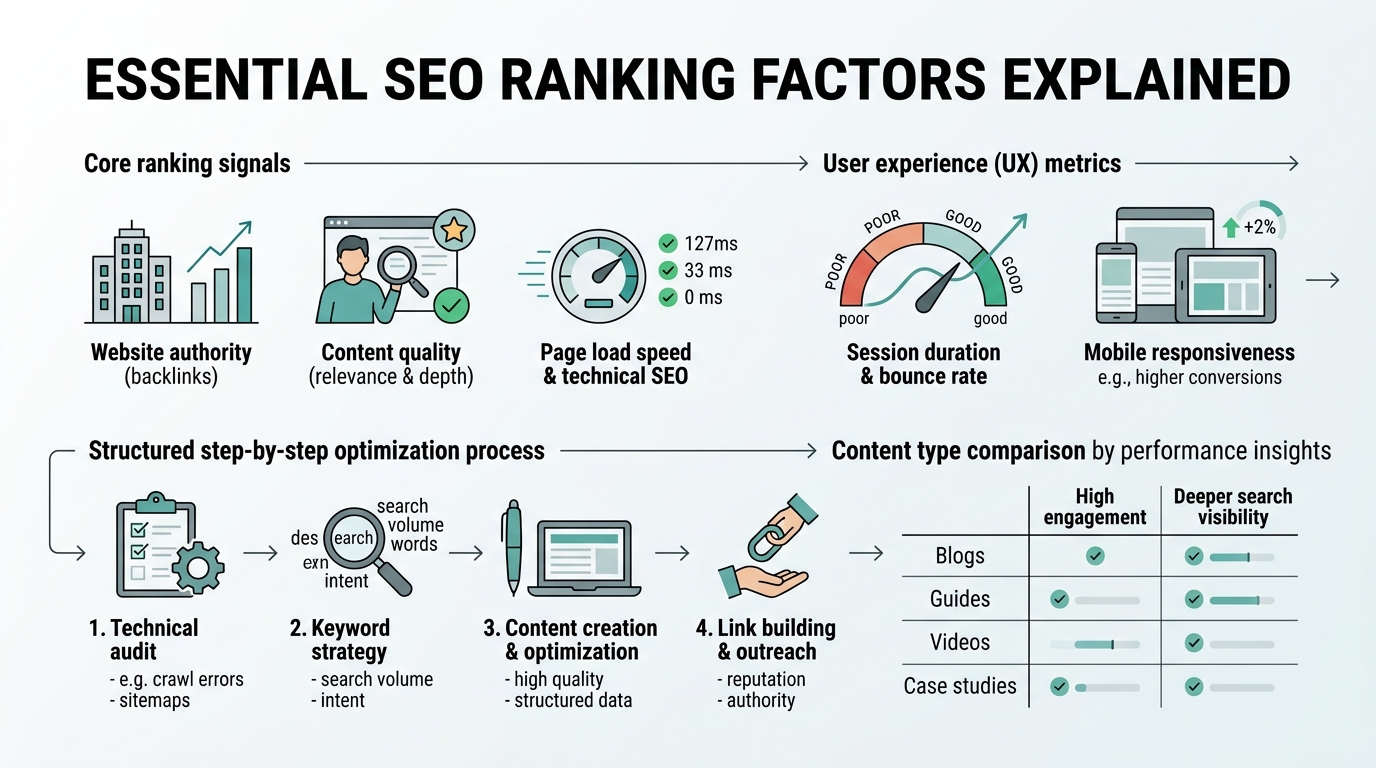
How Has Google's Algorithm Evolved to Prioritize Content Quality and E-E-A-T?
For a decade, Google treated content quality as important but secondary to backlinks. That era ended in March 2024. The March 2024 Core Update integrated the Helpful Content System directly into the core ranking algorithm and reduced low-quality content visibility by 45%. Then, Google introduced three new spam policies: scaled content abuse (mass AI-generated content without human oversight), site reputation abuse (third-party spam on trusted domains), and expired domain abuse (flipping old domains for quick ranking). Sites that failed this test experienced mass de-indexing. Those with real expertise thrived.
In December 2025, Google doubled down. The update prioritized Experience, Expertise, Authoritativeness, and Trustworthiness (E-E-A-T) with unprecedented weight, particularly in health and finance verticals (67% and 52% of affected sites saw major volatility).
What this means in practice:
- Author Credibility: Bylines with real credentials and author bios linking to professional profiles now carry ranking weight; faceless content underperforms.
- First-Hand Experience: Content based on direct experience (tested products, case studies, original research) outranks secondhand compilation of existing sources.
- Third-Party Validation: Testimonials, certifications, awards, and media mentions function as trust signals; sites without external credibility markers are deprioritized.
- Content Freshness & Accuracy: Demonstrably updated content with corrected facts ranks higher; stale or factually incorrect content gets buried.
For most content teams, this creates a real problem: producing multiple long-form articles weekly with verified expertise and fresh research requires resources most scaling companies don't have. Manual SEO content production can't keep pace. That's why automated content systems that maintain research depth and fact-checking—not just AI generated filler—have become essential for competitive SEO.
What Role Do Core Web Vitals Play in SEO Rankings?
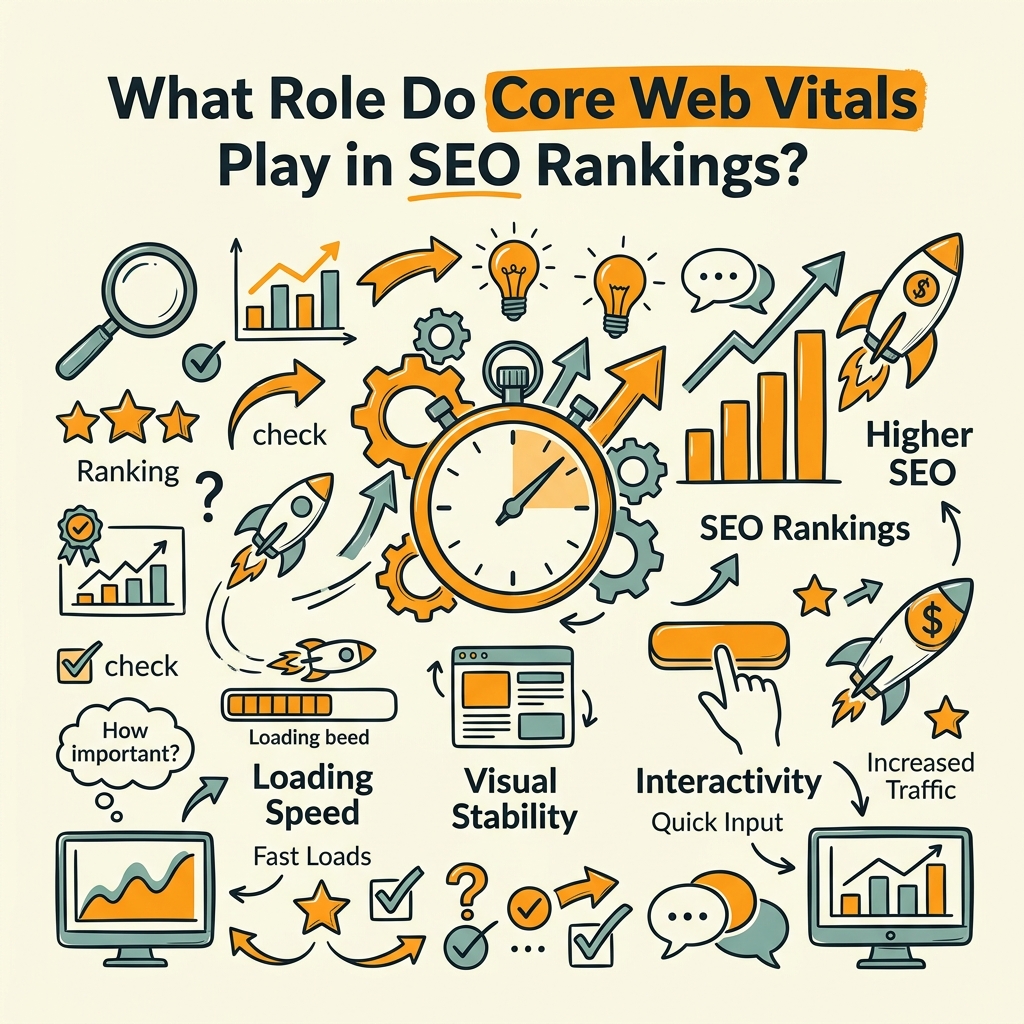
Core Web Vitals measure three user experience signals: Largest Contentful Paint (LCP, how fast the main content loads), First Input Delay (FID, how responsive the page is to interaction), and Cumulative Layout Shift (CLS, visual stability). Google made these official ranking factors in 2021. By 2025, compliance had become mandatory for competitive rankings. Current data shows only 47-54% of websites meet all Core Web Vitals thresholds, and sites improving from "Poor" to "Good" report 25% conversion rate increases.
The technical requirements are specific and non-negotiable. Meeting all three Core Web Vitals thresholds is now a prerequisite for competitive rankings in most industries.
The technical requirements are:
- LCP under 2.5 seconds: Users expect the page's main content visible almost instantly; slower loads trigger bounce.
- FID under 100 milliseconds: Clicks, taps, and keyboard interactions must feel immediate; sluggish responsiveness damages user experience metrics that Google monitors.
- CLS under 0.1: Elements shouldn't suddenly shift after the user starts interacting; unexpected layout changes cause accidental clicks and frustration.
Most sites miss one of these three. Image optimization, lazy loading, reducing render-blocking JavaScript, and leveraging browser caching address the majority of violations. However, for teams managing high-traffic sites or rapid content publishing, maintaining Core Web Vitals compliance across dozens of new pages weekly becomes a scaling problem without automation and monitoring infrastructure.
Why Are Backlinks and Domain Authority Still Critical Ranking Factors?
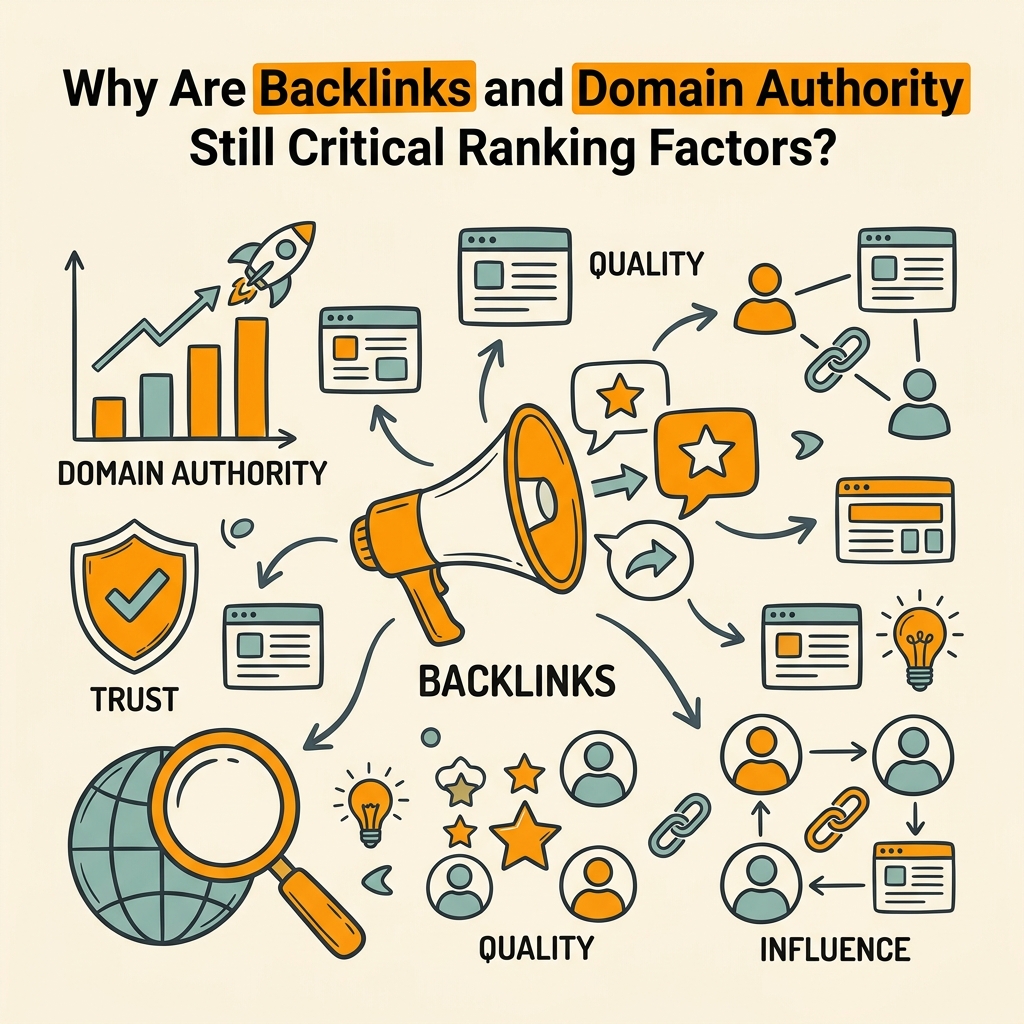
Backlinks remain the second-strongest ranking signal after content quality. A backlink signals external validation: another site found your content valuable enough to reference it. However, not all backlinks carry equal weight. Topically relevant links from authoritative domains outrank spammy backlinks 100-to-1. Quality, not quantity, now dominates.
Domain authority itself is a composite score reflecting the cumulative quality and quantity of backlinks pointing to your domain. Domains with higher authority see their new content rank faster and rank higher for competitive queries.
Building authority requires:
- Original Research & Data: Publishing studies, surveys, and proprietary insights attracts high-quality backlinks naturally; competitors link to valuable original work.
- Skyscraper Content: Creating significantly better versions of existing top-ranked content attracts links as people share and reference the superior resource.
- Strategic Partnerships & PR: Industry collaborations, expert interviews, and press coverage generate authoritative backlinks from trusted publications.
- Internal Linking Architecture: Strategic internal links consolidate authority to pillar pages and distribute relevance across topic clusters, improving the entire domain's topical authority.
For scaling content operations, the challenge is clear: producing 1-5 articles daily with original research, proper sourcing, and internal link strategy requires coordination between research, writing, and publishing teams. Manual internal linking workflows become the bottleneck. Automation platforms that map internal link opportunities across content clusters solve this at scale.
How Do On-Page SEO Factors Impact Your Rankings?
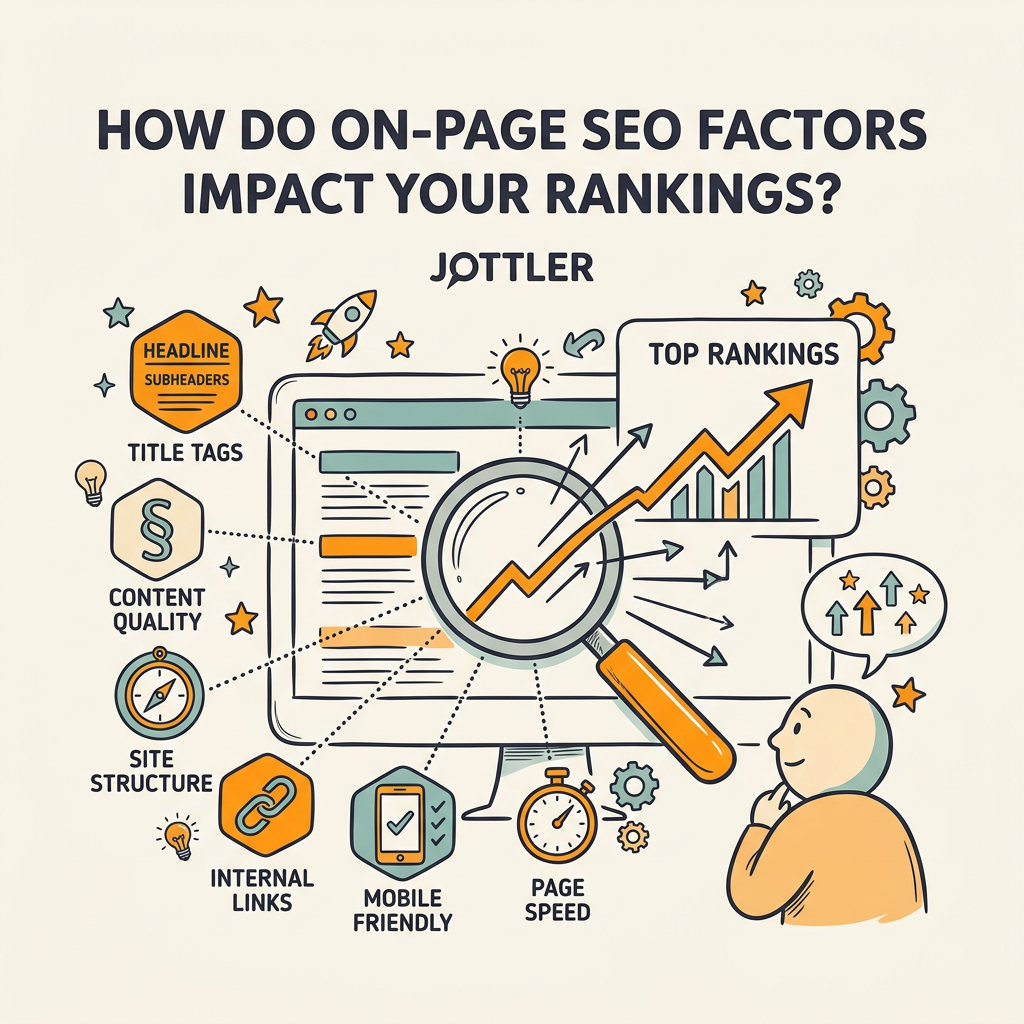
On-page factors remain the most controllable ranking signals. Unlike backlinks (which require external validation) or brand authority (which takes years to build), on-page optimization can be fixed immediately. The key factors include:
Title Tags and Meta Descriptions
Your title tag is the first signal to both users and Google about what the page contains. Pages with keyword-aligned title tags that match search intent rank 20-30% higher than keyword-less titles. The meta description doesn't directly impact rankings but heavily influences click-through rate from search results. A compelling meta description can increase CTR by 10-15%, driving more organic traffic to the same ranking position.
Heading Structure and Keyword Relevance
Google uses heading hierarchy (H1, H2, H3) to understand page structure and topic relevance. The H1 should clearly state the page's main topic. H2 and H3 subheadings should address related subtopics and answer related questions users search for. This structure helps Google understand topical depth and improves your chances of ranking for featured snippets and People Also Ask features, which now account for 30-40% of search visibility.
Content Length and Keyword Density
Comprehensive content ranks higher. Pages ranking in top 10 average 2,000-3,000 words for competitive keywords. However, length without relevance backfires; keyword density should remain 0.5-2% (roughly 10-20 uses of the primary keyword in a 2,000-word article). Overoptimization triggers algorithmic penalties.
Image Optimization and Alt Text
Images break up content, improve engagement, and provide ranking signals. Each image needs descriptive alt text for both accessibility and SEO; Google uses alt text to understand image relevance. Images also function as ranking signals for visual search (Google Images) and help your content appear in rich results.
| On-Page Factor | Impact on Rankings | Implementation Effort | Competitive Advantage |
|---|---|---|---|
| Title Tag (keyword-aligned) | 20-30% higher rankings | 5 minutes per page | High—most competitors skip optimization |
| Heading Structure (H1-H3) | 15-25% higher rankings | 10 minutes per page | High—clear structure signals expertise |
| Content Length (2,000+ words) | 30-40% higher rankings | 2-4 hours per article | Very High—separates quality from filler |
| Internal Links (strategic placement) | 20-35% cumulative authority gain | 15 minutes per article | High—builds topical authority across domain |
| Image Optimization (alt text, captions) | 10-15% visibility in image search | 5 minutes per image | Medium—niche but consistent traffic source |
For teams publishing 3-5 articles weekly, on-page optimization must be systematic. Manual optimization becomes a significant time sink without process automation. Strategic platforms that auto-generate optimized title tags, meta descriptions, and internal link suggestions save 10+ hours per week while ensuring consistency.
How Does Your Domain Structure Influence SEO Performance?
Domain-level factors affect how Google treats your entire site. The primary domain, subdomain structure, and topical architecture all influence crawl efficiency and authority distribution.
Topical Authority and Topic Clustering
Google rewards sites with deep, comprehensive coverage of specific topics. A site with 50 articles on "SEO automation tools" ranks higher than a generalist site with 200 shallow articles across 100 topics. Building topical authority requires organizing content into clusters: a pillar page (comprehensive overview) surrounded by cluster content (detailed subtopics), all internally linked to consolidate authority.
Site Speed and Server Performance
Page load speed influences both rankings and user experience. Sites hosted on fast servers, leveraging CDNs, and optimizing assets load 2-3 seconds faster than poorly optimized sites. This 2-second difference translates to measurable ranking improvements and 10-15% higher conversion rates.
Mobile-First Indexing
Google indexes the mobile version of your site first, regardless of desktop performance. Responsive design is mandatory. Approximately 67% of all Google queries now come from mobile devices, making mobile optimization non-negotiable. Sites with poor mobile experience experience 30-50% ranking penalties on mobile queries.
What Is the Impact of AI Overviews on Traditional SEO Strategy?
AI Overviews appeared in 24.6% of Google search queries in 2025, with that percentage rising. These AI-generated answers summarize top-ranking results directly in the search results page, eliminating the need for users to click to any website. This created a new challenge: 61% drop in organic click-through rates for queries with AI Overviews.
There is critical good news: 97% of AI Overview citations come from pages already ranking in the top 20 organic results. This means traditional SEO isn't being replaced—it's becoming the prerequisite for AI visibility. The ranking game hasn't changed; the stakes have raised.
To appear in an AI Overview, you must first rank organically top 20, which requires all the fundamentals covered above: content quality, technical excellence, backlinks, and on-page optimization. In fact, SEO teams focused on quality, authoritative content benefited from AI Overviews because Google preferentially cited comprehensive, well-researched sources. Faceless content and AI-generated spam got filtered out even faster.
Conclusion
The essential SEO ranking factors in 2026 distill to five core pillars: content quality and E-E-A-T signals (40-50% of ranking power), technical performance and Core Web Vitals (20-30%), backlinks and domain authority (20-30%), on-page optimization (10-15%), and domain structure and topical authority (5-10%). March 2024 and December 2025 Core Updates eliminated the viability of low-effort, AI-generated content at scale, while 97% of AI Overview citations originate from top 20 organic results, proving that traditional SEO fundamentals remain the foundation for all search visibility.
For busy founders and marketing teams, the real challenge isn't understanding these factors—it's executing them consistently across 3-5 articles weekly without burning out your team. Manual content research, writing, optimization, and publishing takes 20-30 hours per article. That's 100-150 hours weekly for a competitive publishing cadence. Automation and systematic processes are essential to achieve compounding organic traffic growth at sustainable scale.
FAQs
What is the most important SEO ranking factor?
Content quality and E-E-A-T (Experience, Expertise, Authoritativeness, Trustworthiness) now account for 40-50% of ranking power following Google's December 2025 Core Update. This means demonstrating genuine expertise, publishing original research, and building third-party credibility through reviews, certifications, and media mentions outweigh almost every other factor. Faceless, AI-generated content without author credibility and first-hand experience is actively deprioritized by Google's algorithm. Backlinks remain the second-most important factor, while technical performance (Core Web Vitals) ranks third. Quality content with author credibility and original insights consistently outranks well-optimized but generic alternatives.
How many ranking factors does Google use?
Google's algorithm evaluates over 260 ranking signals to determine where pages rank in search results. However, research and algorithm analysis indicate that roughly 5-7 core factors account for 80-90% of ranking power: content quality, E-E-A-T, backlinks, Core Web Vitals, on-page optimization, domain authority, and topical authority. The remaining 250+ factors are secondary refinements that matter in edge cases or competitive scenarios. Most teams achieve 80% of possible organic visibility by mastering just these core factors consistently. The additional complexity yields diminishing returns for most businesses.
How long does it take to rank for competitive SEO keywords?
Typical ranking timelines depend on keyword difficulty and domain authority. Low-competition keywords (volume under 100, no ranking competitors) typically rank within 2-4 weeks if content quality and on-page optimization are solid. Medium-difficulty keywords rank in 2-3 months with consistent effort. High-difficulty, competitive keywords require 6-12 months of sustained backlink building and topical authority development. The fastest path to rankings is consistent publishing of high-quality, well-researched content with strategic internal linking, which compounds authority over time. Expecting top 3 rankings for competitive terms in under 3-4 months is unrealistic unless the domain already has substantial authority. Patience and consistency, not shortcuts, determine lasting SEO success.