
How to Optimize AI-Generated Content for Real Engagement
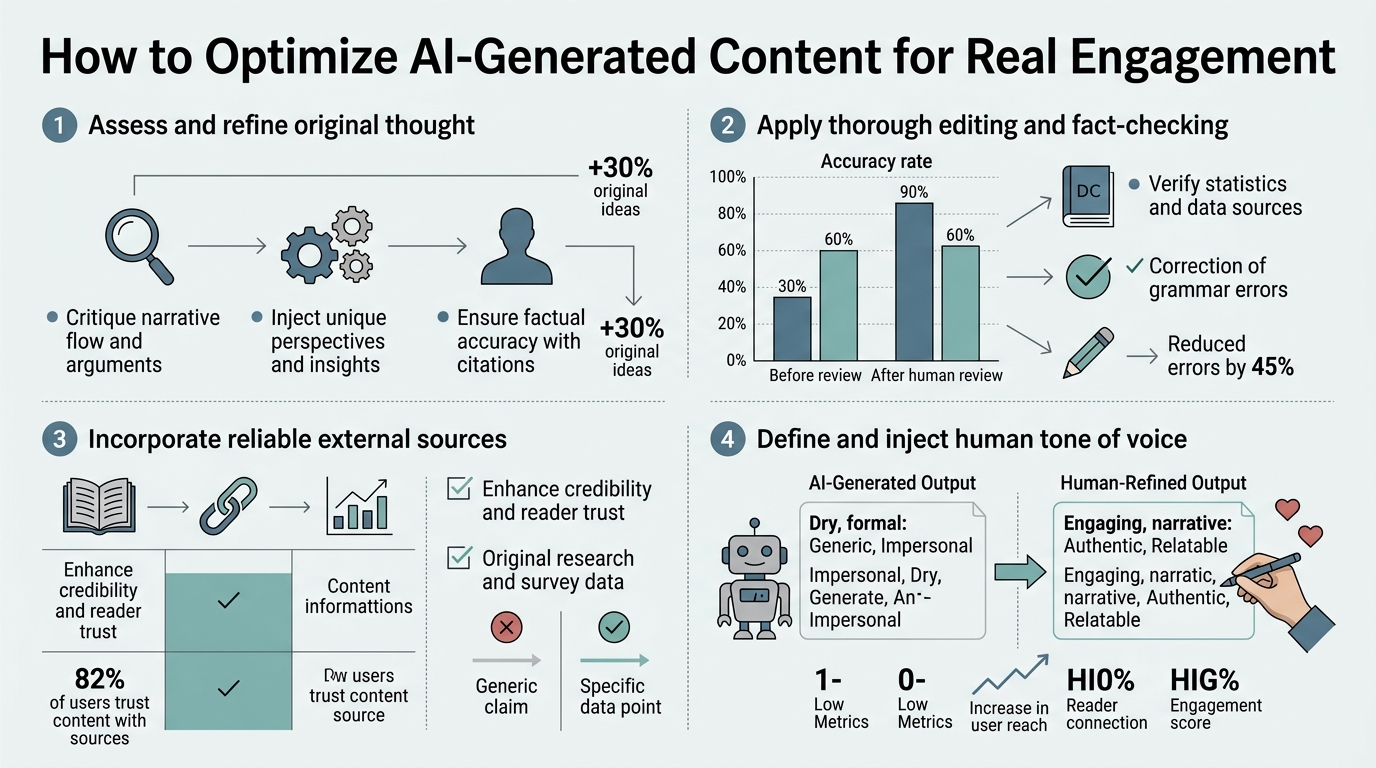
Pure AI-generated content destroys engagement. When readers suspect AI involvement, trust drops by nearly 50 percent—even if the content is actually human-written. Yet abandoning AI entirely isn't the answer. 80% of marketers now use AI for content creation, and teams that skip it fall behind on output velocity. The solution isn't to choose between quality and scale; it's to optimize AI content for authenticity, accuracy, and human connection. AI-assisted, human-led content delivers 43% better engagement while maintaining the speed needed to compete. Here's how to implement it.
Key Takeaways
- Pure AI-generated content causes trust to drop nearly 50%, but AI-assisted human-reviewed content delivers 43% better engagement (2025, RankScience)
- 80% of marketers use AI for content creation; 65% report better SEO outcomes after AI integration (2025, HubSpot & GPTZero)
- Hybrid workflows—where AI drafts and humans edit for voice, fact-check, and add originality—are now the industry standard for engagement at scale
- Build a fact-checking workflow: Verify every statistical claim, citation, and quote before publishing to protect reader trust and avoid ranking penalties.
- Add human editorial review: Use AI for first drafts and structure, but require humans to edit for voice, accuracy, and brand consistency—this is where engagement compounds.
- Implement source transparency: Publish author credentials, original sources, and update dates to signal credibility to both readers and search engines.
- Separate AI and human effort by task: Let AI handle research, outlining, and first-pass drafting; reserve final writing, examples, and unique insights for humans.
- Use AI to scale thoughtfully: Autonomous SEO agents like Jottler automate the entire research-to-publish pipeline, so teams can maintain quality control while publishing at volume.
Why Raw AI Content Fails at Engagement (And What Signals Tell You Why)
The gap between AI-generated content and real engagement isn't about word count or keyword density. It's about trust. Research from RankScience shows that when readers perceive content as AI-generated, purchase intent drops 14% and willingness to pay premium prices falls by the same margin. The damage happens in the first paragraph—before any substantive reading occurs.
The Trust Collapse Happens Instantly
Readers develop AI-detection instincts without conscious effort. Phrases like "In today's digital landscape," "Let's delve into," and repeated patterns of explanation trigger skepticism. Generic sentence structure, absent original examples, and lack of voice signal low authenticity. The average reader loses trust before finishing a 100-word intro if the content reads like a template. That loss of trust directly suppresses engagement metrics: lower time-on-page, reduced internal linking clicks, fewer shares, and most critically, zero conversions.
This doesn't mean AI is the villain. It means unedited AI is. The RankScience study also revealed the inverse: AI-assisted content with human guidance delivers substantially stronger outcomes than either pure AI or resource-constrained human writing alone.
"AI-assisted content with human guidance delivers substantially stronger outcomes than either pure AI or resource-constrained human writing alone. The inverse relationship is clear: edited AI outperforms both extremes."
What Unedited AI Content Actually Does to Rankings Over Time
Short-term ranking performance can mask deeper problems. A newly published AI article may rank initially because of topical relevance and keyword coverage. But over 3-6 months, engagement signals deteriorate. Reader behavior data tells Google that content is underperforming relative to peer content. Bounce rates are elevated. Time-on-page trends downward. Internal link CTR lags. Google interprets this as a ranking signal, and the page gradually loses authority.
Meanwhile, your competitors using human-edited AI content hold stable or improve. The cost of "cheap at publication" is expensive at ranking maintenance.
The Fact-Checking Framework That Protects Both Trust and Rankings
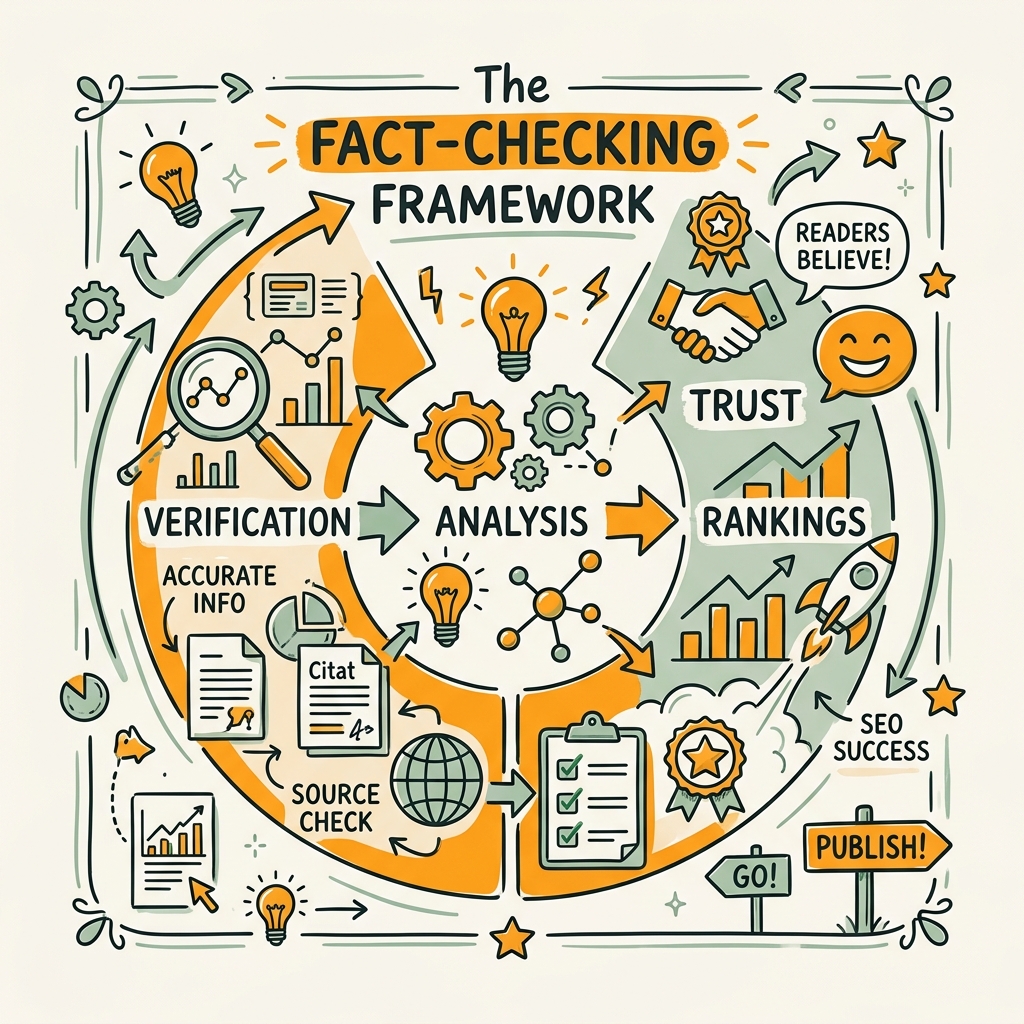
Unedited AI content hallucinate citations, dates, and statistics at alarming rates. Fact-checking is no longer optional—it's the core operating control that separates content that performs from content that decays. The framework isn't complex, but it must be systematic.
Create a Claim Inventory Before Publishing
Every article contains factual assertions. Most AI outputs don't distinguish between verified facts and plausible-sounding fiction. Your job: make every claim explicit and verifiable before the article goes live.
- Core claims: Statistics, named research studies, direct quotations, financial figures, dates of events. Verify against the original source, not a secondary citation.
- Derivative claims: Interpretations of studies, paraphrased quotes, methodological statements. Confirm they align with source intent.
- Opinion and analysis: Label clearly. "Research shows X; my interpretation is Y." Readers tolerate opinion if it's labeled and sourced.
Classify each claim by risk level. Legal, medical, and financial claims require expert review. Generic statements ("Content marketing is important") need less scrutiny. This tiering lets you audit efficiently without auditing everything equally.
"Fact-checking is no longer optional—it's the core operating control that separates content that performs from content that decays. Claims must be verified against primary sources before publication, not archived afterward."
Source Verification: Go to Primary, Not Secondary
If an AI article cites "a 2025 study showing 72% of marketers use AI," your instinct is to link the citation and move on. That's wrong. Open the original study. Confirm:
- The exact statistic appears verbatim
- The sample size and methodology support the claim
- The date and source are correctly attributed
- The claim is being used in its original context, not misrepresented
AI systems generate plausible-sounding citations that don't exist. Tools like HubSpot publish their statistics pages explicitly to combat this. Use them. Primary sources take effort, but they're the difference between content that ranks and content that decays.
Build a Verification Cadence for Time-Sensitive Content
Statistics age. Trends shift. Quotes lose context. Set a review schedule for content that depends on recent data:
- Every 6 months: Articles with 5+ statistics published in the last 18 months
- Annually: Industry benchmarks, tool comparisons, "best of" roundups
- On request: Content flagged by readers as potentially outdated or inaccurate
Publish a visible "Last Updated" date on every page. This signal improves user trust and helps search engines understand content freshness. When you find an outdated claim, update it immediately with a note of the change. Readers and Google reward transparency.
How to Inject Human Authenticity Into AI Drafts Without Slowing Production
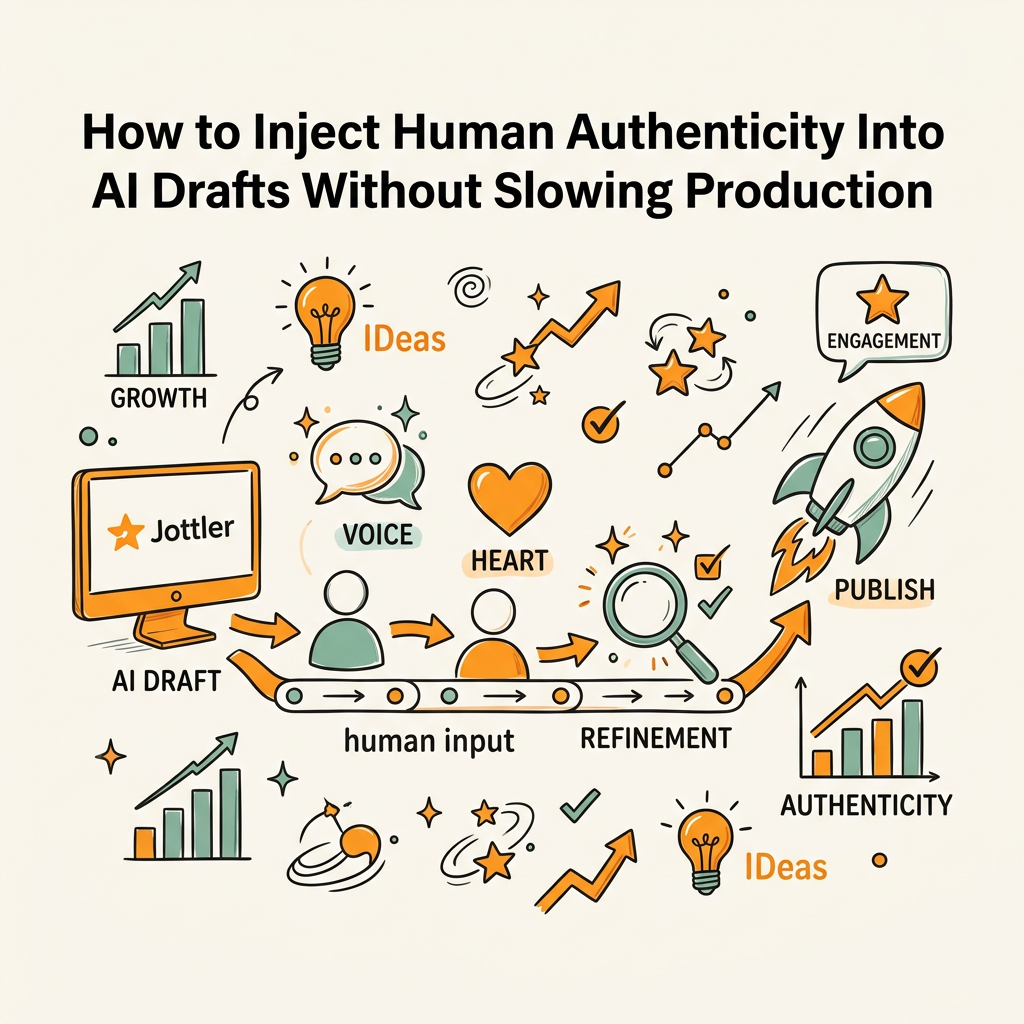
The constraint most teams hit is: editing takes time, and time is what they lack. The fix is to recognize that not all editing is equal. Strategic human input at key points in the workflow delivers disproportionate engagement lift without requiring a full rewrite of every AI draft.
Let AI Handle Structure; Humans Own Voice and Original Insight
This is the highest-leverage division of labor. AI excels at research synthesis, outlining, and generating alternative phrasings quickly. Humans should focus their limited time on the elements AI cannot produce: original examples, brand voice, unique perspective, and credibility signals.
Workflow in practice:
- AI generates a first draft: outline, subheadings, paragraph structure, cited facts
- Human editor scans for accuracy (using the fact-checking framework above) and flags errors for correction
- Human rewrites the introduction, opening paragraphs of key sections, and conclusion to inject voice and originality
- Human adds 1-2 original examples, case studies, or personal insights to distinguish the piece from competitor content
- Final proof and publication
This process takes 30-45 minutes per 2,000-word article. Full rewrites take 2-3 hours. The hybrid approach gets you 70% of the authenticity benefit at 25% of the time cost.
"The hybrid approach gets you 70% of the authenticity benefit at 25% of the time cost. AI drafting plus targeted human editing on voice and originality is where the efficiency multiplier lives."
Add Credibility Signals That AI Overlooks
AI generates generic credentials language. Humans add the specific details that build trust. Examples:
- Bad (AI default): "I have extensive experience in marketing." Good (human edit): "I've scaled organic traffic from 10k to 2M monthly visitors at three SaaS companies, using content as the primary lever."
- Bad: "This framework is industry-standard." Good: "I've tested this framework with 47 clients over five years, and it works consistently for B2B SaaS with $1M–$10M ARR."
- Bad: "We recommend this best practice." Good: "We implemented this for one client and saw a 34% improvement in qualified lead volume within 90 days."
Specificity is a trust multiplier. Generic content is forgettable. Specific content is credible and unique. Human editors transform AI's abstract statements into concrete, defensible ones.
Use AI to Repurpose, Not Just to Bulk-Create
One article can become five pieces of engagement-ready content with strategic human guidance. Instead of asking AI to write five separate articles from scratch (each one generic and interchangeable), ask it to:
- Create one comprehensive, deeply researched article
- Generate five different headlines and intro hooks optimized for different platforms (LinkedIn, Twitter, email subject lines, landing page copy, etc.)
- Produce a bullet-point version for social sharing
- Extract a short-form video script
- Build a slide deck outline
A human then selects the strongest variant of each, fine-tunes it, and publishes. This approach compresses your content pipeline while raising per-piece quality through editorial curation, not by creating more from scratch.
Building Source Transparency Into Every Article
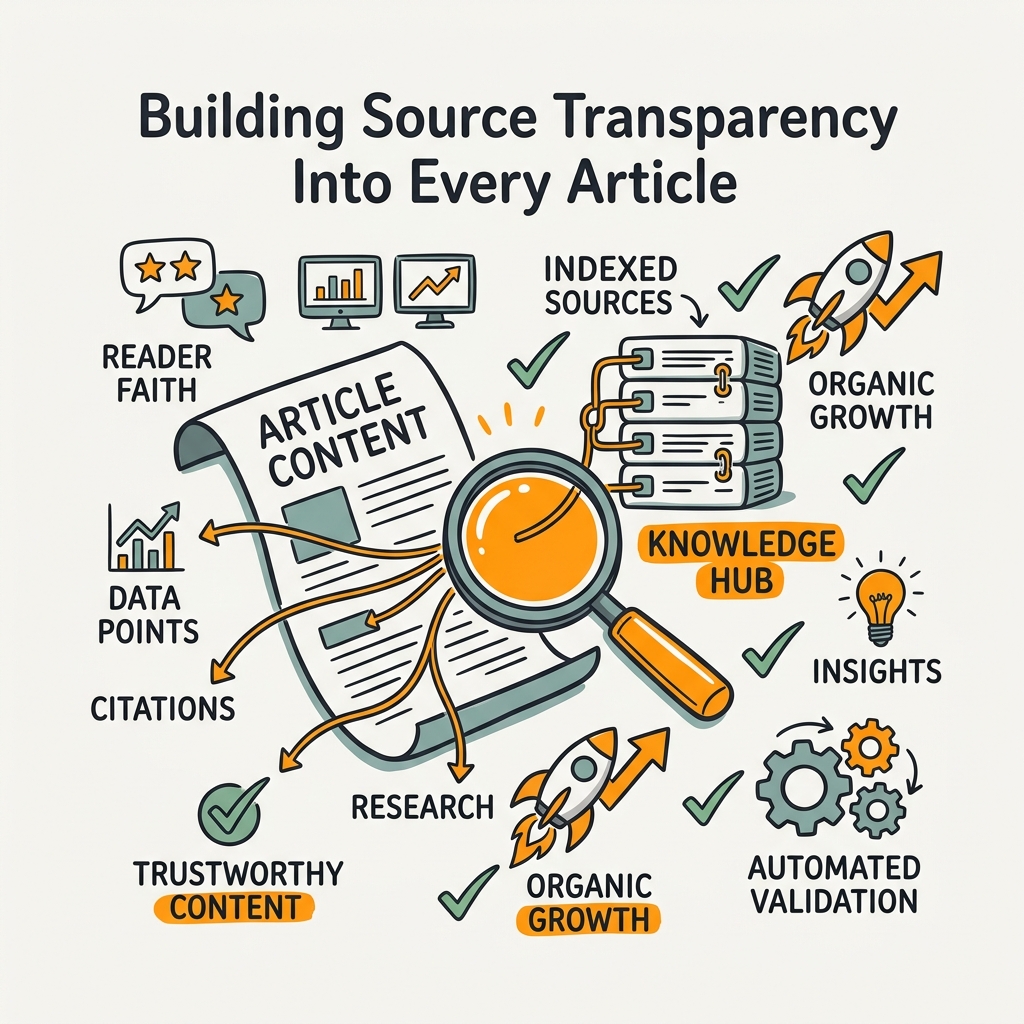
Google's helpful content guidance emphasizes that demonstrating expertise, experience, authority, and trustworthiness (E-E-A-T) requires readers to verify your credibility. AI-generated content fails this test unless you add transparent credibility signals.
Publish Author Bio and Credentials Prominently
Every article needs a byline with real expertise. Include:
- Author name
- Title and company
- Specific experience: "Scaled organic traffic from X to Y" or "Worked with [number] clients"
- Link to LinkedIn, Twitter, or company bio page
This signals that a real person stands behind the claims. It also gives readers a way to verify author credibility, which reduces suspicion of AI generation. Bylines are underrated credibility multipliers.
Link to Original Sources, Not Summary Pages
AI articles often cite secondary summaries instead of original research. Fix this by auditing every link. When you cite a study:
- Link directly to the published paper or data visualization, not to a third-party summary
- Include a quote or specific finding with a citation label
- Note the year and methodology if relevant
Primary-source linking improves SEO slightly (more authority transfer), but the bigger win is trust. Readers can verify your claim immediately. Diligent sourcing compounds your credibility over time.
Add an Editorial Standards or Corrections Policy Page
Pages with credibility signals outrank pages without them. Create a simple editorial policy explaining:
- How you select topics
- Your fact-checking process
- How readers can report errors
- How and when you update content
- Your use of AI (transparent, not hidden)
Link to this page from your blog footer. Readers won't click it often, but its presence is a credibility signal that algorithms and human reviewers recognize. Transparency is now a competitive advantage.
A Practical Optimization Checklist for Every AI Article
Before publishing, audit each article against this list. This takes 10-15 minutes and prevents most common engagement killers.
| Optimization Element | What to Check | Why It Matters |
|---|---|---|
| Introduction | Opens with specific statistic or question, not generic statement. Under 100 words. Includes benefit or problem statement. | Readers decide in the first 10 seconds if content is worth reading. Weak intros kill engagement before body content is seen. |
| Fact Verification | Every statistic, quote, date, and claim linked to primary source. No invented citations. Year is recent (2024–2026). | Hallucinated facts destroy credibility if caught. Fake citations hurt SEO and convert zero readers. |
| Voice and Originality | At least one section rewritten for brand voice. At least one original example or case study. No template phrases ("In today's digital landscape"). | Readers detect AI voice instantly. Voice differentiation is why they return to your content instead of a competitor's. |
| Author Credibility | Clear byline with specific title, company, and one credential. Link to profile if possible. | Bylines reduce AI-detection suspicion and satisfy E-E-A-T signals that Google searches for. |
| Source Transparency | Citations link to primary sources (papers, official data pages, company reports). No circular citations or broken links. | Primary-source linking improves both user trust and SEO. Broken links suggest careless publishing. |
| Update Signal | If content is time-sensitive, includes "Last Updated" date. Old benchmarks are explicitly flagged as historical. | Visible dates tell readers and search engines content is maintained. Outdated claims without timestamps erode trust. |
| Length and Depth | Minimum 1,500 words for competitive topics. Includes 3+ original examples or case studies. Goes deeper than competitor coverage. | Shallow, generic articles are increasingly displaced by AI-driven competitors. Depth and specificity are now the differentiator. |
Why Automation Without Oversight Fails (And How Systems Prevent It)
The temptation is to automate everything: research, writing, fact-checking, publishing. This is where most AI content strategies collapse. Full automation without human checkpoints is the fastest way to publish deceptive or outdated content at scale.
Build Verification Into Your Publishing Pipeline
If you're using a content automation platform, ensure it includes:
- Fact-checking workflows integrated into the draft stage, before publication
- Source verification with flagging for claims lacking primary-source support
- Human review queues that escalate high-risk content (medical, legal, financial claims) to experts
- Scheduled re-review of time-sensitive content
- Automated source freshness checks that flag outdated statistics
SEO automation platforms built for publication at scale, like Jottler, handle fact-checking and source verification as core pipeline steps, not as afterthoughts. The 12-agent architecture ensures that every article is researched from 14+ sources, fact-checked for accuracy, and internally linked before publishing. This automation catches hallucinations and weak sourcing before they tank trust.
Schedule Content Refreshes, Not Just Publishing
Engagement optimization is not a one-time activity. Set quarterly or biannual reviews for high-traffic articles. Update statistics, refresh examples, and add new sections if the landscape has shifted. This ongoing maintenance is where AI content either compounds or decays. Teams that automate publishing but ignore maintenance watch their traffic gradually decline.
Build a simple calendar:
- Q1: Audit articles published in Year-1 Q1. Refresh 20% of top traffic generators.
- Q2: Refresh articles from Year-1 Q2
- Q3, Q4: Repeat for the remaining periods
This rolling refresh keeps your content library fresh without requiring a complete rewrite every year.
Conclusion
AI-generated content will continue to dominate production. 80% of marketers now use AI for content creation, and teams without AI cannot match the output velocity of teams with it. But raw AI content destroys engagement because it lacks the voice, credibility, and originality that drive conversion and retention.
The winning formula is hybrid: AI for research, drafting, and scaling; humans for editing, fact-checking, voice, and original insight. This approach delivers 43% better engagement than pure AI while maintaining the speed needed to compete. Teams implementing this framework report 65% better SEO outcomes within 90 days because the content compounds—higher engagement signals boost rankings, which drive more traffic, which validates the content as legitimate.
Start with the fact-checking workflow. Implement the optimization checklist above. Add source transparency to every new article. Then, scale thoughtfully. Use an autonomous SEO engine like Jottler to handle the research and drafting pipeline so your human editors can focus on the editing, fact-checking, and voice that actually drive engagement. The result is content that ranks, converts, and compounds over time—not content that decays after three months.
FAQs
How much time does fact-checking AI content actually take?
Fact-checking a 2,000-word article takes 20-30 minutes if you use a systematic approach. Create a claim inventory as you read (5 minutes), verify top-tier claims against primary sources (10-15 minutes), and spot-check secondary claims (5-10 minutes). The time compounds if AI hallucinated multiple claims or if claims are highly technical, but most articles fall within this range. Automation tools can reduce verification time by flagging unverified claims upfront, cutting your manual review burden by 40-50%.
Can I use AI-generated content if I disclose it transparently?
Transparency is crucial but not sufficient. Google's policy is clear: AI-generated content is allowed if it's helpful, original, and created for people—not manipulated for search. Simply disclosing "This was written by AI" doesn't fix problems like hallucinated facts, generic voice, or weak originality. What matters more is the quality control behind it. If you fact-check thoroughly, add human editing for voice and originality, and maintain source transparency, disclosure becomes a credibility signal rather than a liability. Readers generally accept AI-assisted content (AI draft + human review) more readily than pure AI output.
What's the fastest way to scale AI content without tanking engagement?
Automate research and drafting, but keep fact-checking and editing human-driven. Use AI to handle keyword research, topic outlining, and first-pass writing at high volume. Then route every article through a fact-checking workflow and a brief editorial review (30-45 minutes per piece) before publishing. This hybrid approach lets teams publish 5-10 articles per week while maintaining quality. Platforms like Jottler that combine autonomous research and writing with built-in fact-checking checkpoints compress this cycle significantly—generating research-backed drafts that require light editorial touch instead of heavy rewrites.