Implementing Marketing Automation Without Losing Personal Touch
81% of consumers expect personalized interactions, yet 84% switch brands after just one impersonal experience. The tension is real: scale your marketing or maintain authentic relationships. The problem? Most automation tools treat personalization as a checkbox feature, not a core philosophy. Yet the data shows the opposite path works. Brands that blend automation with genuine personalization achieve 4.5x higher customer lifetime value and 68% lower churn. Here's how to implement marketing automation effectively without sacrificing the human connection that builds loyalty.
Key Takeaways
- 81% of consumers expect personalized interactions; 84% switch brands after one impersonal experience (Adobe, 2026)
- AI-powered personalization reduces customer acquisition costs by 63% while extending lifetime value by 31% (Accenture, 2026)
- Behavioral trigger emails see 405x higher conversions than broadcast messages (MoEngage, 2025)
- Unified Customer Data: A single source of truth enables relevant, contextual messages at scale without feeling generic.
- Behavioral Segmentation: Divide audiences by intent and action, not just demographics, for messaging that truly resonates.
- Automated Workflows with Personal Triggers: Use behavioral signals to deploy timely, relevant content that feels hand-crafted.
- Content Personalization at Scale: Tailor subject lines, product recommendations, and calls-to-action dynamically based on user history.
- Human Oversight and Refinement: Build in checkpoints where teams review and refine automation rules to maintain brand voice.
Why Automation Fails Without Personalization Strategy
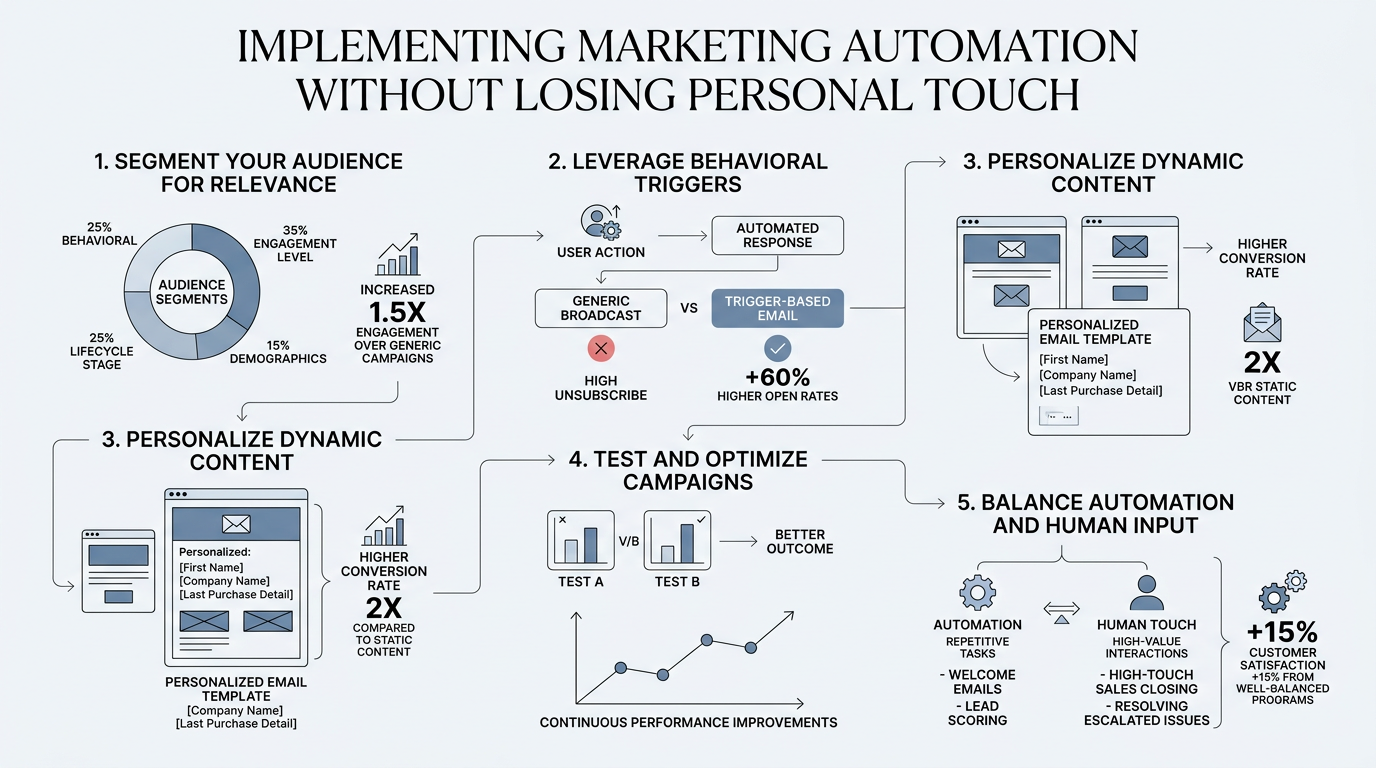
Most companies implement marketing automation backward. They start with the tool, build the workflows, and hope personalization follows. What actually happens: generic campaigns at scale. The fix isn't choosing a different platform—it's understanding that automation and personalization are not opposing forces. They're complementary. Research shows that only 54% of consumers agree that brands personalize well, even though 84% of marketing teams claim they do. That gap reveals the truth: many companies have automation without intentional personalization logic built in.
"The strongest automation feels so relevant it doesn't feel automated at all. Most companies miss this because they confuse efficiency with effectiveness. A template-based email sequence that doesn't adapt based on customer behavior feels automated. One that adjusts subject lines, content blocks, and send times based on individual preferences feels personalized." — Marketing Automation Strategist
The False Choice Between Speed and Relevance
Founders and marketing teams face a false binary: either send fewer, manually crafted messages, or send many generic ones. Automation is portrayed as the villain—a necessary evil that trades authenticity for volume. In reality, automation is a lever. Used correctly, it amplifies personal touch at scale. The issue is most automation platforms are designed for efficiency first, not relationship building. A template-based email sequence that doesn't adapt based on customer behavior feels automated. One that adjusts subject lines, content blocks, and send times based on individual preferences feels personalized. This distinction is where most content marketing automation systems miss the mark.
Why Generic Automation Triggers Churn
When customers receive the same message as thousands of others—or worse, get irrelevant messages because segmentation was too broad—they perceive the company as careless. 84% of consumers switch brands after impersonal experiences. This isn't because automation exists. It's because automation was deployed without intent. A customer who abandoned a specific product shouldn't get a generic "we miss you" email. They should get a message about that product, addressing their specific concern, perhaps with a lower price or a case study from a similar customer. That level of relevance requires automation AND personalization logic working together.
Build a Unified Customer Data Foundation
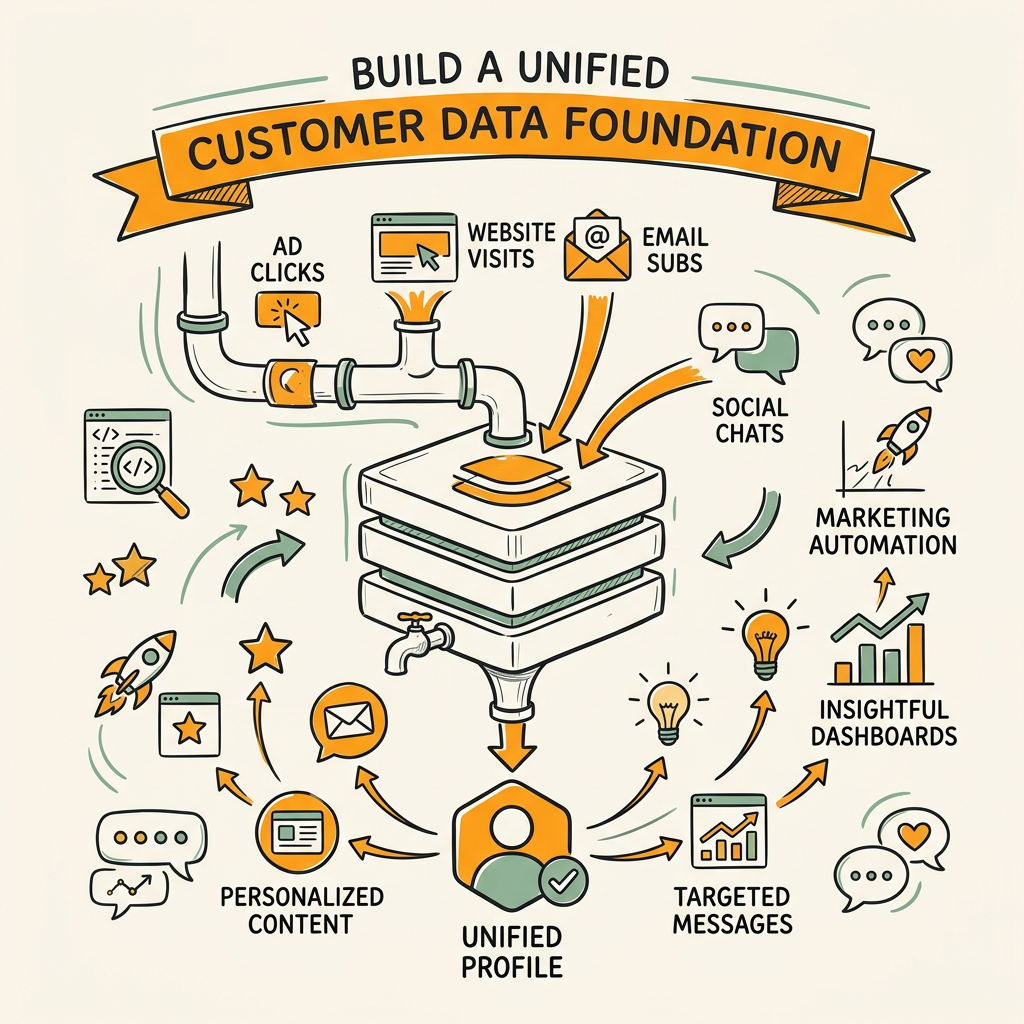
Personalized automation lives or dies on data quality. Without a single source of truth about who your customers are and what they've done, every automation rule is a guess. Teams using unified customer data platforms see 41% higher click-through rates from behavioral triggers compared to broadcast sends. The reason: context. When your automation system knows that a user visited the pricing page twice, abandoned a cart, and opened every educational email you sent, the next message can be hyper-relevant. Without that data unified, you're sending in the dark.
"When a customer opens an email, visits your pricing page, and starts a free trial all within 48 hours, that sequence is visible to your entire system. Now automation can respond intelligently. This unified view transforms automation from a broadcast tool into a genuine relationship builder." — Customer Data Platform Expert
Consolidating Customer Data Across Touchpoints
Start by mapping every place customer data lives. Website analytics, CRM, email platform, payment system, support tickets, social interactions. Most teams operate with fragmented data: the CRM doesn't talk to the email platform, analytics is siloed, and customer support data isn't connected to purchase history. The first step is consolidating. This doesn't require ripping out every tool. Many modern platforms can sync data via APIs and pull it into a central customer profile. When a customer opens an email, visits your pricing page, and starts a free trial all within 48 hours, that sequence is visible to your entire system. Now automation can respond intelligently. Understanding how to orchestrate this is core to building effective AI content personalization at scale.
Maintaining Data Privacy and Consent Without Abandoning Personalization
Unified data raises a valid concern: privacy. The solution isn't less personalization—it's transparent personalization. Tell customers you're using their data to send them relevant messages. Let them control preferences. Most regulations (GDPR, CCPA) don't forbid personalization; they require permission and transparency. In fact, 81% of Gen Z and 57% of Millennials favor personalized ads over generic ones. The key is giving customers agency. Let them choose communication frequency, content topics, and channels. When personalization feels like a benefit rather than surveillance, it strengthens relationships.
Design Behavioral Triggers That Feel Personal
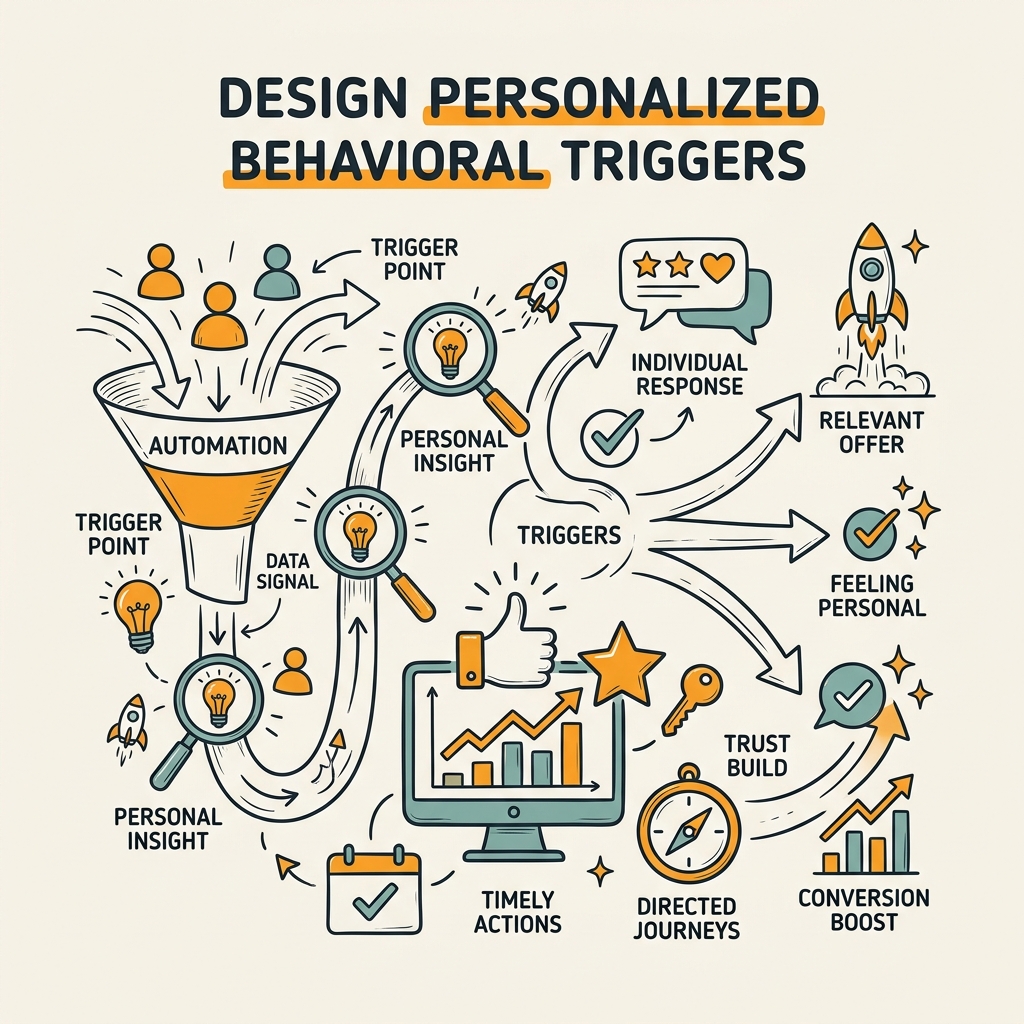
Automated workflows powered by behavioral triggers are where automation and personalization converge. A trigger is an action or event: visiting a page, opening an email, making a purchase, failing to complete a transaction. The response—the message sent—is where personalization matters. Too many companies set triggers but craft responses as generic templates. The result feels robotic. Behavioral trigger emails can achieve 405x higher conversions than broadcast messages, but only when the content matches the trigger. High-performing teams treat each trigger as an opportunity to demonstrate they understand the customer's current need.
Crafting Contextual Responses to Real Actions
Here's the framework: for each trigger, ask "What does this action signal about the customer's intent?" A page visit signals interest. An abandoned cart signals hesitation. An email open after a long silence signals re-engagement. For each intent, craft a response that acknowledges it and moves the conversation forward.
- Product Page Visit (no purchase): Send a follow-up with social proof (case study, testimonial) or a specific next step, not a generic "We have what you need" message.
- Cart Abandoned: Remind them of what they left, acknowledge friction ("Is price a concern?"), and offer a small incentive or extra information.
- Email Opened (but no click): The next send should include new information or a different value prop, not a repeat of the last message.
- Purchase Completed: Skip the generic thanks. Reference the product they bought and suggest logical next steps (onboarding content, related products, community access).
- Long Period of Inactivity: Acknowledge the silence directly ("We noticed it's been a while") and offer value to re-engage—fresh content, a check-in call, or a new feature announcement.
Multi-Touch Workflows That Adapt to Response
A personal automation workflow isn't a linear sequence. It's branching logic that responds to how customers engage. If someone opens email 1 but doesn't click, they get email 2 with new content. If they click, they get email 3 with a more aggressive offer. If they don't respond to any emails but DO visit your website, the sequence pauses and switches to a different trigger (web activity). This kind of dynamic personalization requires platforms that allow conditional logic and cross-channel visibility. Understanding how to build these workflows at scale is where platforms like AI content generation for SEO can support your team—automating the content research and writing so your team focuses on designing intelligent workflows rather than manual writing.
Scale Content Personalization Without Manual Overload
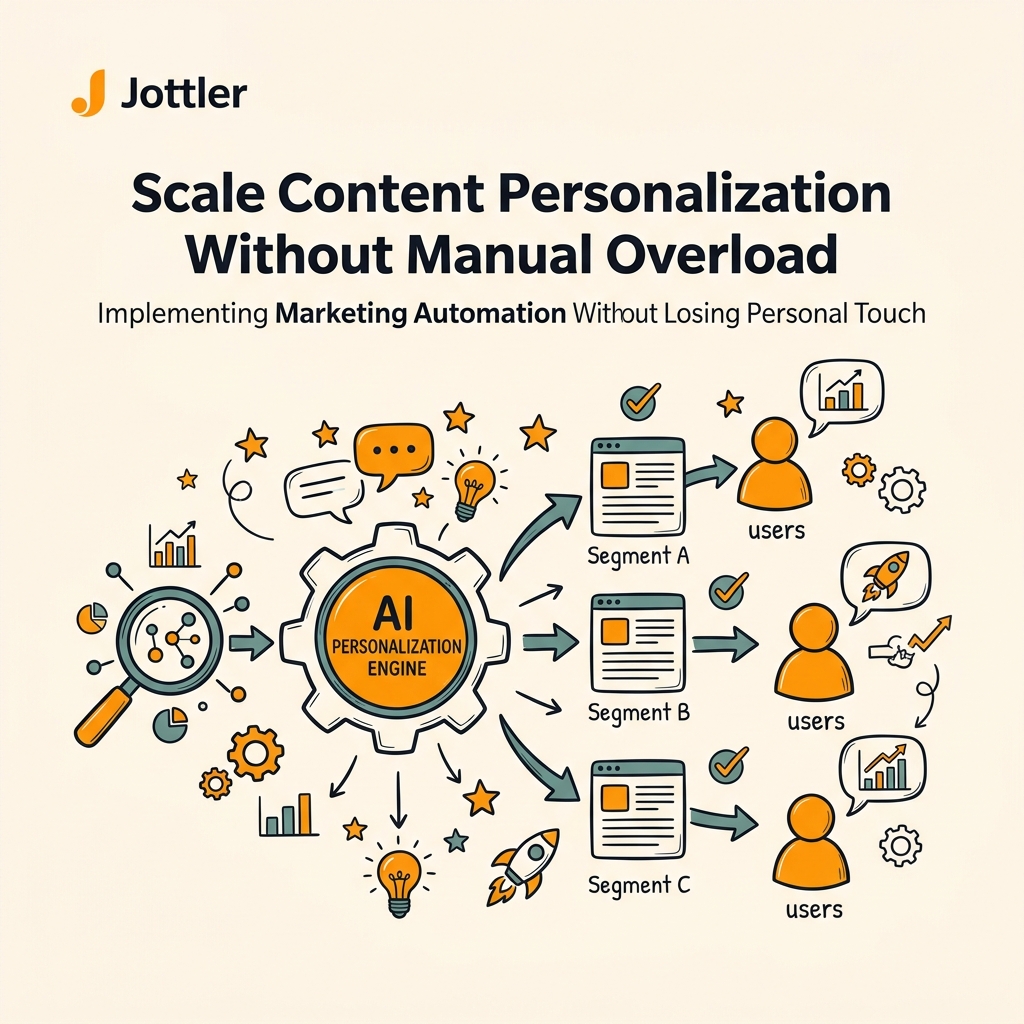
Creating dozens of personalized email variations, website experiences, and landing pages manually is infeasible. Personalization only scales through content automation. Most growing teams can't afford to write a unique subject line for every segment, a custom product recommendation email for each product category, or a tailored case study for each use case. Yet that's what real personalization requires. The lever is AI-powered content generation that maintains your brand voice while adapting to audience segments.
"The best performing teams treat each trigger as an opportunity to demonstrate they understand the customer's current need. This isn't about sending more emails—it's about sending smarter ones. AI enables that scale without drowning your team in writing work." — Content Automation Leader
Dynamic Content Blocks Based on Segment and Behavior
Modern automation platforms allow you to create content blocks that change based on customer attributes. A customer in the healthcare vertical sees a case study from healthcare. One in finance sees financial services examples. But manually writing these versions is labor-intensive. Generative AI can create dozens of personalized variations from a single outline. Subject lines can shift based on reading level, industry, or past open rates. Product recommendation emails can highlight different features for different user personas. The personalization happens at scale, but your team didn't write 50 email variations manually.
Maintaining Brand Voice Across Personalized Variations
The risk: AI-generated content feels generic or off-brand. The solution is setting clear parameters. Define your brand voice in plain language: tone (authoritative, friendly, casual), vocabulary (technical terms vs. layman's language), personality (witty, serious, conversational). Feed these guidelines to your AI content tool. Then, have your team review and refine outputs for the first round of each message type. After a few rounds, the system learns your voice and generates increasingly on-brand variations automatically. This isn't a one-time setup; it's an ongoing calibration where humans remain in control, but automation handles the repetitive writing.
Implement Safeguards to Prevent Automation Fatigue
Even well-designed automated workflows can overwhelm customers if frequency isn't managed. A customer who receives five emails in a day from different automation sequences feels bombarded, not personalized. The solution is frequency capping and preference centers. Consistent cross-channel personalization yields 4.5x higher lifetime value, but only when frequency is controlled. Build rules that prevent a single customer from receiving more than one email per day, or more than three per week. Create preference centers where customers choose communication frequency and content topics. This sounds like it reduces personalization, but it actually increases it: customers who feel respected by your frequency stay engaged longer.
Checking for Message Redundancy and Relevance
Automation can create accidental redundancy. Customer receives email from Sequence A, then a similar message from Sequence B because both triggers fired. Building in deduplication logic prevents this. Also implement rules that suppress messages if a customer has already seen similar content within a set time period. For example, if someone downloaded your "Beginner's Guide to X," they shouldn't receive another "Getting Started" email for 30 days, even if a new automation trigger fires.
Regular Audits of Automation Rules
As your automation grows, rules can become outdated or conflicting. Schedule monthly reviews: which automations are driving engagement, which are generating unsubscribes, which rarely fire? Disable or refine underperforming sequences. Test subject lines and content variations to see what actually resonates. This human oversight keeps automation from becoming a set-and-forget liability. The best autonomous marketing systems free your team to do this strategic work instead of just writing emails.
Integrate Personalization Across Every Channel
Email is only part of the story. Real personalization happens when customers see consistent, relevant messaging across email, web, SMS, social, and ads. A customer who receives a personalized email but lands on a generic homepage feels the disconnect. Cross-channel personalization is what creates the 4.5x lifetime value lift. This requires a platform architecture where customer profiles, segments, and behavior are visible to all channels.
| Channel | Personalization Opportunity | Data Source | Expected Lift |
|---|---|---|---|
| Behavioral triggers, dynamic content blocks, subject line variation | CRM, email engagement, web behavior | 405x higher conversions vs. broadcast | |
| Website | Homepage content, product recommendations, messaging based on visitor segment | Behavioral triggers, visitor ID, purchase history | 41% higher CTR from unified data |
| SMS | Timing, offer relevance, frequency based on preferences | Engagement history, opt-in preferences | 98% open rate when relevant |
| Retargeting Ads | Product-specific messaging, dynamic creative, audience segmentation | Page visits, cart abandonment, purchase stage | 4.5x higher lifetime value |
| Social | Audience targeting, creative variation, messaging tone | Behavioral segments, demographic data | 68% lower churn with consistent messaging |
Website Personalization Powered by Automation Rules
Use automation rules to trigger website experiences. A customer who opened three emails about your premium tier and visited the pricing page should see your premium features prominently on the homepage. One who abandoned a cart should see a banner addressing that product. This level of personalization doesn't require custom code; modern website platforms and CDPs allow no-code personalization rules. The rule is: "If customer has property X and behavior Y, show experience Z." Automation populates the data; personalization rules use it.
Cohesive Messaging Across Email, SMS, and Ads
When a customer sees the same product recommendation in their email, on your website, and in a retargeting ad—because they all pull from the same customer segment and behavioral data—that consistency builds trust. It doesn't feel creepy; it feels attentive. The key is ensuring all channels pull from the same source of truth and use the same segmentation logic. If email sends a message to "high-intent users who visited pricing," ads should target the same segment, and website content should speak to the same buyer concerns.
Conclusion
Marketing automation and personalization aren't opposing forces. They're complementary strategies that unlock growth when implemented together. The data is clear: personalized automation delivers 4.5x higher customer lifetime value, 68% lower churn, and meaningful ROI. But it only works when you start with unified customer data, design triggers that respond to real intent, scale content creation without sacrificing brand voice, and maintain safeguards to prevent fatigue. The teams winning aren't choosing between speed and relationships. They're using automation to deliver more relationships, faster. Start with data consolidation and behavioral triggers this quarter. Layer in content personalization next. Review and refine continuously. By next year, your automation will feel so personal that customers won't realize it's automated—they'll just feel seen.
FAQs
How do you automate marketing without losing the personal touch?
Start with unified customer data so your automation system knows who each person is and what they've done. Then design behavioral triggers—actions like visiting a page or opening an email—that prompt personalized, contextual responses. Use AI to create many relevant variations of your core messages without manual writing. The key is treating automation as a delivery mechanism, not a creativity shortcut. Automation sends the right message to the right person at the right time. Personalization determines what that message actually says. Build in regular reviews to ensure sequences stay relevant and frequency-capped so customers don't feel overwhelmed. The strongest automation feels so relevant it doesn't feel automated at all.
What are the best marketing automation tools for personalization?
HubSpot leads for B2B teams that need integrated CRM and email automation with strong personalization features and reasonable pricing starting around $890/month. Marketo wins for enterprise-scale account-based marketing but carries higher costs and complexity. Braze excels in B2C and mobile-app driven businesses. For busy founders and growing teams, look for platforms that offer behavioral segmentation, dynamic content blocks, cross-channel visibility, and no-code workflow builders. The best tool for your team is the one that centralizes customer data and lets you build conditional logic without requiring developer resources. Test a platform with a small automation sequence first before committing to a larger rollout.
How often should I review and update my automation workflows?
Review automation performance monthly at minimum. Look at metrics like open rates, click-through rates, conversions, and unsubscribes for each sequence. If a workflow is driving higher unsubscribes than engagement, pause it and refactor the messaging or trigger. Test content variations—subject lines, call-to-actions, product recommendations—and shift your send toward the versions that perform best. Automation isn't a set-once system; it's a living thing that improves when you monitor and refine. Schedule 30 minutes each month to audit underperforming sequences and disable any that no longer align with current campaigns or customer needs. As your company evolves, your automation should too.