Optimizing Your Google Business Profile for Local SEO
Most businesses leave money on the table with their Google Business Profile. 86% of consumers use Google Maps to find local businesses, yet 89% of business profiles are only using 20% of GBP's potential. The gap between optimized and neglected profiles is stark: fully optimized profiles generate 287% more clicks than average listings. Your GBP isn't just a directory entryit's your primary storefront for local search, and small optimizations compound into significant competitive advantages. Here's how to take control of your local visibility.
Key Takeaways
- Optimized Google Business Profiles generate 287% more clicks and 93% more customer actions than underoptimized ones (2025, BrightLocal)
- Review quantity, quality, recency, and response rate are the four critical levers for local ranking dominance
- Category precision and mobile responsiveness directly impact both local and organic search visibility
- Complete Profile Data: Accuracy in NAP (name, address, phone) and business details increases click-through rates by 45% from your GBP listing.
- Review Management Strategy: Active review response and recency patterns signal engagement to Google and improve local map pack rankings.
- Category Optimization: Precise category selection aligns your business function with search intent and improves ranking across multiple local keywords.
- Media and Visual Content: Photo-rich profiles with regular updates outperform text-only profiles in user engagement metrics.
- Local Citations and Links: Consistent business citations across directories and backlinks from local authority sites reinforce your local presence.
What Does a Complete Google Business Profile Include?
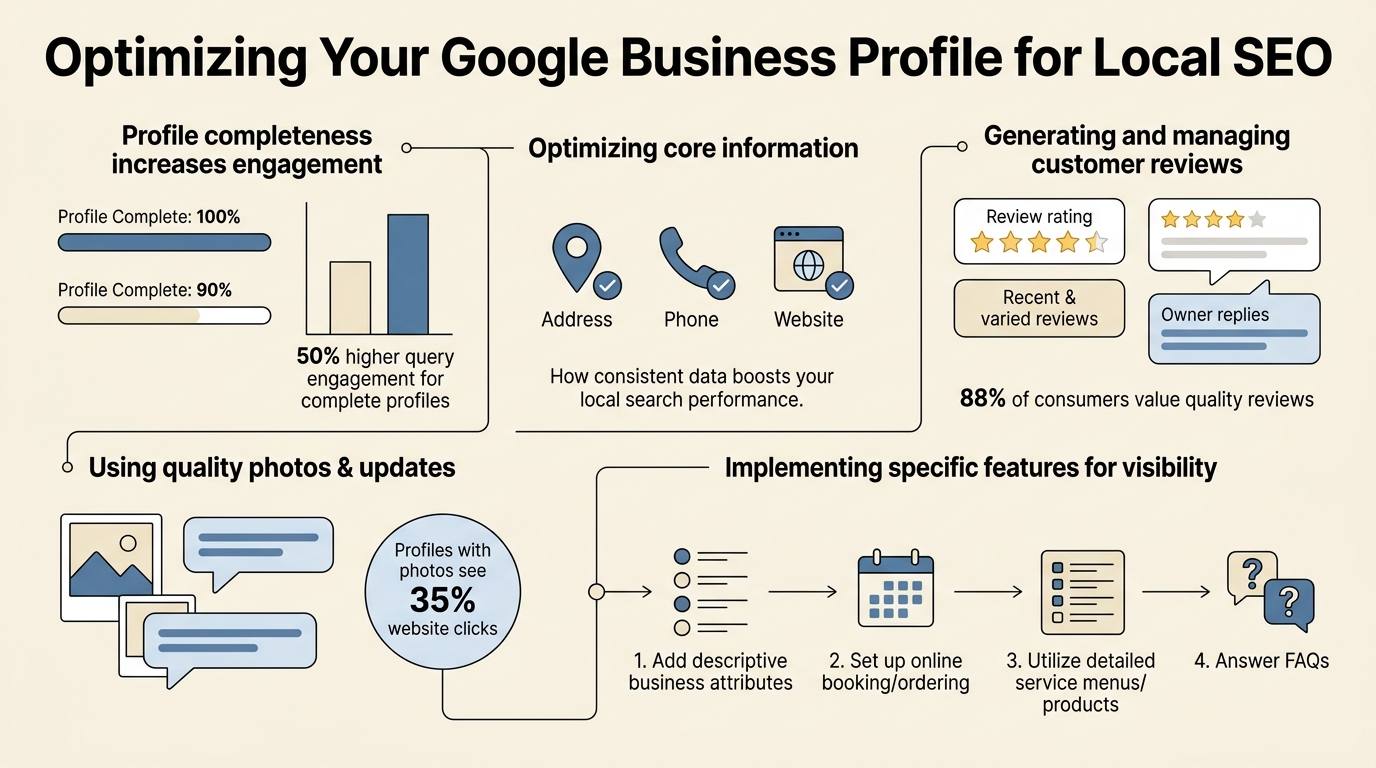
A fully optimized GBP covers seven essential data layers. Businesses that complete all layers see measurable improvements in click-through rates and customer inquiries. Most abandon the profile after the basic setup, missing the features that actually drive rankings and conversions.
Core Business Information (NAP and Description)
Your business name, address, and phone number must match your website, directories, and citations exactly. Inconsistencies confuse Google's verification algorithms and dilute local authority signals. 76% of local searchers visit within 24 hours of searching, so accuracy directly converts to foot traffic.
Your business description gets 750 characters. Use this space to reinforce what you do, where you serve, and why customers should choose you. Include location keywords naturally: "Serving Denver, Boulder, and Fort Collins" rather than "Denver area." A description that mirrors your homepage title tag and meta description signals topical consistency to Google and improves relevance scoring.
Categories and Service Areas
Primary and secondary categories are your most direct signal to Google about business function. Precision outweighs volume. A plumbing company shouldn't claim "water treatment specialist" unless it actually offers that service. Profiles with multiple relevant categories tend to rank better across industries, but each category should reinforce expertise, not dilute it.
If you serve multiple locations, the service area feature (available for service-area businesses) geotags your relevance to specific neighborhoods. A house cleaning service operating in five suburbs should list all five. This multiplies your visibility across local searches in each area without requiring multiple profiles.
Hours, Website, and Contact Methods
Up-to-date hours prevent customer frustration and signal active management to Google. Website and messaging links are direct conversion pathways. Include all contact options: phone, website, message button, appointment booking if you offer it. Mobile users often prefer messaging or booking to callingomitting these channels costs conversions.
How Does Review Strategy Drive Local SEO Rankings?
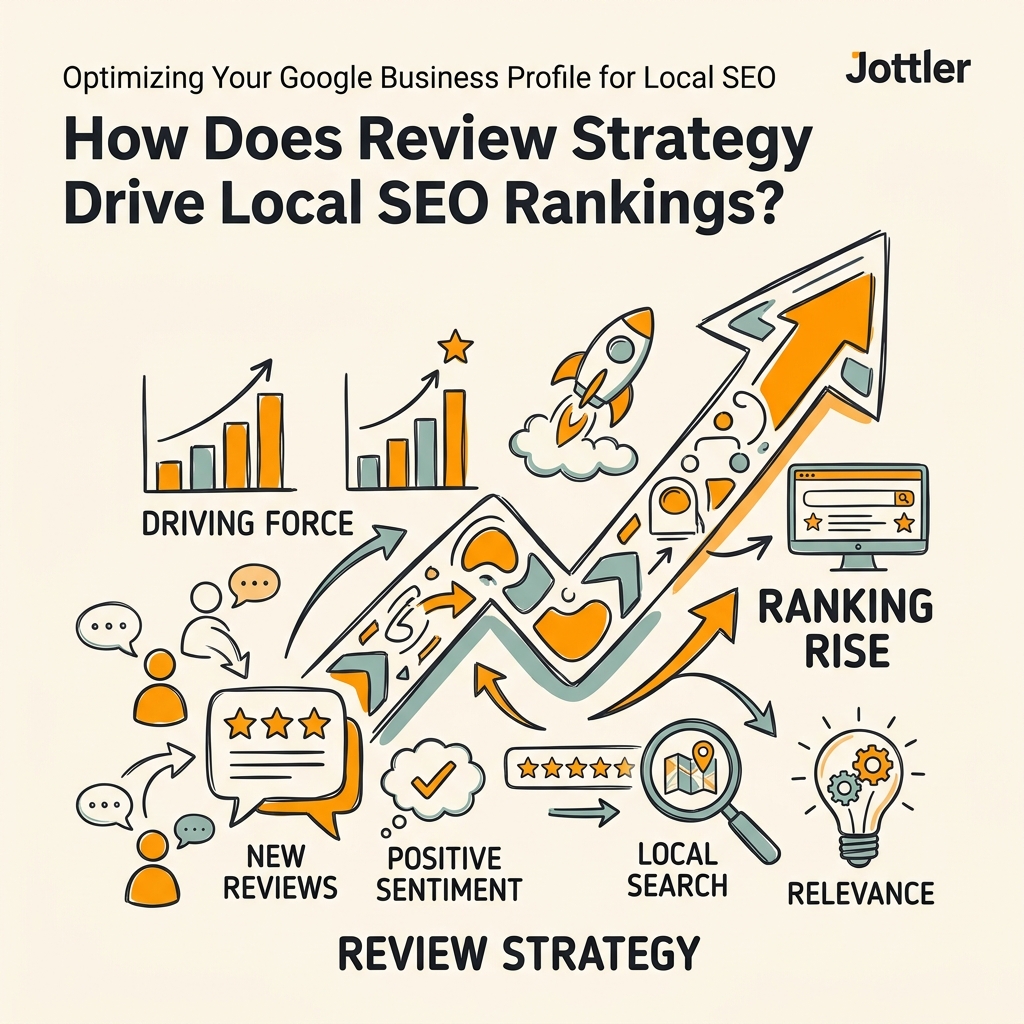
Reviews are the single most visible, most trusted ranking signal in local search. Google weighs four review dimensions simultaneously: quantity (signal of establishment), quality (star rating), recency (ongoing engagement), and response rate (management activity). Businesses that systematize review generation typically double their local visibility within 90 days.
Building Consistent Review Volume and Recency
A steady stream of new reviews outperforms a spike followed by silence. Google's algorithms reward recency, meaning a business with two reviews per month ranks higher than one with 20 reviews from two years ago. Create a post-purchase or post-service touchpoint to request reviews: email follow-ups, QR codes on receipts, simple text-to-review links.
Volume matters less than consistency. Detailed, photo-rich reviews with consistent engagement are particularly effective for improving map pack rankings. A customer review with a photo of your storefront or their completed project carries more weight than a text-only "Great service." Encourage detailed reviews by asking specific questions: "How would you describe our staff?" or "Would you recommend us to a friend?"
Response Strategy and Customer Signals
Responding to every reviewpositive and negativesignals active ownership and improves your ranking visibility. Google monitors response rate as a behavioral signal of legitimate business operation. A response should be brief, warm, and conversational. Thank the reviewer by name if they provided it, address specific points they mentioned, and invite repeat business.
For negative reviews, resist the urge to defend. A professional, solution-focused response visible to future customers builds trust more than arguing with the reviewer ever could. "I'm sorry you had that experience. I'd like to make it right. Please call me directly at [number]." This short response often converts a negative impression into a positive one.
Why Does Mobile Experience Matter for Local SEO?
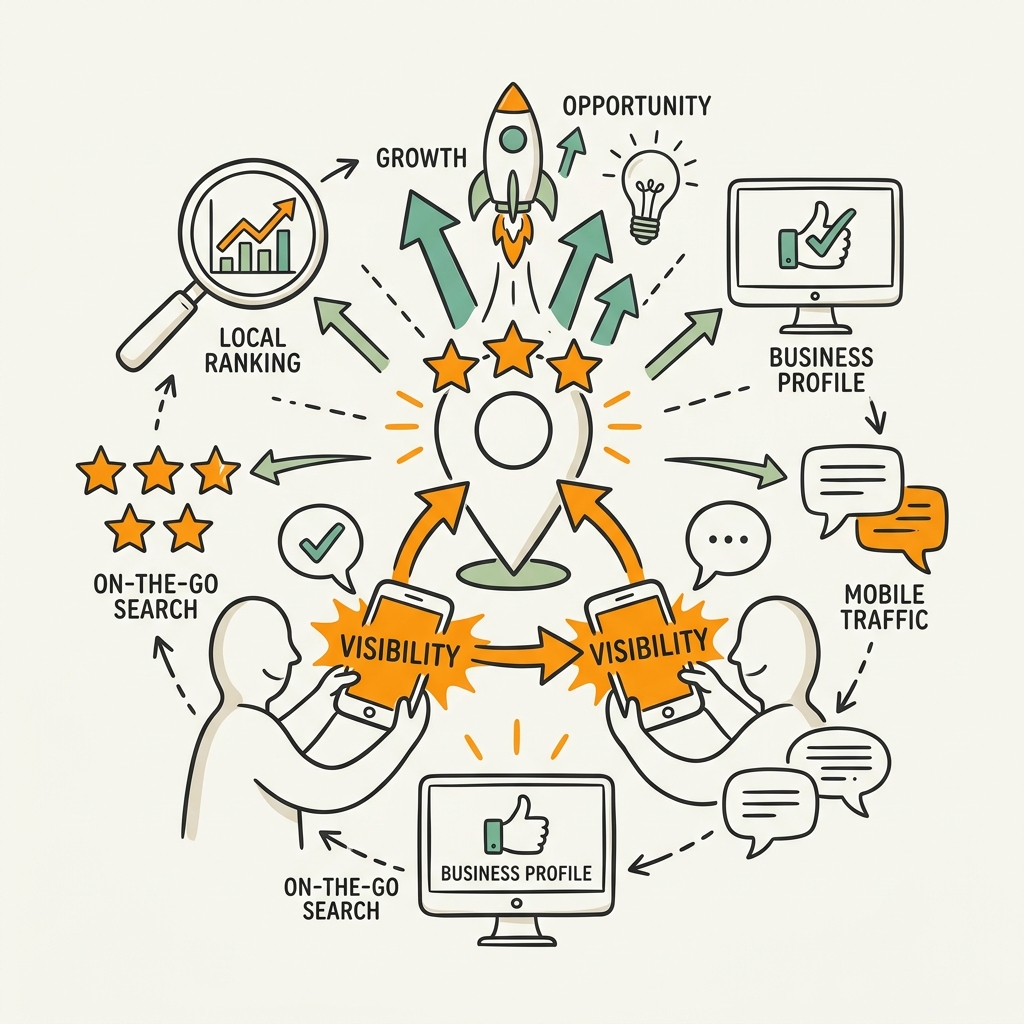
Nearly every local search now happens on mobile. Your GBP appearance on mobile maps, local search results, and Google search results determines whether people click you or your competitors. Mobile optimization extends beyond your websiteit includes your GBP photos, description readability, and click-to-call functionality.
Visual Optimization and Content Strategy
Upload 10-15 high-quality photos covering: storefront exterior, interior space, products/services in action, team members, and customer-facing areas. Update photos seasonally. Geotagged imagery (photos with location metadata) tells Google this business actually operates in the geographic area it claims. Video tours and AR store walkthroughs are emerging features that boost engagement metrics significantly.
Photos appear in three places: your GBP profile, local search results above the map, and the knowledge panel on branded searches. Each context requires different framing. Profile photos should showcase your business's character. Search result photos should communicate value immediately: a before-and-after for a contractor, a team photo for a medical practice, a packed dining room for a restaurant.
Website Integration and Click-to-Call Conversions
Your website linked from GBP should load in under three seconds on mobile and feature a prominent click-to-call button above the fold. Every page should display your address prominently. Google measures direction requests from your GBP as a conversion signalif your website makes it difficult to call or find directions, you're losing ranking leverage.
Ensure your website's NAP matches your GBP exactly. Schema markup for local business on your homepage tells search engines this is a legitimate local establishment, not just a national company with a local landing page. This consistency compounds your local authority across organic and map results.
How Do Local Citations and Backlinks Amplify Your GBP Ranking?
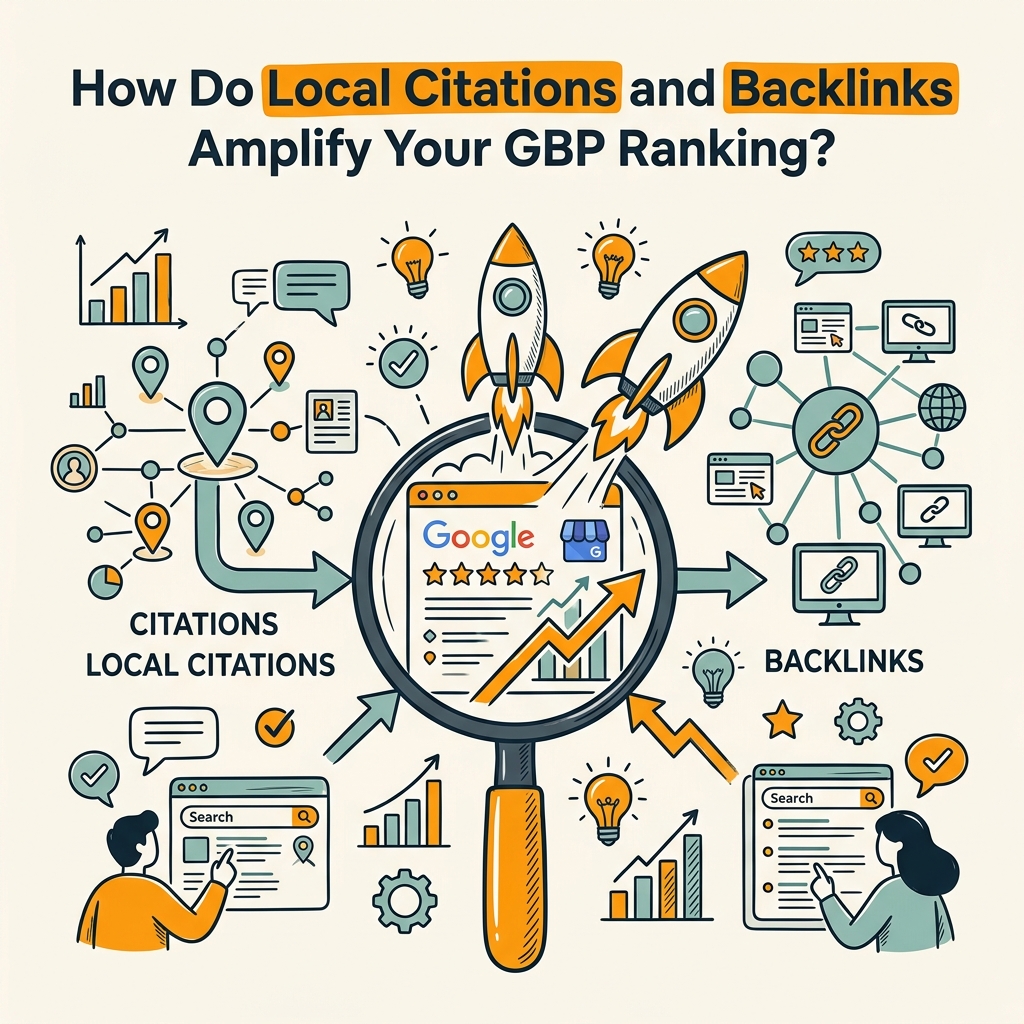
A GBP exists in an ecosystem of citations and links. Consistent mentions across trusted directories reinforce your business legitimacy and local authority. Local citations and backlinks from reputable local websites reinforce local presence, and Google uses this data to validate your GBP accuracy and authority.
Citation Audit and Directory Strategy
Start with the "Big Five" citation sources: Google Business Profile itself, Bing Places, Apple Maps, Facebook, and your industry's primary directory (e.g., AVVO for attorneys, Healthgrades for medical practices). Ensure your NAP is identical across all five. Then expand to secondary directories relevant to your industry and location.
Run a citation audit using a tool to identify where your business is already listed. Inconsistencies (different phone numbers, outdated addresses, misspelled business names) confuse Google and weaken your ranking. Correct these first. Then pursue high-authority, low-spam directories: Chamber of Commerce, Better Business Bureau, and niche-specific associations.
Local Backlink Building and Authority
Links from local news sites, community organizations, and industry publications carry more weight for local rankings than generic backlinks. A feature in a local news outlet about your business, a sponsorship of a community event listed on the nonprofit's website, or an interview with a local journalist all signal legitimate local establishment.
Focus on relationship-based link building: sponsor local sports teams or events, partner with complementary businesses for cross-promotion, contribute expert commentary to local media. Each local backlink and citation reinforces your geographic relevance and authority signals to Google, improving visibility for local keyword variations and non-branded searches.
What Data Should You Track to Measure GBP Success?
Optimization without measurement is guesswork. Google Business Profile provides a built-in analytics dashboard. Track these five metrics weekly to understand what's working and what needs adjustment.
| Metric | What It Signals | Action Trigger |
|---|---|---|
| Customer Actions (Calls, Messages, Directions) | Conversion intentcustomers actively trying to reach or visit you | If low: improve CTA buttons, hours, phone number visibility; test new review incentive |
| Search Queries (Branded vs. Non-Branded) | Search behavior; non-branded shows you're ranking for organic local keywords | If non-branded is low: refine categories, add service area descriptors, build local citations |
| Photo Views and Engagement | User interest in visual information; high engagement suggests relevant content | If low: update photos; add professional storefront/product shots; add geotagged images |
| Direction Requests and Website Clicks | Local foot-traffic intent; website clicks indicate research-phase interest | If directions are high but website clicks low: improve website CTAs; speed up mobile load time |
| Review Generation Rate | Momentum in review volume and recency; impacts ranking directly | If stagnant: automate review requests; respond to every review; create incentive for detailed reviews |
Most founders neglect this data entirely. Spending 15 minutes per week in your GBP dashboard to identify trends costs nothing and compounds into strategic clarity. Which photos drive the most views? Do directions requests spike after you post seasonal promotions? This insight guides your content calendar and optimization priorities.
For scaling teams, consider automating this workflow. Systematic content planning tied to keyword research and performance metrics compounds SEO progress significantly, and the same principle applies to GBP management. Tools that automatically pull GBP analytics and flag optimization gaps let you focus on strategy rather than data entry.
How Can You Optimize Your GBP While Building Organic SEO Authority?
GBP optimization and organic SEO reinforce each other. A well-optimized profile improves your local pack ranking, which drives more visibility, clicks, and reviews. More reviews strengthen organic search authority. Your organic content should reference your local service areas, which teaches Google your geographic relevance. These signals compound.
Local Content and Landing Page Strategy
Create location-specific landing pages on your website. A plumbing company serving three cities should have three pages: "Emergency Plumbing in Denver," "Emergency Plumbing in Boulder," "Emergency Plumbing in Fort Collins." Each page includes local testimonials, service area details, and local keywords. These pages rank individually in organic search AND feed local authority signals to your GBP.
Your website's local business schema markup tells Google you're a legitimate local establishment, not just a national company. This is especially powerful for multi-location businesses. Each location should have its own schema block with accurate NAP data, matching your GBP exactly.
Content Consistency Across Channels
Your GBP description, website homepage, blog, and social media should tell the same story about your business. Inconsistency creates confusion. If your GBP says you serve "three-county area" but your website headline is "Denver's #1 plumber," that contradiction weakens both. Consistency across channels is a trust signal and an SEO signal.
For busy founders at growing companies, this coordination is often overlooked in favor of firefighting. The result: fragmented messaging, missed ranking opportunities, and confused customers. A systematic content strategy ensures every channel reinforces your core positioning and local authority, multiplying the ROI of your GBP and organic efforts.
Conclusion
Google Business Profile optimization is no longer optional for local businesses. The competitive advantage goes to founders who systematize their GBP management: consistent review generation, accurate data, strategic photos, and regular metric reviews. The payoff is significantbusinesses with fully optimized profiles generate 287% more clicks and achieve 93% more customer actions.
Start with the completeness audit: ensure your NAP is correct across all channels, fill out every GBP field, and upload 10+ professional photos. Then implement review generation and response processes. Measure weekly using GBP analytics, identify trends, and adjust your local content strategy based on what's working.
For scaling teams managing multiple locations or markets, manual GBP optimization becomes a bottleneck fast. That's where automation helps. Tools like Jottler that automate SEO workflows also streamline local marketing coordination, ensuring consistent messaging and systematic execution across locationscompounding your local authority without the manual overhead.
Start your SEO agent and let automated systems handle the optimization work while you focus on running your business.
FAQs
How long does it take to see ranking improvements from GBP optimization?
Most businesses see measurable improvements in local search visibility and customer actions within 7-14 days of completing their GBP profile and uploading quality photos. Review-driven ranking improvements typically take 2-4 weeks as you accumulate new reviews and Google's algorithms process recency signals. The key is consistencysteady review generation and metric monitoring compound into ranking dominance faster than sporadic effort. Expect significant ranking shifts (top 3 in local pack) within 60 days if you implement the complete optimization framework.
Do I need multiple Google Business Profile listings for different locations?
Yes, if you have separate physical locations with distinct addresses. Each location should have its own GBP with accurate NAP data, unique photos, and independent review streams. For service-area businesses (contractors, consultants, delivery services) that operate from a single office, you should use one GBP with a service area listing all locations you serve. Do not create multiple profiles for one locationGoogle penalizes duplicate listings and will remove them, damaging your ranking. When in doubt, verify location ownership through Google's verification process to ensure you control each profile.
What's the fastest way to generate more reviews for my Google Business Profile?
The fastest approach combines multiple channels: send follow-up emails and text messages to recent customers with direct review links, place QR codes linking to your GBP review page on receipts and invoices, include review requests in your email signature, and add a review button to your website homepage. Tools that automate this workflow can generate 3-5x more reviews monthly with minimal manual effort. Photo-rich, detailed reviews carry the most weight with Google, so in your requests, ask customers to share photos and specific details about their experience. Respond to every review within 24 hours to signal active management and maximize ranking impact.