SaaS Link Building: Proven Strategies for B2B Software Companies
SaaS link buildinglink building for saasb2b saas link buildingsaas seobacklink strategiescontent marketing for saas
SaaS Link Building: Proven Strategies for B2B Software Companies
For B2B SaaS companies, organic search isn't just another channel; it's the primary engine for sustainable growth. With organic traffic responsible for nearly 45% of all B2B revenue, a weak backlink profile is a direct bottleneck on your company's potential. Yet, most founders and marketing teams are stuck in a manual, time-consuming loop of outreach and content creation that fails to produce results at scale. The cost of inaction is immense, as competitors who master search acquire customers at a fraction of the cost. Here's a quick summary of how to build a powerful SaaS link building engine effectively:
Key Takeaways
Organic search is the largest B2B revenue channel, accounting for 44.6% of total revenue, making link building a critical growth lever. (2026, Oliver Munro)
Effective SaaS link building pivots from transactional outreach to creating scalable "linkable assets" through high-quality, long-form content.
Automation is key to overcoming the primary obstacle in link building: the immense time and resource cost of manual content creation and outreach.
Focus on content-driven strategies like creating free tools, data-driven reports, and expert guides, as these attract high-authority links passively.
What is SaaS Link Building (And Why Does It Matter)? Understand the core principles and why backlinks are a top-three Google ranking factor for SaaS.
How to Build a Scalable Link Building Strategy: Shift from manual outreach to creating systems that generate backlinks passively.
Strategy 1: Create "Linkable Assets" with Long-Form Content: Focus on producing high-value, research-backed articles that naturally attract links.
Strategy 2: Develop Free Tools and Calculators: Build simple, valuable tools that solve a niche problem for your audience and earn backlinks from industry sites.
Strategy 3: Leverage Data-Driven Research and Reports: Publish original research or proprietary data to become a go-to source for journalists and bloggers.
Strategy 4: Master the Art of Guest Blogging on Authority Sites: Secure placements on relevant, high-traffic blogs to tap into their audience and authority.
Strategy 5: Pursue Strategic Partnerships and Integrations: Co-market with non-competitive SaaS companies to exchange value and links.
How Do You Measure SaaS Link Building ROI?: Track key metrics like referral traffic, domain rating trends, and organic keyword rankings to prove value.
What is SaaS Link Building (And Why Does It Matter)?
SaaS link building is the process of acquiring hyperlinks (backlinks) from other websites to your own. For a software company, this isn't just about quantity; it's about earning quality links from relevant, authoritative sources. Each backlink acts as a vote of confidence, signaling to search engines like Google that your content is credible and valuable. This is why backlinks remain one of the top three ranking factors, and a robust strategy is non-negotiable for any SaaS business serious about organic growth. The average ROI for B2B SaaS SEO is a staggering 702%, with a break-even time of just seven months, proving its superiority over paid channels.
The Compounding Power of Authoritative Backlinks
Unlike paid advertising, which stops the moment you stop paying, the value of a good backlink compounds over time. A single link from a high-authority site can drive referral traffic, boost your domain authority, and improve your rankings for years. Think of it as building a digital asset portfolio. High-quality links are like blue-chip stocks that appreciate in value, consistently delivering returns long after the initial effort is expended. For a SaaS founder, this means lower customer acquisition costs and a more defensible marketing moat.
Moving Beyond "More Links" to "Better Links"
The goal is not simply to accumulate as many links as possible. The algorithm has evolved. Today, a single, contextually relevant link from a respected industry publication is worth more than hundreds of low-quality links from irrelevant directories. For SaaS, this means targeting links from tech blogs, business publications, integration partners, and industry news sites. Quality and relevance are the pillars of a modern, effective link building campaign that drives meaningful business results, not just vanity metrics.
How to Build a Scalable Link Building Strategy
A scalable link building strategy moves beyond one-off tactics and focuses on creating systems that generate backlinks predictably and passively. For busy SaaS teams, manual outreach is a dead end; the key is to build "linkable assets" that attract authority sites naturally. This requires a fundamental shift in mindset: from "building links" to "earning links." Shockingly, while 73% of B2B marketers have a documented content strategy, many fail to integrate link acquisition into the core of their content production process. This is where automation and strategic content creation become game-changers.
The Problem with Traditional, Manual Outreach
Traditional link building involves manually finding prospects, sending personalized emails, and negotiating for a link. The process is notoriously inefficient, with response rates often dipping below 5%. A single successful link can take hours of work. For a growing SaaS company, this model is unsustainable. It doesn’t scale. You can't hire enough people to manually build the hundreds of high-quality links needed to compete in a crowded market. The overhead is too high, and the results are too unpredictable.
The "Linkable Asset" Flywheel
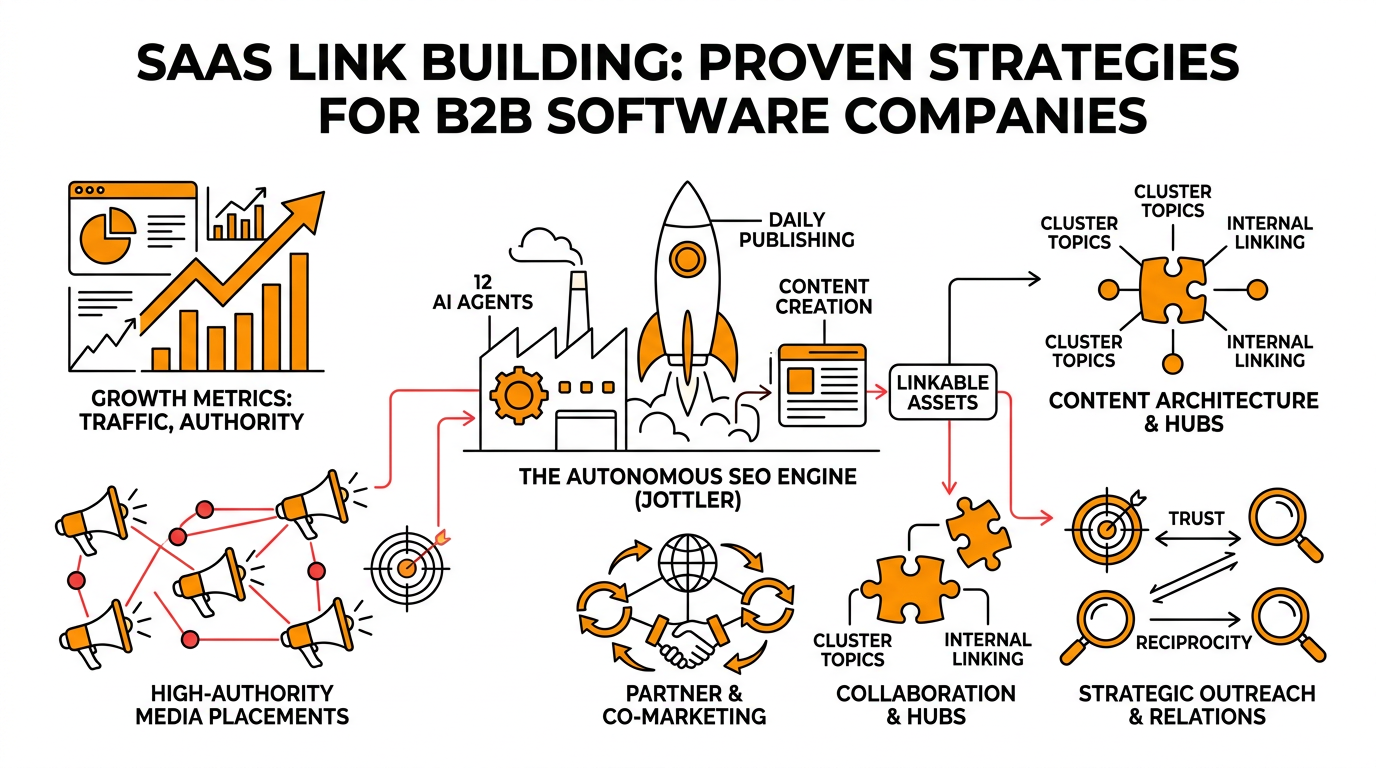
The solution is to create content so valuable that other websites want to link to it. This is the core of the "linkable asset" flywheel. Instead of begging for links, you create definitive guides, original research, or free tools that serve a genuine need for your target audience. This high-value content becomes a magnet for backlinks. The more links it attracts, the higher it ranks, leading to more visibility and even more organic links. This virtuous cycle is the foundation of scalable, long-term SEO success. It's the philosophy behind autonomous SEO engines like Jottler, which focuses on programmatically creating the type of long-form, authoritative content that fuels this flywheel.
Strategy 1: Create "Linkable Assets" with Long-Form Content
The most reliable and scalable link building strategy for any SaaS business is to consistently publish high-quality, long-form content. Studies consistently show that content marketing generates 3x more leads than outbound marketing at a 62% lower cost. These in-depth articles, guides, and resources act as "linkable assets," attracting backlinks naturally from other sites that want to reference a definitive source. The key is to create content that is significantly better than what currently ranks for your target keywords.
What Constitutes a "Linkable Asset"?
A linkable asset is a piece of content created with the specific intention of attracting backlinks. It's not just a blog post; it's a comprehensive resource that provides immense value to the reader. Characteristics include:
Depth and Comprehensiveness: Typically over 2,000 words, covering a topic in exhaustive detail.
Originality: Presents a new perspective, unique data, or a novel framework.
Practical Utility: Offers actionable advice, templates, or step-by-step instructions.
Expert Authority: Features quotes from experts, proprietary data, or in-depth analysis.
Creating this level of content manually is a significant challenge for most teams. This is the exact problem platforms like Jottler are designed to solve. Jottler’s autonomous content engine researches and writes 3,000+ word articles daily, specifically engineered to function as linkable assets without the manual overhead.
Topic Selection for Maximum Linkability
Choosing the right topics is critical. Instead of focusing on bottom-of-funnel, product-focused keywords, target informational keywords that address your audience's core problems. Use keyword research to find questions your audience is asking and create the best possible answer on the internet. Evergreen topics that remain relevant for years, such as "how-to" guides, ultimate resource pages, and foundational concept explainers, tend to accumulate the most backlinks over time.
Strategy 2: Develop Free Tools and Calculators
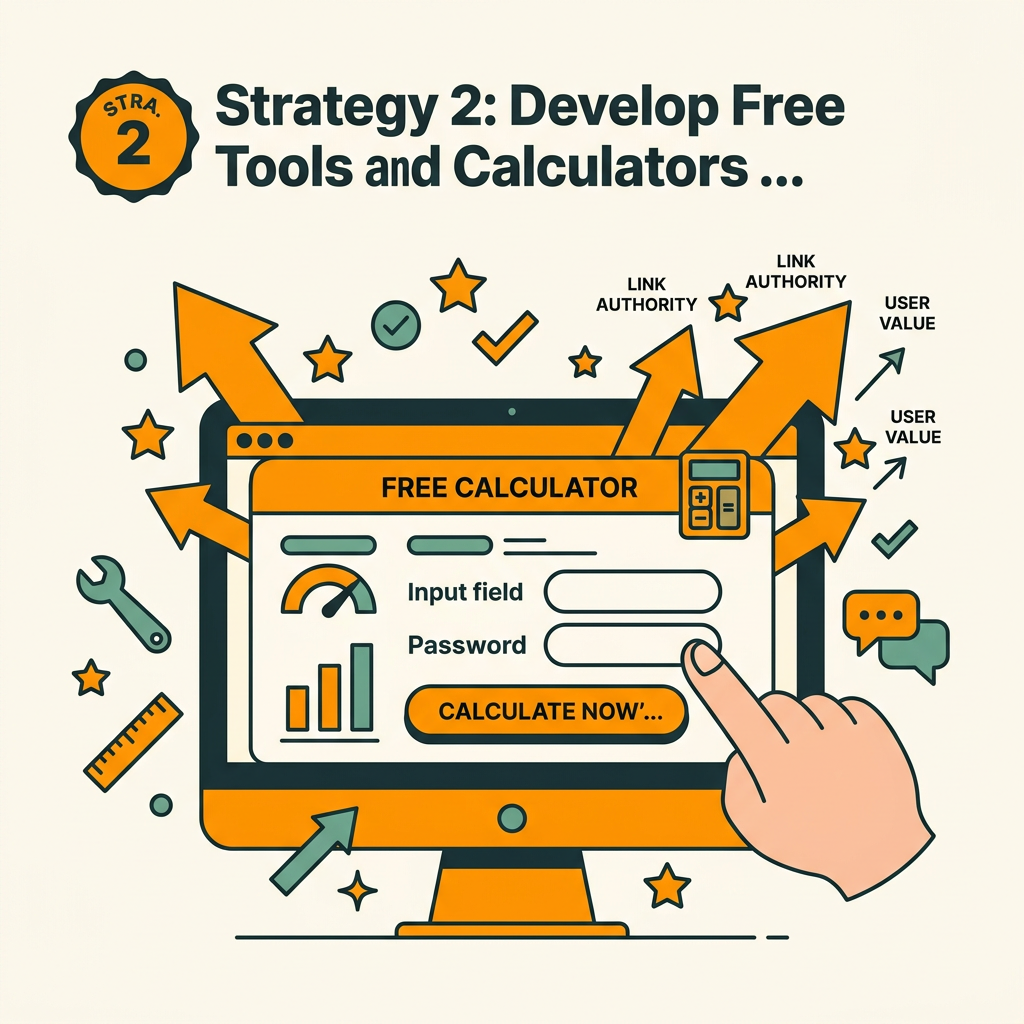
One of the most powerful but underutilized SaaS link building strategies is creating free, web-based tools. A simple calculator, generator, or checker that solves a painful, niche problem for your target audience can become a passive link-generating machine. These tools attract high-quality links from product hunt-style directories, industry blogs, and even universities because they provide direct, tangible value. While development costs can be a barrier, the long-term ROI often dwarfs that of writing dozens of blog posts.
"A great free tool is the ultimate linkable asset. It has a built-in viral loop. People use it, find it valuable, and share it. Bloggers and journalists link to it because it's a resource, not a sales pitch."
Look for simple calculations or processes that your customers currently do in spreadsheets. What's a common question you hear during sales calls? Can you turn the answer into a simple interactive tool? Examples include:
A "Total Cost of Ownership" calculator for a complex software category.
A "Headline Analyzer" for content marketers.
An "MRR Calculator" for fellow SaaS founders.
A "Robots.txt Generator" for SEOs, like the one offered by Jottler's free tools.
The goal is utility, not complexity. A single-purpose tool that does one thing perfectly is often more effective than a feature-bloated one.
Strategy 3: Leverage Data-Driven Research and Reports
Publishing original research is a surefire way to establish authority and attract high-quality backlinks from top-tier publications, journalists, and industry analysts. While this strategy requires more upfront investment in data collection and analysis, a single successful report can generate hundreds of authoritative links. In a world of regurgitated content, proprietary data is a powerful differentiator. Marketing organizations now allocate 26% of their total budget to content, and a significant portion of that is shifting towards creating defensible, data-backed assets.
Sources of Proprietary Data
You don't need a team of data scientists to publish original research. There are several accessible ways to generate unique data:
Survey Your Audience: Use tools like SurveyMonkey or Typeform to survey your email list, customer base, or a targeted panel about industry trends.
Analyze Product Data: Anonymize and aggregate user data from your own platform to reveal insights about user behavior. (e.g., "We analyzed 10 million emails sent with our platform and found...")
Curate and Synthesize Public Data: Compile and analyze data from multiple public sources (like government reports, academic studies, or financial filings) to create a new, unique perspective.
Once published, proactively reach out to journalists and bloggers in your niche who have written about similar topics, offering them your unique findings.
Link Building Strategy
Effort Level
Link Quality
Scalability
Long-Form Content (Manual)
High
Medium-High
Low
Long-Form Content (Jottler)
Very Low
High
Very High
Free Tools
High
Very High
Medium
Data-Driven Reports
Very High
Very High
Low
Guest Blogging
Medium
Medium
Medium
Strategic Partnerships
Medium
High
Low
Strategy 4: Master the Art of Guest Blogging on Authority Sites
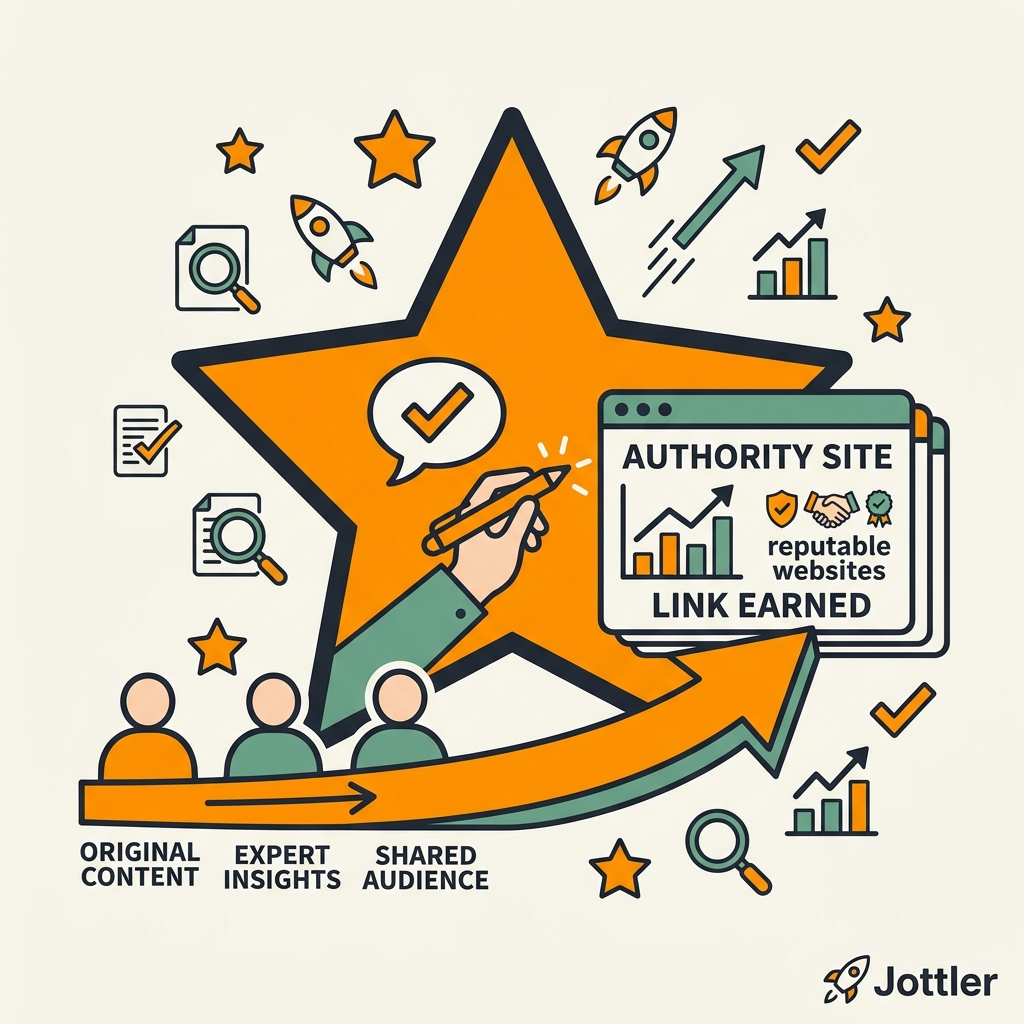
Guest blogging remains a highly effective SaaS link building tactic, but the approach has matured. The goal is no longer to secure a link from any site that will accept a post. Strategic guest blogging in 2026 focuses on placing high-value, non-promotional content on topically relevant, authoritative sites with a real, engaged audience. It's a brand-building and audience-development play first, and a link building play second. A single, well-placed guest post on a top-tier industry blog can drive more qualified referral traffic than dozens of links from low-quality sites.
Finding and Vetting Opportunities
Use advanced Google search queries to find sites looking for contributors:
"your keyword" + "write for us"
"your keyword" + "guest post"
"your keyword" + "become a contributor"
Vet each site carefully. Look at its domain authority (DA), monthly traffic (using tools like Ahrefs or Semrush), and audience engagement (comments, social shares). Prioritize quality over quantity. It's better to land one post on a site with a DA of 80 than ten posts on sites with a DA of 20.
The Perfect Pitch
Editors at top publications are inundated with generic pitches. To stand out, your pitch must be personalized, demonstrate that you understand their audience, and offer concrete value. Instead of asking "Can I write for you?", pitch 3-5 specific, data-backed article ideas that would be a perfect fit for their blog. Briefly explain why you are qualified to write on the topic and include links to your best published work. A thoughtful, well-researched pitch shows you respect their time and are a serious contributor.
Strategy 5: Pursue Strategic Partnerships and Integrations
For B2B SaaS companies, your ecosystem of partners provides a rich source of high-quality, relevant backlinks. Co-marketing with non-competitive companies that serve a similar customer profile is a powerful way to build links while also driving direct business value. These links are particularly valuable because they come from contextually relevant partners and are often placed on high-traffic pages like integration directories or partner showcases.
Integration and "Works With" Pages
If your product integrates with other software, ensure you are listed on their integration marketplace or directory. These are some of the most relevant and authoritative links a SaaS company can get. Reach out to the partner marketing contact at the other company and provide them with your logo, a description of the integration's benefits, and a link to your site. This is a mutually beneficial arrangement that is typically an easy "yes."
Co-Marketing Content
Collaborate with partners on co-branded content initiatives. This can take many forms:
Joint Webinars: Host a webinar together and promote it to both of your audiences. Each company will naturally link to the registration page and recording.
Co-authored Ebooks or Whitepapers: Pool your expertise to create a comprehensive guide on a topic of mutual interest.
Guest Post Swaps: Exchange guest posts on each other's blogs. This provides fresh content for both audiences and a valuable backlink.
"Your best link building opportunities often come from your partners. You're both trying to help the same customers succeed. Co-marketing isn't just a marketing tactic; it's a customer-centric way to grow."
Measuring the return on investment of link building is essential for justifying budget and refining your strategy. While it can be more complex than tracking PPC conversions, a data-driven approach can clearly demonstrate its business impact. The key is to look beyond simply counting backlinks and focus on metrics that tie directly to traffic, authority, and revenue. Given that SEO can deliver a 700%+ ROI, setting up proper tracking is critical to proving that value.
Key Performance Indicators (KPIs) to Track
Instead of a single metric, use a dashboard of KPIs to get a holistic view of performance:
Domain Rating / Authority (DR/DA): A third-party metric from tools like Ahrefs or Moz that estimates your site's backlink authority on a 100-point scale. Track this monthly; a steady increase is a primary indicator of a successful campaign.
Number of Referring Domains: The total number of unique websites linking to you. Growth in high-quality referring domains is more important than growth in the total number of backlinks.
Organic Traffic: Using Google Analytics, monitor the growth of traffic from organic search. This is the ultimate measure of whether your SEO efforts are working.
Keyword Rankings: Track your rankings for a core set of target keywords. Are you moving up the SERPs for terms that drive revenue?
Referral Traffic: Monitor the traffic coming directly from the links you've built. This is especially important for links from high-traffic guest posts or partner pages.
Attribution and Time Horizon
Link building is a long-term investment. It's crucial to set realistic expectations with stakeholders. It can take 6-12 months to see a significant impact on organic traffic from a new link building campaign. Unlike paid ads, the results are not immediate, but they are far more durable. The value of a strong backlink profile doesn't disappear when you stop your campaign; it continues to deliver compounding returns for years.
Conclusion
For B2B SaaS companies, link building is not an optional marketing tactic; it is a fundamental driver of long-term, profitable growth. While traditional, manual outreach is inefficient and unscalable, a modern strategy focused on creating "linkable assets" can build a defensible moat and a powerful customer acquisition engine. The data is clear: with organic search driving nearly 45% of B2B revenue and delivering an average ROI of over 700%, the SaaS businesses that win are those that master SEO.
By focusing on strategies like producing high-value long-form content, developing free tools, publishing original data, and building strategic partnerships, you can create a flywheel that attracts authoritative backlinks passively. However, the primary barrier for most founders remains the immense time and effort required for execution. This is where automation becomes a critical advantage. Platforms like Jottler's autonomous SEO engine are built to handle the heavy lifting of research, writing, and publishing, allowing you to scale your content and link acquisition efforts without scaling your team. The future of SaaS link building is not about working harder; it's about building smarter, automated systems. To get started, you can Start your SEO agent.
FAQs
How long does it take to see results from SaaS link building?
Patience is key, as link building is a long-term strategy. While minor ranking improvements might appear within a few months, it typically takes 6 to 12 months to see a significant, measurable impact on organic traffic and lead generation. The timeline depends on your starting domain authority, the competitiveness of your keywords, and the intensity of your campaign. The results are not immediate, but unlike paid advertising, they are compounding and durable, building a long-term asset for your company.
What is the easiest way to start building links for a new SaaS?
For a new SaaS with limited resources, the easiest and most effective starting point is to focus on creating genuinely useful content. Instead of chasing complex strategies, publish one or two incredibly in-depth, "ultimate guide" style blog posts that solve a major pain point for your ideal customer. This approach requires no outreach budget and positions you as an expert. Automating this content creation with a tool like Jottler can significantly accelerate this process, allowing even a solo founder to produce the kind of high-value content that naturally attracts links from the start.
How many backlinks do I need to rank?
There is no magic number of backlinks needed to rank. It's a matter of quality and relevance, not just quantity. You need to acquire more high-quality, relevant backlinks than the pages currently ranking on the first page of Google for your target keyword. Analyze the backlink profiles of the top 3-5 ranking competitors for your desired search term. This will give you a realistic benchmark for the number of referring domains and the overall authority you need to compete effectively. Focus on earning links from better, more relevant sources than your competition.
Your content pipeline on autopilot.
Jottler's AI agent researches, writes, and publishes 3,000+ word articles every day.