SaaS SEO Strategy: How to Scale Organic Traffic Without Burnout
The typical SaaS founder's reality: Customer acquisition costs have increased 14% since 2023, with median companies now spending $2.00 to acquire every $1.00 of annual recurring revenue (2026, Oliver Munro Research). Meanwhile, 75% of software companies reported declining retention rates, forcing founders into an expensive cycle of constantly replacing churned customers.
Here's the pivot that changes everything: SEO delivers 702% ROI for B2B SaaS companies with a break-even time of just 7 months, dramatically outperforming paid channels (2026, First Page Sage). When organic search generates 44.6% of all B2B revenue — making it the largest single revenue channel — the question isn't whether you need SEO. It's whether you can afford to scale it without burning out your team.
The answer is automated content systems that compound growth while you focus on product development. Here's a quick summary of how to scale organic traffic without sacrificing your sanity:
- Strategic Foundation: Build an ICP-driven keyword strategy targeting problem-aware prospects, not just feature comparisons.
- Content Automation: Deploy AI-powered research and writing systems that maintain quality while scaling to daily publication.
- Technical Leverage: Implement programmatic SEO for long-tail capture and automated internal linking structures.
- Authority Building: Focus on thought leadership content that establishes expertise in your core software category.
- Measurement Systems: Track leading indicators like content velocity and topical authority, not just traffic vanity metrics.
Why Traditional SaaS SEO Approaches Lead to Team Burnout
Most SaaS companies approach SEO like a traditional service business — manually researching keywords, writing individual articles, and hoping for compound growth. 68% of all website traffic begins with a search query (2026, ALM Corp Research), yet the typical SaaS marketing team can barely produce 2-3 articles per month without sacrificing quality.
The Manual Content Bottleneck
The math is brutal. Your competitor with automated content systems publishes 3-5 comprehensive articles daily while your team struggles to maintain weekly publication. Each manual article requires 15-20 hours of research, writing, fact-checking, and optimization — time your growing company desperately needs for product development and customer success.
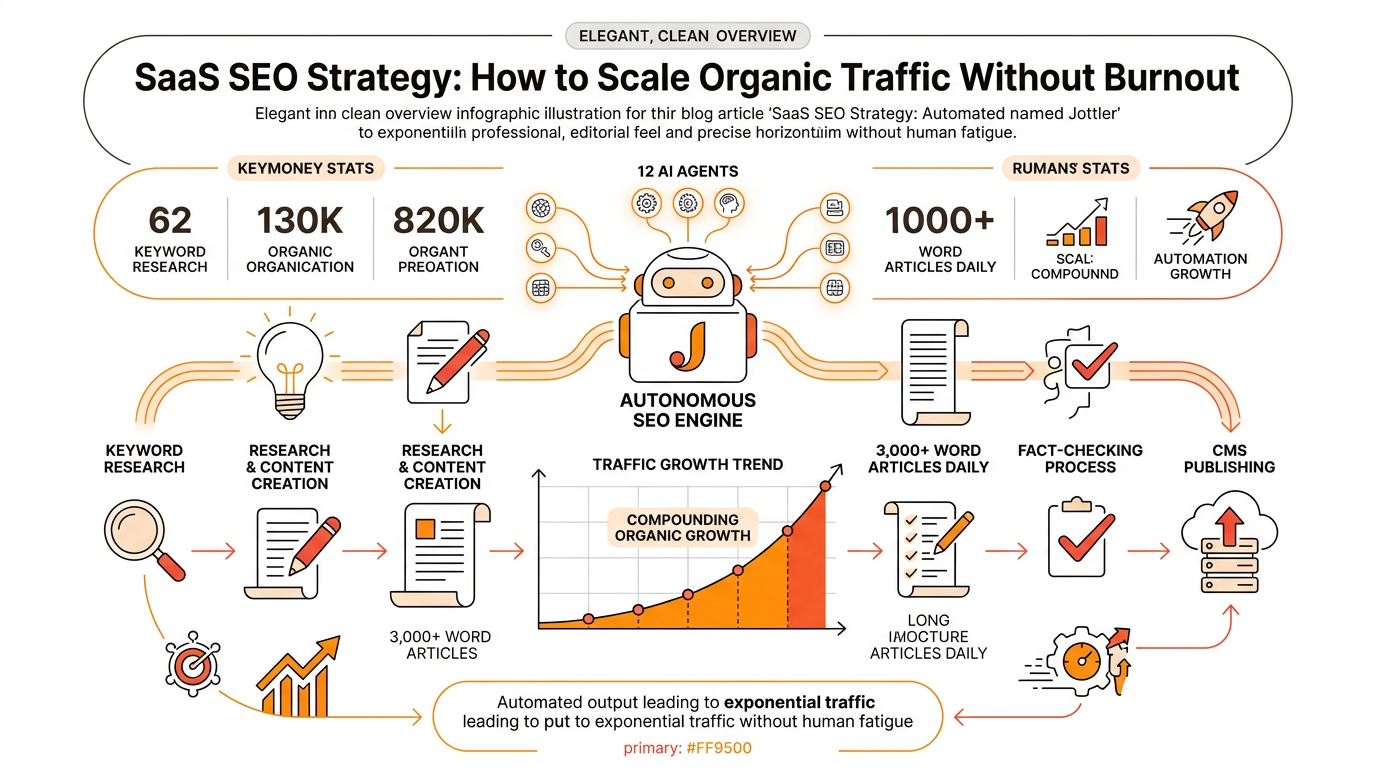
Tools like Jottler solve this bottleneck by deploying 12 AI agents that handle research, writing, and publishing automatically, maintaining quality while scaling to daily publication rates traditional teams can't match.
Inconsistent Publishing Kills Momentum
Google's algorithm rewards consistent, high-quality content publication. When your team publishes sporadically — two articles one month, five the next — you never build the sustained momentum needed for compound growth. B2B SaaS buyers start their journey by researching price information, and if your content doesn't appear consistently in their research phase, they'll find solutions elsewhere.
Shallow Keyword Research Limits Growth Potential
Manual keyword research typically covers 50-100 target terms. Automated systems can identify and target thousands of long-tail opportunities your competitors miss. When 57% of B2B decision makers start their research using search engines (2026, Position Digital), missing these micro-intent keywords means losing prospects before they ever discover your solution.
How to Build an Automated Content Engine That Scales
The most successful SaaS SEO programs automate the heavy lifting while maintaining editorial quality. Companies that build strong SEO programs generate two times more revenue from organic search traffic than from other channels (2026, Powered by Search), but only when they can scale content production consistently.
Deploy AI Agents for Research and Writing
Modern AI content systems don't just generate text — they research topics across 14+ sources, fact-check claims, and optimize for search intent. The key is choosing systems that maintain your brand voice while scaling beyond human capacity. Look for solutions that handle:
- Topic research: Automated identification of content gaps in your industry
- Multi-source fact-checking: Verification across authoritative industry publications
- Smart internal linking: Automatic connection of related content for topical authority
- CMS integration: Direct publishing without manual intervention
Jottler's autonomous SEO engine exemplifies this approach, with AI agents that research, write, and publish comprehensive articles daily while building internal link networks that compound your domain authority.
Implement Programmatic SEO for Long-Tail Capture
While your automated content engine handles thought leadership and educational content, programmatic SEO captures thousands of long-tail searches through template-driven pages. This dual approach ensures you dominate both high-value strategic keywords and the broad tail of micro-intent searches.
"SEO at scale requires both depth and breadth. You need comprehensive pillar content for authority and programmatic coverage for the long tail that drives actual conversions."Carlos Silva, Content Strategy Lead, Semrush
Build Content Workflows That Run Without You
The goal isn't to eliminate human oversight — it's to eliminate human bottlenecks. Establish approval workflows where AI handles research and first drafts, while your team focuses on strategic direction and final quality control. This approach maintains brand standards while achieving publication rates that compound organic growth.
Technical Infrastructure for Sustainable SEO Growth
Scaling content without technical optimization is like building a race car with bicycle tires. Your automated content engine needs technical infrastructure that supports rapid growth without performance degradation.
Core Web Vitals at Scale
As you publish more content, page load speeds can deteriorate without proper optimization. Implement automated image compression, lazy loading, and CDN distribution to maintain performance as your content library grows. 32% of B2B SaaS marketers said that SEO is very effective at boosting brand awareness (2026, Position Digital), but only if your technical foundation supports discoverability.
Internal Linking Architecture
Manual internal linking becomes impossible at scale. Automated systems should identify semantic relationships between articles and create contextual links that build topical authority. This isn't about random link insertion — it's about creating logical content pathways that guide prospects through your expertise.
Schema Markup for Enhanced SERP Features
Rich snippets and featured snippets drive click-through rates that compound organic traffic growth. Implement automated schema markup for articles, FAQs, and product features to maximize SERP real estate for your content.
| Scaling Method | Content Output | Quality Control | Team Burnout Risk |
|---|---|---|---|
| Manual Writing | 2-3 articles/month | High | Severe |
| Freelancer Network | 8-12 articles/month | Variable | Moderate |
| Jottler AI Engine | 30-150 articles/month | High | Minimal |
| Hybrid AI + Human | 20-60 articles/month | Very High | Low |
Strategic Keyword Targeting for SaaS Growth
SaaS keyword strategy extends far beyond product features and comparisons. Organic search generates 44.6% of all B2B revenue, making strategic keyword selection the difference between sustainable growth and expensive customer acquisition.
Problem-First Keyword Prioritization
Your prospects aren't searching for your solution — they're searching for answers to problems your software solves. Target pain point keywords before solution keywords, building awareness and authority before promoting your product. This approach captures prospects at the crucial research phase when buying decisions form.
Intent-Based Content Clusters
Organize your automated content around customer journey stages:
- Problem-aware: "Why is [manual process] inefficient?"
- Solution-aware: "How to automate [specific workflow]"
- Product-aware: "[Your category] vs [alternative solution]"
- Decision-ready: "[Your product] pricing and features"
Your content engine should map keywords to intent stages, ensuring comprehensive coverage of your prospect's research journey.
Competitor Keyword Gap Analysis
Automated competitor analysis reveals keyword opportunities your manual research misses. Identify gaps where competitors rank but you don't, then systematically create superior content for those topics. This data-driven approach ensures every article serves a strategic purpose in your market positioning.
"The companies winning with SEO aren't just creating content — they're creating content systems that compound advantage over time."Oliver Munro, SaaS Content Marketing Consultant, Oliver Munro Consulting
Measuring Success Without Vanity Metrics
Traditional SEO metrics like traffic and rankings matter, but SaaS companies need metrics that correlate with revenue growth and customer acquisition efficiency.
Content Velocity as a Leading Indicator
Publishing consistency predicts organic growth better than any single article's performance. Track your content velocity — how many comprehensive articles you publish monthly — as a leading indicator of future traffic growth. Companies with automated content systems publish 10-15x more content than manual competitors, creating compound advantage over time.
Topical Authority Development
Google rewards websites that demonstrate comprehensive expertise in specific topics. Measure your topical authority by tracking keyword clusters where you rank on page one. As your automated content engine covers more aspects of your core software category, your authority and rankings compound across related terms.
Organic-to-Trial Conversion Tracking
Ultimate SEO success means converting organic traffic into trial signups and paying customers. Track which content types and topics drive the highest conversion rates, then optimize your automated systems to produce more of what works. This data-driven approach ensures your content scales revenue, not just traffic.
Advanced Automation Strategies for Enterprise SaaS
Enterprise SaaS companies face unique SEO challenges: longer sales cycles, multiple buyer personas, and complex technical solutions. Advanced automation strategies address these challenges while maintaining the personal touch enterprise buyers expect.
Multi-Persona Content Automation
Your automated content engine should create role-specific content for different buyer personas — technical content for developers, ROI-focused content for executives, and implementation guides for operations teams. This targeted approach ensures comprehensive coverage of your complex buying committee.
Technical Documentation as SEO Assets
Turn your technical documentation into SEO gold by creating searchable, comprehensive guides that capture long-tail technical queries. Automated systems can transform internal documentation into publicly accessible resources that demonstrate product depth and technical capability.
"Enterprise buyers research for months before engaging with sales. Your content needs to educate and build trust throughout that entire journey, not just at the moment of purchase intent."Brian Fajar Mauladhika, Digital Marketing Strategist, Position Digital
Thought Leadership at Scale
Position your executives as industry thought leaders through automated content that addresses market trends, regulatory changes, and industry challenges. This content builds brand authority while capturing searches from prospects researching broader industry topics beyond immediate software needs.
Future-Proofing Your SaaS SEO Strategy
The SEO landscape evolves rapidly, especially with AI-powered search experiences changing how prospects discover solutions. Future-proof strategies adapt to these changes while maintaining sustainable growth.
AI Search Optimization
Optimize for AI-powered answer engines by creating content that directly answers specific questions. Structure your automated content with clear headers, bullet points, and factual claims that AI systems can extract and cite. This approach positions your content for featured snippets and AI-generated responses.
Voice Search and Conversational Queries
Voice search queries tend to be longer and more conversational than typed searches. Ensure your automated content targets natural language questions like "What's the best way to automate customer onboarding for SaaS companies?" rather than just keyword-focused phrases.
Visual and Video Content Integration
Expand beyond text-based content to include automated video transcriptions, image SEO, and visual content that captures searches across Google's universal results. This multi-format approach ensures comprehensive market coverage as search behavior evolves.
Conclusion
Scaling organic traffic without team burnout requires systematic automation of content production, technical optimization, and strategic keyword targeting. SEO delivers 702% ROI for B2B SaaS companies when implemented with consistent, high-quality content that addresses real prospect needs throughout their research journey.
The companies that dominate organic search in 2026 aren't just creating better content — they're creating better content systems. Organic search generates 44.6% of all B2B revenue, making automated SEO engines essential infrastructure for sustainable SaaS growth. While competitors struggle with manual content bottlenecks, automated systems compound advantage through consistent publication, comprehensive keyword coverage, and technical optimization that scales without human limitations.
Stop trading your team's bandwidth for organic growth. Start your SEO agent today and build the content engine that scales your SaaS without burning out your people.
FAQs
How long does it take to see results from automated SaaS SEO?
Most SaaS companies see initial ranking improvements within 3-6 months of implementing automated content systems, with significant traffic growth occurring at the 6-12 month mark. The break-even time for SEO is just 7 months according to industry data, making it one of the most predictable growth channels when executed consistently. The key is maintaining daily publication rates that compound over time.
Can automated content systems maintain quality standards for enterprise SaaS?
Advanced AI content systems like Jottler use multi-agent verification and fact-checking across 14+ sources to maintain enterprise-grade quality. Quality control comes from systematic processes, not manual bottlenecks. The best automated systems include human oversight for strategic direction while eliminating time-consuming research and writing tasks that traditionally created scaling limitations.
What's the biggest mistake SaaS companies make with SEO automation?
The biggest mistake is treating automation as a content quantity play rather than a strategic quality multiplier. Successful SaaS SEO automation focuses on comprehensive topic coverage and user intent matching, not just publishing volume. Companies that build strong SEO programs generate two times more revenue from organic search by combining automated efficiency with strategic direction, not by sacrificing editorial standards for speed.