SEO Basics Every Founder Should Know
You're probably losing money to founders who understand SEO. Organic search drives 53.3% of all website traffic and converts at 2.4% on average—higher than paid or social channels. Yet most founding teams treat SEO as a "nice-to-have," when it should be core strategy from day one. The gap between teams that prioritize organic visibility and those that don't compounds monthly. Here's what every founder needs to understand to compete: how search works, why keywords matter, what content actually ranks, and how to measure success without drowning in metrics.
Key Takeaways
- Organic search delivers $7.48 for every $1 invested over three years, outpacing most digital channels (2026, Searchlab)
- SEO-generated leads close at 14.6% compared to 1.7% for outbound leads
- The top three organic results capture 54.4% of all clicks on a SERP—ranking position matters more than volume
- How Search Engines Rank Content: Understanding crawling, indexing, and the core ranking factors (intent match, authority, relevance) separates founders who get traffic from those who don't.
- Keyword Research and Intent: Picking keywords your audience actually searches for—not the ones you want them to search for—is the foundation of all SEO.
- Content That Ranks: Long-form, comprehensive content over 3,000 words generates more traffic, backlinks, and authority than surface-level articles.
- On-Page SEO Fundamentals: Title tags, meta descriptions, and structured HTML are not optional—they directly affect both search visibility and click-through rates.
- Building Authority Through Links: Backlinks remain a top ranking factor; without them, even great content gets buried by competitors who have invested in link-building.
- Measuring What Actually Matters: Traffic is a vanity metric; SEO success is measured by organic conversion rate, customer acquisition cost, and lifetime value.
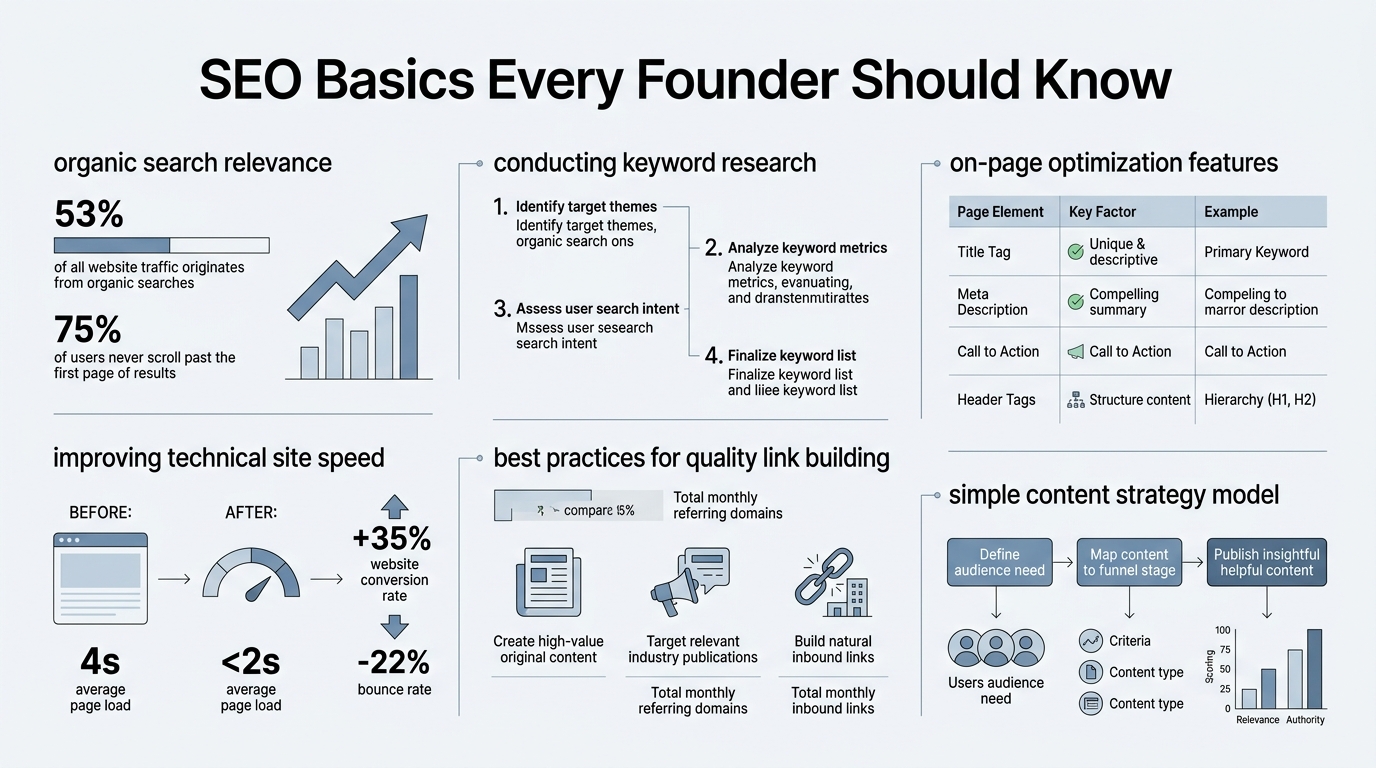
How Do Search Engines Actually Rank Content?
Search engines use three core processes to get your content in front of the right people: crawling, indexing, and ranking. Your content doesn't magically appear in Google—these steps have to happen in order, and skipping even one stops the chain. Over 60% of searches now end without a click due to AI summaries, which makes understanding how Google evaluates your content even more critical. Ranking engines look for three things: relevance (does this page answer the search query?), authority (does the source matter?), and user experience (is the page fast and easy to use?). Most founders obsess over the first and ignore the last two, which is why their competitors outrank them despite lower-quality writing.
"The difference between ranking on page one and page two is the difference between visibility and invisibility. Over 60% of searchers never scroll past the first three results—your ranking position is your revenue position."
— Search Engine Land, 2026
Crawling and Indexing: Getting Your Site Into Google
Crawling is Google sending automated robots (called "bots") to your website to read your pages. Indexing is Google storing those pages in its database for future retrieval. Neither happens automatically just because your site exists. You need a few basics in place:
- An XML sitemap that tells Google where your pages are
- A robots.txt file that tells Google which pages you want crawled
- Fast page speed so Google doesn't time out while reading your content
- Mobile responsiveness to ensure proper indexing across devices
Use Google's SEO Starter Guide to submit your sitemap and check indexation in Search Console. If your pages aren't indexed, ranking them is impossible.
The Core Ranking Factors: Intent, Authority, and Relevance
Google ranks pages based on three weighted factors. Search intent is whether your content matches what the searcher is actually looking for—this is why a keyword's intent (informational, transactional, commercial) matters more than volume alone. Authority is measured through backlinks (votes from other credible sites) and topical depth. Relevance is how well your page answers the query, typically shown through keyword usage in titles, headers, and body copy. Most founders optimize only for relevance (keywords in text), then wonder why they don't rank. You need all three.
"Pages that rank in the top three combine high relevance with strong topical authority and at least 15–25 high-quality backlinks from relevant domains. Relevance alone gets you nowhere."
— Backlinko SEO Study, 2026
Tools like AIOSEO help identify where your content is weak on any of these factors before publishing.
What Keyword Research Actually Means for Your Business?
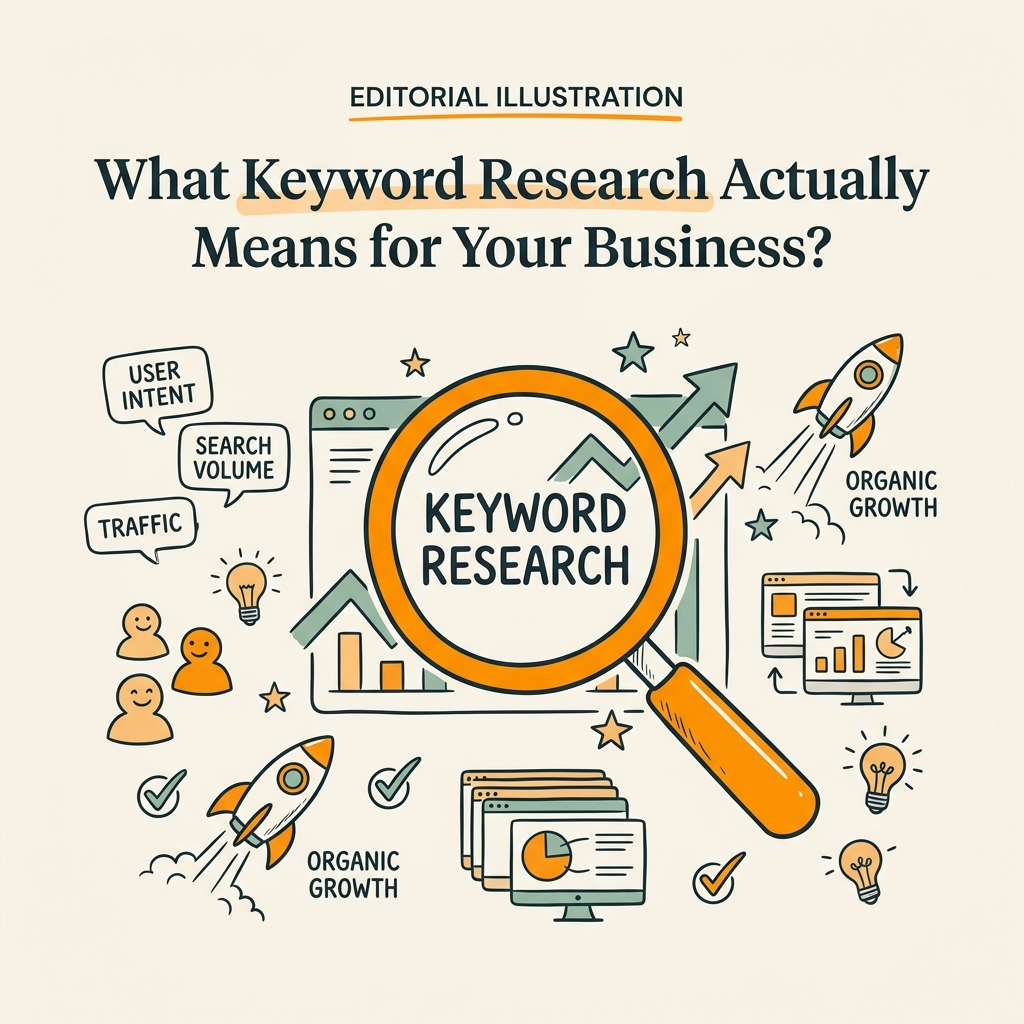
Keyword research is not about finding the highest-volume search terms. It's about finding the keywords your actual customers search for that your business can realistically rank for. Page-two results get only 0.63% of clicks, which is why targeting easy-to-rank keywords you can win matters far more than chasing million-volume keywords you'll never rank for. Most founders pick keywords based on what sounds good ("SaaS marketing") when they should be targeting longer, more specific phrases ("best email personalization tools for B2B SaaS") where competition is lower and intent is clearer.
Volume, Difficulty, and Intent: The Real Keyword Triangle
Ignore any keyword advice that focuses only on search volume. The ranking equation is volume × your-likelihood-of-ranking = actual-opportunity. A keyword with 1,000 monthly searches where you can rank #1 is worth 10x more than a keyword with 10,000 searches where you'll be stuck on page four. Keyword difficulty (how competitive the term is) is just one variable. Search intent—whether people searching are looking to learn, compare, or buy—determines if that traffic converts.
When evaluating keywords, assess these factors in order:
- Search intent (commercial/transactional keywords drive revenue; informational keywords drive learning)
- Keyword difficulty (target KD under 50 for fast wins as a new domain)
- Search volume (secondary consideration—only matters if intent and difficulty align)
- Relevance to your product and ideal customer profile
A commercial keyword ("best project management software for designers") drives revenue; an informational keyword ("what is project management?") mostly drives tire-kickers to your blog. Start by listing 50–100 keywords related to your product, then filter by difficulty (aim for KD under 50 for fast wins) and intent (prioritize commercial and transactional). Tools automate this, but judgment is still required.
Building a Keyword List That Compounds
Your keyword strategy should live in a spreadsheet or keyword management tool and evolve every month. Organize keywords into buckets by type:
- Brand-related searches: Keywords containing your company name or product name
- Product category searches: General queries about the type of problem you solve
- Competitor brand searches: Keywords where competitors rank; opportunity to steal traffic
- Use-case keywords: Specific problems your product solves for specific personas
Prioritize based on relevance, difficulty, and volume in that order. Publish one piece of content per keyword cluster (one deep article covering multiple related keywords beats ten shallow articles). After publication, track which keywords your new article ranks for. Some will surprise you—ranking for terms you didn't optimize for. Those are compound opportunities; build your next content piece around related keywords. This is how programmatic SEO strategies scale without burning out your team—you systematize the research once, then execute repeatedly.
Why Long-Form Content Dominates Search Rankings?
Short-form content ranks. Long-form content dominates. Content over 3,000 words generates more organic traffic, backlinks, and authority signals than average-length pieces, according to 2026 research. This isn't because Google counts words—it's because comprehensive content answers more questions, covers edge cases, and provides enough authority to cite. Your competitor's 800-word article on "SEO basics" will never outrank a 3,500-word guide that covers keyword research, on-page SEO, technical SEO, link-building, and measurement. Founders who understand this write one definitive piece instead of ten blog posts. They get the backlinks. They keep the traffic.
The Structure That Ranks: Answering the Question First
Every section of your article should answer the question in the heading within the first 40–60 words. Bury the answer in paragraph three, and AI search engines (which power rankings increasingly) won't extract it. This format—answer first, then elaborate—is how you get cited in AI overviews and featured snippets. Use clear headers (H1, H2, H3) to organize content logically.
Best practices for scannable, rank-friendly structure include:
- Answer one question per section (no multi-topic H2s)
- Use lists to break up text so the article scans quickly
- Keep paragraphs to 2–3 sentences maximum for digital readability
- Include at least one data point or quote per H2 section
- Front-load the most important information in every paragraph
Readers (and ranking algorithms) both prefer this. Tools can help identify structural weaknesses before publish, but the pattern is simple: headline makes a claim, first paragraph proves it with a stat or definition, subsequent paragraphs add nuance.
Depth as Authority: How Topical Mastery Compounds
Write a 3,000-word guide to SEO basics, then write another 3,000-word article on keyword research. Link them together. Google starts to understand that your site is a topical authority on SEO. Write a third article on link-building. Now you have a cluster of related, internally-linked articles that all reinforce each other's rankings. This is called topical authority or topic clustering, and it's the difference between ranking for a few random keywords and owning an entire category. Founders who publish consistently without strategy get random results. Founders who pick a topic cluster and build out comprehensive coverage compound their visibility quarter over quarter.
On-Page SEO: The Technical Signals You Control?
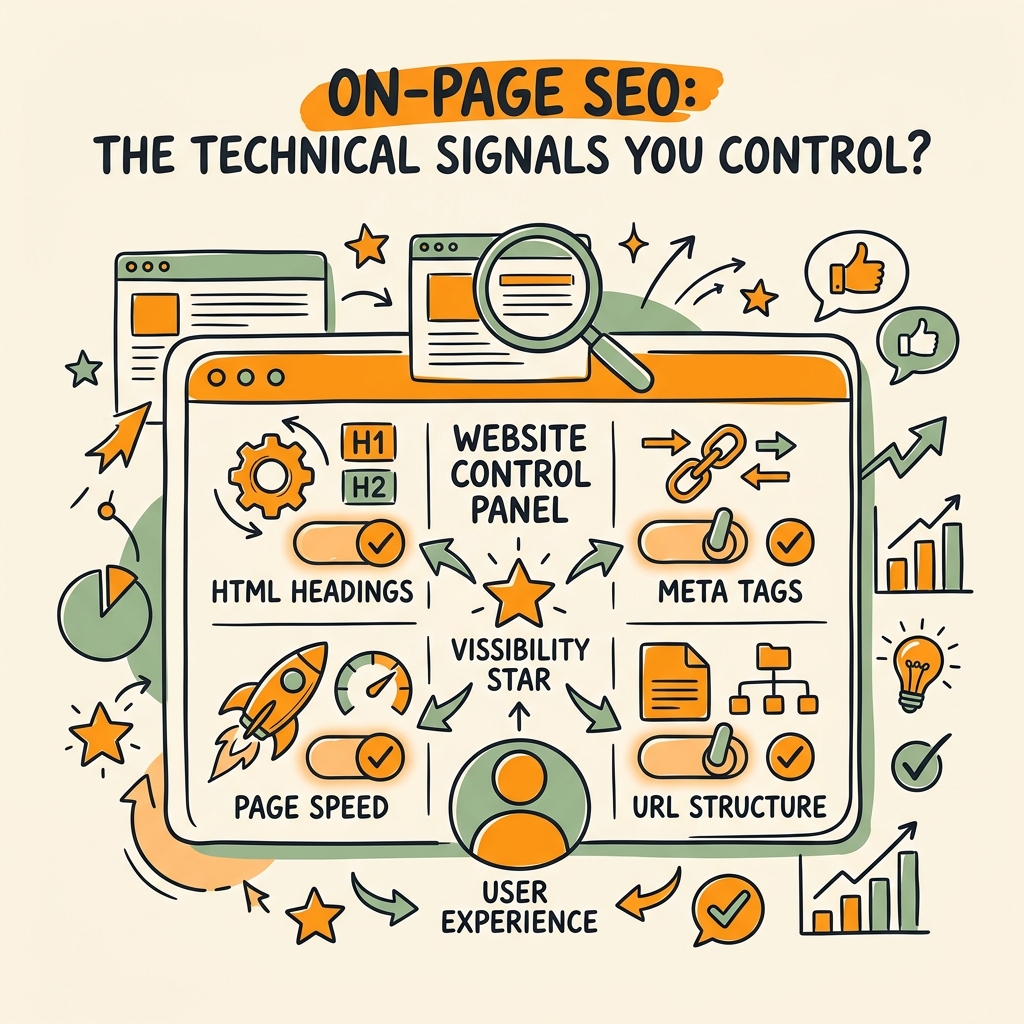
On-page SEO is every element of your article you control: title tag, meta description, headers, keyword placement, and internal linking. These don't rank your content alone, but they're the foundation. A perfect title tag with your target keyword can improve click-through rate by 20% compared to a vague title. A poorly written meta description discourages clicks even if you rank #1. Most founders ignore these as "technical details" when they directly affect traffic. Here's what matters most.
Title Tags and Meta Descriptions: The First Impression
Your title tag (the blue link text in search results) should be 50–60 characters, include your target keyword, and make a benefit promise. Bad: "SEO Guide." Good: "SEO Basics Every Founder Should Know (2026 Guide)." Your meta description (the gray text under the title) should be 150–160 characters and drive clicks. Bad: "This guide covers SEO basics." Good: "Learn keyword research, content strategy, and link-building fundamentals. The complete SEO playbook for founders scaling from zero." Test your titles and descriptions by searching your target keyword in Google and seeing how your result compares visually to competitors. If it doesn't stand out, revise it. A/B test versions over a month and keep the winner.
Headers and Keyword Placement: Making Content Skimmable
Use one H1 per page (your main title). Use H2s for major sections (each H2 should include or relate to your target keyword). Use H3s for subsections. This hierarchy helps both readers and search engines understand your content's structure. Place your target keyword in the first paragraph and at least one H2. Don't repeat the keyword so much that it feels forced (aim for 0.5–2% keyword density). Natural language matters more than exact-match repetition. Subheaders should be descriptive and answer specific questions ("Why Long-Form Content Dominates" beats "Content and Rankings"). This pattern makes your article both easy to scan and easy for Google to understand.
How Do You Build Authority Through Link Building?
Backlinks are one of the top three ranking factors in 2026. Without them, even exceptional content gets buried by competitors who invested in links. A backlink is a vote of confidence from another website, telling Google "this content is worth citing." The top three organic results account for 54.4% of all clicks—getting there requires authority. Most founders don't have time to build links, which is exactly why it compounds. While competitors are still "trying SEO," founders who outsource or systematize link-building pull ahead. Here's how.
Earning vs. Building Links: Which Strategy Fits Your Stage
Earning links means creating such valuable content that other sites naturally link to you. Building links means actively outreaching to relevant sites and asking for links. Early-stage startups should focus on earning through exceptional content, press releases, and being the original source of data. Mature businesses should build through relationships, guest posts, broken-link-building, and partnerships.
Link-building methods by maturity stage:
- Stage 1 (0–20 backlinks): Press coverage, original research, founder connections, beta user testimonials
- Stage 2 (20–100 backlinks): Guest posts on industry publications, partnership announcements, resource page placements
- Stage 3 (100+ backlinks): Skyscraper technique, broken link building, sponsorships, webinars attracting industry coverage
Most founders oscillate between "we don't need links, our content speaks for itself" (false) and "we'll spam our way to 10,000 backlinks" (worse). The truth: invest in deep, linkable content first, then build relationships with the people and sites that can link to you. Use tools to analyze your competitor's backlink profiles, not to copy them, but to identify which sites value content in your category.
Why Internal Linking Matters As Much As External Links
Every internal link from one of your pages to another is a vote of confidence within your own site. Smart internal linking distributes authority to your most important pages and helps search engines understand your content hierarchy. Link from high-authority pages (like your homepage or a well-ranking article) to new content you want to rank. Use descriptive anchor text ("best SEO tools for startups" beats "click here"). Build a linking strategy that looks like a wheel: your pillar article is the hub, and topical articles link back to it. This structure compounds your topical authority and helps newer articles rank faster by borrowing authority from established ones.
How Should You Measure SEO Success Without Getting Lost in Metrics?
Most founders measure SEO by traffic. Traffic is a vanity metric. Measure SEO by outcomes: how many leads came from organic search, what those leads cost to acquire, and whether they convert to revenue. A thousand visitors who never convert is worthless. One hundred visitors who convert is a business. Yet most founders don't even set up conversion tracking in Google Analytics. Here's the framework that matters.
The Metrics That Drive Decisions: Conversion Rate, CAC, and LTV
Organic conversion rate is the percentage of organic visitors who take an action (sign up, request a demo, make a purchase). If your organic conversion rate is 2%, you need 500 visitors to get one conversion. Track this by traffic source, not total. Calculate organic customer acquisition cost (CAC) by dividing your total SEO costs (tools, time, agency fees) by conversions gained. Compare this to your customer lifetime value (LTV). If LTV is $10,000 and your SEO CAC is $500, scale it. If CAC is $8,000 and LTV is $10,000, it barely works. Most founders don't calculate this because it's slightly tedious, which means they're flying blind. Spend one day setting up UTM parameters, conversion events in Google Analytics, and a simple spreadsheet that tracks these numbers monthly. Watch how SEO ROI becomes obvious—and how certain content clusters become obviously unprofitable.
Building Your SEO Dashboard and Reviewing Quarterly
Track these metrics monthly: organic traffic to your site, organic conversions, organic conversion rate, and organic CAC. Segment by content type (blog vs. product pages), by topic cluster, and by intent (informational vs. commercial). Review quarterly. Ask: which content clusters drive revenue? Which are underperforming? Pause investment in content that doesn't convert, and double down on winners. Most teams either check SEO metrics obsessively (burning out on day-to-day fluctuations) or never check them (flying blind). Check quarterly, act on insights, compound the wins.
Why Consistency Beats Perfection in Scaling SEO?
The real SEO challenge isn't understanding the basics—it's executing consistently without exhausting your team. Most founders write three blog posts with passion, see no results (because SEO compounds over months, not weeks), and quit. The ones who win have systems. They publish on a regular schedule, whether that's twice a week or daily. They pick a topic cluster and own it. They measure and iterate. Most teams can't sustain that manually because content production, keyword research, fact-checking, and publishing are labor-intensive.
Building Systems That Don't Require Your Constant Attention
Publishing one perfect article per quarter ranks you slower than publishing one solid article per week. SEO rewards consistency. Google's crawlers return to frequently-updated sites more often. Sites with regular publishing schedules tend to have broader keyword coverage. Teams that publish consistently compound their authority faster. The catch: most teams can't sustain weekly publishing without external support. They run out of ideas, time, or energy. This is where research-driven systems matter. Set your content pillars (the 3–5 major topics your business owns), generate keyword lists within each pillar, then create a rolling 13-week content calendar. Publish to that calendar regardless of how busy you are. Consistency compounds more than quality does.
Automation as a Multiplier for Founder-Led Growth
Tools can handle keyword research, outline generation, fact-checking, and even publishing to your CMS, freeing your team to focus on strategy and promotion. Autonomous SEO agents publish 3,000+ word articles daily, handling research, writing, and fact-verification simultaneously. This means founders can scale content output without hiring large editorial teams. The difference between a founder publishing manually and one using automation to systematize the process is roughly 10x output. Pick a system you'll actually use. Measure output quarterly. Double down on consistency over perfection.
| SEO Metric | Benchmark | Why It Matters |
|---|---|---|
| Organic conversion rate | 2.4% | Higher than paid (1.3%) and social (0.7%), showing organic visitors' purchase intent |
| SEO lead close rate | 14.6% | Far exceeds outbound leads (1.7%), indicating warm, qualified prospects |
| Top 3 organic result click share | 54.4% | Ranking position dominates traffic allocation; page two gets 0.63% |
| SEO ROI over 3 years | $7.48 per $1 spent | Highest ROI of most digital channels, improving in year 2 and 3 |
| Organic traffic share | 53.3% | Largest single traffic source for most websites, 10x organic social |
Conclusion
SEO isn't complex if you understand the fundamentals: how search engines rank content, why keywords and intent matter, what content actually wins, and how to measure success without losing sight of revenue. Founders who master these basics outpace competitors who skip them. Organic search generates the highest returns of any digital channel. The compound effect is enormous. Your competitor's first blog post won't rank. Their tenth article will start gaining traction. By article fifty, they own categories. The cost of not starting is higher than the cost of starting imperfectly.
Build a content system that works without you. Start with keyword research and topic clustering. Write comprehensive, answer-first articles. Build authority through links and internal linking. Measure by conversion and CAC. Review quarterly and double down on winners. Most importantly: publish consistently. Start your SEO agent to automate the research, writing, and publishing so your team can focus on strategy and growth instead of drowning in production tasks.
FAQs
How long does it take to rank in Google?
Most new articles take 3–6 months to rank for their target keywords, assuming decent keyword difficulty (under 50). Factors that speed this up: linking from high-authority internal pages, earning backlinks from external sites, publishing on an active domain with existing authority, and targeting lower-difficulty keywords. The first article usually takes longest because your domain has no topical authority yet. After 20–30 articles in the same cluster, subsequent pieces rank faster because Google understands your expertise. Don't expect results in weeks; expect them in quarters.
Do I need a technical SEO expert or can a founder handle it?
Most technical SEO basics (site speed, mobile-friendliness, XML sitemaps, robots.txt) can be handled by any founder with a day of learning and a CMS that doesn't actively fight you. You need a specialist only if your site has severe technical issues (crawl errors, indexation problems, poor Core Web Vitals). For most growing companies, focus your time on strategy and content, not fixing server configuration. Your CMS should handle technical SEO. If it doesn't, switch CMSs. Don't hire a person to fight your technology stack.
What's the minimum content volume I need to see SEO results?
Published 10 high-quality, linked articles, you should start seeing organic traffic. Published 30 articles in a tight cluster, you should start seeing meaningful results. Published 100 articles across your topic, you should own several keywords. But volume without consistency matters less than consistency without volume. One article per week for a year (52 articles) will outrank someone who published 100 articles inconsistently over two years. Pick a pace you can sustain indefinitely, then maintain it.