Top AI SEO Tools That Actually Improve Rankings
56% of marketers now use generative AI in their SEO workflows, yet most tools promise ranking gains they can't deliver. The difference between theoretical AI capabilities and real-world SEO results comes down to implementation. 83% of SEO professionals at companies with 200+ employees report improved SEO performance after adopting AI, but only when tools integrate keyword research, content optimization, and internal linking into a cohesive workflow. The fix isn't buying another tool—it's using the right one with discipline. Here's what separates the AI SEO tools that move the needle from the noise.
Key Takeaways
- 56% of marketers actively use generative AI in SEO, with 83% of enterprise teams reporting improved performance (2026, Neuron Expert)
- AI-driven SEO has been associated with a 45% increase in organic traffic and 38% rise in eCommerce conversions
- The strongest gains come from automation tools that combine keyword research, content optimization, and publishing—not standalone writers
- Keyword Research & Clustering: Tools like AlsoAsked and Keyword Insights automate question mapping and topic organization, reducing research time by hours per week.
- Content Optimization & Writing: Surfer SEO, Jasper, and semantic platforms analyze SERPs and rank your content against competitors in real time.
- Autonomous Publishing & Linking: Full-stack solutions that research, write, and publish entire articles daily while building internal link networks—the highest-leverage workflow.
- AI-Powered Analytics & Monitoring: Semrush and SparkToro track answer engine visibility, brand mentions, and zero-click metrics beyond traditional rankings.
- Technical Audits & Recommendations: AI agents that flag crawl errors, schema issues, and content gaps across large sites in minutes.
Why AI SEO Tools Fail (And How to Pick One That Works)
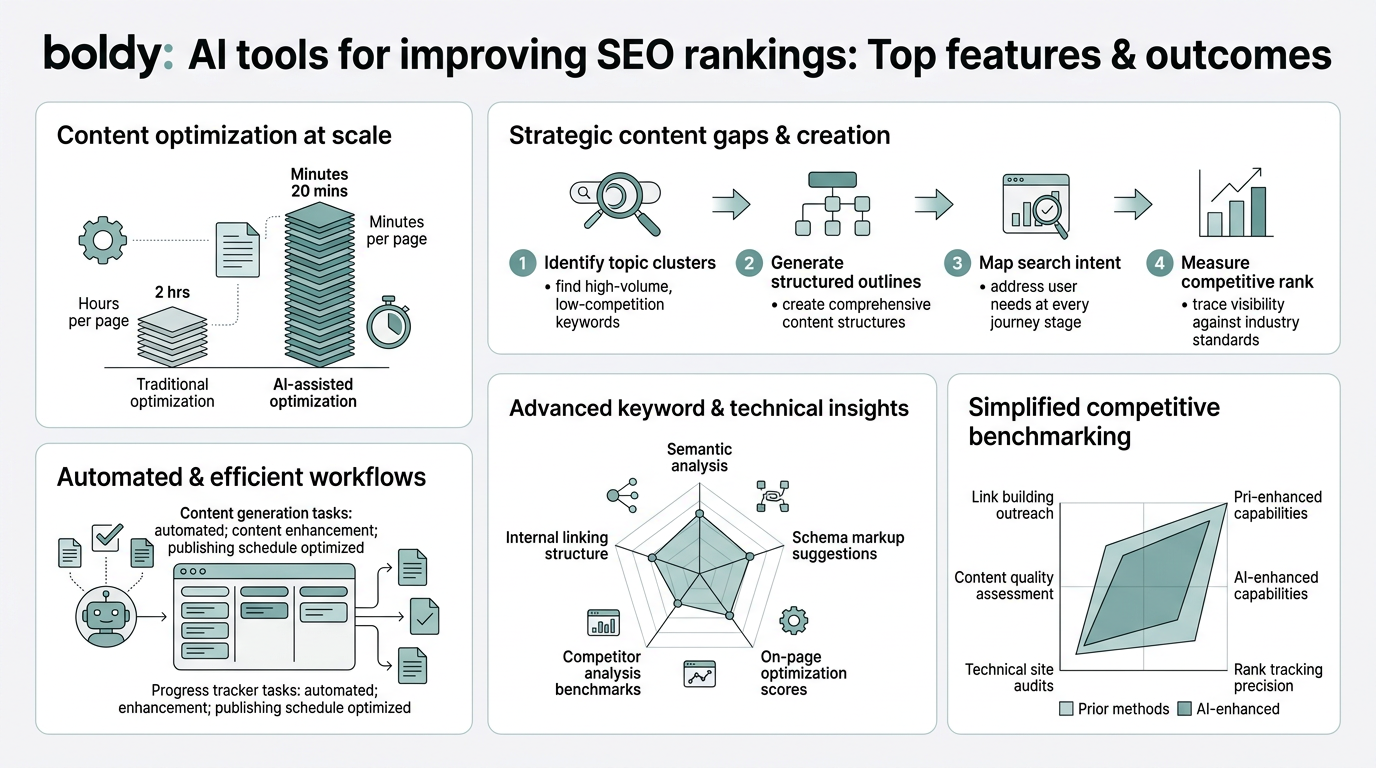
The core problem with most AI SEO tools is that they optimize for volume, not outcomes. A tool that generates 10 blog posts a week looks productive. A tool that generates 3 posts a week that each rank and convert is what you actually need. Content marketing generates 3x more leads than outbound and costs 62% less—but only when the content is built on real keyword research and answer optimization, not AI velocity. The difference between failing and winning tools isn't the AI engine; it's the process. Tools that fail typically miss one or more of these:
- No keyword research integration: The tool writes about topics nobody searches for. You publish faster, but rank nowhere.
- No SERP analysis: The tool doesn't compare your content against the pages already ranking. You outrank nothing.
- No internal linking strategy: The tool doesn't connect related content or build topical authority. Each piece sits alone.
- No publishing automation: You write in the tool, download the file, and manually upload it to WordPress. You save 20% of time, not 80%.
- No fact-checking: The AI hallucinates a statistic. Your credibility tanks.
"The tools that actually improve rankings solve all five of these problems. They research the space, analyze what ranks, optimize your content to compete, automate publishing, and verify facts before going live."
Best AI SEO Tools for Keyword Research & Topic Mapping
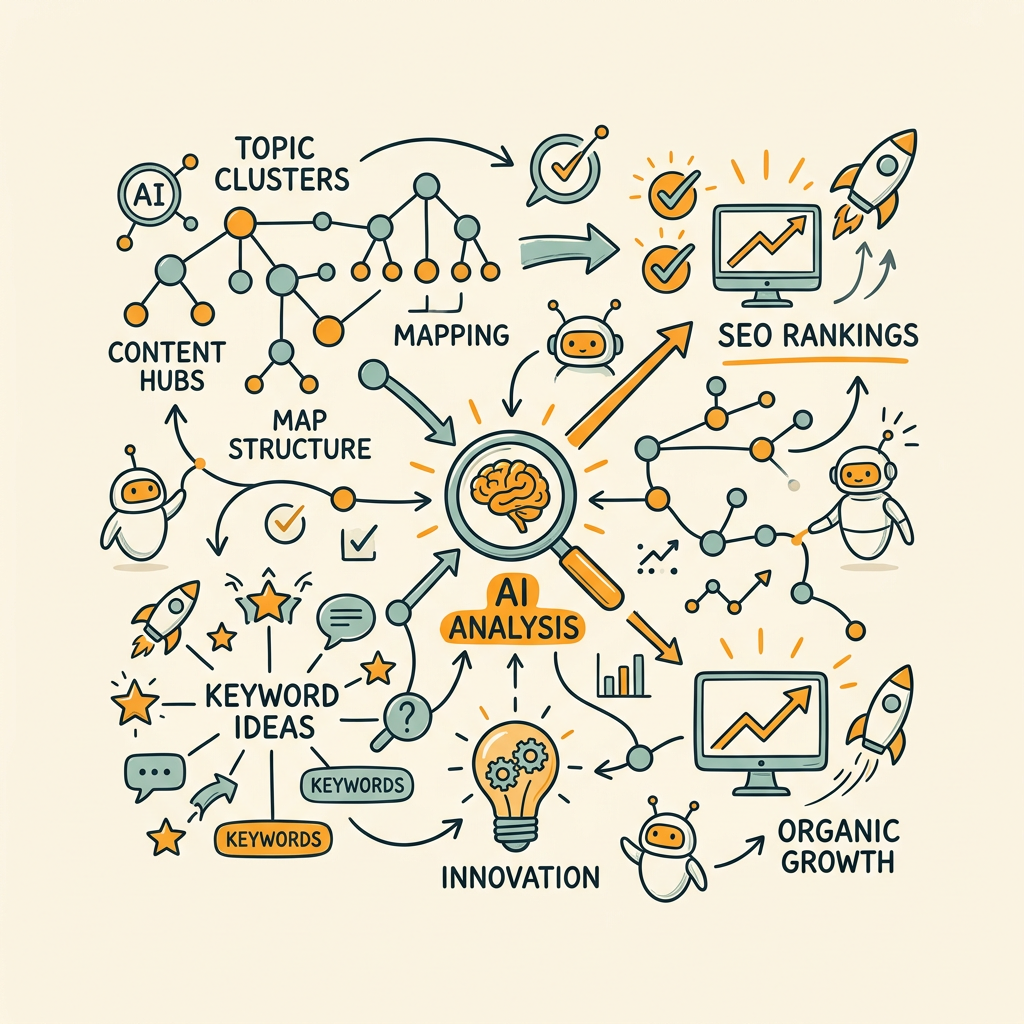
Keyword research is the foundation of all SEO. An AI tool that automates clustering, intent detection, and question mapping can save your team 8-15 hours per week. Marketers save over 5 hours per week on average by using AI workflows, according to recent industry research. But not all keyword tools are equal. The best ones integrate with your writing workflow, not sit in isolation.
AlsoAsked: Automated People Also Ask Mapping
AlsoAsked pulls real questions from Google's People Also Ask feature and organizes them into topic clusters automatically. This is your FAQ framework built in minutes. Free tier gives you 3 credits per day, which is enough for a serious content creator to map 1-2 topics daily. The value? You get a content outline that mirrors what Google's own algorithm thinks questions matter. When you answer those exact questions in your article, you're writing for signals Google already surfaces.
Keyword Insights: Clustering at Scale
If you work with 50+ keywords, Keyword Insights automates clustering and brief generation. You upload a keyword list, and the tool groups them by search intent and topic, then suggests brief outlines for each. The $1 trial lasts 7 days—long enough to test on a real project. Best for: agencies managing multiple clients or content teams with large keyword lists. The limitation is it doesn't write content, only organizes research.
SparkToro: Audience Behavior & Topic Discovery
SparkToro answers a different question: where does your audience actually spend time, and what topics resonate? It's less about keyword volume and more about audience relevance. Free tier gives 5 searches per month. The tool surfaces topics your target market cares about across web, social, and podcasts. Best for: content strategists who want to write about what audiences actually engage with, not just high-volume keywords.
Content Optimization & AI Writing Tools That Rank
Writing is the easiest step. Optimization is what separates ranked content from forgotten drafts. The best AI writing tools don't just generate words—they analyze top-ranking competitors, identify content gaps, and guide your writing to match ranking signals. 84% of marketers say AI has improved the speed of delivering high-quality content, but speed without optimization is just noise. Semrush's 2026 research shows that the integration of AI with traditional SEO signals is critical to sustained ranking improvements.
Surfer SEO: Real-Time SERP Comparison
Surfer pulls the top 10 ranking pages for your keyword, analyzes their structure, word count, semantic keywords, and backlink profiles, then gives you a real-time scorecard as you write. The interface shows you exactly how your content stacks up: your word count vs. the average, your keyword density vs. top rankers, your headings vs. what Google sees. This is the most direct feedback loop between your writing and ranking signals. Desktop and extension integration make it fast. The cost is higher ($89–199/month), but for a single writer or small team, the ranking impact usually pays for itself in months. Limitation: it's a writing helper, not a full publishing pipeline.
"The most direct feedback loop between your writing and ranking signals comes from tools that analyze the top 10 pages in real time, showing you exactly how your content stacks up against competitors before you hit publish."
Jasper: AI Content Generation with Brand Voice
Jasper uses your brand voice data to generate longer-form content that sounds like you, not like ChatGPT. The AI knows templates for blog posts, product descriptions, email, ads, and more. It also integrates SEO keywords and intent into generation prompts, so you're not starting from a blank page. The tool has a built-in editor and fact-checking layer. Cost: $39–125/month depending on usage. Best for: teams that need to scale content volume and already have editorial oversight in place. Limitation: it's better at idea generation than deep research, so you'll still need to validate facts and add original insights.
Semrush Copilot: AI-Powered SEO Assistant
Semrush's Copilot is an AI layer on top of their existing suite. It monitors your website, flags technical issues, suggests keyword opportunities, and generates content briefs based on gaps in your topic coverage. The tool analyzes your current rankings and the gaps between your content and what's ranking, then tells you what to write next. It also integrates with their broader platform, so you can go from brief to keyword research to content outline in one place. Semrush is expensive ($120/month base, more for enterprise), but teams already on the platform get immediate value. Limitation: it's part of a larger suite, so cost is higher for smaller teams.
Autonomous SEO Engines: Full-Stack Automation from Research to Publishing
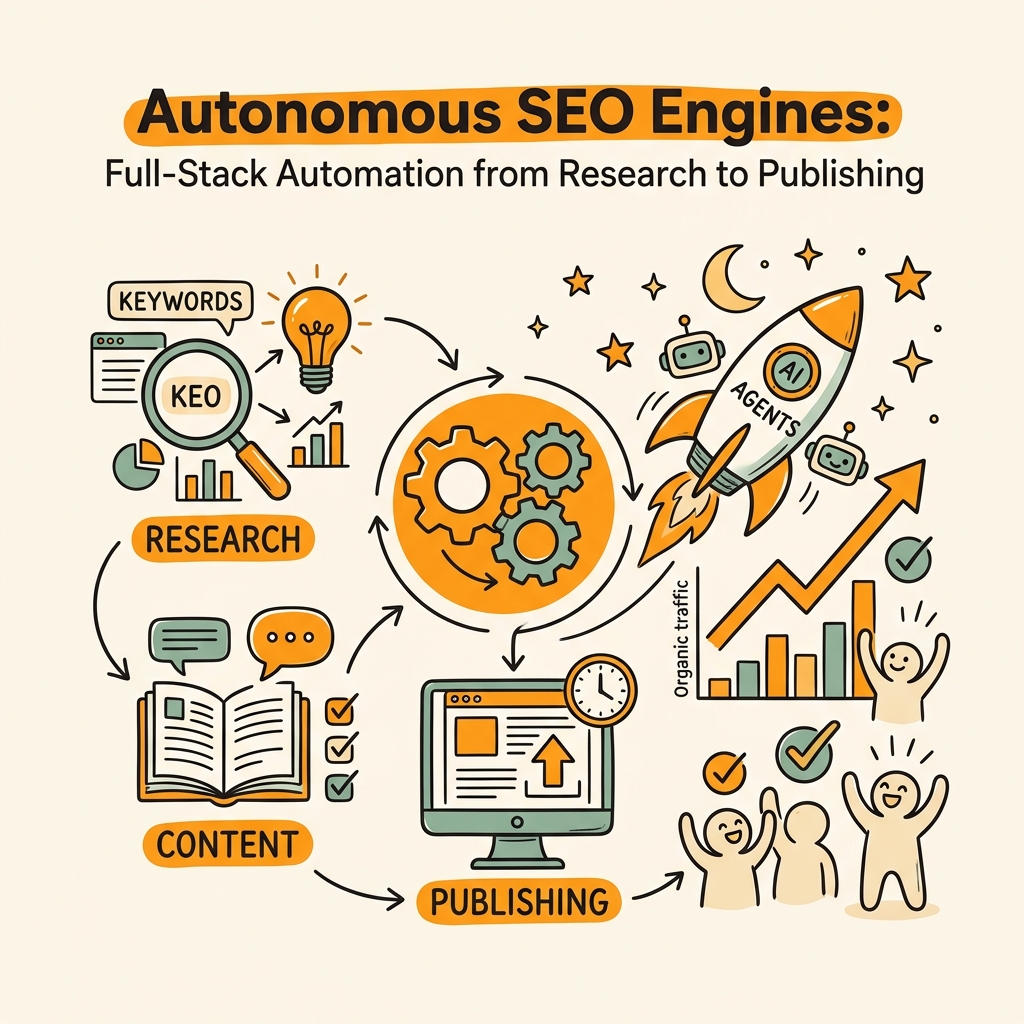
The highest-leverage approach to AI SEO is full automation: one tool that researches, writes, optimizes, fact-checks, and publishes. AI-assisted teams can produce 34% more content at equivalent quality when they use tools that handle the entire workflow. These platforms sit between a writing tool and a marketing operations system.
Jottler: Autonomous Research, Writing, and Publishing
Jottler is an autonomous SEO engine built for busy founders and scaling teams. It researches topics across 14+ sources, writes 3,000+ word articles from scratch, fact-checks claims against live data, and publishes directly to your CMS daily. The difference from other AI writers: Jottler's 12 AI agents work in parallel—one researches, one outlines, one writes, one fact-checks, one handles internal linking. The result is content that ranks because it's researched like a human would do it, not generated like ChatGPT would. Pricing starts at $29/month, scaling based on publish frequency. Best for: founders and marketing teams who want to run a content operation without hiring writers or spending hours each week publishing. You connect your site, set how many articles per day (1–5), and Jottler handles the rest. The tool also builds internal link networks, so each new article is connected to related pieces, multiplying topical authority. Limitation: it's designed for quantity at scale (3+ articles per week), so smaller teams may not need the automation power.
SEO.ai: AI Agent for End-to-End Content Planning
SEO.ai (seo.ai) automates the SEO planning step: keyword research, topic clustering, gap analysis, and brief generation. Then it integrates with writing tools to handle the drafting. The unique angle: it's built as an agent system, not a single tool, so you can mix and match with your favorite writers (Jasper, Copy.ai, etc.). The platform owns the research and planning layers. Pricing is credits-based. Best for: teams that want to keep using their favorite writing tools but need automated research and CMS publishing infrastructure. Limitation: you still need to manage the writing quality layer separately.
Content at Scale: High-Volume AI Content Production
Content at Scale is built for teams that want to publish 5–10 articles per week. It automates keyword research, content generation, and publishing. The tool also has a built-in fact-checking layer. Speed is the strength—it can publish multiple optimized articles daily. The limitation is that it prioritizes volume over the kind of deep research and internal linking strategy that drives topical authority. Best for: affiliate sites, e-commerce, and content farms that benefit from publishing frequency. Not ideal for: B2B SaaS or thought leadership, where depth and expertise matter more than volume.
AI-Powered SEO Analytics & Monitoring Tools
Ranking better only matters if you track it. AI analytics tools now go beyond traditional rankings to measure answer engine visibility, brand mentions, and zero-click metrics. Google AI Overviews reach 2 billion monthly users, yet most teams still only track blue-link rankings. The platforms below measure what actually matters in 2026 SEO.
Semrush: AI Visibility Toolkit
Semrush's AI Visibility suite tracks how often your brand appears in AI Overviews, ChatGPT, and other answer engines. It's the only tool that connects AI answer visibility back to the underlying SEO signals (keywords, content, backlinks) driving those mentions. Dashboard shows your visibility trend, which competitors are stealing your space, and what content to refresh. The data is real—Semrush tracks actual AI-generated summaries, not estimated. Cost is $120+/month for the full suite. Best for: enterprise teams or agencies that need to justify SEO spend to executives by showing brand visibility across all search surfaces, not just Google.
"AI answer visibility is now as important as traditional rankings. Teams tracking only blue-link positions are missing 2 billion monthly users on Google AI Overviews and missing the competitive shifts happening in answer engines."
Ahrefs: Content & Link Analysis
Ahrefs is the gold standard for backlink analysis and competitive content research. The AI layer here is more subtle—it uses machine learning to predict which content topics will link well, which gaps exist in your competitor's content, and which new pieces will likely earn links. The tool integrates keyword research, content performance, and link data in one platform. Cost: $99–399/month depending on tier. Best for: content teams that need to understand which topics will drive authority, not just traffic.
Comparison: Which AI SEO Tool Fits Your Goals?
| Tool | Primary Strength | Best For | Starting Price | Automation Level |
|---|---|---|---|---|
| Jottler | End-to-end automation: research, write, publish, link | Scaling teams publishing 3+ articles/week | $29/mo | Highest (full workflow) |
| Surfer SEO | Real-time SERP analysis during writing | Individual writers optimizing for rankings | $89/mo | Medium (writing only) |
| Jasper | Brand voice preservation + AI generation | Content teams with editorial oversight | $39/mo | Medium (writing + templates) |
| AlsoAsked | Automated FAQ & question mapping | Single creators & small teams | Free (3 credits/day) | Low (research only) |
| Semrush | AI answer engine tracking + SERP analysis | Enterprise teams, agencies | $120/mo | High (tracking + recommendations) |
| Content at Scale | High-volume publishing (5–10/day) | Affiliate & e-commerce sites | $60/mo | Highest (full automation) |
How to Actually Use AI SEO Tools to Improve Rankings
Buying a tool is not a strategy. The teams that see real ranking improvements follow a process: research → optimize → publish → measure. AI tools accelerate each step, but they don't replace the process. Here's the workflow that works.
Step 1: Start with Research, Not Writing
Use a keyword research tool (AlsoAsked, Keyword Insights, SEMrush) to identify topics with real search volume and low competition. This step separates winners from time-wasters. You're not writing about what you think people want to read—you're writing about what people actually search for. If your tool doesn't include keyword difficulty or search volume data, it's incomplete research. Spend time here. Most teams rush through research and pay for it in zero-ranking content.
Step 2: Analyze What's Currently Ranking
Before you write a single word, pull the top 10 results for your target keyword. Use Surfer SEO or an AI content generator that analyzes SERP data to see what structure, length, and keywords those pages use. You're not copying them—you're identifying the baseline you need to beat. Most AI writing tools skip this step, which is why their output ranks nowhere.
Step 3: Write with Optimization in Mind
If you use Surfer, Jasper, or Semrush, you'll get real-time feedback on your draft. Aim to match or exceed the top ranker in word count, semantic keywords, and structure. But don't stop there—add original research, primary data, or expert interviews that the competitors don't have. This is where you win: same structure as the rank 1 result, plus better research or unique perspective.
Step 4: Build Internal Links While Publishing
Tools like Jottler automatically link new content to related existing articles, multiplying the impact of each piece. If you're publishing manually, spend 5 minutes linking your new article to 3–5 existing related pieces. This compounds topical authority and sends ranking signals that you have depth on a topic.
Step 5: Measure Beyond Rankings
Track organic traffic, conversions, and brand mentions alongside rankings. Content marketing returns about $3 for every $1 spent when measured correctly, but basic analytics tools often undercount this by 2x. Use a platform like Semrush that shows zero-click visibility, AI answer inclusion, and assisted conversions. If your metric is only ranking position, you're leaving money on the table.
Red Flags: AI SEO Tools to Avoid
Not all AI SEO tools are built equal. Watch for these warning signs before buying:
- No keyword research included: If the tool only writes content, it can't guarantee you're writing about topics people search for. Pass.
- No fact-checking: If the tool doesn't verify claims against live sources, you'll publish hallucinations. Ask for a demo of their fact-checking layer.
- No SERP analysis: If the tool doesn't compare your content to top rankers, it's guessing at optimization targets. The best tools show you exactly how your draft stacks up.
- No internal linking automation: If you publish but manually link, you're doing 70% of the work the tool should handle.
- Marketing claims over performance data: If the vendor promises "guaranteed rankings" or "3x traffic in 30 days," they're lying. Real tools show you how to rank, not promise outcomes.
- No publishing integration: If you write in the tool but download and upload manually, the tool saved you 20% of time, not 80%.
Conclusion
The difference between AI SEO tools that improve rankings and those that don't comes down to process. 56% of marketers now use AI in SEO, but only 83% of enterprise teams report performance gains—which means execution matters more than the tool. The best tools (Jottler, Surfer, Semrush, Jasper) are built around a complete workflow: research, optimization, publishing, and measurement. If a tool handles only one or two steps, you'll spend time filling the gaps yourself. For busy founders and growing teams, the highest-leverage move is automating the entire pipeline. Start your SEO agent with Jottler if you're publishing 3+ articles per week. For single creators or smaller budgets, Surfer + AlsoAsked is a powerful combo at $150/month combined. The key is choosing tools that automate the research and optimization layers, not just the writing. Content that ranks comes from research, not from AI velocity.
FAQs
What AI SEO tool actually improves rankings the most?
The tool that improves rankings most is the one you use consistently with a real workflow. That said, the tools with the highest ranking impact tend to combine keyword research, SERP analysis, content optimization, and internal linking in one platform. Jottler automates all four steps end-to-end, which is why teams using it report seeing ranking improvements within 4-8 weeks of consistent publishing. If you're starting with a smaller budget, Surfer SEO for optimization plus AlsoAsked for research questions is a proven combo. The mistake most teams make is buying a writing tool and expecting rankings to follow—research and optimization are where the ranking gains actually come from.
Can free AI SEO tools improve rankings?
Free tools can improve rankings if you combine them strategically. AlsoAsked (free tier: 3 credits per day) gives you FAQ research. ChatGPT or Gemini can draft content if you provide a detailed brief. Google Search Console shows you what queries are already bringing impressions. The limitation is that free tools don't integrate—you'll research in AlsoAsked, draft in ChatGPT, optimize in Google Search Console, and publish manually. The time you save on the tool is lost to manual workflow steps. Paid tools like Surfer or Jasper become cost-effective once you're publishing 2+ pieces per week, because the integration saves you 10+ hours monthly.
How long does it take to see ranking improvements from AI SEO tools?
Ranking improvements typically appear within 4-12 weeks of consistent publishing with optimized content. The timeline depends on three factors: keyword difficulty (easier keywords rank faster), domain authority (established sites rank faster), and content velocity (publishing regularly signals relevance). A new site publishing one optimized article per week might see first rankings in 8-12 weeks. An established site with topical authority publishing 3-5 articles per week can see improvements in 4-6 weeks. Tools like Jottler accelerate this by handling research and optimization automatically, so you're compounding the publishing velocity without sacrificing quality. The mistake is expecting day-one rankings—SEO compounds over time.