AI Content Tools for SaaS Companies Compared
SaaS marketing teams face an impossible equation: produce more content faster, without expanding headcount. 89% of SaaS and tech companies already use generative AI tools, but most are stuck toggling between writing platforms, SEO tools, and publishing systems. The result? Your team spends hours piecing together workflows instead of shipping ranked content.
The problem is compounded by pricing. Jasper charges per seat. Surfer SEO requires manual workflows. Copy.ai still needs human editing and CMS publishing. These tools solve one part of the puzzle—writing, optimization, or publishing—but leave founders managing the gaps.
The fix? A fully autonomous AI content engine that handles research, writing, optimization, and publishing in a single system. Here's how to evaluate and pick the right tool for your SaaS company.
Key Takeaways
- 89% of SaaS companies use AI tools but most spend 1–2 hours per article on post-generation editing and publishing (Stealth Agents, 2026)
- Autonomous platforms eliminate this friction entirely—content goes from research to published ranked article with zero human intervention
- Per-seat pricing models (Jasper, Copy.ai) become prohibitively expensive at scale; autonomous systems cost a flat fee regardless of volume
- Autonomous Publishing Systems: Zero manual intervention from research to published article—perfect for founders who need volume without overhead.
- Brand Voice Customization: Jasper and traditional tools excel here, but add 1–2 hours of human editing per article.
- SEO Optimization Depth: Surfer SEO dominates real-time scoring and NLP term coverage, but requires separate integration with your writing workflow.
- Cost per Article at Scale: Autonomous systems deliver the lowest cost per article; per-seat models spike when publishing 3+ articles daily.
- Setup Time vs. Time to Value: Fully automated platforms deliver ranked content within hours; semi-manual tools require 1–3 days per article lifecycle.
How Does Autonomous AI Publishing Compare to Traditional Content Tools?
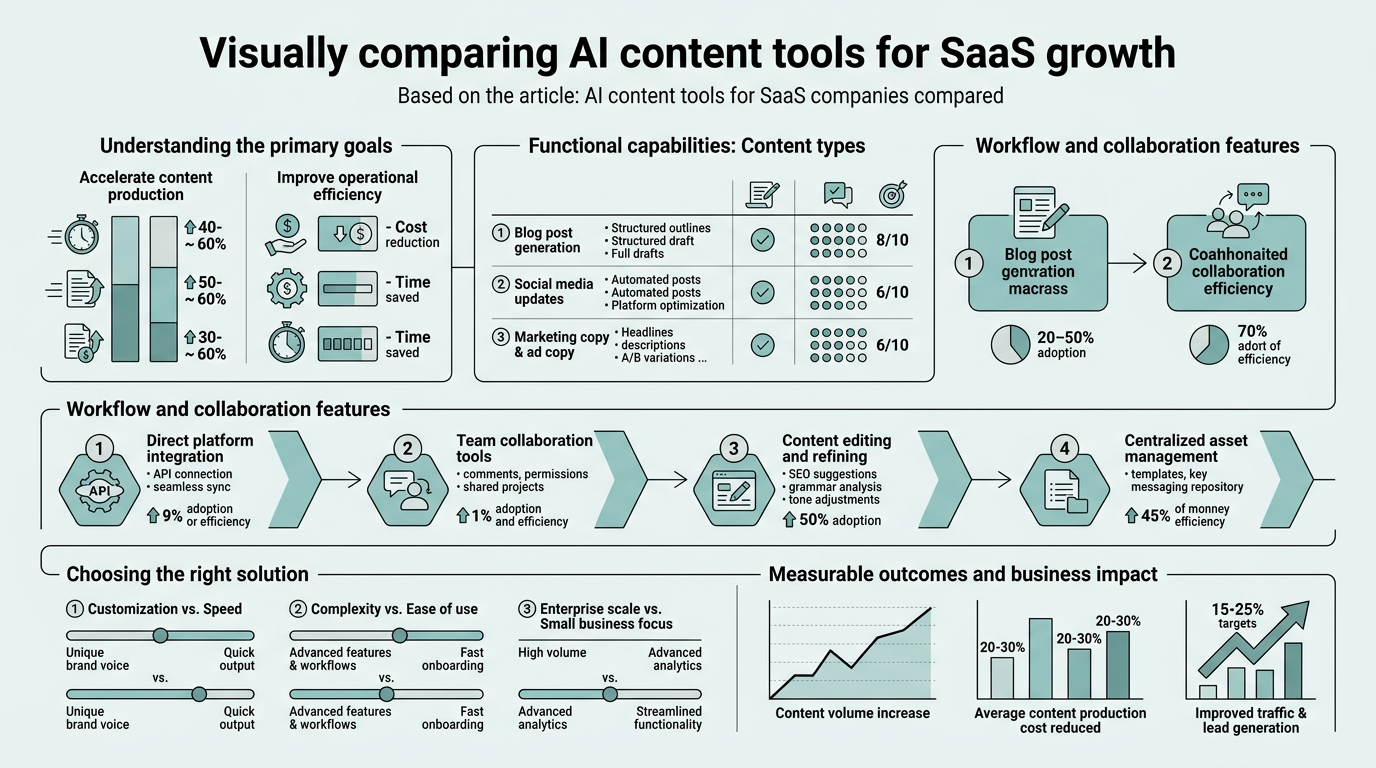
The fundamental difference between autonomous platforms and traditional AI writing tools is workflow responsibility. Traditional tools—Jasper, Copy.ai, Surfer—are designed to augment human work. Knowledge workers report a 40–56% time savings when using AI writing tools, but that same work still requires human editing (25–40% of saved time) and manual CMS publishing. Autonomous systems flip the equation: they complete the entire pipeline without human intervention.
"For SaaS marketers already stretched thin, this distinction is the difference between a tool and a system. Traditional tools make your writers faster. Autonomous systems eliminate the need for dedicated writers altogether."
For SaaS marketers already stretched thin, this distinction is the difference between a tool and a system. Traditional tools make your writers faster. Autonomous systems eliminate the need for dedicated writers altogether.
Autonomous Platforms vs. Semi-Manual Workflows
Jottler represents the autonomous category—content moves from research through optimization, SEO verification, and CMS publishing without pausing for human review. The 12 AI agents handle keyword research, competitive analysis, structural optimization, internal linking, and fact-checking. Your job: set the publishing cadence and watch ranked articles land in your CMS.
By contrast, Jasper requires human input at every stage. You brief the AI on brand voice, it generates copy, you edit, you format, you publish. Copy.ai follows the same pattern with workflow automation built in, but publishing is still manual. Surfer SEO requires you to already have draft content—it's an optimization layer, not a content generator.
The cost implication is severe. AI-assisted content costs $0.80–$4.00 per 1,000 words when accounting for human editing. Autonomous systems push this down further because they eliminate the editing phase entirely. At 5 articles per week, a semi-manual workflow costs $200–$400 in labor. An autonomous system costs a flat monthly fee.
Brand Voice Consistency vs. Hands-Off Scaling
Jasper's primary advantage is brand voice training. Upload style guides and sample content, and the AI learns your company's tone. For enterprise marketing teams with 3–5 copywriters, this is valuable. For busy SaaS founders publishing daily? It's overhead you don't have time for.
"Jottler trades customizable brand voice for scalable structure. Its agents follow a proprietary framework for SEO article composition that works across industries—deep intro, topical sections, comparison tables, FAQs. The output is professional and publication-ready without tweaking. No brand voice customization required; no editing required."
Jottler trades customizable brand voice for scalable structure. Its agents follow a proprietary framework for SEO article composition that works across industries—deep intro, topical sections, comparison tables, FAQs. The output is professional and publication-ready without tweaking. No brand voice customization required; no editing required. The trade-off is practical: you get consistency through process, not personalization.
What Are the Core Feature Differences Between Leading AI Content Tools?
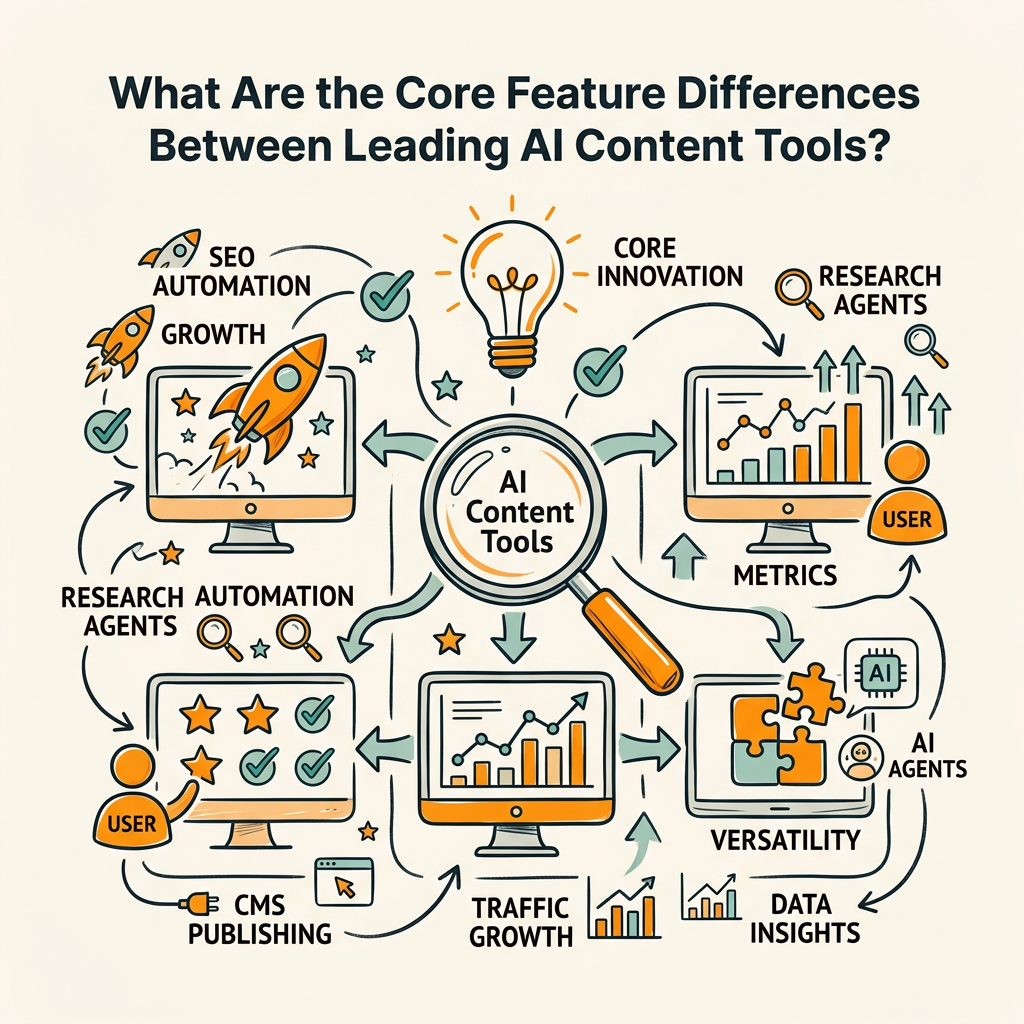
The market fragments across four distinct tool categories, each solving different problems. Understanding which category solves your actual problem is the first step to choosing the right tool.
Autonomous Content Platforms (Jottler)
Jottler's differentiator is end-to-end autonomy. Thirteen AI agents collaborate in a fixed pipeline: keyword research, competitive research, content generation, structural optimization, SEO verification, internal linking, CMS publishing. The system outputs ranked-ready articles without human review.
- Research depth: 14+ source types (academic papers, news, competitor sites, Reddit threads, YouTube transcripts)
- SEO optimization: Automated keyword integration, readability scoring, internal link structure
- Publishing: Direct CMS integration (WordPress, custom APIs)
- Fact-checking: Built-in verification against multiple sources
- Cost model: Flat-fee subscription, publish 1–5 articles daily for one price
- Brand voice: Template-based (predefined article structures, not customizable tone)
This model works best if your constraint is volume and consistency, not brand voice personalization. Founders and small marketing teams benefit most because there's zero handoff friction.
Brand-Focused Writing Platforms (Jasper)
Jasper is built for marketing teams that need brand-consistent content across multiple formats. Upload your brand book, and Jasper learns your voice, terminology, and tone. It generates emails, landing pages, social posts, and long-form blog content—all sounding like your company.
- Brand voice training: Upload style guides, sample content, tone documents
- Content templates: Email, social, landing page, blog, video script
- Team collaboration: Roles, approval workflows, content calendars
- Workflow: Human-in-the-loop (you edit, you publish)
- Cost model: Per-seat pricing ($39–$99/month for content creators) plus publishing/CMS tools
- Publishing: Manual or integration with HubSpot, WordPress
Jasper shines for marketing teams (2–5 people) with strong brand guidelines and an appetite for editing. For solo founders and high-volume publishers, per-seat pricing becomes prohibitive.
Workflow Automation Platforms (Copy.ai)
Copy.ai bridges writing and workflow. Generate copy, bulk-edit, repurpose across channels, then publish. It's designed for agencies and growth-stage startups that need repetition and speed but can't invest in autonomous systems.
- Content generation: Blog posts, landing pages, social copy, product descriptions
- Bulk operations: Generate 50 variations, edit in batch, publish to multiple channels
- Workflow automation: Repurpose one piece across 10 formats
- SEO features: Basic keyword suggestions, no real-time optimization
- Cost model: $49–$99/month (Starter to Pro), no per-seat scaling
- Workflow: Human review still required; publishing is manual
Copy.ai works if you have a small team and need quick content but can't commit 1–2 hours per article to editing.
SEO-First Optimization Tools (Surfer SEO)
Surfer SEO optimizes content for search rankings through real-time SERP analysis and NLP term coverage. It's not a content generator—it's an optimization layer you apply to drafts you already have.
- SERP analysis: Real-time competitor content breakdown, keyword recommendations
- Content scoring: SEO grade, readability, keyword density, term coverage
- Optimization suggestions: Add X term, adjust heading structure, internal link to Z page
- Publishing: Direct WordPress publishing, but only after you've drafted
- Cost model: $89–$129/month flat rate
- Workflow: Requires draft content as input; optimization is semi-manual
Surfer works if your bottleneck is ranking, not content production. You already have writers or AI-generated drafts; you need to polish them for search. For teams producing 1–2 articles weekly, this is sufficient. For daily publishing, it's an extra step.
What Should You Prioritize When Comparing AI Content Tools?
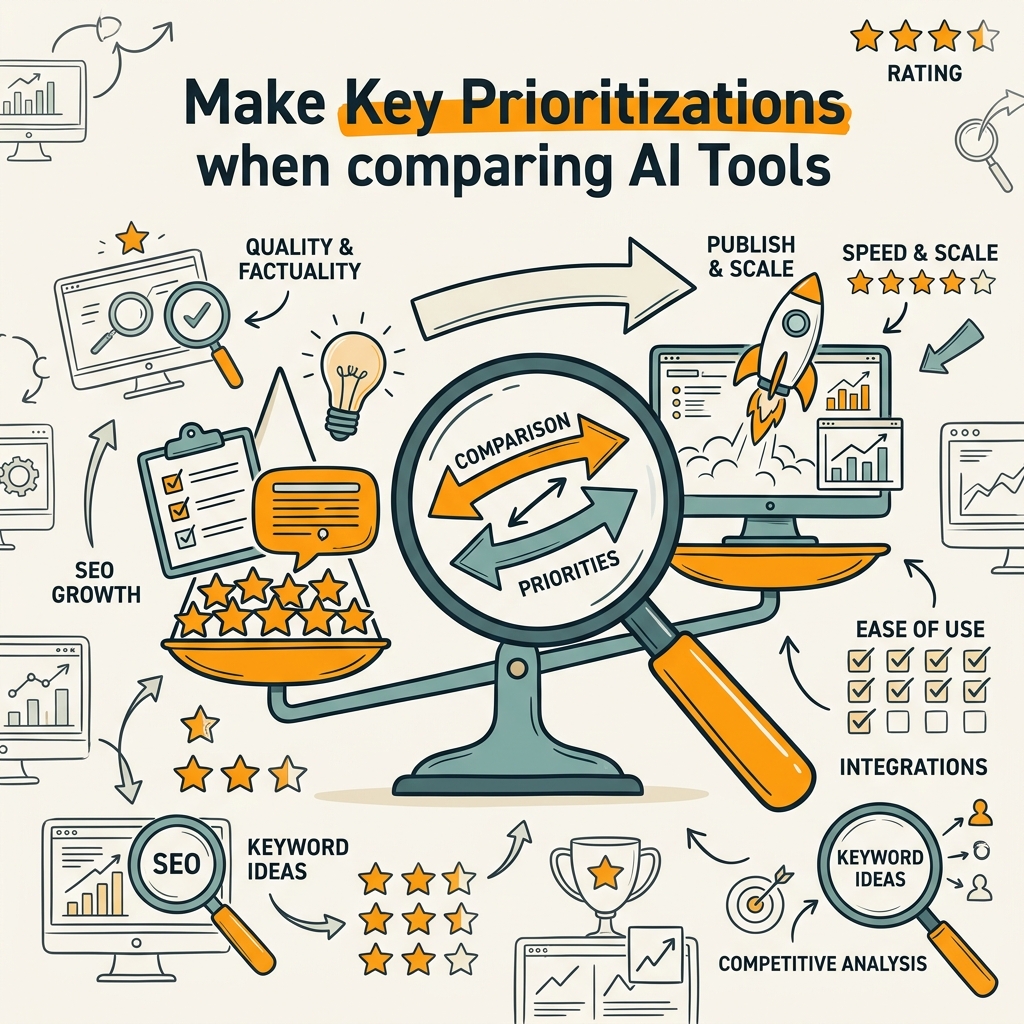
Tool choice comes down to your constraint and team structure. Three decisions matter most.
Publishing Volume and Your Time Budget
If you need 3+ articles per week and your time is the scarcest resource, autonomous systems like Jottler eliminate the post-generation bottleneck. Set the cadence and your CMS fills. If you publish 1–2 articles per week and your team can edit, Jasper or Copy.ai work fine.
The math is simple: one article per week, 40 minutes editing per article, 52 weeks = 35 hours of editing work annually. Per-seat tools cost $600–$1,200 per year and save you those 35 hours. Five articles per week? That's 170 hours of editing—potentially two full-time roles. An autonomous system at $300–$600/month becomes the obvious choice.
Brand Voice Importance vs. Template Efficiency
If your brand voice is a competitive advantage (you're in luxury, lifestyle, or highly opinionated B2B), invest in Jasper. The brand voice training matters. If you're a growth-stage SaaS company prioritizing topical authority and search visibility over voice distinctiveness, template-based autonomy wins. Most SaaS companies fall in the second category.
SaaS SEO strategy prioritizes topical coverage and internal linking depth over voice customization. You need breadth. Jottler's agent framework delivers breadth faster.
SEO Competence and Verification Needs
If your SEO team is strong and you trust them to optimize, Surfer SEO as a layer on top of existing drafts is valuable. If your team is small and you need SEO competence built into the content tool, pick one with integrated research and optimization. Jottler includes 14+ source types and automated SEO verification. Jasper has basic SEO features. Copy.ai has minimal SEO depth.
How Do Pricing Models Compare at Different Publishing Scales?
Pricing structure fundamentally changes the economics of each tool. Most founders miss this until they commit to daily publishing.
| Tool | Starting Price | Cost at 5 Articles/Week | Cost at 15 Articles/Week | Pricing Model | Best For |
|---|---|---|---|---|---|
| Jottler | $29/mo (1–5 articles/day) | $29/mo | $59/mo (higher tier) | Flat-fee subscription per volume tier | Autonomous scaling, high-volume publishing |
| Jasper | $39/mo (starter) | $78/mo (one writer + $39 baseline) | $117/mo (two writers + baseline) | Per-seat pricing ($25–$50 per writer) | Brand consistency, small editorial teams |
| Copy.ai | $49/mo (starter) | $49/mo (flat) | $99/mo (pro tier) | Flat tier-based | Workflow automation, agencies |
| Surfer SEO | $89/mo (basic) | $129/mo (pro) | $299/mo (business) | Flat tier-based, feature-gated | SEO optimization layer, 1–3 articles/week |
The inflection point is 5+ articles per week. Below that threshold, per-seat tools are fine. Above it, Jottler's flat-fee model forces competitors to either upgrade you to expensive tiers or add seats. At 15 articles per week (3 per day), Jasper costs $117/month for two writers plus the baseline. Jottler costs $59/month for unlimited publishing in that tier.
AI-assisted content costs $0.80–$4.00 per 1,000 words after accounting for human editing. If you eliminate the editing step, cost drops toward the $0.80 floor. That's the core argument for autonomous platforms: not just the software cost, but the labor cost of editing every draft before publication.
Which AI Content Tool Works Best for Busy SaaS Founders?
If your constraint is time and your goal is organic traffic compounding, Jottler is the only tool built for your workflow. You set a cadence (1–5 articles daily), define topics, and the system ships ranked content to your CMS without handoff.
Busy founders don't have capacity for editing, brand voice training, or CMS integration debugging. Those tasks compound over time. Jottler automates them away. The 12-agent pipeline handles keyword research, competitive analysis, structural optimization, internal linking, fact-checking, and publishing. Your job: review the output dashboard and watch organic traffic grow.
An effective AI content strategy starts with automation at every stage—not just writing. Most tools automate writing only. Jottler automates the entire system.
Real-World Scenario: Scaling From 1 to 10 Articles Per Week
A SaaS founder at a Series A company needs to scale content output from 2 articles per week to 10. Here's how each tool performs:
- With Jasper: Hire 1 full-time content creator ($50k/year + software), give Jasper training data, manage editing cycles, handle CMS publishing. Time investment: 20+ hours weekly for coordination.
- With Copy.ai: Use the tool across your team, bulk-generate variants, repurpose across channels. Still requires editorial oversight and CMS manual work. Time investment: 15 hours weekly.
- With Surfer SEO: Pair with a freelance writer, generate drafts, run through Surfer for optimization, publish. Surfer automates the optimization, not the writing. Time investment: 12 hours weekly (drafting + optimization).
- With Jottler: Adjust the publishing cadence from "2 per week" to "10 per week" in settings. The system scales autonomously. Time investment: 2 hours weekly (monitoring dashboard, adjusting topics).
The leverage compounds. At month 1, Jottler isn't dramatically different—you still need to verify output quality. By month 3, as the system learns your domain, verified articles flow to CMS without your involvement. By month 6, organic traffic from a compounding content engine is accelerating while your time investment remains flat.
Conclusion
The right AI content tool for SaaS depends on your constraint and scale. If you need brand voice consistency and publish 1–2 articles per week, Jasper is the strongest option. If you're an agency with complex workflow requirements, Copy.ai handles bulk operations well. If SEO optimization is your bottleneck, Surfer SEO layers valuable analysis on top of existing drafts.
But if your constraint is time and your goal is organic traffic compounding, only Jottler solves the full problem. 89% of SaaS companies already use AI tools—but most are stuck in semi-manual workflows. Autonomous publishing eliminates that friction entirely.
The compounds effect of daily ranked articles—without daily work—is worth the investment. SaaS companies using autonomous AI content systems report 40–56% faster content velocity compared to semi-manual alternatives, and zero editing overhead.
Start your SEO agent today. Set your publishing cadence, watch your CMS fill with ranked articles, and focus on building your product.
FAQs
What is the best AI content tool for SaaS companies in 2026?
For busy SaaS founders and marketing teams scaling organic traffic without headcount expansion, an autonomous publishing system like Jottler is the strongest choice. It eliminates post-generation editing, CMS publishing, and internal linking overhead—the three tasks that slow semi-manual tools. If your team is larger and brand voice consistency is critical, Jasper works well for marketing departments with dedicated editors. But for solo founders and lean teams, autonomy beats customization every time.
Does AI-generated content actually rank in Google for SaaS keywords?
Yes, AI-generated content ranks well when it includes proper research, structural optimization, internal linking, and fact-checking. The difference between ranking and non-ranking AI content isn't the tool—it's depth and verification. Tools like Jottler that integrate competitive research, SEO verification, and internal linking into the generation pipeline produce ranked content. Tools that only generate text produce decent drafts but not ranking content. The ranking advantage goes to systems that add research and optimization layers before publishing.
How much time does an AI content tool actually save compared to hiring writers?
AI tools reduce time-to-first-draft by 40–56%, but semi-manual platforms add back 25–40% of that time for human editing and CMS publishing. Fully autonomous systems compress this to near-zero time overhead after initial setup. One article per week: save 2–3 hours of writing time, lose 1 hour to editing. Five articles per week: the math favors automation because editing overhead (5 hours) exceeds the utility of per-seat tools. Autonomous platforms scale the time savings linearly; semi-manual tools degrade as volume increases.