AI SEO Tools Ranked by Founder Impact
86% of SEO professionals now use AI tools daily, yet most founders still struggle with the same bottleneck: they understand organic growth matters, but they lack the time and resources to produce consistent, high-quality content. The result? Brands publish sporadically, rankings plateau, and the founder becomes the content bottleneck.
This is where founder-first AI SEO tools make the difference. The best tools don't just optimize existing content—they automate the entire content machine, from research to publishing. We've evaluated dozens of AI SEO tools through the lens of what actually matters to founders: time saved, ranking velocity, and sustainable organic growth without operational chaos.
Key Takeaways
- Autonomous content platforms like Jottler deliver 45% organic traffic increases (2026, Neuron Expert) by automating research, writing, and publishing daily.
- 68% of marketers see higher ROI from AI SEO tools; the difference is whether tools automate the entire workflow or just one piece (2026, Semrush).
- Founders lose 5–10 hours per week on manual keyword research and content ops—time that autonomous systems reclaim for strategy.
- Autonomous Content Engines: Full-stack automation from keyword research to publishing saves founders 10+ hours per week while compounds organic growth consistently.
- On-Page Optimization Tools: Real-time SERP analysis and NLP-driven recommendations improve ranking velocity by 33% faster time-to-rank.
- Generative Engine Optimization (GEO) Tools: New category designed for AI Overviews and LLM visibility, essential since 60% of searches now yield no clicks.
- All-in-One SEO Suites: Integrated platforms handle keyword research, content optimization, and AI Overview tracking but require manual orchestration.
Why Founder Impact Matters in AI SEO Tool Selection
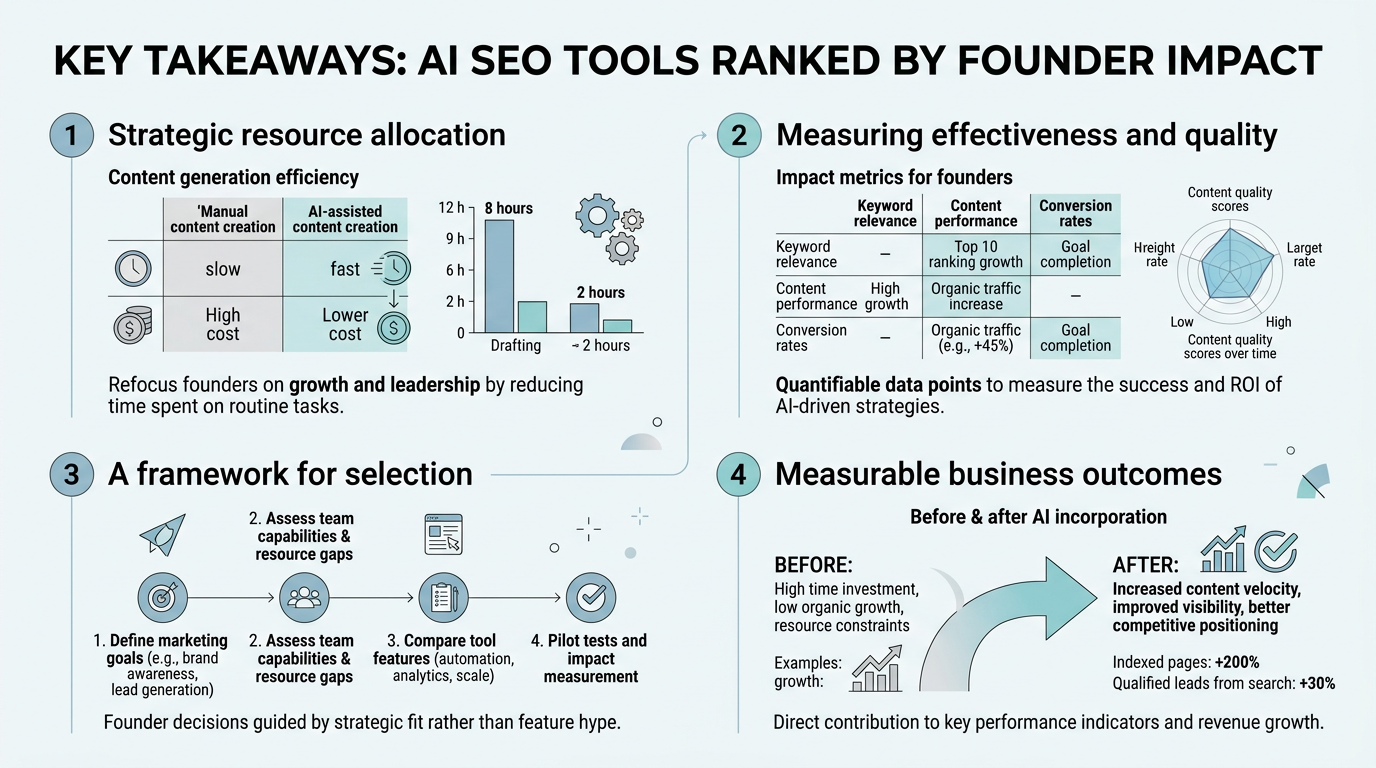
When evaluating AI SEO tools, founders have traditionally focused on feature count. Instead, the real question is: How much time and revenue will this tool actually compound for my business? Research from Semrush shows that 68% of marketers report higher ROI from AI SEO, but only 58% see 2x ROI in under six months. The difference? Founder-focused tools automate the entire pipeline, not just one step.
"The real leverage for founders isn't in tools that optimize existing content—it's in systems that produce and optimize content at scale automatically. A tool saving 2 hours per week on optimization is nice; a tool that reclaims 10+ hours per week on the entire content pipeline is transformative."
Consider the typical founder's workflow before AI: 10–15 hours per week split between keyword research (4–5 hours), content writing (5–7 hours), optimization (2–3 hours), and publishing (1–2 hours). A tool that only optimizes existing content saves maybe 2 hours. A tool that automates research to publishing? That reclaims your entire week.
The ROI Equation: Automation vs. Optimization
Optimization-first tools improve rankings of content you already created—typically a 15–25% traffic lift over 6 months. Automation-first tools compound your content volume while optimizing each piece, driving 45–70% traffic growth. The difference between a tool that helps you write better and a tool that writes for you daily is exponential. According to Seoprofy research, AI-generated answers now appear in 30% of search results, meaning your content must ship at scale to capture emerging opportunities.
Founder Constraints: Time, Expertise, and Consistency
Most founders fall into three camps:
- Too busy to outsource content
- Skeptical of outsourced quality
- Constrained by budget
AI SEO tools directly address all three. Automation cuts time by 80% for keyword research and frees founders to focus on strategy instead of tactical writing. Quality concerns vanish when the tool handles research, fact-checking, and citations. And $29–$150/month for a tool beats $5,000/month for a content freelancer.
Autonomous Content Engines: The Founder's Shortcut to Scale
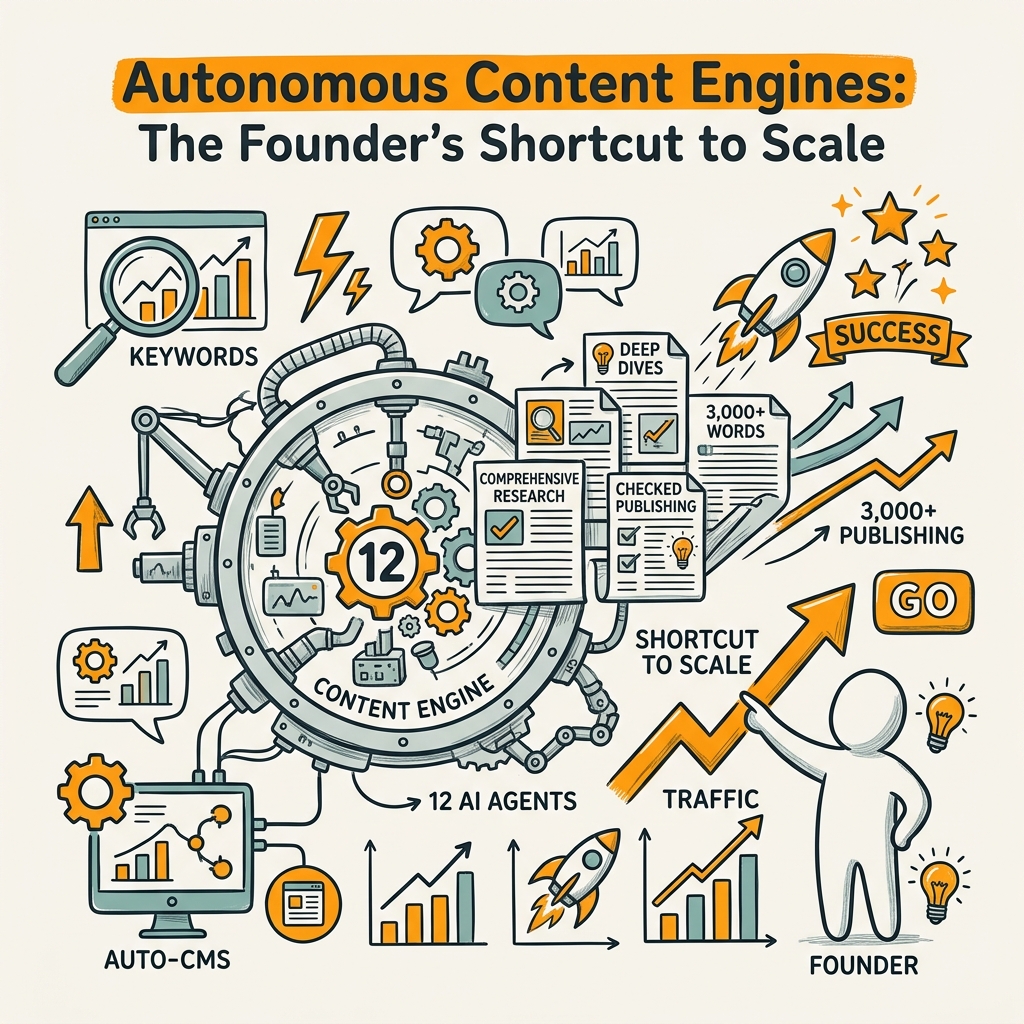
Autonomous content systems are built for founders who refuse to hire a full content team. They research, write, optimize, fact-check, and publish 3,000+ word articles automatically—compounding organic traffic without daily oversight. 67% of companies using AI SEO tools reported increased organic traffic within 3 months (Neuron Expert, 2026), primarily those using full-stack automation.
How Autonomous Systems Actually Work
The architecture is simple but powerful. Multiple AI agents work in sequence:
- Content gap agent identifies gaps in your content vs. top-ranking competitors
- Research agent pulls from 14+ authoritative sources and synthesizes findings
- Writing agent produces the article following your brand voice and SEO guidelines
- Fact-checking agent validates claims and adds citations
- Publishing agent formats, builds internal links, and pushes to your CMS
Jottler exemplifies this approach, using 12 AI agents working in parallel to automate the entire content pipeline. Founders connect their website, set a publishing frequency (1–5 articles per day), and watch organic traffic compound. The system handles keyword research, deep research verification, fact-checking, and smart internal linking that builds topical authority automatically. For founders stretched thin, this is the difference between a content strategy that ships and one that stalls in spreadsheets.
"What founders don't realize is that the bottleneck isn't writing—it's consistency. You can write one great article. But publishing 100 articles per quarter with consistent quality and internal linking strategy? That's where autonomous systems win. They don't get tired, don't skip steps, and compound SEO benefits automatically."
Trade-Off: Speed vs. Customization
The trade-off is real: autonomous systems prioritize volume and consistency over custom storytelling. You don't pick every topic or rewrite headlines based on a hunch. But for founders who need to compound SEO—not win a writing award—this is the right trade. Faster time-to-publish means faster ranking velocity. If you're publishing 100 optimized articles per quarter instead of 12, ranking inevitably accelerates.
| Tool Type | Time Investment | Content Volume | Monthly Cost | Best For |
|---|---|---|---|---|
| Jottler (Autonomous) | 0–2 hrs/week | 75–300+ articles/quarter | $29–$499/mo | Hands-off scaling |
| Surfer SEO (Optimization) | 5–8 hrs/week | 4–8 articles/week | $89–$329/mo | Optimization-focused teams |
| SE Ranking (All-in-One) | 4–6 hrs/week | 8–12 articles/week | $95–$995/mo | Integrated research + optimization |
| Jasper (Content Generation) | 3–5 hrs/week | 15–30 articles/week | $39–$125/mo | AI-assisted drafting |
| Ahrefs (Technical SEO) | 2–4 hrs/week | N/A (optimization-only) | $119–$999/mo | Technical audits |
On-Page Optimization Tools: Real-Time SERP-Driven Recommendations
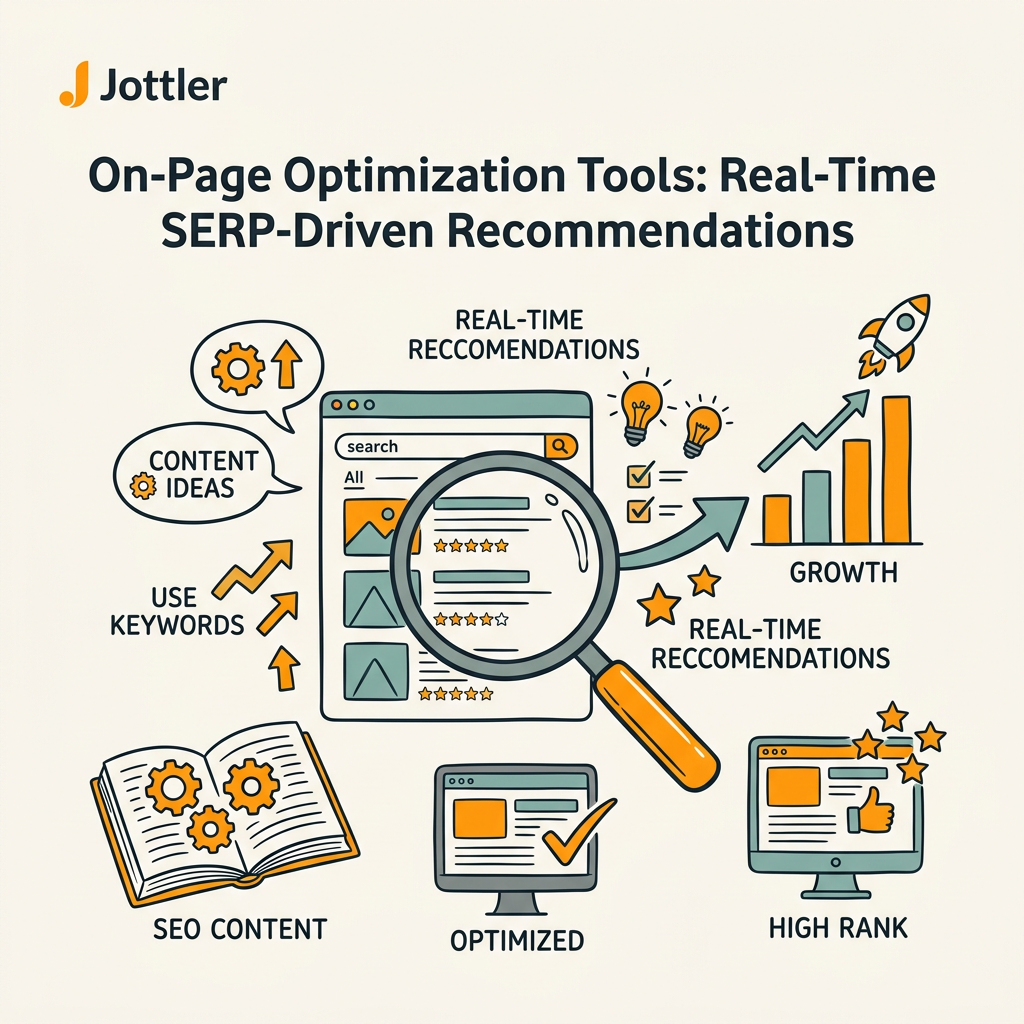
On-page optimization tools analyze your content against the top 50 Google results and tell you exactly what to change: word count, heading structure, keyword density, and semantic gaps. These tools reduce time spent on optimization by 30% while improving ranking velocity. They're not about publishing more—they're about publishing smarter.
Surfer SEO: The SERP Analysis Gold Standard
Surfer SEO leads this category. Its Content Editor analyzes the top 50 ranking pages in real-time and shows optimal article length, keyword frequency, and heading structure for your target keyword. 64% of digital marketing agencies use Surfer (SEO Sandwitch, 2026) because it delivers immediate, actionable feedback. You write an article, paste it into Surfer, and get a checklist: "Add 200 more words," "Include this keyword 3 times in section 2," "Restructure H3 headers."
The weakness: Surfer assumes you have content to optimize. It's best paired with writing automation. When combined with autonomous content production, optimization tools amplify results exponentially.
NeuronWriter: SEO + Generative Engine Optimization
NeuronWriter bridges traditional SEO and the emerging frontier: Generative Engine Optimization (GEO). It tracks not just Google rankings but also visibility in ChatGPT, Claude, and Perplexity—critical since 35% of Gen Z uses AI chatbots to search instead of Google (Semrush, 2026). The platform launched a GEO Citation Tracker in February 2026, letting founders see if their brand is cited in generative answers.
At $23/month, NeuronWriter offers extraordinary value. Founders get on-page optimization plus emerging GEO tools without enterprise pricing.
Generative Engine Optimization (GEO) Tools: The New Frontier
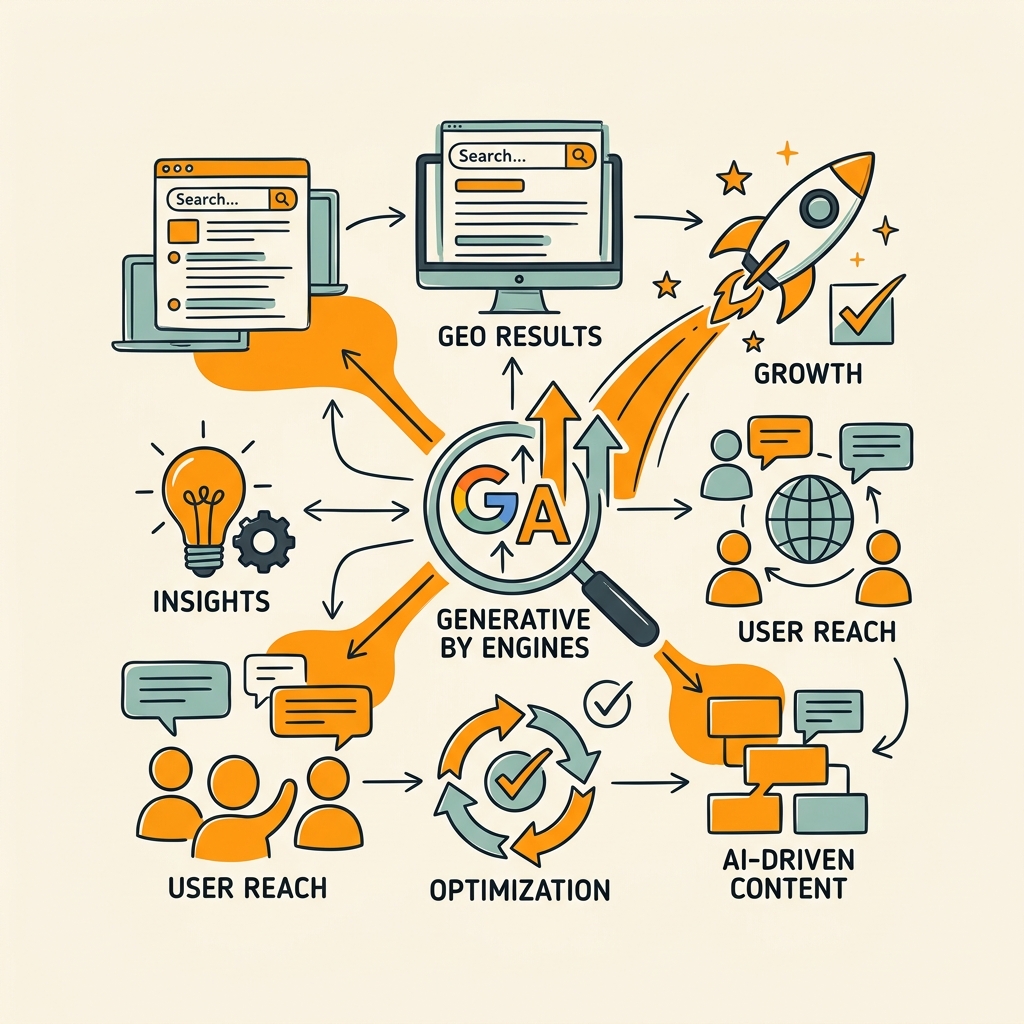
The biggest 2026 shift is that 60% of searches now yield no clicks because AI Overviews answer questions directly on the search results page. Your goal isn't just ranking #1—it's appearing in AI-generated answers, which drives 4.4x more valuable traffic than traditional organic clicks.
Why GEO Matters Now
99.9% of keywords triggering AI Overviews are informational—meaning question-based content gets cited most often. If your blog answers "How do I...?" and "What is...?" questions directly with clear, sourced answers, you'll appear in AI Overviews. GEO optimization requires a content strategy focused on direct, well-sourced answers that AI engines can extract and cite.
To rank in AI Overviews, follow these proven tactics:
- Structure content as direct answers to questions, not long-form narratives
- Include 3–5 authoritative sources per answer section
- Use clear header hierarchy (H2/H3) that AI engines can extract easily
- Add data, statistics, and original research that adds unique value
- Monitor your brand mentions in ChatGPT, Perplexity, and Claude monthly
Dageno and Rankscale.ai: New Category Leaders
Dageno represents a new category: pure GEO optimization. It shows which keywords trigger AI Overviews and what content structure is favored by ChatGPT and Perplexity. Rankscale.ai similarly specializes in AI visibility for emerging search platforms. These tools are nascent but essential for forward-looking founders.
All-in-One SEO Suites: Integration vs. Depth
All-in-one platforms like Semrush, Ahrefs, and SE Ranking consolidate keyword research, content optimization, technical audits, and backlink analysis. The benefit is unified data across your entire SEO stack. The limitation is each feature is less specialized than its dedicated competitor.
Semrush: Keyword Research at Scale with Copilot
Semrush's generative AI Copilot analyzes 28B+ keywords and suggests content angles, intent signals, and keyword clusters. For keyword research, this is transformative—you get AI-driven insights instead of manual analysis. Copilot also generates SEO briefs and content outlines automatically.
Cost is the constraint: Semrush starts at $139.95/month. For growing companies with $5K+ monthly marketing budgets, it's standard.
SE Ranking: AI Overview Tracking Integration
SE Ranking stands out for integrating AI Overview tracking. You can see which keywords trigger Google's generative answers and monitor visibility in those results. This is critical as search behavior shifts toward AI-answered queries.
Picking Your AI SEO Tool Stack as a Founder
The right stack depends on your constraint: time, money, or expertise. Here's how to think strategically.
If You're Time-Starved (CEO Running Everything)
Use an autonomous system like Jottler. You set it once, and it publishes daily. Your organic engine runs on autopilot while you focus on sales and product. The articles aren't custom-tailored to your latest campaign, but they're researched, fact-checked, and internally linked for topical authority. This is the founder's multiplier play.
If You Have a Content Team (But No SEO Specialist)
Pair Semrush (keyword research) + Surfer SEO (optimization). Your team uses Semrush Copilot to find high-intent keywords and content angles. Writers draft articles guided by Surfer's SERP data. This workflow takes 6–8 hours per article but delivers higher-quality output than automation alone.
If You're Doing High-Volume Content Play
Use Jottler for base content production (100+ articles/quarter), then layer Surfer SEO or NeuronWriter for optimization on your highest-priority pieces. This hybrid approach balances volume and quality. Content automation with selective optimization delivers the best ROI for scaling teams.
If GEO Is Your Priority (AI Visibility Over Google)
Focus on NeuronWriter (GEO Citation Tracker) or Dageno. Structure content to answer questions directly with sources. Monitor AI visibility alongside Google rankings. This is essential if your audience skews young or tech-forward.
Conclusion
The best AI SEO tool for your business is the one that removes your constraint. For busy founders, that's an autonomous system like Jottler that handles research, writing, optimization, and publishing—delivering 45% organic traffic increases without daily oversight. Founders using autonomous platforms report saving 10+ hours per week while scaling from 12 articles per quarter to 100+.
The 2026 SEO landscape is bifurcated: traditional optimization wins with Google's ranked results, while GEO tools win with AI Overviews and generative search. The founders winning hardest are those layering both—automating base content production while strategically optimizing for AI visibility on their top keywords.
Your organic growth is compounding right now whether you act or not. The question is: will you compound it on your terms, or let competitors capture the traffic? Start your SEO agent and reclaim 10 hours per week of your life while your content machine runs 24/7.
FAQs
What AI SEO tool saves the most time for founders?
Autonomous content platforms like Jottler save the most time because they handle research, writing, optimization, and publishing automatically. Founders using such systems save 10–15 hours per week compared to manual writing or optimization-only tools. The system researches topics from 14+ sources, writes 3,000+ word articles, fact-checks all claims, and publishes directly to your CMS. Other tools like Surfer SEO or Semrush still require you to create content manually—they just make the optimization or research steps faster.
Which AI SEO tool is best for ranking in AI Overviews?
NeuronWriter and Dageno are purpose-built for Generative Engine Optimization (GEO). They track which keywords trigger AI Overviews and show you what content structure and sources are getting cited by ChatGPT, Perplexity, and Claude. NeuronWriter's GEO Citation Tracker, launched in February 2026, is currently the most comprehensive solution. Since 99.9% of AI Overview triggers are informational keywords, structure your content as direct answers with clear headers and authoritative sources.
Can I use a free or cheap AI SEO tool instead of paying $100+/month?
Cheap content generators like Jasper ($39/month) or basic AI writing tools create volume fast, but they skip research and fact-checking—critical for ranking. 68% of marketers see higher ROI from paid AI SEO tools because they integrate keyword research, SERP analysis, and verification. If budget is tight, start with NeuronWriter ($23/month) for optimization, or use free tools like ChatGPT paired with manual verification. For founders who value their time, the $29/month entry tier of Jottler delivers full-stack automation—research, writing, and publishing—making it the best value when your time is the constraint.