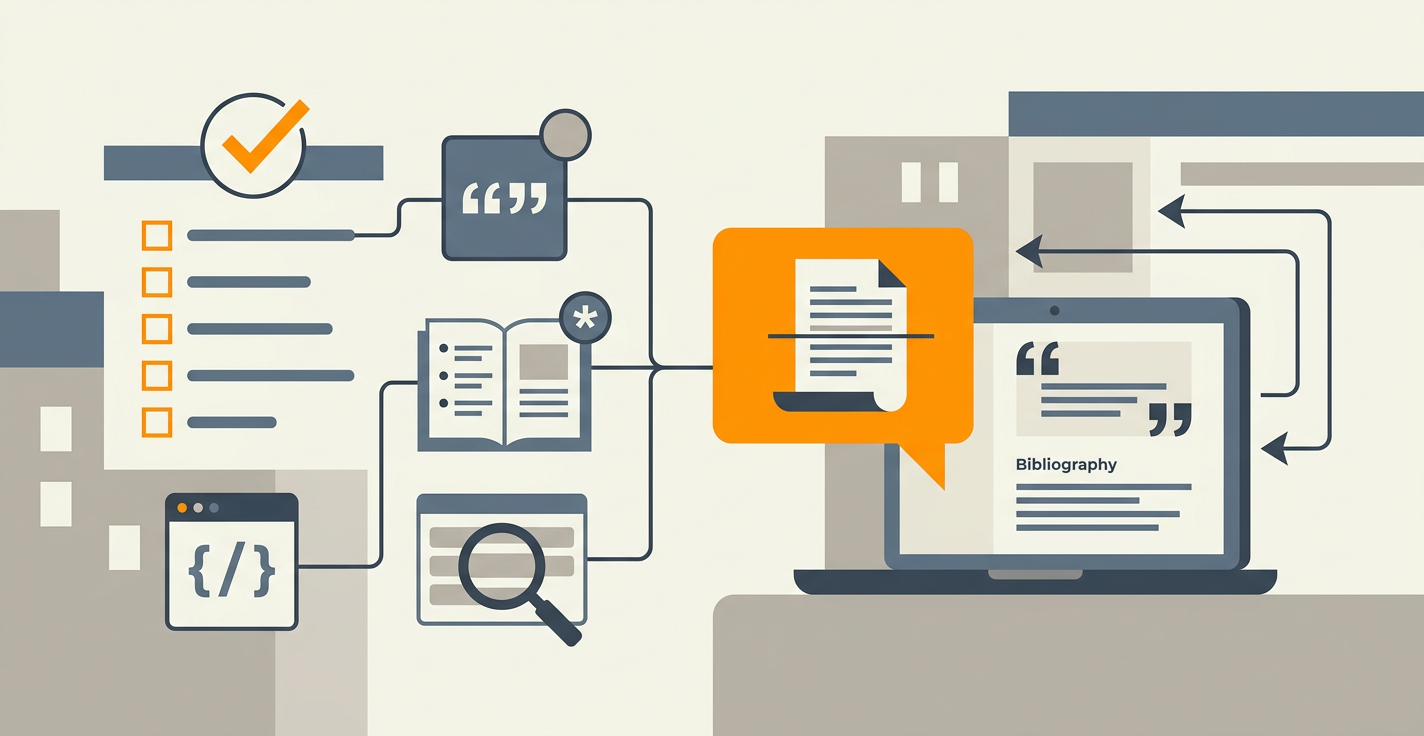
How to Get ChatGPT Citations: The 2026 Checklist
ChatGPT now serves 800 million weekly users, and a growing share of them see web citations under the answers (Reuters, 2025). Those citations are the new search result. Earning them is a specific engineering problem with a specific checklist, not a vibe.
This post answers one question: how do you get ChatGPT citations pointing at your site instead of a competitor's? The rules come from OpenAI's own bot documentation, from how ChatGPT Search selects live sources, and from what actually gets quoted in answers today.
Key Takeaways
- ChatGPT citations come from ChatGPT Search, which selects live sources through a Bing-backed index plus live fetches by the ChatGPT-User and OAI-SearchBot agents. If those bots cannot reach your page, you cannot be cited.
- To be eligible for ChatGPT citations, a page needs four things: Bing indexation, a robots.txt that allows GPTBot, ChatGPT-User, and OAI-SearchBot, an answer-first content structure, and authority signals on the domain.
- Freshness is weighted heavily. Pages updated in the last 90 days are cited more often than evergreen pages with the same topical fit, so a dated review cycle beats one-and-done publishing.
- The practical checklist is twelve items long. Nail it on one article first, then template it.
How ChatGPT Search Actually Picks Its Sources
ChatGPT Search is the feature that shows web citations. It launched inside ChatGPT in late 2024, then rolled out to logged-out users through 2025 (OpenAI, 2024). When a user asks something time-sensitive or factual, ChatGPT runs a live web retrieval and stitches the top sources into a cited answer.
Three distinct bots touch your site during this process, and they each have a different job.
GPTBot
GPTBot is OpenAI's training crawler. It scrapes the open web to improve future models. GPTBot does not directly feed ChatGPT Search, but blocking it tells OpenAI something about your preferences. Most sites should allow it, because being in the training data shapes default answers even when ChatGPT is not searching.
ChatGPT-User
ChatGPT-User fires when a user or a custom GPT clicks a link or asks ChatGPT to read a specific URL. It is a live, on-demand fetcher. If ChatGPT-User is blocked, the assistant literally cannot open your page mid-conversation, which removes one of the cleanest paths to citation.
OAI-SearchBot
OAI-SearchBot is the crawler that builds and refreshes the ChatGPT Search index. This is the one that most directly governs whether you can be cited in a search-style answer. OpenAI documents all three bots and their IP ranges at platform.openai.com/docs/bots.
Allow all three in robots.txt unless you have a compliance reason not to. A single Disallow line here is the most common reason a well-written article never gets cited.
The Bing Indexation Layer You Cannot Skip
ChatGPT Search does not build a full web index from scratch. It relies on Bing's index as a backbone, then layers OpenAI's own retrieval on top. If Bing does not know your page exists, ChatGPT Search usually does not either.
This is the single biggest fix for most sites. Submit your sitemap to Bing Webmaster Tools. Verify domain ownership. Use the IndexNow protocol to push fresh URLs the moment you publish. Pages that are indexed by Bing within 24 hours of publication have a meaningfully better shot at landing in early ChatGPT answers, because the assistant pulls from what is fresh.
If your technical SEO stops at Google Search Console, you are shipping to half the audience. Bing is the connective tissue between your publishing workflow and AI search visibility.
Freshness, Authority, and Answer Shape
Crawlability gets you eligible. Three other factors decide whether you actually get picked.
Freshness. ChatGPT Search weights recently updated pages heavily for any query with a time component. A piece from 2022 with great content loses to a piece from this quarter with decent content on the same topic. Keep a quarterly review cycle on your top pages, bump the published date honestly when you update, and let OAI-SearchBot re-fetch.
Authority. Domain-level signals still matter. Backlinks, brand mentions, and E-E-A-T markers feed both Bing's ranking and the re-ranker ChatGPT applies on top of retrieval. A page on a domain with real authority gets cited before a better-written page on a brand-new domain.
Answer shape. ChatGPT wants to extract a clean, self-contained answer it can paraphrase or quote. The pages that get cited tend to lead with the answer, then expand. A question-shaped H2 followed by a 40-to-60-word direct answer is the unit ChatGPT eats most cleanly. Our guide on answer engine optimization goes deeper on this format.
The 12-Point ChatGPT Citations Checklist
Run every article you want cited through this list. If a box is not checked, fix it before worrying about the next piece.
- Robots.txt allows GPTBot, ChatGPT-User, and OAI-SearchBot. Verify with a live fetch of yoursite.com/robots.txt. One missing user-agent line breaks the pipeline.
- The page is indexed in Bing. Check via site:yourdomain.com/slug in Bing, not Google. Submit through Bing Webmaster Tools if missing.
- IndexNow is firing on publish. WordPress, Webflow, and most modern CMSs support this with a plugin or an endpoint. It closes the gap between publish time and Bing knowing about the page.
- The article opens with a direct answer to the headline question. First 40 to 80 words, no preamble.
- Headings are phrased as questions or clean noun phrases. Question-shaped H2s and H3s map directly to the way ChatGPT users phrase prompts.
- A Key Takeaways block sits near the top. Three to five self-contained bullets. This is the block LLMs extract when they paraphrase.
- Stats are real, sourced, and recent. ChatGPT down-weights pages that cite outdated or broken stats. Every number should link to a primary source.
- Schema markup is present. Article, FAQPage, and BreadcrumbList at minimum. Schema is not a direct ranking factor, but it helps retrieval systems parse the page.
- Meta title and H1 contain the query. ChatGPT still relies on classic title and H1 signals during retrieval.
- The page links out to credible sources. Outbound citations signal that you did real research, which correlates with being cited yourself.
- Internal links point to the page from related articles. Authority flows through your own site first. A cluster of linked, topically adjacent pages outperforms a single orphan post. Our internal-linking method is covered in the content cluster strategy guide.
- The page has been updated in the last 90 days. Even a small, honest edit plus a bumped date works.
Miss one of these on a top-priority article and you will watch ChatGPT cite a weaker page on a better-configured domain instead.
Where Jottler Fits
Most teams fail this checklist not because it is hard, but because nobody owns it. A writer owns the draft. A developer owns robots.txt. SEO owns Bing. Nobody owns the intersection.
Jottler is built around that intersection. Every article the content engine produces is researched against live SERP data, written answer-first, shipped with a Key Takeaways block, tagged with schema, and auto-published to a CMS that pings IndexNow. The ai-citation formatting layer is not an afterthought; it is the default shape of every draft. One person can run a citation-ready publishing program instead of three.
Frequently Asked Questions
How long does it take to get cited by ChatGPT after publishing an article?
Expect 1 to 8 weeks in most cases. Bing needs to index the page first, then OAI-SearchBot needs to crawl it, then the page has to win a live retrieval against competitors. IndexNow, strong internal links, and a fresh publish date can compress that window toward the short end.
Does blocking GPTBot stop me from being cited in ChatGPT Search?
No, not by itself. GPTBot governs training data, not search. ChatGPT Search retrieval is driven by OAI-SearchBot and ChatGPT-User. If you only block GPTBot, you can still be cited, but if you block all three, ChatGPT Search cannot reach your page and you will drop out of answers entirely.
Do ChatGPT citations send real traffic?
Yes, and the volume is climbing. Similarweb reported that ChatGPT referral traffic to publishers and SaaS sites rose sharply through 2025, with ChatGPT joining the top ten referral sources for many information-heavy sites. It is still smaller than Google, but it is a real channel with qualified clicks.
Is schema markup required to get ChatGPT citations?
It is not strictly required, but it helps. Article and FAQPage schema make it easier for retrieval systems to parse and extract the correct answer from your page. Sites that use schema tend to get cited more cleanly, with the right snippet lifted rather than a middle-of-the-article sentence.
Why does ChatGPT keep citing my competitor instead of me?
Almost always one of three reasons. Their page is fresher, their domain has more authority for the topic cluster, or their answer is more extractable because it sits at the top of the article in a clean 40-to-60-word form. Audit all three before blaming the model.
Close
ChatGPT citations are not a lottery. They are the predictable output of crawlability, Bing indexation, freshness, authority, and answer-first structure. Fix the twelve items on the checklist above for one article, watch what happens over 90 days, then template it across the rest of your site. If you want that template to run itself, start a free trial of Jottler and let the agent build every article around the citation criteria from the first draft.