Google Business Profile Optimization for Multi-Location Brands
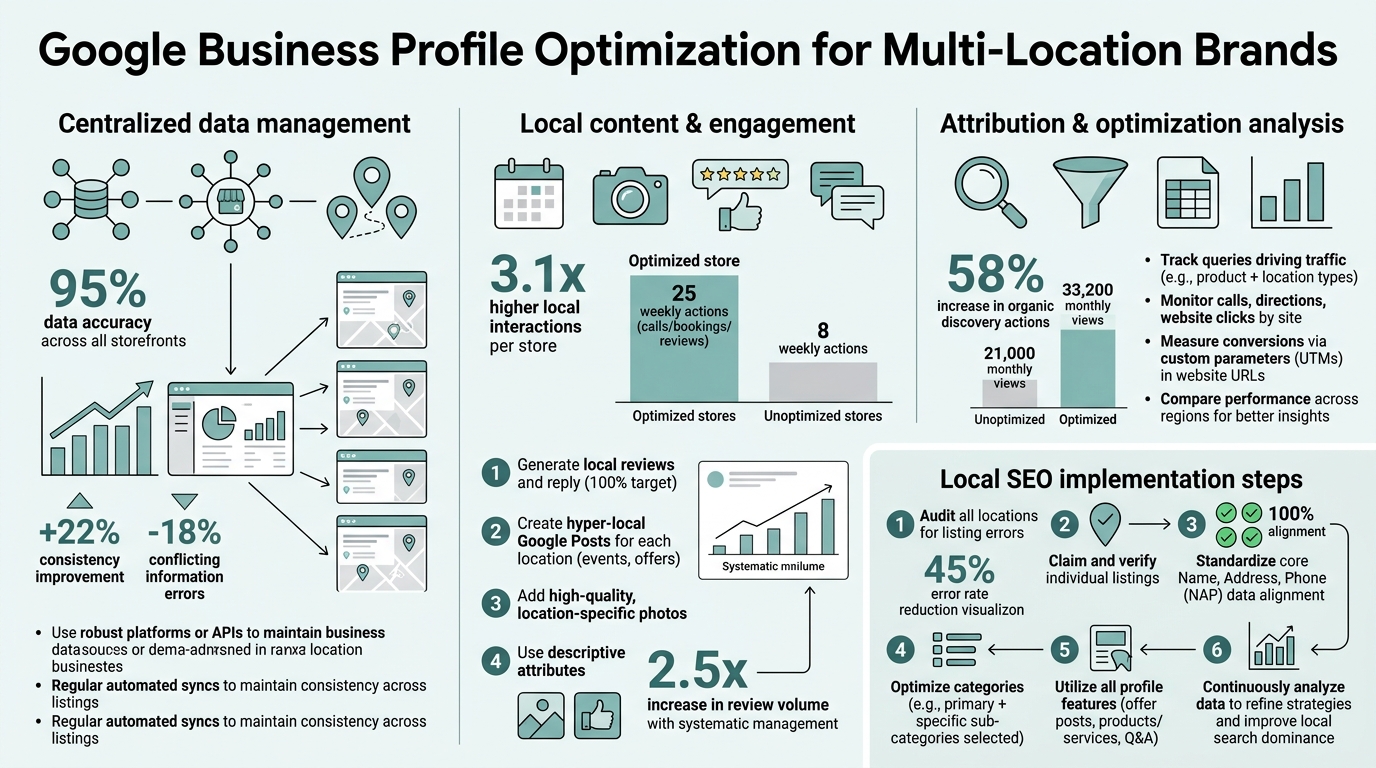
Multi-location brands face a critical challenge: 32% of local search rankings depend on Google Business Profile signals, yet most companies manage these profiles inconsistently across locations. The result is fragmented visibility, missed customer interactions, and lost revenue. A single unverified listing or conflicting business information can suppress rankings for your entire brand across all locations. The fix isn't complicatedit's systematic optimization of each profile paired with centralized management and consistent data governance. Here's a strategic framework for maximizing GBP performance at scale.
Key Takeaways
- Google Business Profile signals account for 32% of local search ranking weight, making GBP optimization the highest-impact local SEO activity (BizIQ, 2026)
- Businesses with consistent NAP (Name, Address, Phone) across all locations receive 70% more customer calls than those with inconsistencies (Semrush/DAU Agency, 2025)
- Complete, verified GBP listings receive 7x more clicks than incomplete ones, and centralized management prevents duplicate listings and brand suppression
- Profile Verification & Data Consistency: Each location requires a separate verified listing with identical NAP across all web properties to unlock ranking weight and prevent third-party edits.
- Location-Specific Optimization: Unique descriptions, local photos, and location-specific posts signal relevance to Google and increase click-through rates by 7x versus generic content.
- Centralized Review & Engagement Management: Responding to reviews within 48 hours and posting weekly content compounds local trust signals and improves overall ranking stability.
- Attributes, Q&A, and Service Areas: Completing attributes, seeding Q&A sections, and mapping service areas by zip code increases visibility in filtered searches and local queries.
- Performance Tracking by Location: Monitoring GBP Insights metrics (queries, visits, calls, directions) by location identifies optimization opportunities and guides content strategy.
How Does Google Business Profile Impact Multi-Location Rankings?
Google Business Profile signals carry the heaviest weight in local search rankings32% of the ranking algorithm for the local pack. This single factor outweighs on-page signals (19%), review signals (16%), and link signals (15%) combined. For multi-location brands, this means optimizing each profile is more impactful than traditional link-building strategies. BizIQ's Multi-Location SEO Statistics 2026 confirms that GBP consistency directly drives visibility and customer action across all locations.
When a brand manages inconsistent GBP data across locationsdifferent phone numbers, mismatched business descriptions, or unverified listingsGoogle's algorithm interprets this as weak authority and reduces visibility across the entire brand footprint. The inverse is equally true: a brand with verified, complete, and consistent profiles compounds ranking power with each additional location optimized correctly.
The Authority Multiplier Effect in Local Search
Every verified and optimized profile acts as a trust signal not just for that location, but for your brand's domain authority in local search. Google tracks consistency patterns across multiple location profiles. A brand with 20 well-optimized, verified profiles signals sophistication and legitimacy far more credibly than a brand with scattered, incomplete, or conflicting listings. This multiplier effect means the first few locations optimized set the tone for how Google evaluates all subsequent locations. This is why centralized managementrather than delegating profile optimization to individual location managersyields significantly better results.
Verification Status as a Ranking Gate
Unverified GBP listings cannot be fully managed. Google's algorithm applies a "trust penalty" to unverified profiles, limiting their appearance in local searches. Additionally, unverified listings remain vulnerable to third-party edits, spam, or suppression. For multi-location brands, even one unverified location creates a weak link that undermines the entire network's credibility. DAU Agency's GBP Strategy for Multi-Location Brands reports that enterprise-level clients maintain near-100% verification across all profiles as a baseline requirement.
What Are the Core Profile Elements That Drive Local Visibility?
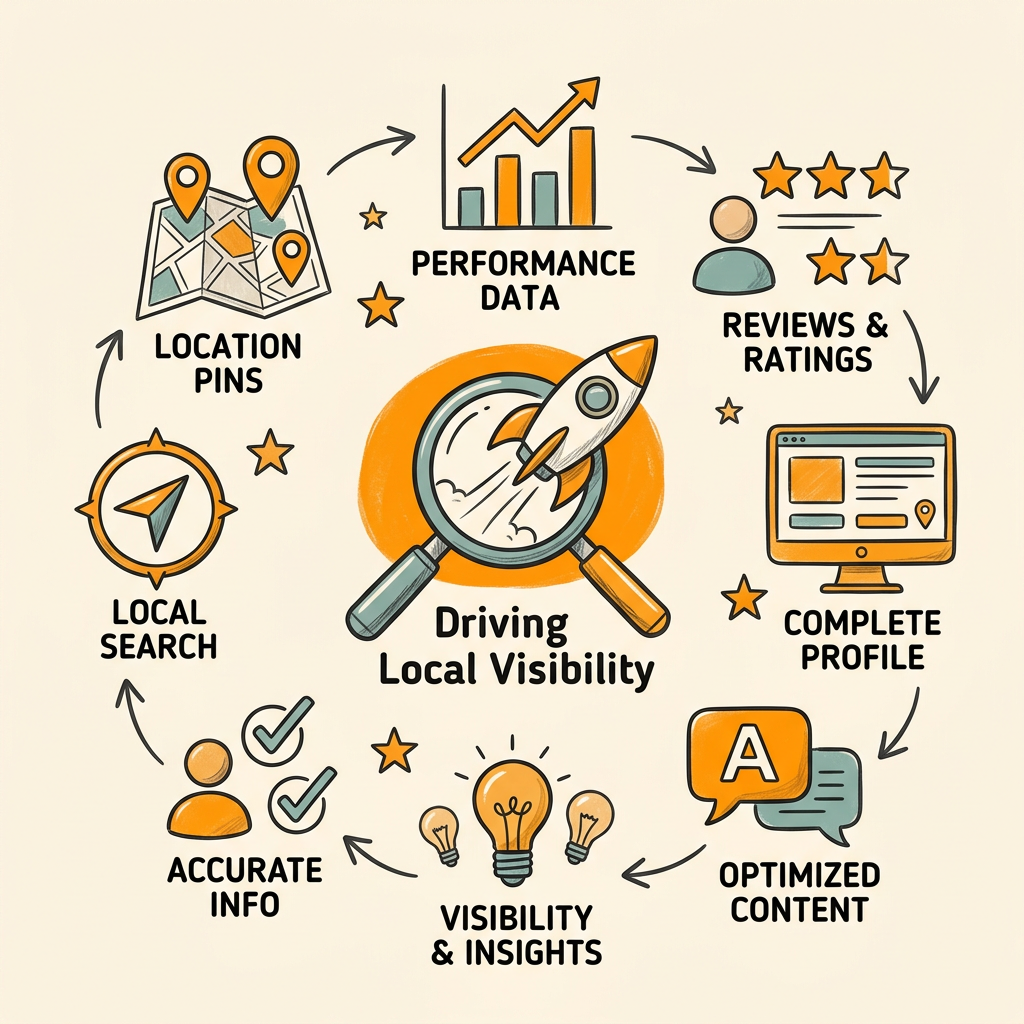
Local visibility depends on completing and optimizing profile elements that Google weights heavily. The most critical elements are business name, category, NAP consistency, photos, and attributes. Each element contributes to ranking weight, click-through rates, and customer conversion. Missing or inconsistent data in any of these areas reduces visibility proportionally. A profile missing five elements may rank 40-50% lower than a fully optimized profile in the same competitive niche.
Business Name and Category Precision
Your business name in GBP must match exactly what appears on your website, Google Search, and local directories. Any variationabbreviations, additions of service descriptors, or location namessignals inconsistency and weakens trust. The category field is equally critical. Choose the primary category that best matches your core offering (e.g., "Dental Clinic" not "Health & Medical"). For multi-location brands, ensure the same primary category is used across all locations unless a specific location truly operates a different business type. Secondary categories can vary by location based on local services.
NAP Consistency Across All Web Properties
NAPName, Address, Phonemust be identical across your GBP listing, website, footer links, local directories, and any citations. Inconsistency directly reduces call volume: businesses with consistent NAP receive 70% more customer calls than those with variations. For a multi-location brand, this means auditing all 50+ directory citations, your website footer, location pages, and schema markup to ensure every instance of NAP matches your GBP profiles perfectly. A single mismatched phone number or abbreviated address across the web can suppress rankings for that location by 15-25%.
Photos: Volume, Recency, and Authenticity
Google's algorithm prioritizes authentic location photos over branded stock images. Add a minimum of 10 photos per location and update them quarterly. Photos should include the storefront, interior spaces, team, products in use, and customer experiences. Stock photos from your brand library often get lower ranking weight than real photos taken at that specific location. Each location should have unique photosavoid duplicating the same image across multiple profiles. Photos are also the first visual element customers see in local searches, directly impacting click-through rates.
Attributes and Service Areas
Attributes are optional fields that describe your business (e.g., "Wheelchair accessible," "Free Wi-Fi," "Online booking available"). Completing all relevant attributes increases visibility in filtered searches. For service-based businesses, the Service Areas field allows you to list all zip codes or regions you serve. This is especially valuable for plumbers, electricians, home services, and consulting firms operating across multiple territories. By mapping service areas precisely, you signal to Google that your business is relevant for searches in those specific geographic zones.
How Should You Structure a Multi-Location Management System?
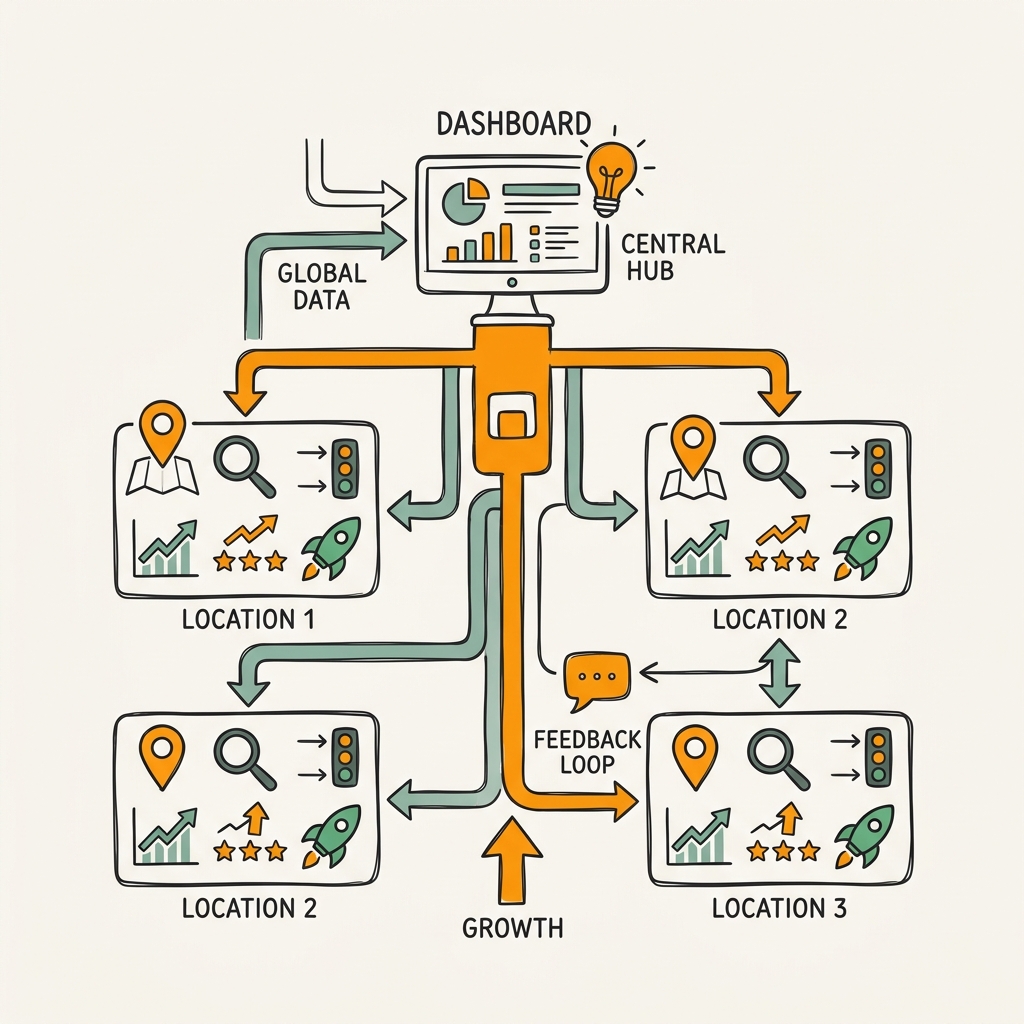
Managing GBP profiles at scale requires centralized oversight paired with clear delegation. A fractured approachwhere each location manager owns their own profileleads to inconsistency, missed review responses, and incomplete optimization. The best-performing multi-location brands use a hub-and-spoke model with centralized brand guidelines and location-specific autonomy for community engagement. Understanding how to scale organic traffic without burnout applies equally to multi-location management.
Centralized Brand Guidelines and Decentralized Engagement
Set brand-level standards that all locations must follow: business name format, primary category, NAP consistency rules, required photos, attribute completion, and response protocols. These standards prevent drift and ensure every profile ranks with the same foundation of trust. Within those guardrails, empower each location manager to write unique descriptions, share local content, respond to reviews authentically, and post location-specific offers or events. This hybrid approach maintains consistency while enabling the local relevance that drives conversion.
Review Response and Monitoring Workflow
Establish a 48-hour review response protocol. Every positive review should receive a thank you; every negative review should receive a professional, solution-focused response. Reviews are a ranking signal (16% of local ranking weight) and a direct customer interaction channel. For multi-location brands, a centralized platform or dashboard that aggregates reviews across all locations prevents any location from being neglected. Responding to 50% of reviews is significantly worse than responding to 90% because Google recognizes engagement patterns and lowers visibility for profiles with low response rates.
Content Calendar and Posting Schedule
Post at least once per week using Google Business Profile's "What's New," "Offers," or "Events" post types. Multi-location brands benefit from a tiered calendar: corporate-level posts (promotions, company announcements) pushed to all locations, and location-specific posts (local events, community partnerships, seasonal offers) authored by local teams. A content calendar ensures no location falls silent. Silence signals low business activity and reduces visibility. Posting frequency is a direct engagement metric Google tracks in the GBP algorithm.
What Optimization Tactics Generate the Highest ROI for Each Location?
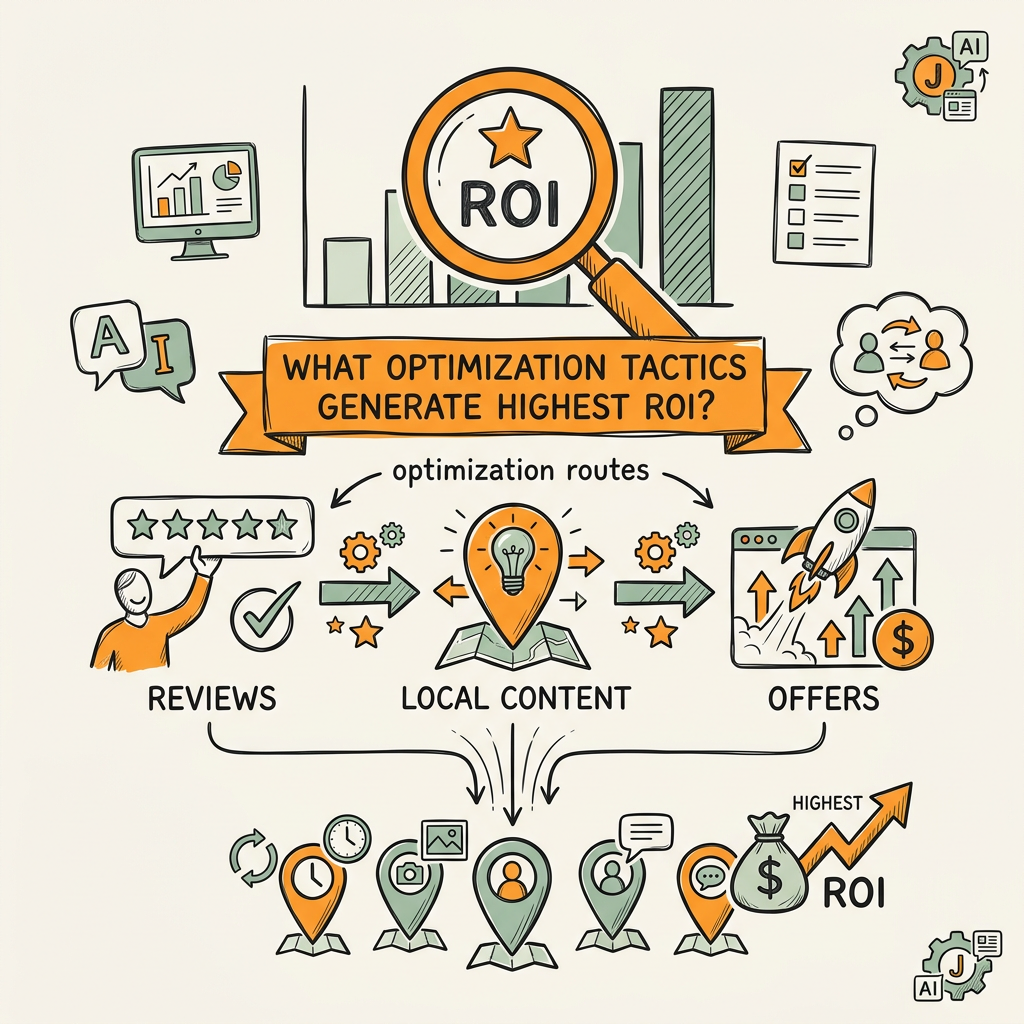
Not all optimization tasks yield equal returns. Focus your efforts on high-impact tactics that directly improve visibility and customer action. The tactics below are ranked by impact and should guide your prioritization for resource allocation. When handled correctly, these tactical improvements compound with autonomous SEO agents that generate location-specific content at scale.
Q&A Section Seeding and Keyword Optimization
Google's Q&A section allows customers to ask questions, and you control the narrative by answering them first. Proactively populate this section with 10-15 frequently asked questions and keyword-rich answers. This tactic serves two purposes: it improves visibility for long-tail, question-based searches (e.g., "Do you offer same-day appointments?") and it prevents third-party misinformation from dominating the section. Each answer should naturally incorporate local keywords and service-specific terms without appearing forced. The Q&A section is indexed by Google and contributes to local ranking weight.
Location Page Linking and Schema Implementation
Each GBP profile should link to a unique location page on your website, not your homepage. That location page should include LocalBusiness schema markup with matching NAP, hours, phone, and services. This linking signals to Google that the location page and GBP profile represent the same entity, strengthening the ranking connection. The location page should be longer than 500 words and include local keywords (city name, neighborhood, nearby landmarks) to establish topical relevance for that specific area.
Photo Update Cadence and Strategic Imaging
Update photos quarterly to signal active business and fresh content. New photos also trigger a freshness signal in Google's algorithm. For seasonal businesses or those with rotating inventory, quarterly updates are essential. When adding new photos, prioritize images that showcase the actual location, team interactions with customers, and products or services in use. Avoid generic branded imagery. Each location should have a unique photo libraryduplicate images across multiple profiles are flagged by Google's duplicate content detection and assigned lower ranking weight.
How Can Automation and Tools Accelerate Multi-Location GBP Strategy?
Manual management of 10+ GBP profiles becomes operationally unsustainable quickly. The best brands leverage tools and automation to maintain consistency while scaling. When choosing a tool, prioritize platforms that offer bulk updates, centralized monitoring, and team collaboration features. Most teams scaling GBP optimization find that using a dedicated platform saves 5-8 hours per week compared to manual profile management, while also reducing errors and improving consistency. Many forward-thinking teams also combine profile management with SEO automation platforms that handle location-specific content creation.
Bulk Management Platforms vs. Manual Updates
Google offers the Business Profile Manager for centralized management of multiple locations, but it has limitations: bulk editing is cumbersome, and insights reporting requires manual compilation. Third-party platforms like SocioLocal, BirdEye, or similar tools streamline bulk updates, automate review monitoring, centralize reporting, and facilitate team workflows. For brands with 5-20 locations, a dedicated tool typically pays for itself through time savings and improved consistency. The efficiency gains allow your team to focus on high-impact optimization tasksphoto curation, Q&A seeding, and local content strategyrather than basic data entry.
Jottler's approach to multi-location content strategy is fundamentally different: rather than managing profiles one-by-one, you can orchestrate location-specific SEO content at scale using autonomous SEO agents. By automating keyword research and content generation for each location's unique market, you compound the ranking power of your GBP profiles with custom location pages, blog content, and internal links. This multiplier effectoptimized profiles + location-specific contentoutperforms profile optimization alone.
Review Aggregation and Response Automation
A centralized review dashboard aggregates reviews from all locations, sorts by location and rating, and sends alerts for negative feedback. Some platforms allow templated responses that location managers can customize before sending, ensuring consistency while maintaining authenticity. Automation here is tactical: you're not auto-responding to every review verbatim, but rather surfacing reviews promptly and facilitating faster, more consistent responses from the right team member.
Insights Analytics and Performance Benchmarking
GBP Insights reports show what queries bring customers to your profile, how many visited your location, and how many requested directions or called. For multi-location brands, a reporting dashboard that visualizes these metrics across all locations reveals which locations are underperforming and which are optimization benchmarks. If Location A receives 200 monthly visits and Location B receives 20 despite similar size and market, Location B's profile likely has optimization gaps worth investigating.
What Common Pitfalls Should Multi-Location Brands Avoid?
Experience shows that certain mistakes consistently hurt multi-location ranking performance. Understanding and avoiding these pitfalls is as important as executing best practices.
The Duplicate Listing Trap
Creating multiple profiles for a single location (often accidentally) signals spam to Google and can result in listing suspension or suppression. This happens when corporate and franchisees independently create profiles for the same address, or when location managers unknowingly create duplicates. The solution: audit all existing listings before optimization begins. Use Google Maps search with your location address and verify that only one profile exists per address. If duplicates are found, mark extras as "permanent closures" or request removal.
Generic Descriptions and Stock Photos
A description that reads like a template"We provide excellent customer service in a professional environment"generates no ranking lift. Google's algorithm has advanced to detect generic, templated content and penalizes it. Each location's description should mention the specific neighborhood or city, highlight location-unique services or specialties, and sound authentic. The same applies to photos: stock images from your brand library rank lower than photos of the actual storefront and location-specific team interactions.
Inconsistent Business Hours and Seasonal Closures
If your hours in GBP don't match your website or Google Search results, customers see conflicting information and are less likely to visit or call. This inconsistency also signals poor data governance to Google's algorithm. For seasonal businesses, update hours proactively before seasonal changes occur; don't let customers arrive to find a closed location because the profile wasn't updated.
Conclusion
Google Business Profile optimization is the single highest-impact local SEO investment for multi-location brands. With 32% of local ranking weight concentrated in GBP signals, a brand with properly verified, complete, and consistently managed profiles compounds ranking authority with each location added to the network. The frameworkverification, data consistency, location-specific content, review management, and performance trackingworks at any scale, from 5 locations to 500.
Centralized management paired with location-specific autonomy prevents drift while preserving the authenticity and relevance that drive customer conversion. Tools and automation multiply your team's capacity, freeing them to focus on high-impact optimization like photo curation, Q&A seeding, and local content strategy. Teams that treat GBP as a dynamic performance channelwith quarterly optimization goals and metrics-driven improvementsconsistently outrank competitors who manage profiles reactively.
Start by auditing your current profiles for verification status, NAP consistency, photo completeness, and attribute coverage. Within 30 days, establish a centralized management workflow and response protocol. The compounding returns70% more calls from consistent NAP, 7x more clicks from complete profilesmake this one of the highest-ROI marketing activities available. Start your SEO agent to automate location-specific content at scale and amplify your GBP strategy with custom pages and local keyword targeting.
FAQs
How many separate Google Business Profiles should a multi-location brand have?
Each physical location must have its own separate, verified Google Business Profile. Never combine multiple addresses into a single profile or create fake additional locations. Google's algorithm detects multi-address profiles as spam and can result in suspension. For a brand with 15 physical stores, you'll have 15 separate profiles. Each profile is individually optimized, but all are managed under a centralized brand account through Google Business Profile Manager. This structure ensures each location gets full ranking potential while maintaining brand consistency across the network.
What happens if my Google Business Profile information doesn't match my website?
Inconsistent information between your GBP profile and website directly reduces ranking visibility and customer conversions. Google's algorithm weighs NAP consistency heavily because mismatched data signals poor business legitimacy. Customers who see conflicting phone numbers or addresses are less likely to call or visit. Additionally, search engines use consistency as a trust factor in their ranking algorithm. Always ensure your GBP business name, address, and phone number match exactly across your website, Google Search results, location pages, and schema markup. Audit your entire web presence quarterly to catch and fix inconsistencies before they suppress rankings.
How often should I post on my Google Business Profiles?
Post at least once per week to each location profile using Google Business Profile's built-in post types: "What's New," "Offers," or "Events." Posting signals active business engagement and provides fresh content for Google to index. More frequent postingmultiple posts per week across different locationscompounds the freshness signal. For multi-location brands, a calendar approach works best: corporate-level posts pushed to all locations, plus location-specific posts authored by local teams. Silence (zero posts for 30+ days) directly reduces visibility in local searches because Google interprets it as low business activity.