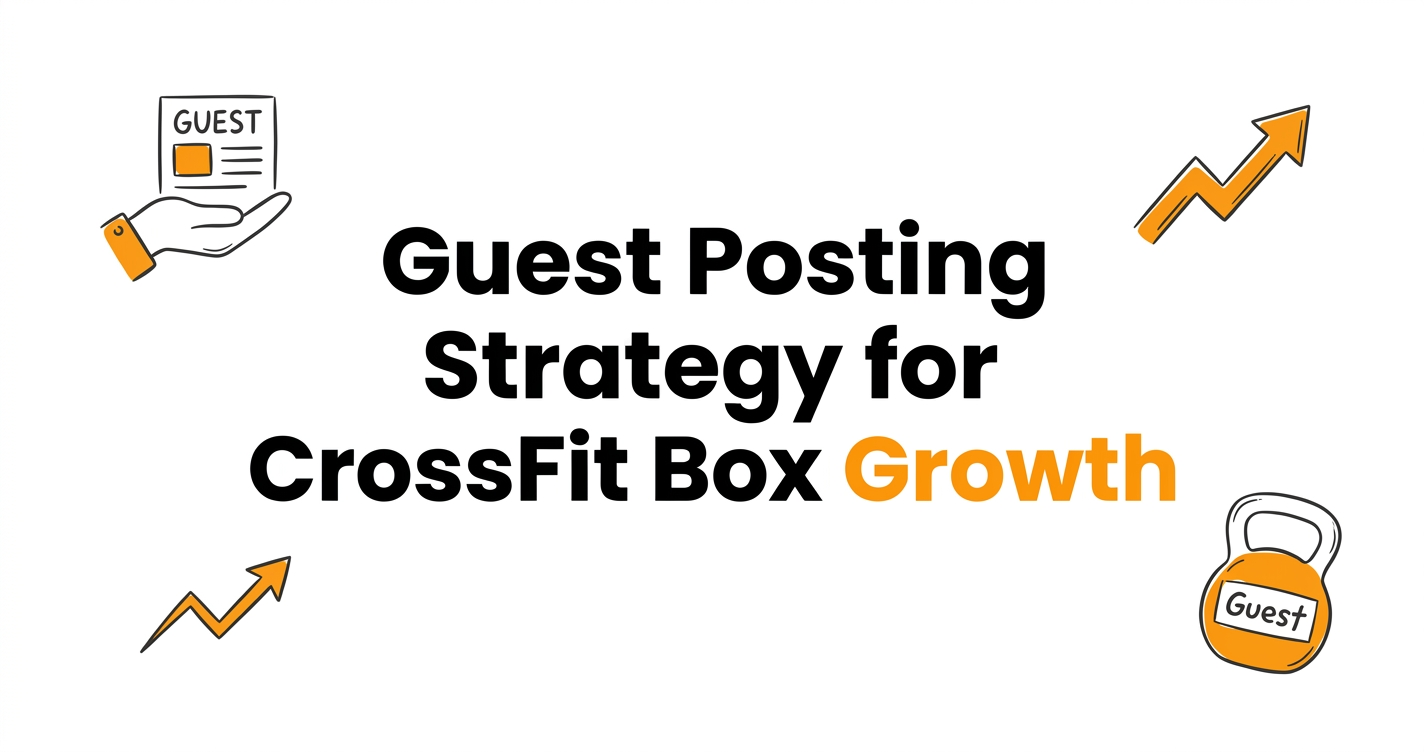
Guest Posting Strategy for SaaS Link Authority
Guest posting remains one of the most effective ways for SaaS teams to build authority and earn high-quality backlinks, but only 18% of marketers rank it as their best link-building method according to 2026 survey data. The gap? Most teams treat guest posting as a volume game when it's actually a precision play. You need the right sites, the right editors, and the right internal linking strategy to convert a backlink into qualified traffic and revenue. Without these three elements, you'll spend weeks on outreach that yields nothing.
Key Takeaways
- 42.4% of SaaS marketers use guest posting, but only 18% see it as their top-performing tactic—digital PR now leads at 34% (2026, Reporter Outreach)
- SaaS link-building ROI averages 702% when measured over a 7-month break-even window with proper attribution
- The difference between high-performing and low-performing guest posts is relevance: quality and niche alignment matter far more than link volume
- Site Selection & Authority Vetting: Most teams pitch low-authority sites that drive no traffic—use referral metrics and niche fit, not just domain authority.
- Relationship-Led Outreach: Cold templates get ignored; editors respond to personalized pitches from people they recognize or who share genuine topical alignment.
- Content-First Strategy: The post itself must be data-backed and genuinely useful; promotional content gets rejected or earns low-quality links.
- Strategic Internal Linking: Earn the backlink, then use internal links to funnel authority toward product and revenue pages where it drives conversions.
- Measurement & Attribution: Track referral traffic, conversion events in GA4, and revenue impact—not just rankings—to justify continued investment.
How to Select High-Authority Guest Posting Targets in Your Niche
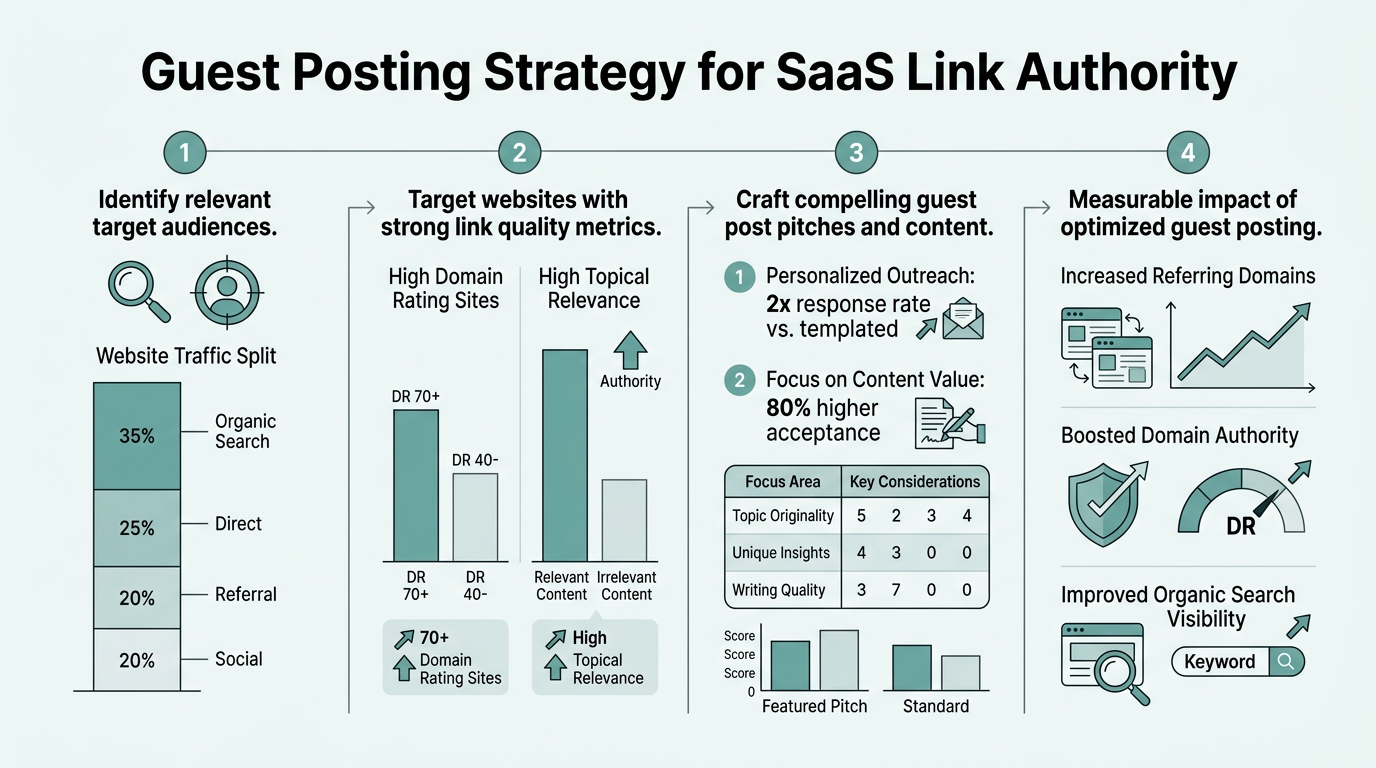
Picking the wrong sites kills the ROI before you even write. 63% of SaaS marketers analyze referral traffic from links, but only 37% track conversions—meaning most teams aren't vetting whether a placement actually brings qualified visitors. The fix is simple: evaluate target sites using a scorecard that combines niche relevance, organic traffic trends, audience fit, and outbound link profile, not domain authority alone.
"The best guest posts come from treating editor relationships like partnerships, not transactions. When an editor sees you've genuinely read their work and understand their audience, response rates jump from 2% to 20%+. That's the difference between a tactic and a strategy."
Finding the Right Sites to Pitch
Start by searching for "write for us" or "guest post" pages in your niche, then cross-reference competitor backlink profiles using tools like Buzzstream, which helps identify sites that already publish guest content. Look for sites that have published 3+ guest posts in the past 6 months—a strong signal that editors actively work with external writers. If a "write for us" page exists but the most recent post is 18 months old, move on. Dead publications won't help your authority.
Create a list of 20-30 target sites and score each one on five criteria:
- Organic traffic: Does the site get 5,000+ monthly organic visits? Sites below this threshold rarely send qualified referral traffic.
- Niche relevance: Does the content actually align with your ICP and product category, or is it tangentially related?
- Audience match: Are readers similar to your ideal customer? A post on a DevOps blog is only valuable if DevOps engineers buy your product.
- Outbound link policy: Do authors get 2-3 contextual links? Sitewide footer links or heavily restricted outbound policies signal low link quality.
- Editorial standards: Is the writing factually accurate, well-researched, and free of obvious spam? Poor editorial quality reflects on you.
Evaluating Authority Without Over-Relying on Domain Metrics
Domain Authority (DA) is a lazy proxy. Two sites with identical DA can deliver vastly different traffic and conversion value depending on audience quality and referral behavior. Instead of treating DA as a pass/fail gate, use it as one data point in a broader relevance assessment.
A site with DA 35 that publishes weekly posts for your exact buyer persona will outperform a DA 50 site with generic tech content that misses your audience by miles. Use Search Engine Land's proven, scalable approach to guest post outreach to filter by organic traffic and engagement metrics first—those are better signals of real audience value than authority scores alone.
How Should You Approach Relationship-Based Outreach?
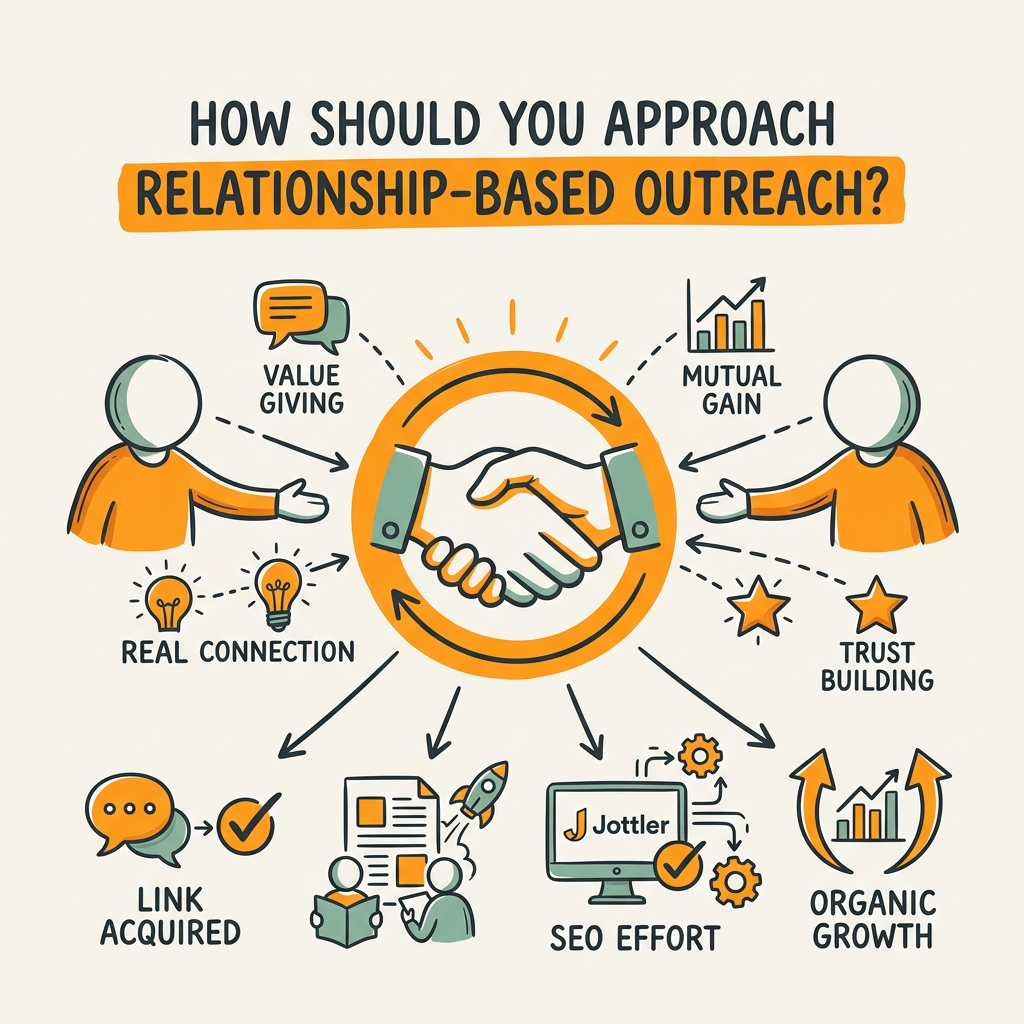
Cold templates get 2-5% response rates. Personalized outreach from writers editors recognize or who share genuine expertise gets 20%+. The difference is relationship foundation—or at least credible relevance signaling that makes an editor want to work with you.
"Most SaaS teams fail at guest posting because they batch-and-blast generic pitches. The winning move is spending 20 minutes to personalize your outreach—read their recent posts, reference a specific gap in their coverage, and explain why your angle serves their readers. That single investment moves you from a 2% response rate to 20%+."
Building Pre-Outreach Credibility
Before you email an editor, spend 20 minutes getting to know them and their site. Read their last 3-4 published posts. Comment thoughtfully on their LinkedIn or Twitter. If they mention a challenge or topic, reference it in your outreach. This takes more time than batch-and-blast, but your open and response rates will jump because you're not another generic pitch.
Identify the person most likely to accept your post—usually the editor or founder, not a generic submissions inbox. If you can't find a name, dig through the site's LinkedIn company page, Twitter feed, or look for a by-line on recent posts. Send to that person directly on LinkedIn or their work email if visible.
Crafting the Pitch Email
Your pitch should answer one question: Why is this post valuable to their readers, not your company? Lead with a specific data point or problem statement, not "we'd love to contribute." Example:
"I noticed your recent post on SaaS retention benchmarks. Most articles miss the conversion impact of churn—it's not just revenue loss, it's the cost of re-acquiring that customer base. I have original data from 200+ SaaS companies showing churn's actual LTV damage. Would a 2,500-word post with case studies and a calculator interest your readers?"
This works because it shows you've read their content, you understand their audience, and you're offering something specific and data-backed. Include a brief 1-2 sentence bio and a link to 1-2 of your best past articles if they ask for samples. That's it. Keep the initial pitch to 150-200 words max.
What Makes a Guest Post Actually Rank and Convert?
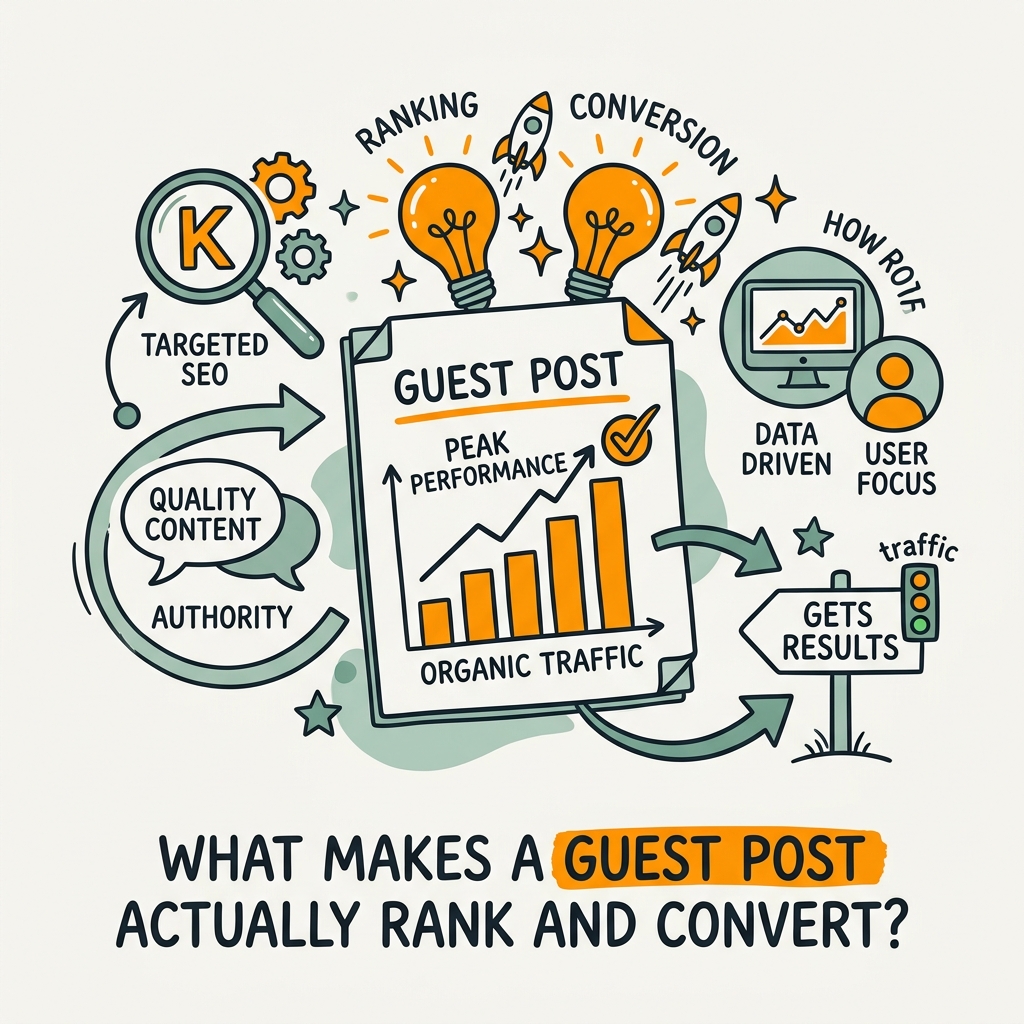
A guest post is only valuable if it drives qualified traffic and supports your conversion funnel. That means the content itself must be genuinely useful, data-backed, and tailored to a technical audience—not a thinly veiled sales pitch. Educational content that solves a business problem gets published; promotional content gets rejected. Strong content marketing strategy starts with valuable guest posts that earn trust before any selling happens.
Content Structure and Data Requirements
Aim for 2,000-2,500 words and structure around a clear problem-solution framework. Open with a statistic or challenge that resonates with the site's audience. Example: "77% of SaaS teams overpay for their infrastructure because they don't track per-environment costs." Then dive into the mechanics, include screenshots, share case studies with real numbers, and finish with a framework readers can use tomorrow.
Include at least 3-4 original data points, statistics, or examples. Pull from your own product data, customer interviews, or publicly available research—just cite the source. The post should feel like insider knowledge, not generic advice. Editors notice when you've done the homework.
Limit your outbound links to 2-3 total, with at least one near the top of the post. Research on high-ROI SaaS link building shows that strategically placed early links earn more anchor text diversity and get more editorial love than links buried in the conclusion.
Positioning Your Product Without Being Salesy
Your link should support the argument, not interrupt it. If you're writing about cost optimization, your product link makes sense when you explain how automated infrastructure monitoring saves teams 10+ hours per month. If your link feels forced, remove it and let the credibility of the post carry the reader to your site naturally.
Mention your product once, contextually. Never use the guest post as a landing page ad. Readers and editors see that immediately, and the post either gets rejected or buried where no one reads it.
| Element | High-Converting Post | Low-Converting Post |
|---|---|---|
| Opening hook | Specific statistic or reader pain point | Vague industry trend or filler |
| Data backing | 3-5 original statistics, real examples, case studies | Generic claims without sources |
| Actionable takeaway | Framework or step-by-step approach reader can implement | High-level advice with no tactical next steps |
| Link strategy | 2-3 contextual links, one early for visibility | 5+ links or links disconnected from content |
| Promotional tone | Zero hard sells; product mentioned once if relevant | Repetitive calls-to-action and company mentions |
| Word count | 2,000-2,500 words, thoroughly researched | 500-1,000 words, thin and generic |
How Do You Funnel Authority Through Internal Linking?
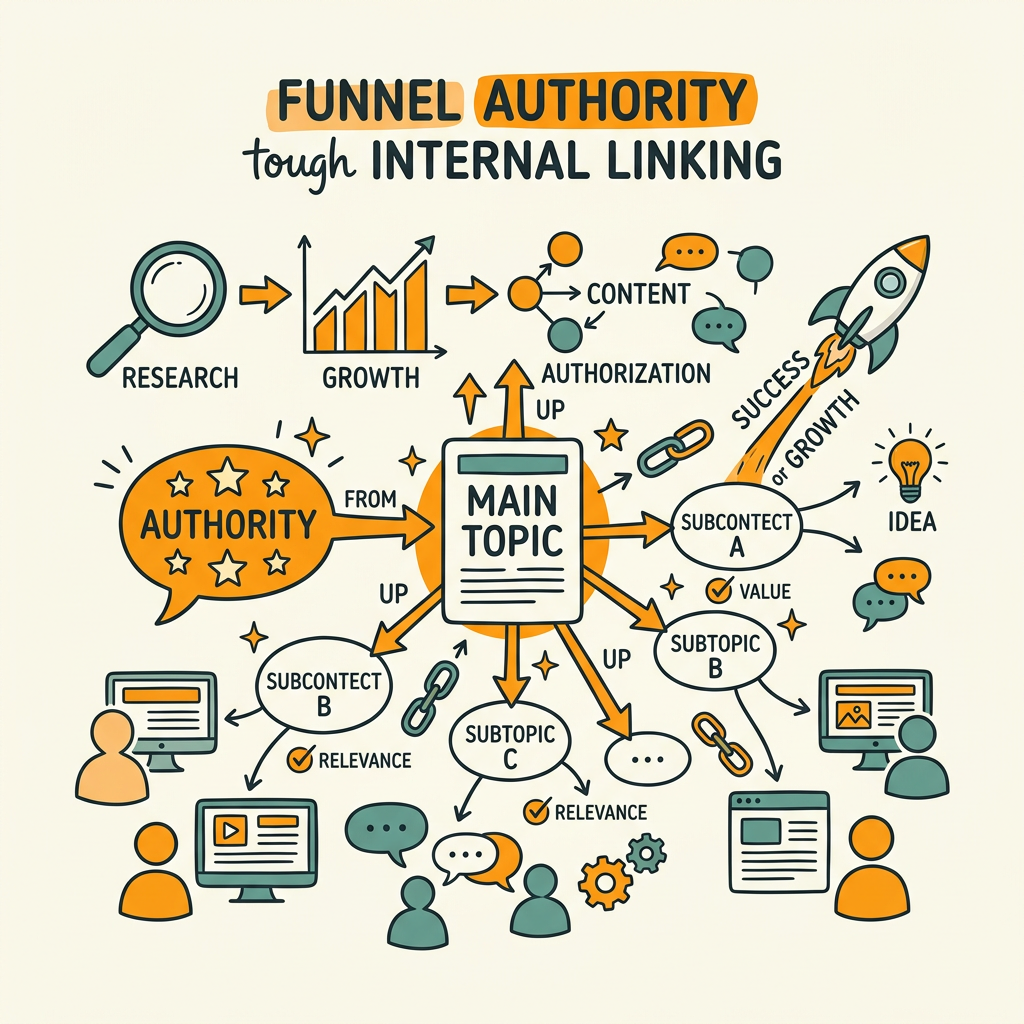
The backlink alone doesn't drive conversions. You need a linking strategy that funnels SEO value from the guest post toward your money pages—product pages, pricing, case studies, or contact forms where visitors actually convert. This is where most SaaS teams drop the ball. Automated SEO systems handle this compounding consistently, unlike manual processes that break down after a few months.
"Guest posts without a linking strategy are wasted effort. You earn the backlink and referral traffic, but then send readers to a generic blog post instead of a warm funnel that moves them toward conversion. The ROI difference between a one-link post and a three-step internal linking path is 3-5x."
Building a Topical Linking Path
When you pitch a guest post, you're targeting a top- or mid-funnel keyword where readers are learning, not buying. Your product link goes to a related article on your own blog that gets read first. Then, from that article, internal links point toward your product page or pricing. This creates a three-step journey: awareness (guest post) → consideration (your article) → conversion (product page).
Example: You guest post on a SaaS blog about infrastructure cost optimization. The post links to your blog article on "How to Audit Your AWS Spend." That article internally links to your pricing page. Now you've built a warm path—readers move from third-party authority through your educational content into your product funnel.
Using Content Systems for Scalable Internal Linking
Most teams manually manage internal links across guest posts and blog content. If you publish 3-5 guest posts per month, you'll spend hours mapping linking paths and updating anchor text across your site. Strategic SaaS link building requires consistency, which manual processes struggle to maintain.
Jottler automates the internal linking puzzle. When you publish a guest post, Jottler identifies relevant internal articles and surfaces them as suggested links, then automatically weaves them into your existing content. The AI engine learns your topical clusters and ensures links point toward high-value pages. Instead of managing links manually, you build a system that compounds—each new piece of content automatically strengthens your existing topical authority.
How Do You Measure Guest Posting ROI?
Vanity metrics like rankings and traffic volume tell you nothing. SaaS link-building ROI averages 702% when measured correctly, but only if you track the full funnel from backlink → referral traffic → conversion events → revenue impact. Set up measurement wrong, and you'll abandon guest posting because it looks unprofitable.
Setting Up GA4 Conversion Tracking for Guest Posts
In GA4, create conversion events for SaaS-specific micro-actions: free trial signups, demo requests, pricing page views, and contact form submissions. Tag each guest post with a unique UTM parameter in your links. Example: `utm_source=guest_post_saas.com&utm_medium=referral&utm_campaign=cost_optimization`.
After 30 days, check GA4 to see which guest posts drove referral traffic and which referral visitors converted. A post that brought 200 visitors but zero demos isn't valuable. A post that brought 50 visitors and converted 5 of them is gold. Prioritize placements that show conversion potential, and avoid sites that send high-bounce traffic.
Calculating True Link-Building ROI for SaaS
Use this framework: (Revenue Generated – Cost of Investment) / Cost of Investment × 100. Include all costs: time spent prospecting, writing, editor communication, and any tools or services used.
Example: One guest post takes 10 hours of your time (at $100/hour = $1,000 cost). It drives 120 referral visitors over 6 months, 8 convert to trials, 2 become customers with $200/month lifetime value. Your revenue from that post is 2 customers × $200 × 36 months (3 years) = $14,400. ROI = ($14,400 – $1,000) / $1,000 × 100 = 1,340%.
The benchmark is 6-12 months to see meaningful ROI. Guest posting compounds slowly. Don't expect instant results, but don't abandon it either—consistency over 6+ months produces outsized returns.
Avoiding Common Guest Posting Pitfalls
Not all guest posts are created equal. The difference between a placement that drives revenue and one that wastes your time often comes down to one or two preventable mistakes.
Pitfall 1: Pitching Low-Authority Sites with No Traffic
A backlink from a site with 500 monthly visitors looks good in your link report. It means nothing for rankings or traffic. Editors at these sites are often looking for cheap or free content; they're not selective about quality. The combination of low authority + low relevance = zero referral traffic and zero ranking benefit.
Only pitch sites with 5,000+ monthly organic visitors, real audience engagement (measurable comments or social shares), and topical relevance to your space. Yes, that narrows your list. That's the point—focus beats volume.
Pitfall 2: Generic, Unresearched Pitches
If your pitch could apply to any publication, editors delete it instantly. They see 50 variations of "we'd love to contribute" every week. Personalize your outreach. Reference a specific recent post. Explain why your angle fills a gap in their coverage. Make it clear you've read their work and respect their audience.
Pitfall 3: Overstuffing Links or Using Spammy Anchor Text
Three contextual links maximum. Avoid exact-match anchor text that screams SEO manipulation ("SaaS cost optimization platform," etc.). Use natural phrases and brand names. One link with natural anchor text beats five links that look like keyword-stuffing.
Conclusion
Guest posting for SaaS link authority works—but only when you treat it as precision marketing, not volume marketing. Quality placements on relevant, high-traffic sites drive both referral traffic and authority growth, and when combined with strategic internal linking, they funnel warm prospects directly into your conversion funnel. The teams winning with guest posting spend more time vetting sites and personalizing outreach, and less time batch-pitching low-authority publications.
Measure your results using GA4 conversion events and actual revenue impact, not just rankings. Track which posts drive qualified visitors and which are vanity plays. Build a system—not a checklist—where each guest post compounds your topical authority and internal linking architecture. That's how you move guest posting from a random tactic into a reliable revenue driver that scales over time.
Start with these three steps: Build a list of 20 high-authority, niche-relevant target sites. Spend 20 minutes personalizing your pitch to the editor. Write a thoroughly researched, data-backed post that genuinely solves a reader problem. Measure conversion events, not just traffic. Start your SEO agent to ensure your guest posts are backed by consistent, automated content strategy that compounds your topical authority across your entire site.
FAQs
How long does it take to see ROI from guest posting?
Expect 6-12 months for meaningful SaaS link-building ROI when you measure correctly. The first 2-3 months focus on getting placements published and earning the backlinks. Months 3-6 show referral traffic trickling in. By months 6-12, conversion patterns emerge and you can calculate true revenue impact. Don't evaluate guest posting success after 3 months—that's too early. Set up GA4 conversion tracking now, stay consistent, and measure in quarterly cycles. Many SaaS teams see their highest ROI from guest posts published 8-10 months prior, which is why patience and consistency compound.
What's the difference between a high-quality guest post and a low-quality one?
High-quality guest posts solve a real reader problem with data and original insight. They open with a specific pain point (not a generic trend), back claims with statistics or case studies, include actionable frameworks, and mention your product contextually—only once, only if it fits the argument. Low-quality posts are thin (under 1,500 words), generic (could apply to any audience), overstuffed with promotional mentions, and lack original research. A high-quality post published on a medium-authority site outperforms a low-quality post on a high-authority site because readers actually engage with it, share it, and convert. Publication reputation matters, but content quality matters more.
Should I pay for guest posting services or do it in-house?
In-house outreach and writing beats paid guest posting services for SaaS because authenticity and personalization matter more than volume. Paid services often rely on batch pitching and template content, which gets lower acceptance rates and lower-quality placements. If you have 5-10 hours per month, do outreach and writing yourself—your personalized pitches and insider expertise will earn better placements. If you truly lack bandwidth, partner with a freelancer who specializes in SaaS and works under your direction, not a service that treats guest posting as a commodity. The goal is relationships and relevance, not link quantity.