Keyword Clustering for Better Content Planning
Most marketing teams waste countless hours building content calendars around individual keywords, only to create fragmented content that cannibilizes organic traffic and dilutes topical authority. Keyword clusteringgrouping related keywords by search intent and topiceliminates this problem entirely. Teams that implement clustering achieve 30% more organic traffic and hold rankings 2.5 times longer than those using disconnected, single-keyword strategies. Yet fewer than 40% of SEO teams have systematized this approach, leaving massive opportunity on the table. Here's how to build a keyword clustering framework that compounds your organic growth without burning out your team.
Key Takeaways
- Clustered content drives 30% more organic traffic and holds rankings 2.5× longer than standalone articles (Whitehat SEO, 2026)
- Long-tail keywords (91.8% of all searches) convert at 2.5× higher rates than broad terms, making cluster targeting a conversion multiplier
- Pillar-and-cluster architecture aligns with 2026 SEO trends: search engines now reward topical authority over isolated keyword matching
- Why Keyword Clustering Matters: Groups related keywords by intent to eliminate content cannibalization and build topical authority faster.
- Pillar-and-Cluster Architecture: One comprehensive pillar page anchors a topic, with supporting cluster pages targeting specific subtopics and long-tail variants.
- Mapping Keywords to Funnel Stages: Cluster keywords by buyer journey stagetop-of-funnel educational content, mid-funnel comparisons, bottom-funnel conversions.
- Building an Internal Linking Strategy: Link cluster pages back to the pillar and across related subtopics to distribute authority and signal topical relevance.
- Tools and Workflow Automation: Modern clustering tools handle keyword grouping, intent mapping, and content planning; automating the workflow eliminates manual overhead.
- Scaling Without Burnout: Systematic keyword clustering allows teams to produce more strategic content faster without adding headcount.
Why Keyword Clustering Is Essential for Modern Content Planning
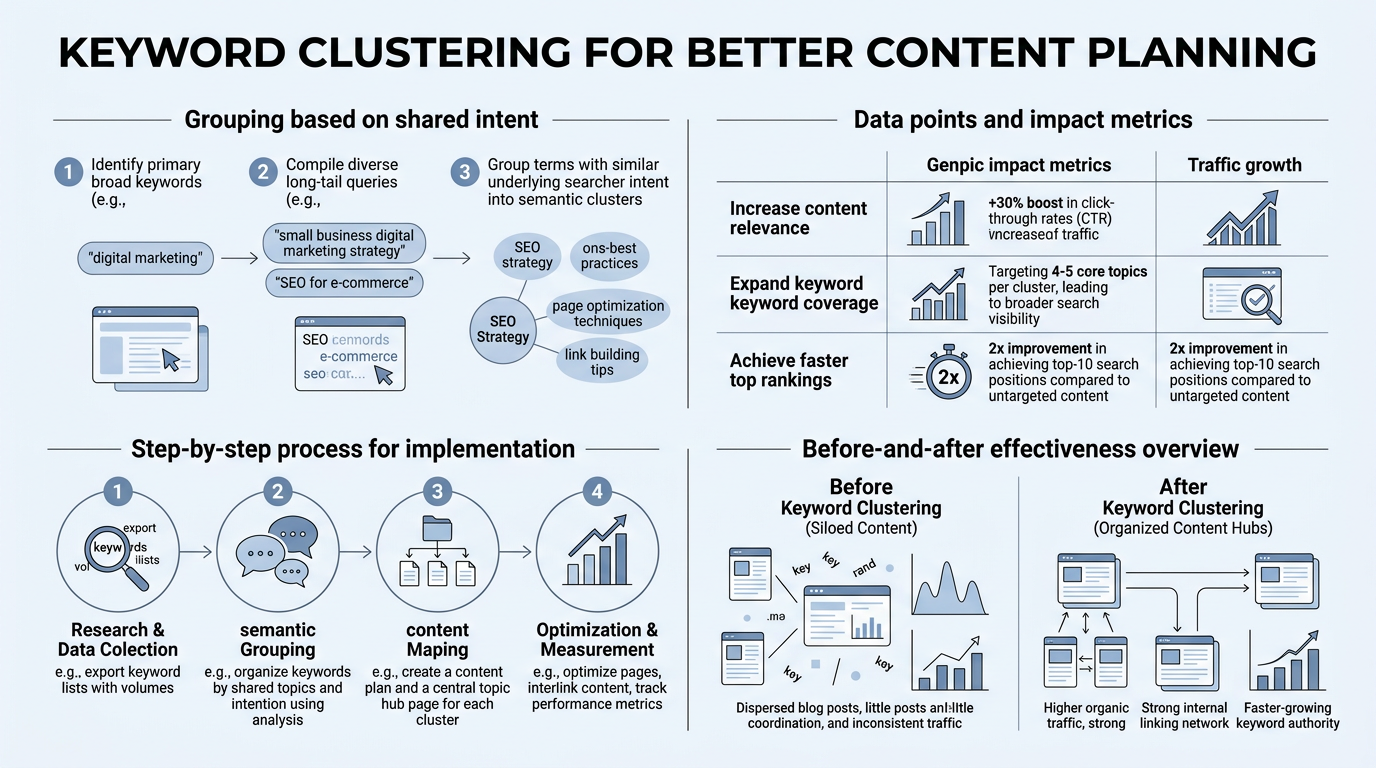
Keyword clustering is the practice of grouping related keywords by semantic relevance and search intent, then building a cohesive content system around those clusters rather than creating isolated articles for individual terms. Content organized into topic clusters drives approximately 30% more organic traffic while maintaining rankings 2.5 times longer than standalone pieces, according to recent SEO research. The difference is architectural: instead of a scattered content library, you're building a web of interconnected content that search engines recognize as topical authority.
The Problem With Siloed Keyword Targeting
Traditional keyword targeting treats each search term as an independent opportunity. A team researches 100 keywords, builds 100 separate articles, and publishes them without considering overlap or topical relationships. The result is content cannibalization, weak internal linking, and fragmented authority across subtopics. When multiple pages compete for the same search intent, they dilute each other's ranking power. Search engines see individual pages, not a coherent topical presence.
Keyword clustering solves this by grouping keywords that serve the same user intent. Instead of publishing 100 scattered articles, you might build 8–12 pillar pages with 30–40 supporting cluster pages. Each piece fits into a system where internal links reinforce topical relationships and distribute authority efficiently.
How Clustering Aligns With 2026 SEO Trends
Search behavior is shifting rapidly. 58.5% of searches now result in zero-click outcomes, meaning ranking position alone is insufficient; your content must appear in AI Overviews, featured snippets, and answer engines. Additionally, search engines now prioritize topical authority and search intent over exact-keyword matching. Google's systems increasingly reward sites that demonstrate comprehensive coverage of a topic across multiple, interconnected pieces rather than deep dives into single keywords.
Keyword clustering is the structural answer to this shift. By creating clusters of related content, you signal topical expertise to both search engines and AI systems. Your pillar pages become the authoritative hubs, while cluster pages provide the depth and breadth that AI indexers want to cite.
Building Your First Keyword Cluster: The Architecture Framework
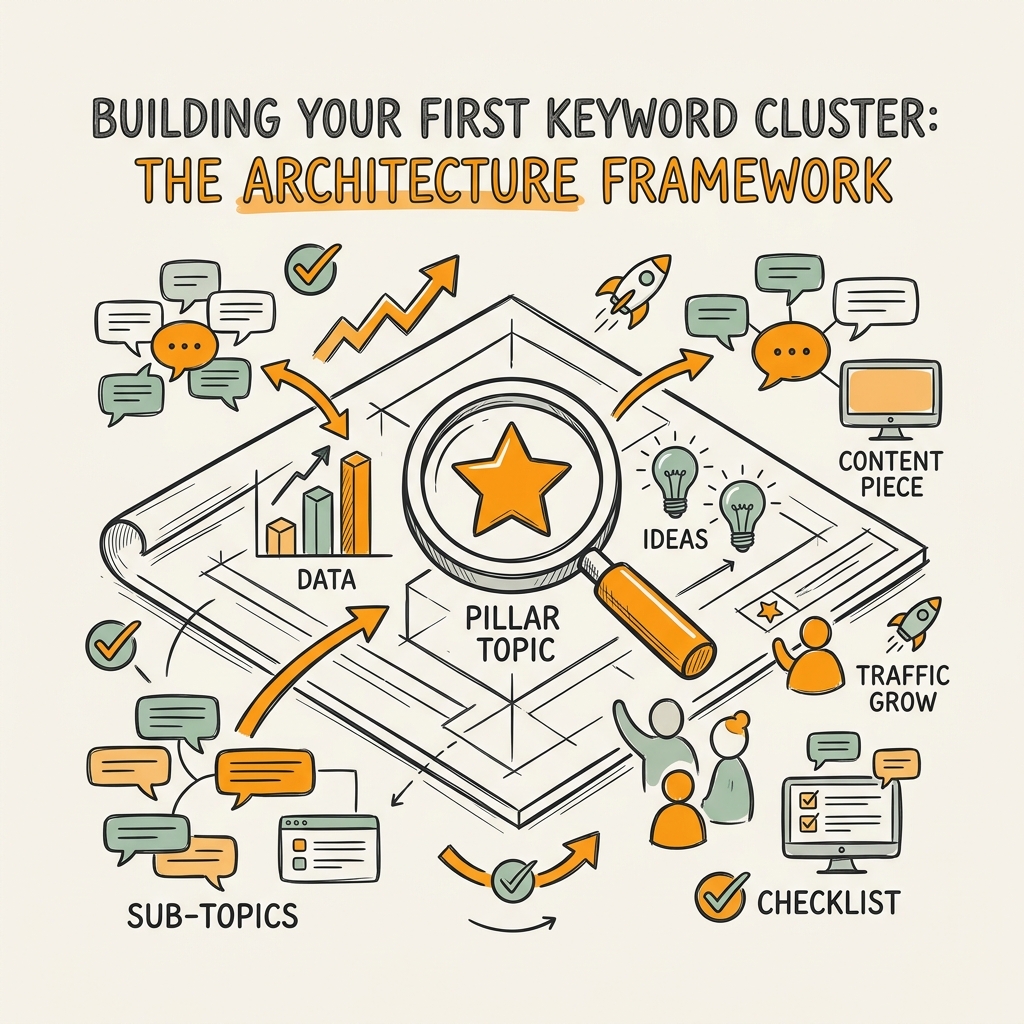
A keyword cluster consists of a pillar page (broad topic overview) and cluster pages (subtopic deep dives). The relationship is hierarchical but interconnected. The pillar anchors the topic; cluster pages target specific questions, pain points, and long-tail variants. All pieces link back to the pillar and across related clusters, creating a topical web.
Defining Your Core Pillar Topic
Start with a broad, high-intent keyword that represents your main area of authority. For a B2B SaaS company, this might be "SEO content automation," "email marketing automation," or "AI-powered content creation." Your pillar should be:
- Broad enough to justify 3,000–5,000 words. If the topic can be covered in under 1,500 words, it's too narrow to be a pillar.
- Aligned with your core offering. Your pillar should anchor your expertise and product positioning.
- Competitive but defensible. Target pillars with search volume in the 1,000–5,000 monthly range for best results. Avoid highly competitive terms early on.
- Long-term relevant. Avoid trend-based pillars unless your business model is built around real-time content.
Once you've defined your pillar, research how top competitors approach it. What subtopics do they cover? What gaps exist? This reveals the full scope of your cluster and guides your supporting page strategy.
Identifying and Grouping Cluster Keywords by Intent
Now gather 40–100 related keywords using tools that organize keywords by semantic intent. For each keyword, identify its primary intent:
- Informational: "How to...", "What is...", "Best practices for..." → Educational, top-of-funnel
- Comparative: "X vs Y", "Alternatives to...", "Best tools for..." → Mid-funnel decision support
- Transactional: "Buy X", "Pricing for...", "Sign up for..." → Bottom-funnel, conversion-intent
- Navigational: "[Brand] reviews", "[Product] features" → Brand or product-specific queries
Group keywords by intent first, then by semantic relevance within each group. This prevents intent misalignmentyou won't accidentally target a "how-to" informational query with a product page.
Mapping Cluster Pages to the Buyer Journey
Each cluster page should serve a specific stage of the buyer's journey. This alignment determines content depth, CTA type, and internal linking strategy.
- Top-of-Funnel (Awareness): Educational guides, "What is X", problem definitions. Target broad, low-intent keywords. High volume, lower conversion.
- Mid-Funnel (Consideration): Comparisons, "X vs Y", "Best tools", use cases. Target medium-volume, intent-rich keywords. Medium conversion.
- Bottom-of-Funnel (Decision): Product pages, pricing, reviews, "best X for my use case". Target high-intent, commercial keywords. Lower volume, highest conversion.
A well-structured cluster might have 60% top-of-funnel content, 30% mid-funnel, and 10% bottom-funnel. This distribution drives qualified traffic while building topical authority broadly.
Implementing Internal Linking Within Your Cluster System
Internal links are the connective tissue of your cluster. They direct users deeper into your content system, distribute authority across pages, and signal topical relationships to search engines. Proper internal linking within clusters is now considered a ranking factor in 2026 SEO. Without strategic linking, your cluster pages remain isolated, limiting their combined authority.
Linking Strategy: Pillar-to-Cluster and Cluster-to-Cluster
Every cluster page should link to the pillar at least oncetypically in the introduction and conclusion. This signals to search engines that the cluster page supports and reinforces the pillar's authority. Additionally, link between thematically related cluster pages using natural, contextual anchor text.
Example: If you have cluster pages on "email segmentation" and "email personalization," link from the segmentation page to the personalization piece with anchor text like "personalization strategies that improve engagement" rather than generic phrases like "click here."
- Pillar links: Every cluster page should link to the pillar at least once, typically in the introduction.
- Cross-cluster links: Link cluster pages to 2–4 other thematically related pages within the same cluster.
- Anchor text: Use descriptive, keyword-rich anchor text that indicates the linked page's topic.
- Link placement: Place links naturally within body copy, not forced into introductions or tacked on as "related reading" sections.
Avoiding Cannibalization Through Link Topology
If two cluster pages target similar keywords, cannibalization occurs when search engines rank the "wrong" page for a query. Internal linking can prevent this. If Page A is your primary target for a keyword, ensure it receives more internal links than Page B targeting a similar term. This signals ranking preference to search engines.
Example: If both "email marketing automation" and "automated email campaigns" are in your cluster, designate one as primary. Link from other cluster pages preferentially to the primary page, even if you publish both.
Automating Keyword Clustering and Content Planning
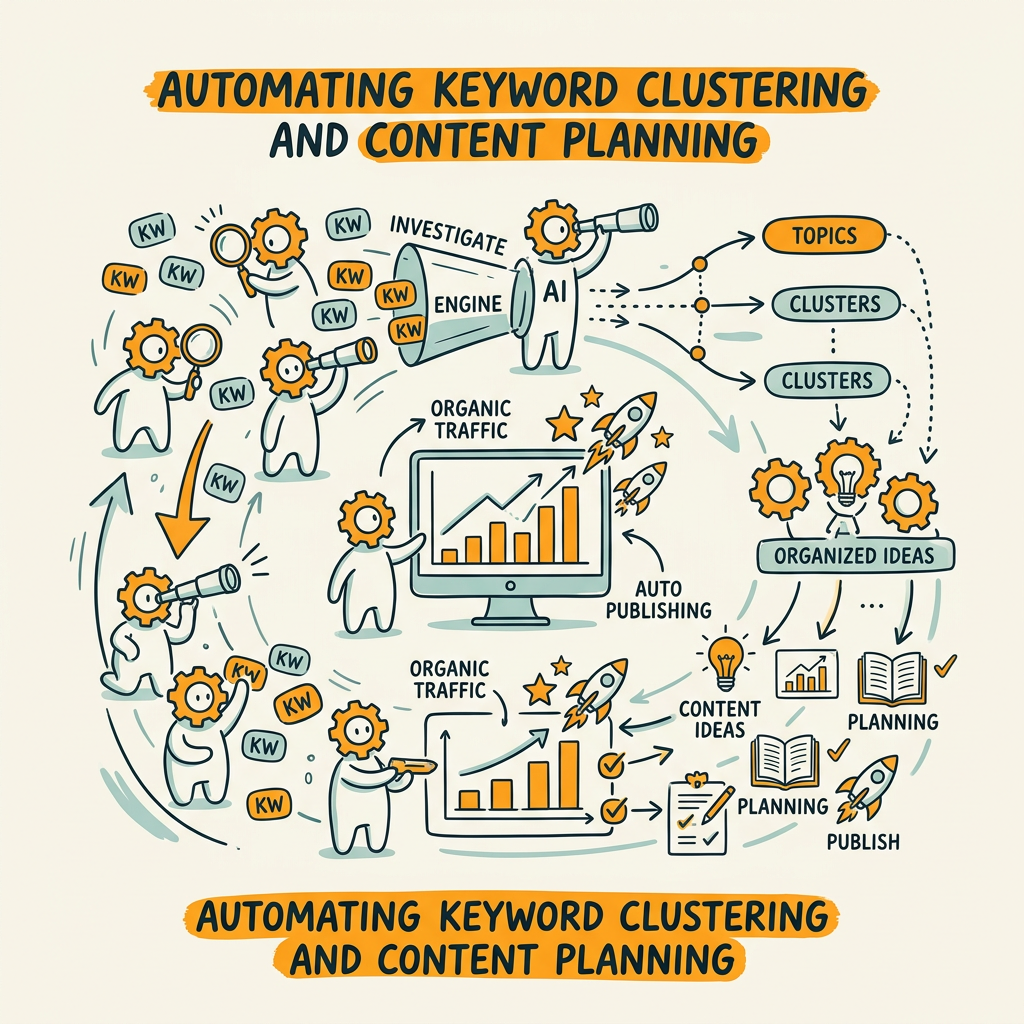
Manual keyword clustering is time-consuming. You're gathering keywords, analyzing intent, building spreadsheets, and planning content architectureall before writing a single word. For busy founders and small teams, this friction kills consistency.
How Modern Tools Handle Clustering at Scale
Leading keyword clustering tools like SEMrush, Ahrefs, and niche platforms now automate much of this work. They ingest your keyword list, analyze intent signals from search results, and suggest cluster groupings. Some even map keywords to buyer journey stages.
The best tools integrate with your content management system, allowing you to assign keywords to draft articles before writing, then track performance post-publish. This creates a feedback loop where data from published articles informs future clusters.
Why Workflow Automation Compounds Your Results
Without automation, a single article might take 8–15 hours from keyword research through internal linking and CMS publication. With a systematic workflow powered by automation, that time drops to 4–6 hours for core content, and routine content can be produced in 2–3 hours. For teams publishing daily or multiple times per week, this multiplies content output without proportionally increasing team size.
Jottler, for example, handles this at scale: it researches keyword clusters, writes fully optimized articles with internal linking built in, fact-checks claims, and publishes directly to your CMS. Instead of spending 40 hours per week on content tasks, founders can review and refine Jottler's output in 5–10 hours, freeing time for strategy.
Creating a Keyword Cluster Table and Planning Document
A structured planning document keeps your team aligned and prevents scope creep. Here's a recommended table structure:
| Pillar Page | Cluster Type | Keyword Target | Content Piece Title | Funnel Stage | Internal Links |
|---|---|---|---|---|---|
| Content Automation | Foundational | What is content automation? | Content Automation: Complete Beginner's Guide | Top-of-Funnel | Pillar link |
| Content Automation | Comparative | Content automation vs manual content management | Manual vs Automated Content: Where Your Team Loses Time | Mid-Funnel | Pillar + 2 cluster links |
| Content Automation | Solution | Best content automation tools 2026 | 7 Content Automation Tools Worth Auditing | Mid-to-Bottom | Pillar + 3 cluster links |
| Content Automation | Use-Case | Content automation for SaaS teams | How SaaS Teams Use Content Automation to Scale (Without Hiring) | Mid-to-Bottom | Pillar + 2 cluster links |
| Content Automation | Implementation | How to set up content automation | Getting Started with Content Automation: A 5-Step Framework | Bottom-Funnel | Pillar + solution link |
This table serves as both planning and accountability. Teams can see at a glance what content exists, what's planned, and how pieces interconnect. As you publish, add performance metrics (traffic, rankings, conversions) to inform future clusters.
Measuring Cluster Performance and Iterating
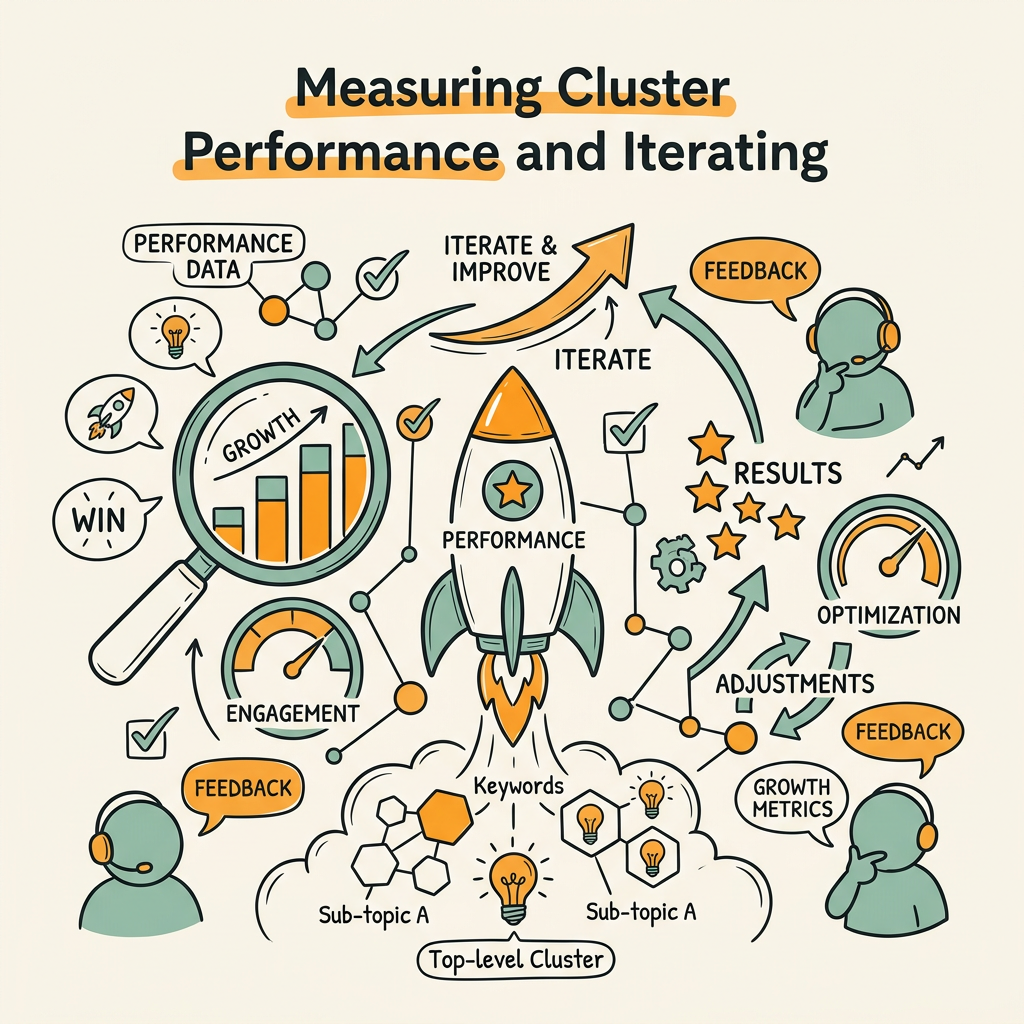
Once clusters are live, measure their combined performance, not individual page metrics. You're optimizing for topical authority and organic traffic growth, not individual article rankings.
Key Metrics for Cluster Success
- Cluster organic traffic: Sum traffic from all pages in the cluster. Compare month-over-month to track growth.
- Ranking diversity: Count how many keywords in your cluster target pages appear in top-10 results. Aim for 60–80% coverage.
- Internal link click-through: Use Google Analytics to track which internal cluster links users click. High CTR between related pages indicates good discoverability.
- Pages generating conversions: Which cluster pages drive leads or sales? Optimize bottom-of-funnel pages first, then improve top-of-funnel to feed them.
- Topical authority signals: Track branded queries and navigational traffic to the cluster pillar. Growing brand searches indicate domain authority in the topic.
Iterating Based on Performance Data
Refresh underperforming pages every 6–12 months. Look for:
- Pages targeting high-intent keywords that generate no conversions (rewrite for clearer CTAs)
- Cluster pages with low internal link traffic (add more contextual links from adjacent cluster pages)
- Pillar pages with declining traffic (refresh with new stats and add links to newly published cluster pages)
Tools like Jottler's automated content planning and monitoring make this iteration cycle simpler. Instead of manually reviewing Search Console data monthly, you can track cluster performance dashboards and receive recommendations on which pages to refresh or which new subtopic clusters to build.
Scaling Keyword Clustering Without Building a Team
The biggest bottleneck for founders is time. Keyword clustering is logical and high-ROI, but building clusters manually is a slow, repetitive process. Multiplication happens when you systematize it.
Prioritizing Your First Clusters
Don't try to build 10 clusters simultaneously. Start with 2–3 high-intent clusters aligned with your core offering. These should target pain points your ideal customers search for actively. For a B2B SaaS company, this might be:
- Cluster 1: Problem-solution ("Why [problem] destroys productivity" → "How [solution] fixes it")
- Cluster 2: Tool/feature comparisons ("Best tools for X" → "Why [brand] ranks higher")
- Cluster 3: Implementation/how-to ("Getting started with [solution]" → "[Solution] best practices")
Once these three clusters are producing consistent traffic and conversions, build the next set. This staged approach reduces overwhelming complexity and allows refinement before scaling.
The Role of AI in Scaling Clusters
AI content generation and SEO automation tools are designed precisely for this: they can research keyword clusters, draft comprehensive articles with internal links, and optimize for topical authority at a fraction of manual overhead.
Tools like Jottler compress weeks of keyword clustering and content production into daily automated workflows. The system researches clusters, writes articles, fact-checks content, adds internal links strategically, and publishesall without human intervention. For founders, this transforms keyword clustering from a time-luxury into a scalable practice.
"We built Jottler because our customers kept saying the same thing: 'Keyword clustering makes sense, but we don't have 40 hours a week to research, plan, and execute it.' The system handles the busyworkclustering, drafting, interlinking, publishingso founders can focus on strategy and conversion optimization."
That's the shift happening in 2026: keyword clustering moves from a manual, quarterly exercise to an automated, daily practice. This changes everything for organic growth compounding.
Conclusion
Keyword clustering is no longer optional for competitive organic growth. Teams using clustered content structures achieve 30% more organic traffic, hold rankings 2.5 times longer, and build topical authority far faster than those pursuing scattered keyword strategies. For busy founders and marketing teams, the path forward is clear: systematize your keyword clustering and automate the workflow.
Start with your highest-intent cluster, build the pillar page, add 5–8 supporting pieces, and interconnect them with strategic internal links. Measure performance against the pillar, not individual articles. Then automate the process so that keyword clustering becomes a recurring practice, not a one-time project.
The compound effect of clustered content is profound. Six months of consistent, well-structured keyword clustering builds organic authority that competitors spend yearsor nevercatch up to. Start your SEO agent and let automated clustering and content production compound your organic growth.
FAQs
What's the difference between keyword clustering and topic clusters?
Keyword clustering and topic clusters are the same conceptjust different terminology. Keyword clustering refers to the process of grouping related keywords by search intent and semantic relevance. Topic clusters refer to the resulting content architecture: a pillar page anchors a broad topic, and supporting cluster pages target specific subtopics and long-tail variants within that space. The best SEO strategies use the terms interchangeably, but the outcome is identicala interconnected web of content that search engines recognize as comprehensive topical coverage.
How many cluster pages should I create per pillar?
There's no fixed number, but 5–15 cluster pages per pillar is a practical range for most B2B SaaS companies. A smaller cluster (5–8 pages) works if your pillar is narrow or your audience is highly specialized. A larger cluster (12–20+ pages) makes sense if your topic is broad and your business targets multiple buyer personas or use cases. Start with 5–8 pages, publish them over 4–8 weeks, and measure performance. If your pillar is gaining rankings and traffic, expand the cluster. If certain subtopics underperform, deprioritize or consolidate.
How long does it take to see results from keyword clustering?
Most clusters generate measurable traffic within 3–6 months, depending on domain authority and keyword competition. Highly competitive clusters may take 6–12 months to rank prominently. The key is consistencypublishing cluster pages regularly (at least weekly) signals to Google that your site is building authority in the topic. Teams that publish 3–5 cluster pages per month see faster cumulative ranking growth than those publishing sporadically. Automation tools like Jottler accelerate this timeline by enabling daily publication, so you're building topical authority much faster than competitors.