Marketing Automation Platforms: Comparison Guide
Picking the right marketing automation platform is no longer optional—it's fundamental to competitive survival. 76% of businesses now use marketing automation to scale lead generation and customer engagement. But with $5.44 return per dollar spent, the stakes of selecting the wrong tool are equally high. Poor implementation sinks three to six months of productivity and budget before teams realize the fit is wrong.
The problem isn't the lack of options. The problem is that every platform markets itself as "the best" while solving fundamentally different problems. HubSpot prioritizes usability and speed. Marketo dominates enterprise complexity. ActiveCampaign leads on cost-to-feature ratio. Pardot wins for Salesforce-first organizations. Each choice compounds over time—both in revenue generated and sunk cost.
Here's a direct answer: The right platform depends on your team size, budget, and technical depth. We'll walk through the five major platforms, dissect their trade-offs, and show you exactly which one matches your growth stage and operational capacity.
Key Takeaways
- 76% of businesses use marketing automation, with adoption rising across all segments from SMBs to enterprises (2026, GTM 8020).
- HubSpot is the fastest to implement (2-4 weeks) with the lowest learning curve; Marketo requires 8-16 weeks but supports enterprise complexity.
- ActiveCampaign offers the best price-to-features ratio at $15-$19/month entry; Marketo and Pardot start at $1,500+ and require quote-based negotiation.
- Usability vs. Depth: HubSpot wins for speed and ease; Marketo wins for sophisticated multi-dimensional lead scoring and branching programs.
- Cost Structure: ActiveCampaign is transparent and contact-based; Marketo and Pardot use opaque quote-based models that often exceed $200K/year with setup.
- Integration Model: HubSpot includes a native CRM; Pardot requires a Salesforce license, adding significant total cost of ownership.
- AI Integration: All major platforms added AI agents in 2026—HubSpot's Breeze AI, ActiveCampaign's predictive sending, Marketo's Adobe Sensei integration.
- Time to ROI: HubSpot users see positive ROI in 2-4 weeks; Marketo implementations average 8-16 weeks before first automation runs smoothly.
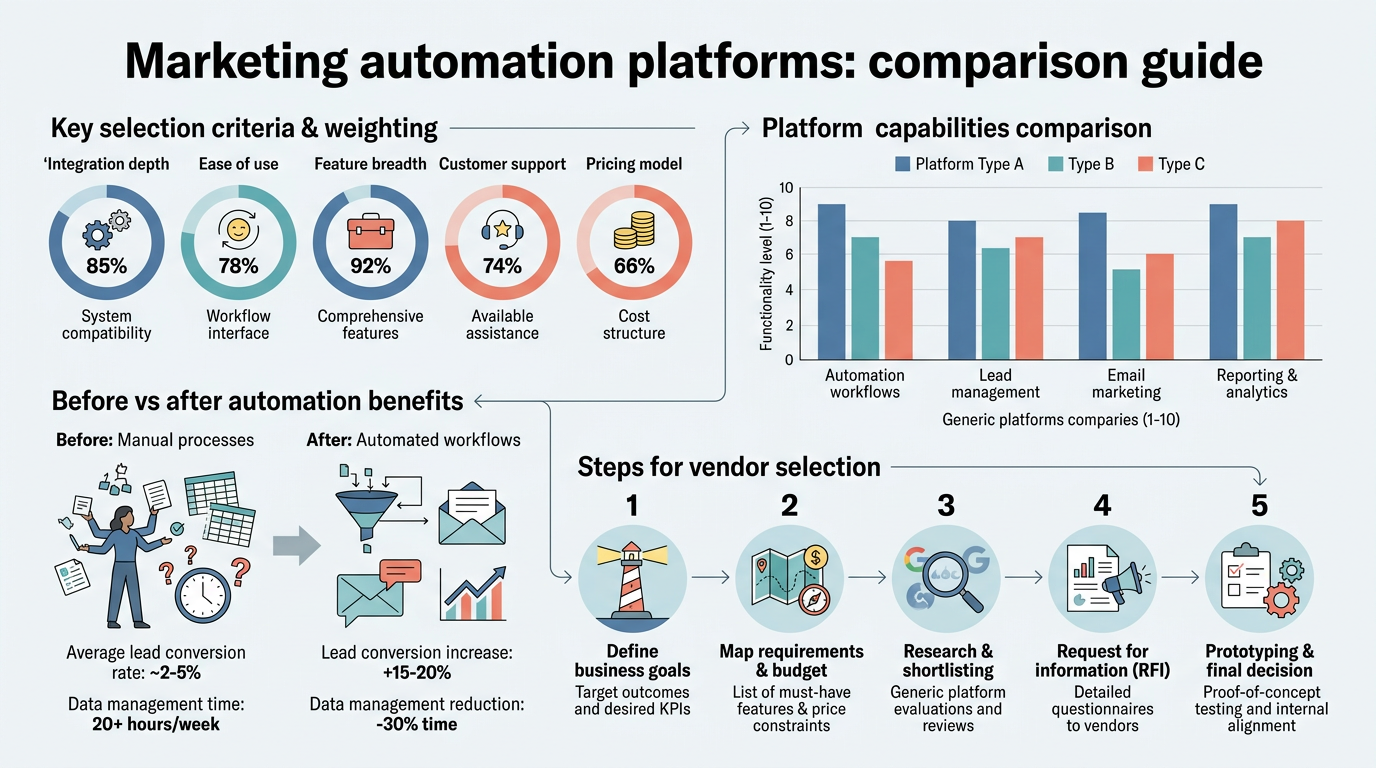
How Does Platform Selection Impact Your Marketing Velocity?
Choosing a marketing automation platform is not just a software decision—it's an operational one. The platform you select determines how fast your team can execute, how much training and ops overhead you'll carry, and whether you'll hit your revenue targets this year or slip into the next.
The gap between a poor fit and the right fit compounds quickly. Teams using platforms aligned with their operational capacity report 451% higher qualified lead generation compared to teams struggling with mismatched tools. This isn't about the platform itself; it's about the friction cost of learning something that doesn't match your team's mental model.
"When you choose a platform that's too sophisticated for your ops depth, you'll spend months in setup hell, training becomes a permanent budget line item, and your best marketers waste cycles fighting the interface instead of running experiments."
When you choose a platform that's too sophisticated for your ops depth, you'll spend months in setup hell, training becomes a permanent budget line item, and your best marketers waste cycles fighting the interface instead of running experiments. When you choose something too basic, you hit scaling walls within six months and face rip-and-replace costs mid-growth cycle.
The five platforms below represent the dominant tiers of the market, each optimized for a specific use case. Your job is matching your use case to the right tier.
Defining Your Operational Readiness
Before comparing feature sets, assess your team's readiness across three dimensions:
- Team size: 1-3 marketers vs. 8+ requires fundamentally different platform depth
- Technical depth: Do you have marketing ops resources, or is automation a secondary responsibility?
- Budget philosophy: Are you optimizing for upfront cost or long-term TCO?
A 5-person marketing team at a $2M ARR SaaS company has fundamentally different needs than a 25-person mid-market B2B team with dedicated ops. The former needs speed and simplicity; the latter needs depth and configurability.
Also ask: Does your sales team use Salesforce? Do you have a dedicated marketing ops person? Will you implement through an agency partner or in-house? These decisions alone eliminate 60% of platform candidates from consideration. When you know the answers, the right platform becomes obvious.
The Role of Implementation Time in ROI Calculation
Most cost calculations ignore implementation time—the fastest way to kill ROI is choosing a complex platform that requires three months of setup before your first automated workflow runs. During this period, opportunity cost is real: leads pile up unqualified, nurturing sequences don't run, and your team's confidence in the system erodes before it even launches.
"If your team generates 200 leads per month and your average deal value is $50K, three months of delayed workflow execution costs $150K+ in stalled pipeline. That's more than most annual software contracts."
HubSpot's speed advantage (2-4 weeks to productive workflows) is worth quantifying. If your team generates 200 leads per month and your average deal value is $50K, three months of delayed workflow execution costs $150K+ in stalled pipeline. That's more than most annual software contracts. Marketo's depth only justifies its timeline for teams managing 500K+ contacts with multi-dimensional scoring requirements.
What Are the Core Features That Drive Differentiation?

All modern marketing automation platforms do the basics: email, segmentation, lead scoring, and CRM integration. The platforms in this space don't compete on whether they have these features—they compete on how well they execute them and for which customer profile they're built.
The real differentiation sits in three areas:
- Ease of implementation: How fast can a non-technical marketer build workflows?
- Sophistication of automation logic: Can the platform handle multi-dimensional scoring, negative scoring, and complex branching?
- Total cost of ownership: What's the real three-to-five-year cost when you factor in setup, training, and integration work?
Lead Scoring Approaches: Speed vs. Sophistication
Lead scoring is where marketing automation platforms show their true architectural DNA. HubSpot's approach is visual, drag-and-drop, and fast to configure. You define behaviors (email opens, web visits, form fills) and assign points. Scoring runs immediately. This design wins for teams that need working automation in weeks, not months.
Marketo's approach is multi-dimensional. You can build decay rules (older activities lose points), apply negative scoring (disqualifies leads that hit certain criteria), and layer B2B account scoring on top of contact scoring. The system is powerful enough to handle ABM use cases where you're ranking entire accounts across multiple dimensions. But configuring this right takes a dedicated ops person and weeks of testing.
ActiveCampaign splits the difference—behavioral scoring with split-testing, so you can run experiments on which scoring models actually predict conversion. Pardot adds a grading layer on top (Salesforce Einstein AI) that surfaces not just "engagement" but "fit to our ICP," which is a meaningful step up for B2B teams with clear ideal customer profiles.
Native CRM vs. CRM Integration Trade-offs
HubSpot is the only major platform in this comparison with a native CRM included in the Marketing Automation suite. This is a significant operational advantage. Your marketing and sales data lives in the same system by default—no data sync delays, no field mapping nightmares, no "leads exist in marketing automation but not in CRM" disasters.
The trade-off: if you're already a Salesforce shop, HubSpot's CRM feels duplicative and adds complexity to your tech stack. In that case, Pardot (Marketing Cloud Account Engagement) is purpose-built as the Salesforce marketing layer. Marketo and ActiveCampaign both integrate with Salesforce, but as bolt-ons, which means you'll spend time managing field mappings and sync rules.
For growing teams still evaluating CRM options, HubSpot's included CRM is a huge time saver. You avoid the "which CRM should we buy" conversation and consolidate two platform purchases into one. As GTM 8020's comprehensive marketing automation research shows, teams with integrated platforms reduce implementation friction by 40% compared to multi-tool stacks.
AI Agent Capabilities and Content Automation (2026 Update)
All five major platforms added AI agents in 2026. HubSpot's Breeze AI launched with 13 specialized agents for content creation, predictive email send time optimization, and workflow suggestions. ActiveCampaign released predictive sending that adjusts segmentation based on real-time engagement patterns. Marketo integrated deeper with Adobe Sensei, offering AI-assisted campaign generation.
For most teams, these AI features are nice-to-haves that accelerate existing workflows rather than transformative. The real value sits in automating repetitive ops work—predictive send time, segment optimization, and content brief generation. Where AI does become table-stakes is in large-scale content production workflows, which feed into marketing automation campaigns. If you're managing 50+ concurrent campaigns and need fresh content variants, generative AI integration matters.
How Do Pricing Models and Total Cost of Ownership Compare?
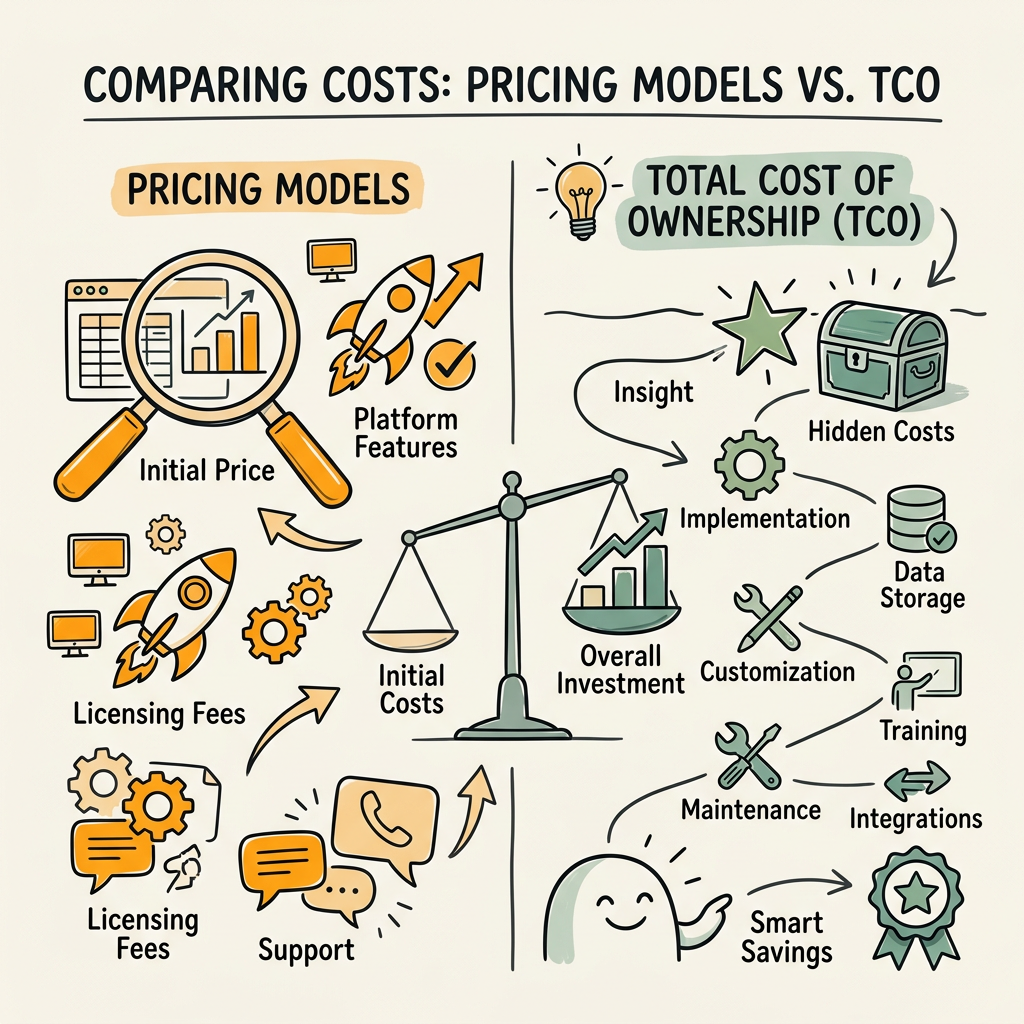
Platform pricing tells a story about who the vendor is optimizing for. Transparent, per-contact pricing (ActiveCampaign) signals confidence in the product's value and attracts budget-conscious teams. Quote-based pricing (Marketo, Pardot) signals enterprise complexity and reliance on sales negotiation. Seat-based pricing with contact limits (HubSpot) tries to serve both mid-market and enterprise but often frustrates both.
ActiveCampaign: The Most Transparent Model
ActiveCampaign's pricing is straightforward: $15-$19/month for 1,000 contacts, scaling to ~$150/month for 10,000 contacts. No per-seat fees, no hidden add-ons. This transparency is why ActiveCampaign has become the default recommendation for startups and bootstrapped teams. You get enterprise-grade automation (behavioral scoring, split-testing, multi-step workflows) at startup prices.
The trade-off: ActiveCampaign doesn't have a native CRM, so you'll integrate with your existing CRM or add a light CRM layer. For teams already using HubSpot, this redundancy is a switching cost. For teams using Salesforce or building their own stack, it's a feature, not a bug.
HubSpot: The All-in-One Premium
HubSpot's pricing has risen significantly in 2026. Professional tier (Marketing + Sales CRM) starts at ~$890/month for 2,000 contacts. Enterprise tier runs $3,600+/month. The inclusion of a native CRM justifies the premium for teams without Salesforce, but the model penalizes scaling. As your contact database grows, costs climb steeply.
For a mid-market company managing 100,000 contacts, HubSpot's total cost exceeds $80,000/year when you factor in setup, training, and app integrations. Compare that to ActiveCampaign's $200/month (~$2,400/year), and the gap widens as scale increases. Affmaven's 2026 analysis of cost drivers confirms that contact volume is the single biggest differentiator between platforms.
Marketo: The Enterprise Quote Machine
Marketo (Adobe Marketo Engage) doesn't publish starting prices. Estimates from implementation partners suggest entry starts at ~$1,500/month for small implementations, rising quickly to $2,000-$5,000/month for mid-market deployments. Enterprise negotiations often exceed $10,000/month or even €20,000/year (~$22,000/year).
The real cost catch: Marketo requires significant setup. Implementation partners charge $30,000-$150,000 to get campaigns running smoothly. Total first-year cost for a mid-market Marketo deployment often exceeds $200,000. This pricing only makes sense for organizations with 500K+ contacts and complex ABM workflows that cannot be done simpler tools.
Pardot: Salesforce's Tax on Total Cost of Ownership
Pardot (Marketing Cloud Account Engagement) pricing starts at ~$1,250/month for 10,000 contacts, rising to $2,000+ for larger deployments. But Pardot's hidden cost is Salesforce licensing. If your team doesn't already use Salesforce CRM, you'll need to budget $165+ per sales user, plus marketing users.
For a 10-person sales team + 3-person marketing team, Salesforce licensing alone runs $1,650-$2,500/month. Add Pardot ($1,250+), and you're above $2,900/month before setup, training, or integrations. Total first-year TCO typically exceeds $200,000.
Pardot only makes financial sense if you're already a committed Salesforce customer. If you're evaluating Salesforce for the first time, Pardot + Salesforce isn't competitive with HubSpot's all-in-one model on cost.
Which Platform Fits Your Team's Size and Growth Stage?
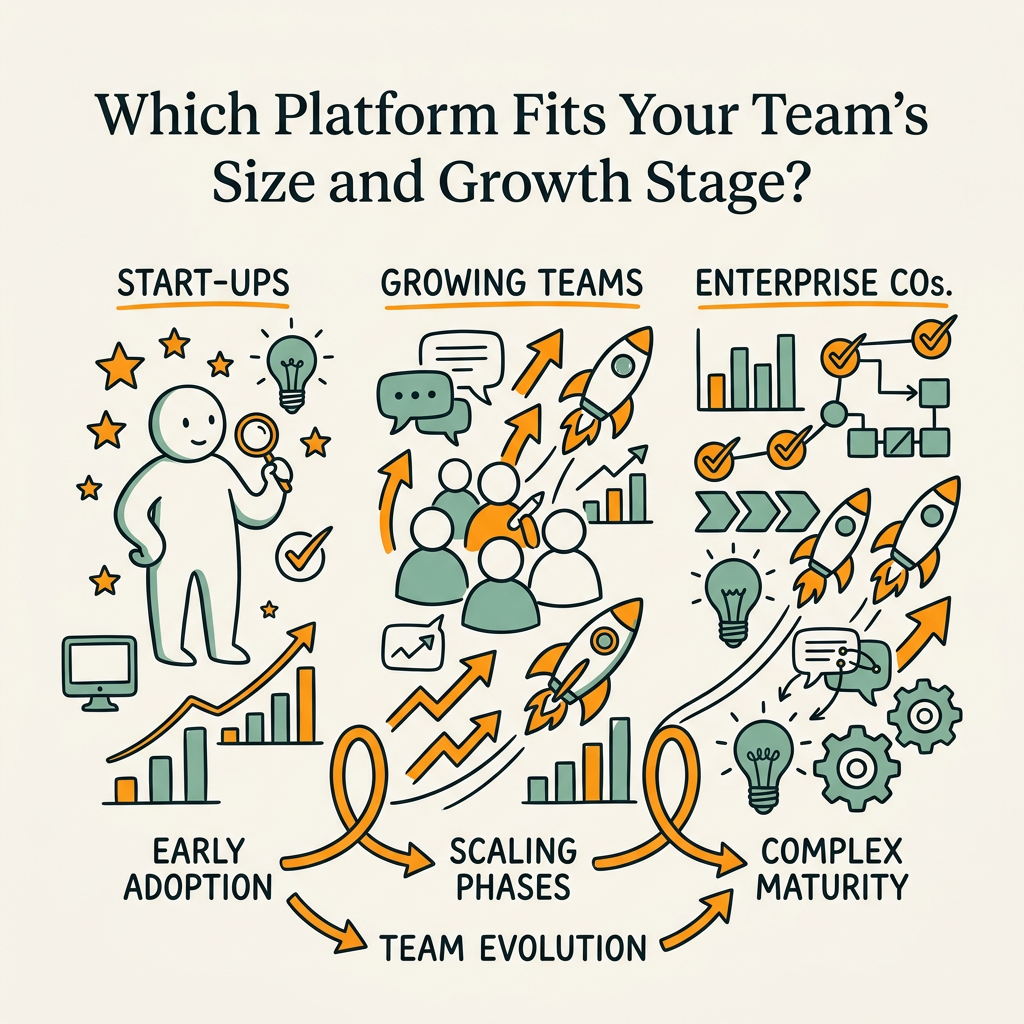
The right platform depends on where you sit in the growth curve. A bootstrapped startup has completely different constraints than a Series C SaaS company, which has different constraints than an enterprise marketing organization.
| Growth Stage | Team Size | Recommended Platform | Why This Platform | Why NOT the Others |
|---|---|---|---|---|
| Startup (<$1M ARR) | 1–3 marketers | ActiveCampaign | $15–$50/month, zero setup overhead, built-in templates for email nurturing, behavioral scoring that works without ops depth. | HubSpot's CRM overlap and $890/mo minimum is overkill. Marketo/Pardot require $100K+ setup budgets and ops resources you don't have. |
| Growing SMB ($1M–$5M ARR) | 3–8 marketers | HubSpot OR ActiveCampaign | HubSpot wins if you don't have Salesforce (native CRM saves time); ActiveCampaign wins if you want to keep costs under $300/mo and integrate with existing tools. | Marketo/Pardot are premature. You'll spend more on setup than software for 2–3 years. Revisit at $10M+ ARR. |
| Mid-Market ($5M–$25M ARR) | 8–20 marketers | HubSpot OR Marketo | HubSpot if you want simplicity and speed; Marketo if you have 500K+ contacts, dedicated ops, and complex ABM workflows. | Pardot only if you're Salesforce-first. ActiveCampaign works but you'll outgrow it within 24 months. |
| Enterprise (>$25M ARR) | 20+ marketers, dedicated ops | Marketo OR Pardot | Marketo for pure marketing automation depth; Pardot if Salesforce is your system of record. Both support complex, multi-dimensional scoring and ABM. | HubSpot and ActiveCampaign lack the sophistication. You'll hit scaling walls within 12 months. |
Notice that the recommendation changes based on where you sit in the curve. There's no universally "best" platform—there's the best platform for your stage. Picking the wrong tier is far more painful than picking the wrong specific tool.
The Hidden Cost of Switching Platforms
Once you've migrated campaigns, trained your team, and integrated with your CRM and other tools, switching platforms costs far more than the new software license. You'll spend 4-8 weeks of marketing team time exporting campaigns, rewriting workflows, and remigrating contact data. Key automation dies in transit. Lead velocity drops for 30-60 days.
This switching cost is why platform selection is so important upfront. Choose conservatively for your current stage, not aspirationally for where you hope to be in three years. You can always upgrade; upgrading within the same ecosystem (HubSpot → Marketo) is hard and expensive. This aligns with how successful marketing teams approach automation tool selection—matching tool sophistication to operational capacity, not vice versa.
How Do You Avoid Implementation Failure?
Platform selection is only 30% of the battle. Implementation approach determines the other 70%. Two teams can pick the same platform and end up with radically different outcomes based on how they approach setup.
Start with Workflow Definition, Not Feature Deep-Dives
The most common implementation failure: teams pick a platform, get dazzled by features, and try to build everything at once. They end up with 47 abandoned campaigns that never launch because the team couldn't agree on scoring rules or segment definitions.
Instead, define your core workflows before evaluating platforms:
- Lead capture to MQL transition
- MQL to SQL nurturing sequences
- Customer onboarding workflows
- Win-back and re-engagement campaigns
Map out the exact data and decision points each workflow needs. Then evaluate which platform can handle those workflows fastest.
This is where content automation tools intersect with marketing platforms. Your automation is only as good as the content fueling it. If your platform is fast but your content production is manual, you've solved half the problem.
Audit Your Data Before Migration
52% of marketers cite collecting quality data as their biggest automation obstacle. If your current CRM has duplicate records, incomplete fields, or inconsistent naming conventions, your new platform will amplify those problems.
Before migration, prepare your data by addressing:
- Duplicate records: Merge or remove duplicate contacts in your existing system
- Field standardization: Standardize company names, job titles, and industry codes
- Missing data: Fill critical fields (email, company, role) for high-value contacts
- Field mapping: Document how your current fields will map to the new platform
Spend two weeks cleaning your contact database before migration. This upfront work prevents six months of downstream scoring and segmentation problems.
Assign a Platform Owner, Not a Task Force
Implementation fails when responsibility is diffused across five people. Assign one person—marketing ops, demand gen lead, or even the VP of Marketing if you're small—as the platform owner. That person gets budget, training time, and mandate to make setup decisions.
A single platform owner should own:
- Configuration decisions: Scoring rules, segmentation criteria, workflow logic
- Team training: Running sessions so marketers can use the platform effectively
- Integrations: Managing connections to CRM, email, analytics, and other tools
- Ongoing optimization: Testing workflows, analyzing performance, and iterating
Decision clarity accelerates everything. Without a single decision maker, every segmentation rule and workflow becomes a committee discussion that drags implementation from 4 weeks to 12 weeks.
Conclusion
Marketing automation platform selection is a high-leverage decision that compounds over years. Teams using aligned platforms report significantly higher qualified lead volumes and achieve positive ROI within 12 months. The right choice depends on your stage, team depth, and integration constraints—not on which platform has the fanciest marketing.
For startups and high-growth SMBs, ActiveCampaign offers the best price-to-speed ratio. For teams without Salesforce, HubSpot's all-in-one model saves months of integration work. For enterprises managing complex ABM and multi-dimensional scoring, Marketo justifies its cost. For Salesforce-first organizations, Pardot is the logical choice.
But platform selection alone doesn't guarantee success. Implementation approach, data quality, and workflow definition matter as much as the software. Start with your three core workflows, assign a single owner, clean your data, and evaluate platforms against those specific needs—not against marketing hype.
Start your SEO agent to explore how modern content automation compounds your marketing automation ROI.
FAQs
What's the most affordable marketing automation platform for small teams?
ActiveCampaign is the most cost-effective entry point, starting at $15–$19 per month for 1,000 contacts. It includes behavioral scoring, email automation, and split-testing—features typically reserved for enterprise platforms at much higher price points. For teams with fewer than 50,000 contacts, ActiveCampaign's transparent pricing structure keeps total cost below $200/month even at scale. HubSpot's Professional tier ($890/month) and Marketo's minimum $1,500/month make them less suitable for bootstrap-stage businesses.
How long does it take to implement each platform and start seeing results?
HubSpot leads on speed: most teams launch their first automated workflow within 2–4 weeks, meaning you'll see lead flow changes in your first month. ActiveCampaign is similarly fast (1–3 weeks) because both prioritize drag-and-drop workflows. Marketo requires 8–16 weeks due to setup complexity and the need for dedicated ops resources. Pardot falls in the 6–12 week range. The longer timelines delay ROI significantly—three months of stalled automation costs six figures for fast-growing companies.
Which platform should I choose if we're already using Salesforce?
Pardot (Marketing Cloud Account Engagement) is purpose-built as the Salesforce marketing layer and integrates natively with your Salesforce data model. This eliminates field mapping complexity and ensures your lead scoring and grading layers align directly with your sales pipeline. If you're not using Salesforce yet, HubSpot's all-in-one model (marketing + CRM) is less expensive than Salesforce + Pardot combined. If Salesforce is locked in, Pardot wins; if you're still deciding on a CRM, HubSpot saves setup time and licensing costs.