Marketing Automation Platforms for SaaS Reviewed
SaaS teams face a critical problem: marketing automation adoption is at 56%–76% globally, yet many companies still struggle to implement platforms that move beyond basic email sequences. The cost of ineffective automation is steep—missed lead opportunities, longer sales cycles, and teams burning out trying to manage fragmented tools. The solution isn't more features; it's the right automation architecture for how SaaS actually sells.
Key Takeaways
- Marketing automation delivers $5.44 in return per $1 spent, with ROI typically achieved in 6–12 months (2026 benchmarks)
- 77% of users report higher conversion rates, while 80% see increased lead generation after implementation
- Platform choice depends on go-to-market motion: HubSpot for all-in-one B2B SaaS, ActiveCampaign for behavioral automation, Customer.io for product-led growth
- Event-driven workflows and AI-powered personalization are now table stakes, not differentiators
- Core platform categories: All-in-one CRM automation (HubSpot), behavior-first engines (ActiveCampaign), event-driven stacks (Customer.io), and enterprise suites (Salesforce, Adobe)
- ROI benchmarks: Cloud-based platforms dominate with 73.6% deployment share; payback averages 6–12 months depending on use case
- Key selection criteria: Event-based trigger capability, journey visualization, CRM integration depth, and API flexibility
- Emerging trend: AI is embedded across all platforms now; the differentiation lies in workflow speed and implementation overhead
What Are the Core Categories of SaaS Marketing Automation Platforms?
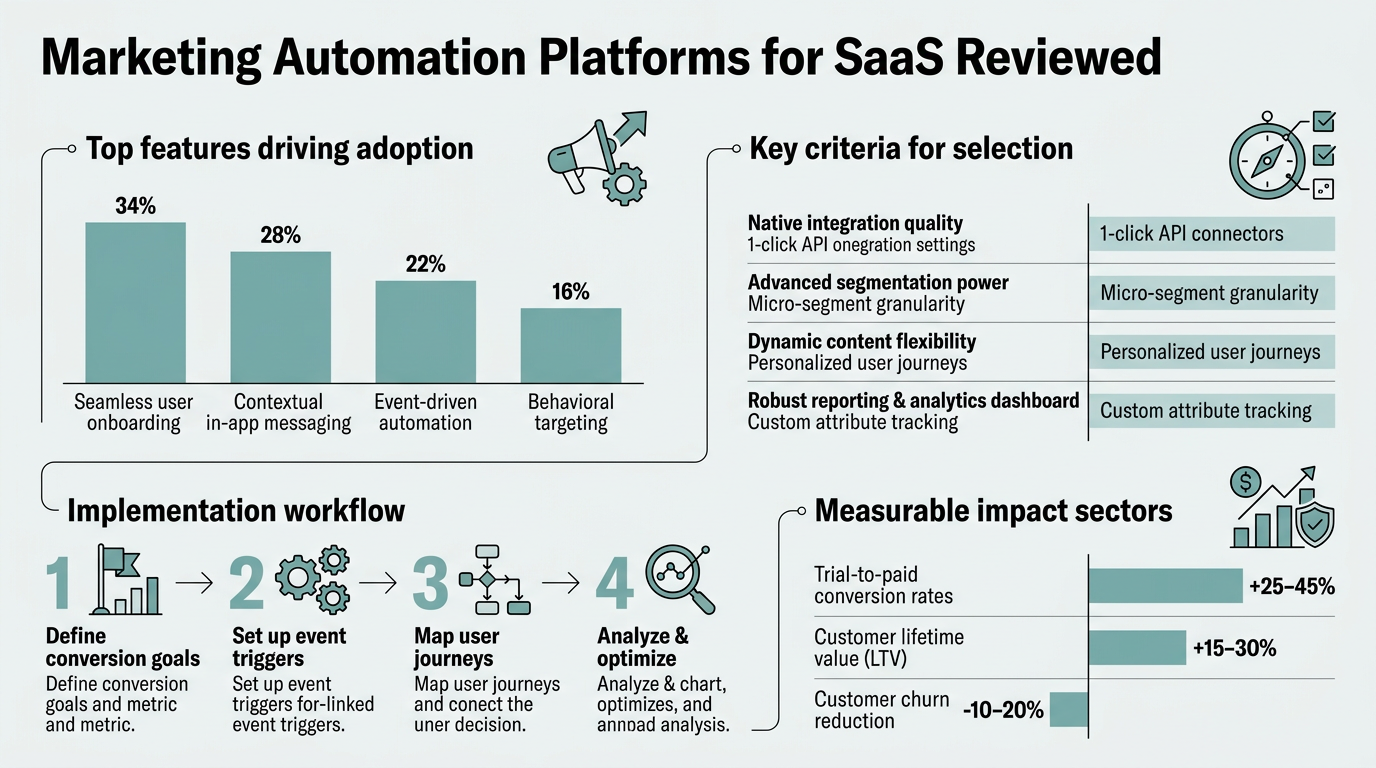
SaaS marketing automation platforms fall into four distinct architecture patterns, each built for different go-to-market motions. 73.6% of modern deployments are cloud-based, meaning the era of on-premise solutions has ended. Understanding which category fits your business motion is the first decision—and the most important one.
All-in-One CRM Automation Suites
HubSpot and Salesforce Marketing Cloud dominate this space. These platforms combine contact management, lead scoring, email campaigns, and visual journey building in a single source of truth. The core promise: one system for the entire customer lifecycle from capture through renewal.
"The native CRM integration in HubSpot eliminates data silos that plague fragmented stacks. When every interaction—from first ad click to contract renewal—lives in one system, marketing can finally prove its contribution to revenue." — Marketing Operations Leader, Series B SaaS
HubSpot Marketing Hub is the de facto choice for mid-market SaaS teams without dedicated ops resources. Native CRM, contact-based pricing that scales with your database, and a visual workflow builder that doesn't require code. The tradeoff is cost—contact overage fees add up quickly for high-volume email lists.
Salesforce Marketing Cloud / Pardot targets organizations already deep in the Salesforce ecosystem. If your sales and support teams live in Salesforce, the native sync and unified data model reduce integration headaches. The cost and implementation burden are real—Salesforce projects often require dedicated admin resources and 6+ month rollouts.
Behavioral and Event-Driven Automation Engines
ActiveCampaign and Customer.io lead this category. They're built on the premise that the best marketing is triggered by what a customer actually does, not what a calendar says. These platforms excel when your workflows depend on real-time product usage, billing events, or customer interactions. According to Saashero's 2026 SaaS automation review, event-driven platforms are the fastest-growing category because they compress time-to-value and reduce manual workflow design.
ActiveCampaign occupies the sweet spot for growing SaaS: flexible, powerful automation at a mid-market price point. Starting at $39/month for 2,500 contacts, scaling to $299/month at 100,000, the cost is predictable. Advanced conditional logic, behavioral segmentation, and CRM-lite features make it a favorite for SaaS sales-led growth motions. The limitation: it's less of a centralized CRM than HubSpot, so handoff from marketing to sales requires discipline.
"Event-driven automation changed how we think about nurture. Instead of blasting emails on a schedule, we trigger messages when users actually do something—activate a feature, hit a usage milestone, or enter a billing window. Open rates went from 18% to 34%." — Head of Growth, PLG SaaS Company
Customer.io is purpose-built for product-led growth. It triggers workflows from in-app events, usage milestones, and billing changes—exactly what PLG SaaS needs. At $100/month entry point, it's a premium choice, but companies with sophisticated event tracking save weeks of integration work.
Budget-Conscious Email and Automation Tools
Brevo and MailerLite serve cost-sensitive teams and solopreneurs. Both tools offer distinct features for budget-conscious growth:
- Brevo: Starts at $39/month for 2,500 contacts with multichannel capabilities including SMS and chat
- MailerLite: Emphasizes simplicity and ease of use over automation complexity, ideal for content creators
- Limitations: Neither platform scales to workflow complexity requirements of fast-growing SaaS companies
- Best use case: Early-stage SaaS validating product-market fit without heavy automation overhead
Niche Specialists: Ecommerce and Channel Depth
Klaviyo dominates ecommerce because it was built for Shopify. If revenue attribution and native commerce integrations matter, Klaviyo wins. For B2B SaaS, it's typically the wrong default—SaaS buying patterns are too complex for ecommerce-first logic.
How Do Top Platforms Compare in Feature Depth and Ease of Use?
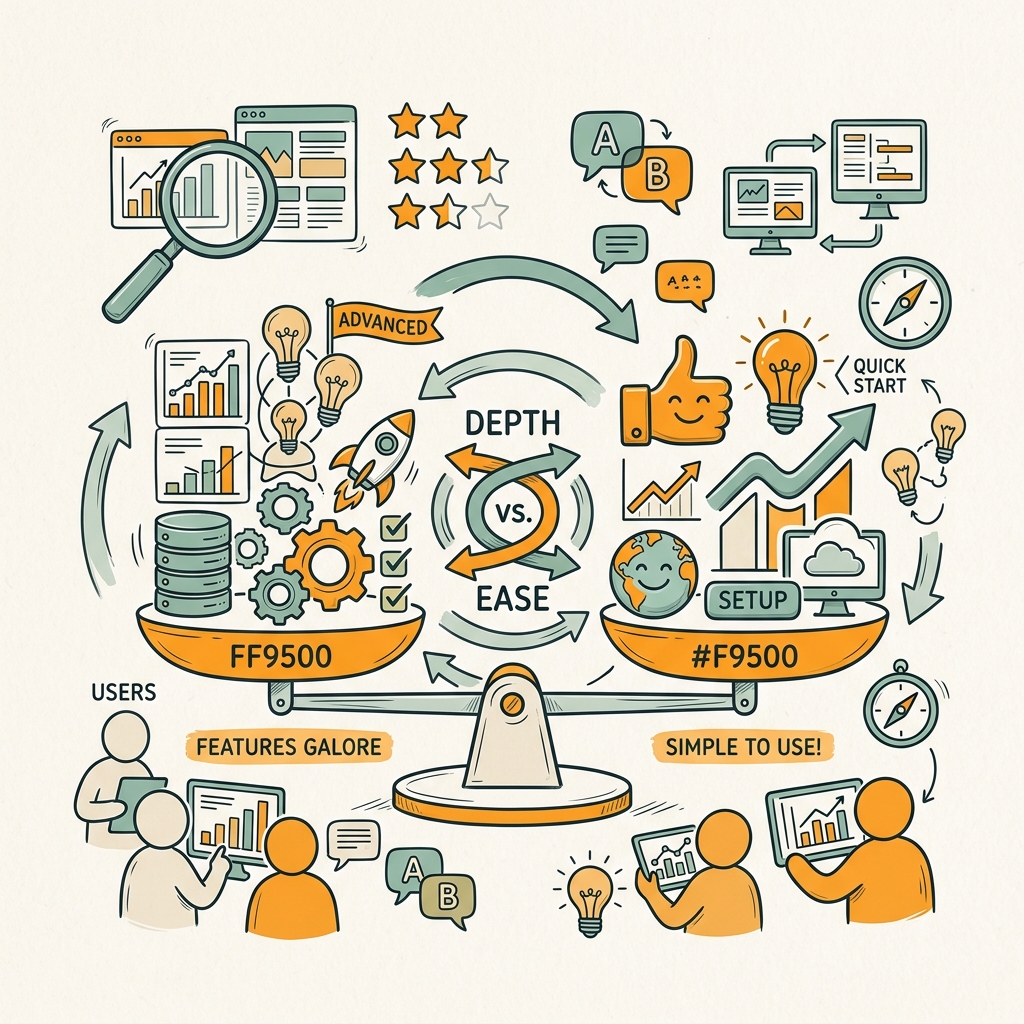
Feature comparison is less meaningful than it used to be. AI is now embedded across all platforms, so the differentiation has shifted to implementation speed and workflow depth. Below is the real trade matrix SaaS teams should evaluate.
| Platform | Best For | Core Strength | Pricing Range (2,500 contacts) | Primary Tradeoff |
|---|---|---|---|---|
| HubSpot Marketing Hub | All-in-one B2B SaaS | Native CRM, visual journeys, full attribution | Contact-based (varies) | Gets expensive as database scales |
| ActiveCampaign | Mid-market SaaS, sales-led | Behavioral triggers, flexible automation, cost-effective | $39–$111 | CRM is lighter than HubSpot; less native Salesforce sync |
| Customer.io | Product-led growth SaaS | Event-based workflows, real-time triggers, lifecycle automation | $100+ | Less CRM depth; requires event infrastructure |
| Salesforce Marketing Cloud | Enterprise Salesforce orgs | Native Salesforce sync, ABM, nurture at scale | $1,000+ per month | High implementation cost and complexity |
| Adobe Marketo Engage | Enterprise marketing ops | Flexible data model, account-based marketing (ABM), analytics | $1,000+ per month | Requires specialized admin resources |
| Brevo | Budget-conscious SMBs | Low-cost entry, multichannel basics | $39–$173 | Limited advanced automation and CRM |
What ROI Metrics Matter Most for SaaS Teams?
Marketing automation ROI isn't theoretical—it's measurable and fast. Companies report 544% ROI over three years, with most recovering their investment within 6–12 months. According to Revenue Memo's 2026 ROI analysis, the fastest payback comes from lead generation and nurture workflows. But the metrics that matter differ by motion.
Lead Volume and Conversion Gains
80% of automation users report increased lead volume, and 77% report higher conversion rates. For SaaS, this translates to faster pipeline fill and shorter sales cycles. A well-designed nurture sequence for a product trial can compress time-to-first-call by 30–40% because leads arrive warmer. The payback window is brutal—most teams recoup their platform investment in lead value gains alone within six months.
Operational Efficiency and Team Bandwidth
The second ROI lever is time savings. A SaaS team manually managing 50 email sequences across different tools spends 20+ hours per week on list management and send scheduling. Consolidating to a single automation platform and layering in trigger-based sends means one person can manage the work of three. Cost avoidance is real: automation reduces operational overhead by 25–30% in mature deployments.
Key operational improvements from automation include:
- Reduction in manual list-cleaning and hygiene tasks by 60–70%
- Decreased email send time from 2–3 hours per week to 15 minutes of monitoring
- Elimination of duplicate contact entry across multiple tools and spreadsheets
- Faster onboarding of new team members due to standardized workflows
Revenue Attribution and Pipeline Velocity
The hardest metric to measure but the most valuable: how much pipeline revenue came from a specific automation sequence? Platforms with native CRM integration (HubSpot, Salesforce, ActiveCampaign) can track deal progression back to the campaign that triggered it. This moves automation from "nice to have" to "essential" for revenue teams.
Which Platform Wins for Common SaaS Go-To-Market Motions?
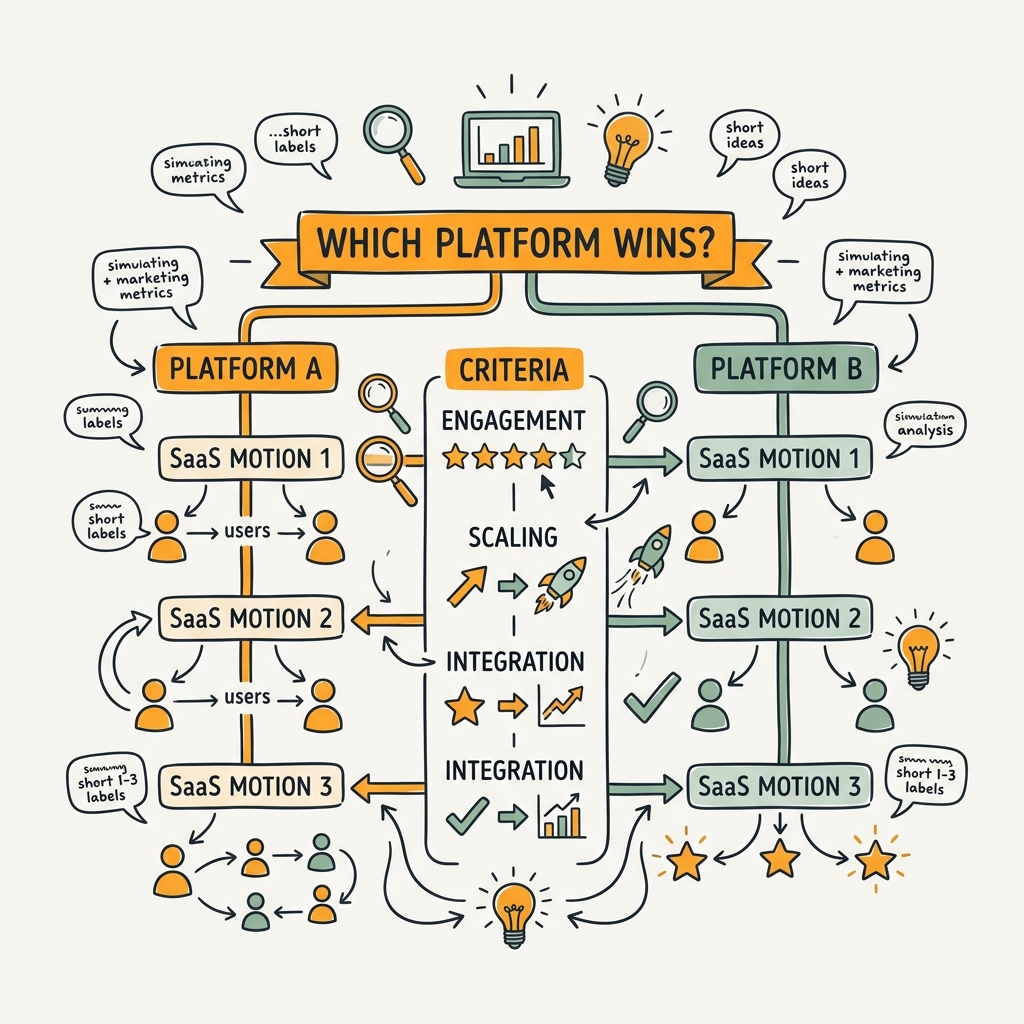
Platform selection should flow from your motion, not the other way around. Generic "best of" rankings miss the nuance—the best platform is the one built for how your company actually sells.
Sales-Led SaaS (Account Executives Drive Deals)
If your go-to-market is a sales team qualifying inbound, you need tight CRM integration and handoff workflows. HubSpot or ActiveCampaign are the defaults here. HubSpot wins if you want one system for the entire funnel. ActiveCampaign wins if you need advanced behavioral segmentation and lower total cost. Both track deal progression back to the campaign that sourced it.
The critical automation in sales-led motions is lead scoring—flagging prospects ready for sales earlier so reps don't waste time on unqualified inbound. Most platforms support this, but HubSpot and ActiveCampaign have the most intuitive scoring interfaces.
Essential elements of sales-led automation include:
- Lead scoring logic that triggers when a prospect reaches readiness threshold
- Automated CRM field population to give sales reps full context before first touch
- Round-robin assignment workflows that route leads to the right rep instantly
- Handoff tracking that monitors whether sales engaged within 24 hours
- Re-engagement workflows that recycle leads if sales doesn't qualify them within 5 days
Product-Led Growth (Self-Serve Freemium or Trial)
PLG SaaS companies live and die by onboarding workflows. The best platforms here are Customer.io and Encharge. Why? They trigger on product events—trial signups, feature usage, in-app behavior. When a user hits day 7 of their trial without activating, the platform can fire an re-engagement email automatically. When someone hits a usage milestone, another workflow activates to explain the next feature.
Customer.io's event infrastructure is the deepest; Encharge is simpler and faster to set up. Both beat HubSpot or ActiveCampaign for pure PLG because event-native architecture matters more than CRM breadth when the "customer" is initially unknown and self-serve.
Hybrid Growth (Sales + Self-Serve Together)
Most fast-growing SaaS is hybrid: self-serve signups feed a sales team, or a product trial qualifies users for a sales conversation. This is where autonomous SEO agents become the strategic backbone. Platforms like HubSpot or ActiveCampaign are the execution layer, but without a consistent stream of high-intent traffic landing on your site, even perfect automation is running on fumes. A system that automates content research, writing, and publishing every day ensures your automation platform never runs dry on qualified inbound. Combined with marketing automation, you get the full flywheel: organic traffic feeds your top of funnel, automation nurtures it through the journey.
Account-Based Marketing (ABM) at Scale
For enterprise SaaS targeting 20–50 named accounts, Salesforce Marketing Cloud or Adobe Marketo are the only real choices. They support the data complexity and orchestration depth required for ABM. Standard mid-market platforms like HubSpot and ActiveCampaign can do light ABM, but they'll eventually hit ceiling.
ABM-specific platform requirements include:
- Support for multi-touch attribution across multiple stakeholders and accounts
- Account-level rather than contact-level segmentation and journey orchestration
- Native integrations with intent data providers and account intelligence tools
- Ability to personalize at scale across dozens of dimensions per account
- Real-time reporting on account progression and pipeline impact
What Are the Common Implementation Pitfalls SaaS Teams Make?
Platform choice matters, but execution determines success. Most SaaS teams make the same mistakes when rolling out automation. Check the complete buyer's guide for SaaS automation stacks to avoid these traps.
Starting Too Complex, Too Fast
Teams often design 15-step nurture sequences before sending the first campaign. Better approach: build one high-performing sequence (lead capture → nurture → sales handoff), measure conversion lift, then expand. Iterative design catches issues early—workflow gaps, copy problems, segmentation misses. Smart teams run a single sequence for 30 days, optimize, then clone it to adjacent segments.
Neglecting List Quality and Segmentation
Automation tools don't fix bad data. If your contact list is stale, duplicate, or poorly segmented, even the best platform will underperform. Successful automation requires discipline: clean your list before import, segment by buyer persona and engagement level, and create separate workflows for each segment. One-size-fits-all sequences underperform by 40–50% compared to segmented campaigns.
Missing the CRM Handoff
The biggest ROI leak is weak marketing-to-sales handoff. A lead flows through a beautiful nurture sequence and lands in the sales inbox with no context about where they came from or what they're interested in. Solution: map automation platforms to your CRM tightly. Track which sequence a lead ran through, when they reached trigger milestones, and what content they engaged with. Then make that data visible to sales in their CRM view. Reps with full context close 25–30% faster.
Which Platforms Integrate Best with Your Existing Tech Stack?
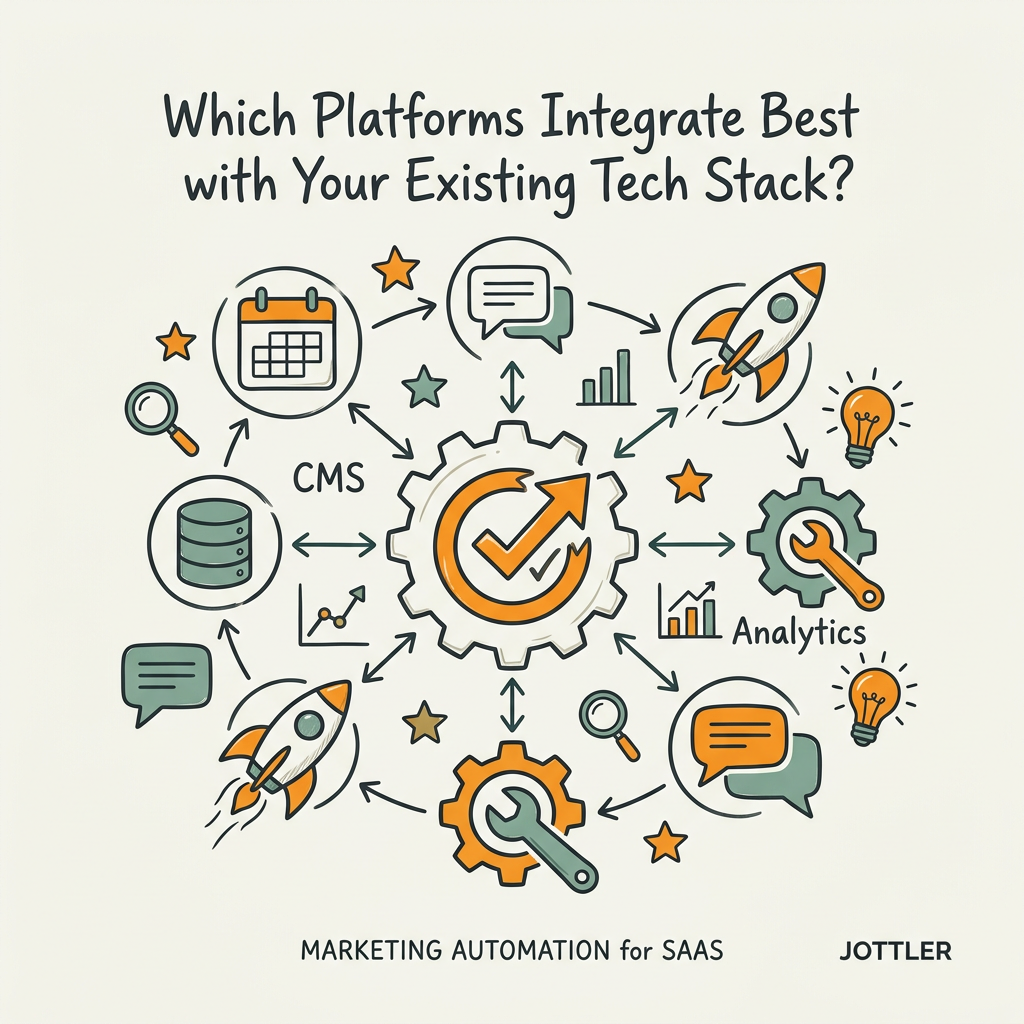
Automation lives in the middle of your stack. It needs to talk to your CRM, email provider, analytics, and revenue tools. Integration depth matters as much as core features.
Native Integrations vs. API and Zapier
Native integrations (direct API connections) are always faster and more reliable than Zapier. HubSpot has deep integrations with Salesforce, Google Analytics, and most revenue tools because they've invested in connector development. ActiveCampaign has similar depth. Customer.io's strength is event APIs, not wide integration breadth.
If your stack includes tools without native connectors, count on 20–40 hours of Zapier setup and maintenance. That cost should factor into your platform decision. A platform that costs $500/month but saves you $2,000 in integration overhead wins over a cheaper platform that requires heavy custom work.
API Flexibility and Webhook Support
Advanced SaaS teams often need to push data to automation tools via API (custom events, dynamic field updates, segment syncs). HubSpot's API is solid but heavily rate-limited for custom workflows. ActiveCampaign's API is more flexible. Customer.io's event API is built for this use case. If you have in-house developers, API flexibility should be a selection criterion.
How Are SaaS Teams Using AI Within Automation Platforms?
AI adoption in marketing automation has accelerated dramatically. 94% usage in content workflows is expected by the end of 2026, which means AI-powered subject lines, copy generation, and send-time optimization are now baseline expectations, not differentiators.
AI-Powered Subject Lines and Copy
Most platforms now offer AI to generate subject lines and email body copy. HubSpot, ActiveCampaign, and even Brevo have this built in. The quality is usually 70–80% of handwritten copy—good enough for A/B testing, but sales-critical emails should still be human-written. The real win is speed: generating 5 subject line variants for a/b testing takes seconds instead of 30 minutes.
Predictive Send-Time Optimization
Platforms like HubSpot and Customer.io now offer AI that predicts the best time to send an email to each recipient based on their past behavior. This can improve open rates by 10–15% compared to fixed send times. It's a small lever, but across thousands of emails, the lift compounds.
Workflow Automation and Optimization
The frontier is AI assisting in workflow design. Some platforms use AI to suggest next steps in a journey based on user behavior patterns. This is still early, but expect platforms to move from "you design the workflow" to "AI suggests the workflow and you approve it" within the next 12–18 months.
"AI-powered send time optimization alone added 15% to our open rates without changing a single piece of copy. That's pure platform leverage—it costs nothing extra but compounds across every email we send." — VP of Marketing, B2B SaaS
Conclusion
The best marketing automation platform for SaaS is the one that matches your go-to-market motion and integrates seamlessly with your team's actual workflow. Most teams recoup their investment within 12 months. The competitive advantage today isn't picking the fanciest platform; it's executing faster and more consistently than your competitors.
HubSpot remains the strongest all-in-one choice for mid-market SaaS. ActiveCampaign offers the best mix of power and cost. Customer.io wins for pure PLG. But platform selection is only half the battle. The other half is ensuring that automation sits atop a foundation of consistent, high-quality content that brings traffic to your funnel in the first place. Building a sustainable SaaS content strategy that feeds your automation engines—through organic search, email capture, and audience building—is the real lever that compounds. Without traffic, even perfect automation is dead.
Start with your chosen platform's free trial or starter tier. Build one end-to-end workflow—from lead capture through sales handoff. Measure conversion, optimize, then scale. Within 90 days, you'll know whether the platform is the right fit for your motion. Start your SEO agent to ensure your automation platform never runs dry on high-intent inbound traffic.
FAQs
What is the best marketing automation platform for small SaaS teams?
For small SaaS teams (under 10 people), ActiveCampaign or HubSpot's starter plan are the practical defaults. Both offer native CRM, automation, and email in one system without requiring dedicated ops resources. ActiveCampaign starts at $39/month for 2,500 contacts; HubSpot's free tier covers basic automation. If your business is pure product-led growth with in-app triggers driving engagement, Customer.io's $100/month entry point is worth the premium because event-native workflows save integration work. Most small teams regret choosing budget-first options because they outgrow the automation depth within 6–12 months and then face costly platform migration.
How long does it take to implement a marketing automation platform?
A basic implementation (CRM setup, first nurture sequence, email template) takes 2–4 weeks for mid-market teams. Full stack integration with your CRM, analytics, and revenue tools takes 6–8 weeks. Enterprise implementations with ABM workflows and complex segmentation can stretch to 3–6 months. The timeline depends less on platform choice and more on data quality and team bandwidth. Teams with clean contact lists, defined buyer personas, and dedicated ops resources move faster. Most teams are impatient and ship their first sequence too early (after just one week). Better approach: spend three weeks designing workflows, test on 10% of your list, optimize for two weeks, then scale to the full database.
Can marketing automation platforms replace a CRM?
Some automation platforms include CRM-lite capabilities, but none fully replace a dedicated CRM at scale. HubSpot's integrated CRM is the closest to a true replacement for small SaaS teams; it works well until you hit about $2M ARR. ActiveCampaign and Customer.io have CRM features, but they're lighter than Salesforce or Pipedrive. For sales-led SaaS with complex deal stages, forecasting needs, and revenue operations, you need a dedicated CRM. Automation platforms handle the journey orchestration and engagement layer. The hybrid approach—CRM for deal management, automation platform for nurture and lifecycle—remains the industry standard because each tool is purpose-built for its use case.