Nurture Sequences That Convert: Email Workflow Guide
Most B2B teams send emails to their prospects once, then wonder why nobody converts. The reality is harsh: generic broadcast campaigns convert at just 1.5%, while segmented nurture sequences hit 8-12% conversion rates — that's a 5-8x improvement (Source: 2026 Industry Data). The gap isn't random. It's the difference between hoping someone buys and strategically guiding them through their buying journey with personalized, timely touchpoints. Nurture sequences work because they treat email as a conversation, not a megaphone. Here's how to design workflows that actually move prospects toward a sale.
Key Takeaways
- Segmented nurture sequences convert at 8-12% versus 1.5% for generic broadcasts (2026 Data)
- Automated email workflows deliver 320% higher revenue per email and 451% more qualified prospects than manual campaigns
- Behavior-triggered emails achieve 27.3% open rates and 4-10x higher response rates compared to batch sends
- The 80/20 content rule — 80% educational, 20% sales asks — is foundational to sequence success
- Define Your Sequence Arc: Structure nurture workflows around trust-building, value delivery, proof points, and conversion — not just constant selling.
- Trigger by Behavior, Not Time: Behavior-triggered sequences perform 27.3% better in open rates; automate based on prospect actions, not just calendar dates.
- Segment by Role and Stage: Create distinct workflows for new subscribers, free trial users, and past customers — one-size-fits-all fails at scale.
- Apply the 80/20 Rule: Lead with educational content and genuine value; reserve 20% of your sequence for direct sales asks.
- Automate with Native Integrations: Tools that deep-link to your CRM (Salesforce, HubSpot) eliminate manual data entry and enable true trigger-based workflows.
What Is a Nurture Sequence and Why Does It Matter?
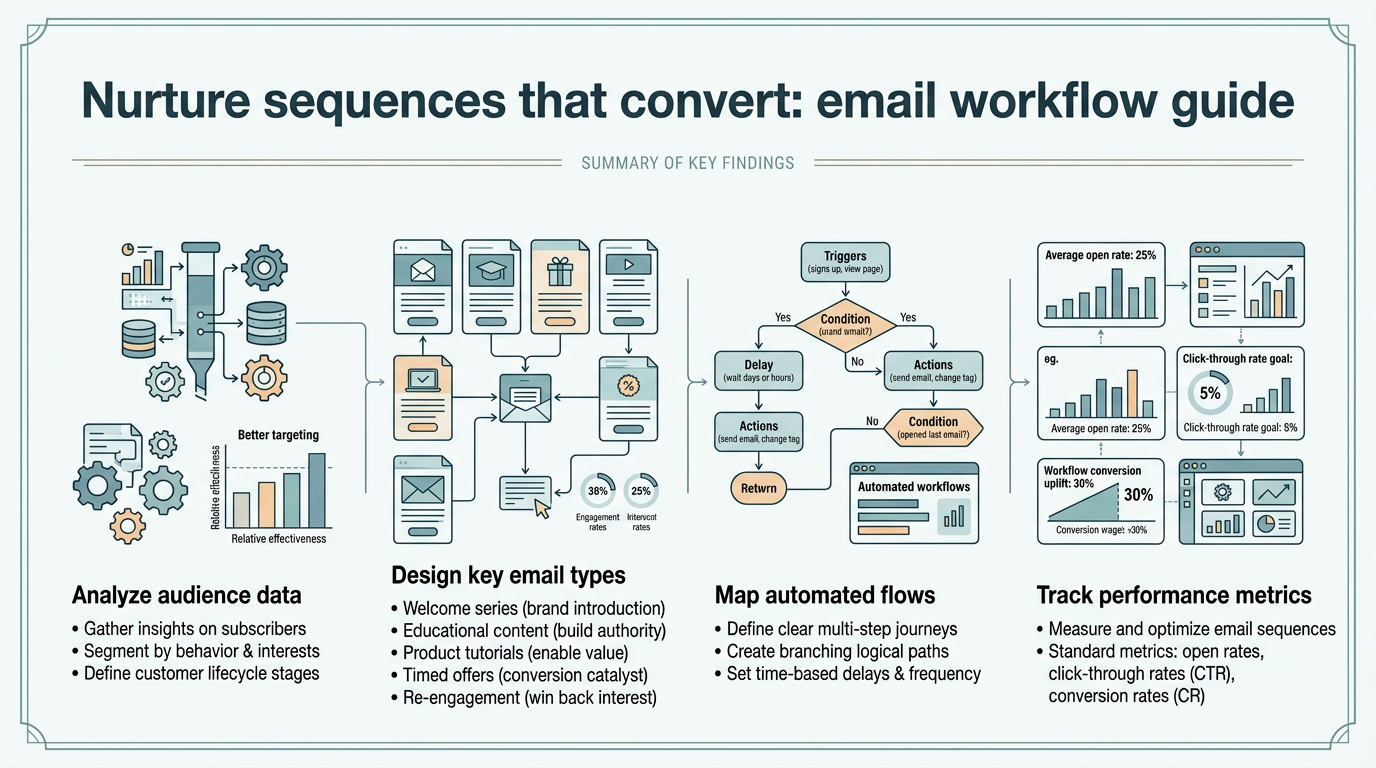
A nurture sequence is a series of automated emails sent to a prospect over time, designed to build trust, educate about your solution, and move them closer to a buying decision. Unlike broadcast campaigns that shout the same message to everyone at once, nurture sequences adapt based on where someone is in their journey. Segmented nurture campaigns are 5-8 times more effective than generic broadcasts because they speak to the right person at the right moment with exactly what they need to hear.
Why Nurture Beats Broadcast
The conversion gap is real. Broadcast emails (a single message to your entire list) convert at roughly 1.5%. Nurture sequences convert at 8-12%. The difference comes down to relevance. A new subscriber hasn't met your team; they need education and trust-building first. A free trial user is evaluating your product; they need proof it solves their problem. A previous customer should hear about upsells and deeper use cases. Broadcast treats everyone the same. Nurture treats everyone like the specific person they are.
"The cost to acquire a sales-ready lead drops by 33% because your sequences prequalify prospects before your sales team touches them. That's compounding ROI: more qualified leads, faster sales cycles, lower CAC." — 2026 Industry Research
Beyond conversion rates, nurture sequences deliver operational efficiency. Automated workflows generate 451% more qualified prospects and 30x higher ROI than one-off campaigns (2026 Research). The cost to acquire a sales-ready lead drops by 33% because your sequences prequalify prospects before your sales team touches them. That's compounding ROI: more qualified leads, faster sales cycles, lower CAC.
The Five Core Sequence Types
- Lead Nurture Sequences: Triggered by content downloads or form submissions. Goal: move awareness-stage prospects toward consideration.
- Welcome Series: First touchpoint after signup. Goal: set expectations, deliver promised value, establish brand voice.
- Trial Onboarding Sequences: Sent to free trial users. Goal: show immediate value, reduce friction, highlight key features.
- Win-Back Sequences: Sent to inactive users or past customers. Goal: re-engage with a new angle or offer.
- Sales Follow-Up Sequences: Triggered after a sales outreach or meeting. Goal: keep momentum without feeling pushy.
How to Structure a High-Converting Nurture Sequence
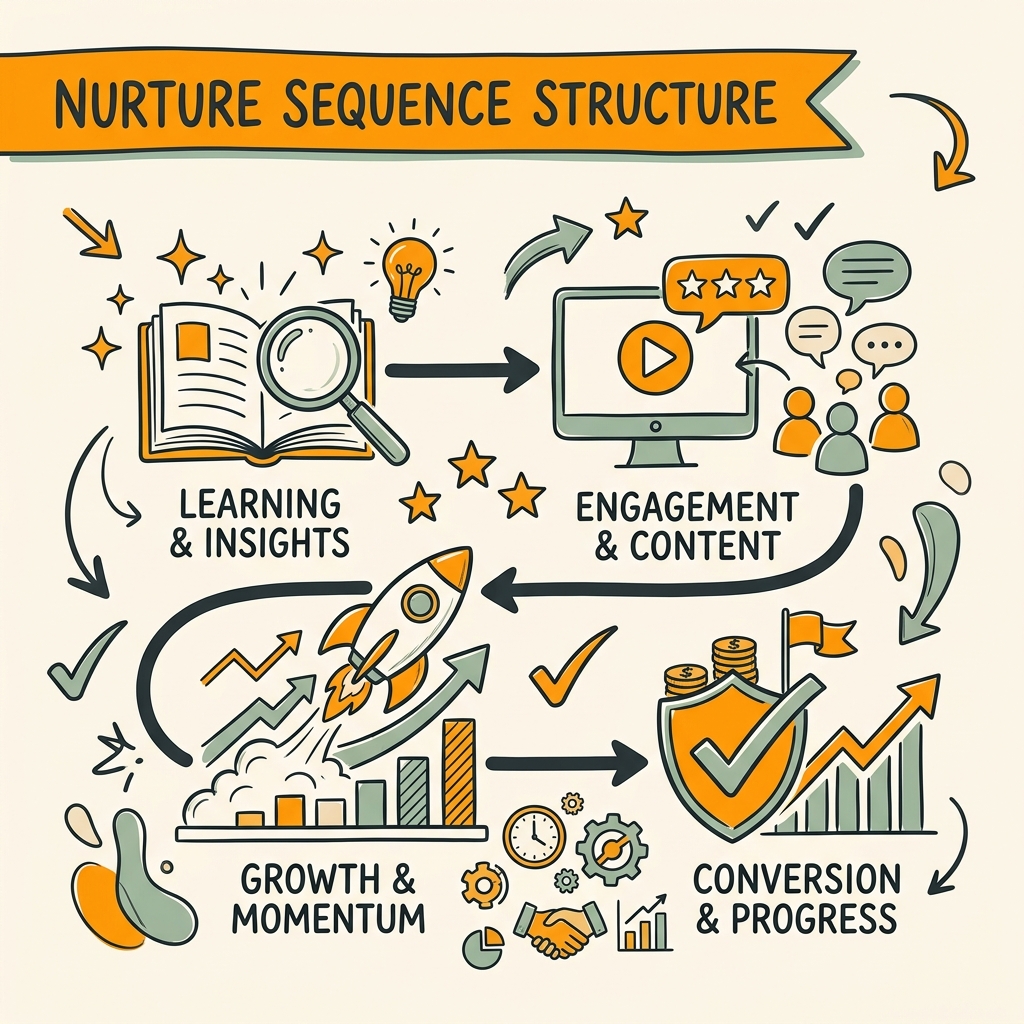
The architecture of your sequence matters more than individual email quality. A poorly ordered sequence wastes good content. The most effective sequences follow a deliberate arc: establish trust, deliver value, provide proof, and then ask for the sale. This journey typically spans 5-7 emails over 2-4 weeks, though your timeline depends on sales cycle length. When you understand how to structure these sequences properly, you'll see why content marketing automation has become essential for scaling email workflows across multiple buyer segments.
The Sequence Arc: Trust → Value → Proof → Conversion
Step 1: Welcome (Day 0) sets the tone. Send immediately after signup. This email should deliver on your promise (the lead magnet, free guide, or offer they signed up for) and establish your voice. Welcome emails achieve roughly 80% open rates, so this is your highest-leverage moment. Use it to prove you're not a robot; make it personal and focused. Example: "Here's the [PDF/guide] you requested. Read it, then reply if you have questions — I'm here."
Step 2: Value Email (Day 3) educates without selling. Share a useful insight, framework, or tip related to their pain point. The goal is to demonstrate expertise and build trust. 67% of prospects who receive educational nurture emails move forward in their buying journey (2026 Data). Don't mention your product. Make them think: "This person/company understands my world." The content should feel like advice from a trusted peer, not a sales pitch.
"Educational nurture emails move 67% of prospects forward in their buying journey because they establish credibility without friction." — 2026 Email Engagement Study
Step 3: Proof Email (Day 7) leverages social proof and case studies. Share a relevant customer success story, outcome, or testimonial. Show proof that your solution works for people like them. Link to a case study or customer quote that mirrors their industry or use case. Keep it specific: "Company X in [your industry] reduced their [metric] by [%]" beats vague "customers love us" messaging.
Step 4: Conversion Email (Day 14) introduces your solution with urgency. Now that you've built trust, educated them, and proven your approach works, ask for the meeting or trial. This is your 20% sales ask. Be direct: "Let's see if this is a fit for you" with a clear CTA. Use mild urgency ("spots are limited," "let's meet this month") without being aggressive.
Step 5: Follow-Up (Day 21+) re-engages non-responders. Change your angle — maybe highlight a different use case, address an objection, or emphasize a different benefit. Re-engagement emails average 36% open rates even for cold leads. A second or third touch with a different angle often converts the prospect who wasn't ready on day 14.
Content Distribution: The 80/20 Rule
Your sequence should be 80% helpful content and 20% sales asks. This ratio is non-negotiable for sequences that convert. Prospect mailboxes are crowded; they expect value, not spam. Violate this ratio, and your unsubscribe rate spikes. In a 5-email sequence, that's roughly four educational/value emails and one direct ask. The beauty of the 80/20 approach is that it builds credibility: by email four, the prospect trusts you enough to consider what you're selling. This is why AI content strategy frameworks prioritize educational content over promotional messaging from the start.
Trigger-Based Workflows: The Automation That Matters
Timing is everything in email. Behavior-triggered emails achieve 27.3% open rates, versus 19.1% for batch sends sent on a fixed schedule (Litmus, 2026). Automation powered by specific actions — not calendar dates — is the difference. When someone downloads your guide today, you send the welcome email today, not "every Monday at 9 AM." Trigger-based workflows make email feel relevant and immediate.
Core Triggers for B2B Nurture Sequences
- Form Submission: New lead downloads a resource, fills out a contact form, or requests a demo. Trigger the welcome sequence immediately.
- Email Engagement: Prospect opens your last email or clicks a link. Trigger a follow-up on a short delay (e.g., 3 days) to capitalize on momentum.
- Website Behavior: Prospect visits your pricing page, reads a case study, or spends 2+ minutes on your product demo page. Signal intent; trigger a sales sequence.
- CRM Events: Sales team logs a meeting, creates a task, or moves a deal stage in Salesforce/HubSpot. Trigger automated follow-ups to keep momentum between sales touches.
- Trial Signup: User creates a free trial account. Trigger onboarding sequences that show value within the first 7 days.
- Inactivity: No engagement for 30+ days. Trigger a win-back sequence with a new angle or offer to re-engage.
The power of triggers is compounding. Each action a prospect takes gives you data: they care about pricing (they visited pricing), they care about implementation (they downloaded a case study), they've gone silent (they haven't engaged in a month). Use that signal to personalize the next email, not send a generic follow-up.
Building Workflow Logic: Branching and Conditional Logic
Advanced nurture sequences use conditional logic to branch based on engagement. Here's how: If a prospect clicks the CTA in email 2 (the value email), send them the fast-track sequence (3 emails to close). If they don't click, send them an alternative angle (different benefit, different proof point) before the conversion ask. This branching approach increases conversion by personalizing the path based on what each prospect signals through their behavior.
Example logic: "If prospect clicked link in value email → send case study. If no click → send different use-case email. Check engagement again after 4 days. If still no engagement → send final conversion ask. If opened but no clicks → move to monthly newsletter instead."
Segmentation: One Size Never Fits All
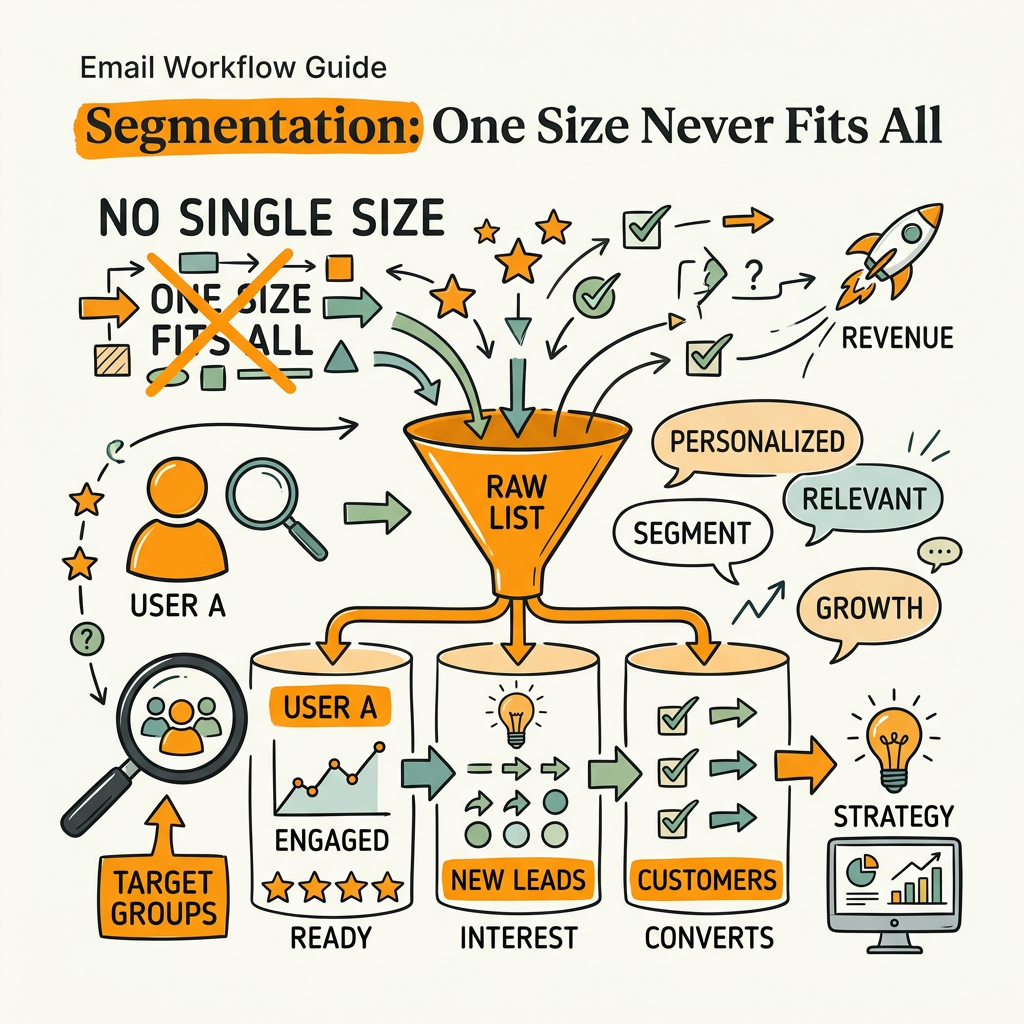
A new subscriber is not a free trial user, and neither is a past customer. Segmented campaigns generate 760% more revenue than non-segmented sends and 3x higher transaction rates (2026 Data). Segmentation means building distinct sequences for distinct audiences. It's not complex; it's just discipline.
Segment by Buying Stage
- Awareness Stage: New subscribers who barely know you exist. They're exploring options, reading blog posts, consuming educational content. Your sequence should build credibility and educate without pushing a sale. Length: 5-7 emails over 4 weeks.
- Consideration Stage: Prospects who've shown intent (visited pricing, attended webinar, downloaded case study). They're evaluating your solution vs. competitors. Your sequence should prove why you're the better choice, address common objections, and drive a demo. Length: 4-5 emails over 2 weeks.
- Decision Stage: Hot prospects who've met with sales or are in active evaluation. Your sequence should accelerate deal closure: share customer references, address final objections, create urgency. Length: 2-3 emails over 1 week.
Segment by Role or Industry
A CMO cares about ROI and pipeline. An operations manager cares about implementation time and team adoption. An engineer cares about API docs and integrations. Same company, different buying influencers. Build sequences that speak to each role's language and priorities. If you can identify prospect role or company industry at signup, route them to role-specific sequences immediately.
Industry segmentation works similarly. A SaaS company buying email software has different priorities than a manufacturing firm. SaaS wants API integration and scalability. Manufacturing wants ease of use and phone support. Tailor the value props and proof points in your sequence to what each industry cares about. That's why SaaS content marketing now relies on role-based segmentation and personalization to move deals forward at scale.
Crafting Emails That Get Opened and Clicked
The best sequence architecture fails if individual emails don't get opened. AI-driven subject lines increase open rates by 22%, and send-time optimization improves opens and clicks by 26-41% (2026 Data). The mechanics matter, but personalization and relevance matter more.
Subject Line Strategy: Curiosity Over Clickbait
Your subject line makes the difference between 15% and 45% open rates. Effective subject lines are specific, relevant, and create curiosity without deception. "Quick question about [company name]" performs better than "You're missing out!" because it feels personal and authentic. Avoid all-caps, excessive punctuation, and hyperbolic claims — they scream spam.
Test subject lines. Take your weakest-performing email (the one with a 12% open rate) and A/B test two new subject lines against it. Track which version performs better, then apply that learning to future sequences. Over time, you'll develop a sense for what works in your audience's inbox.
Copy Framework: One Main CTA Per Email
Every email should have one clear purpose and one clear CTA. Don't ask readers to download a guide AND book a demo AND follow you on LinkedIn. Pick one action per email. For value emails, the CTA might be "read the full guide" (with a link). For conversion emails, it's "book a 15-minute call." One CTA removes friction and makes it obvious what you want the reader to do.
Keep copy short — 50-100 words in the body, max. Most email is scanned on mobile in 5 seconds. Rambling paragraphs don't get read. Use short sentences, white space, and a single bold sentence that captures the core idea. Tools like AI email marketing automation platforms can now handle subject line testing and send-time optimization natively, which saves hours of manual experimentation.
Personalization: Name, Company, and Smart Variables
Personalization goes beyond {{first_name}}. Use dynamic content blocks to swap in company industry, role-specific benefits, or relevant case studies based on prospect attributes. If your email platform supports it, dynamic content and segmented sends increase transaction rates by 6x (2026 Data). Example: "Hi [first_name], your company [company_name] in [industry] is dealing with [pain point]. Here's how [another company_name] solved it:" That level of personalization signals you're not blasting a list; you're speaking to them.
Platform and Tools: Building Sequences in Practice
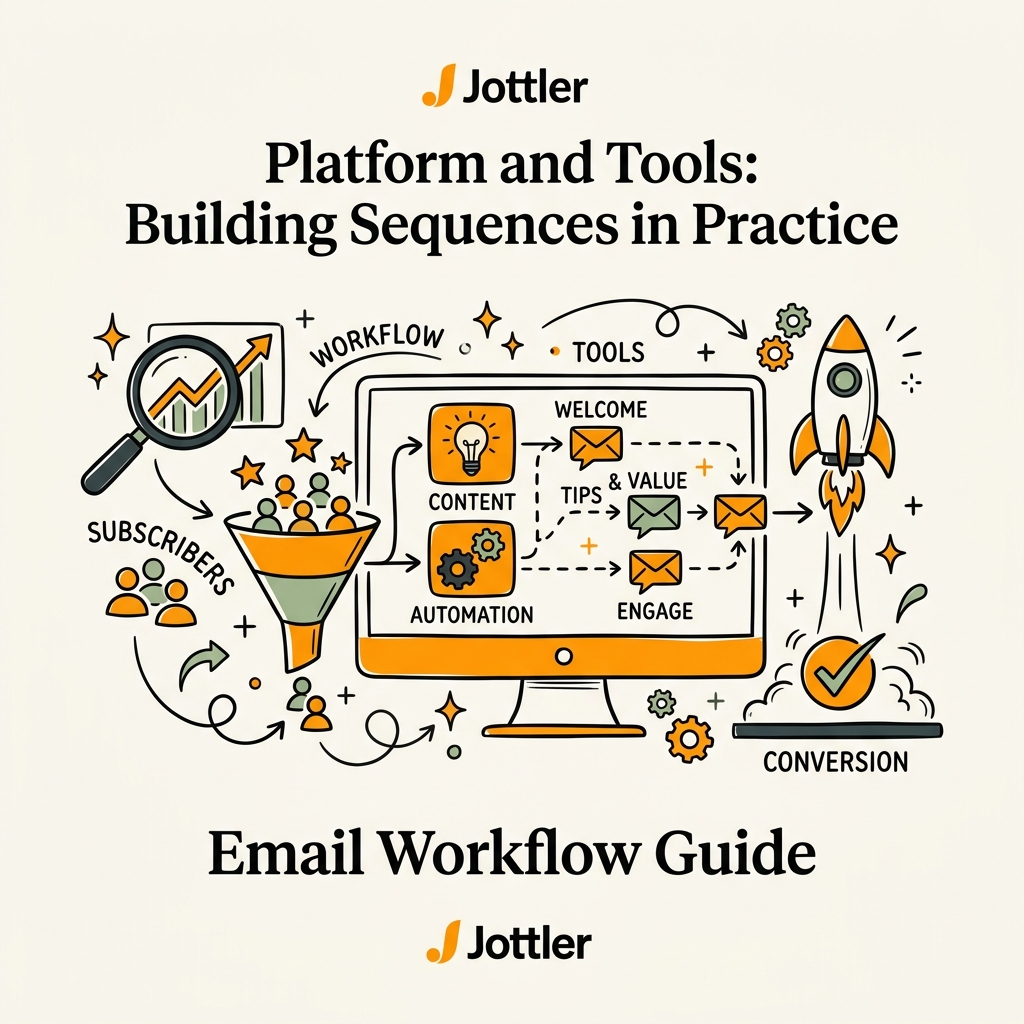
You don't need complex tools to run nurture sequences. HubSpot, Marketo, and Klaviyo all have native sequence builders. The key is native CRM integration. If your email platform requires manual data syncs to your CRM, you'll lose momentum. Deep integration means trigger-based actions, automated data logging, and lead scoring all flowing back to sales without manual work.
Feature Checklist for a Nurture-Ready Platform
- Behavior Triggers: Can you send emails based on form submissions, email opens, link clicks, and website visits?
- Conditional Logic: Can you build if/then workflows that branch based on engagement?
- CRM Integration: Does the platform sync lead data, engagement scores, and deal stage automatically with Salesforce, HubSpot, or your CRM?
- Lead Scoring: Can you assign point values to actions (opened email = 1 point, clicked link = 5 points) and auto-notify sales when a lead hits a threshold?
- Segmentation and Personalization: Can you segment by role, industry, or custom fields and insert dynamic content based on those segments?
- A/B Testing: Can you test subject lines and CTAs automatically across your sequences?
- Reporting and Attribution: Can you see which emails drove pipeline, which drove sales-accepted leads, and which drove revenue?
The platform matters, but the strategy matters more. A mediocre strategy in a best-in-class tool will still underperform. A great strategy in a basic tool will outperform. Build the strategy first; then pick the platform that scales it.
Measuring Success: Metrics That Matter
Most teams measure vanity metrics: open rate, click rate, unsubscribe rate. Those are important, but they're not the metric that matters. What matters is pipeline conversion: did the nurture sequence move a prospect toward a sale? This is where content marketing ROI measurement frameworks help you connect email touches to revenue outcomes.
The Right Metrics to Track
| Metric | What It Tells You | Benchmark (2026) |
|---|---|---|
| Segmented Nurture Conversion Rate | Did the sequence move prospects to the next stage? | 8–12% |
| Open Rate (Behavior-Triggered) | Is your timing and segmentation resonating? | 27.3% |
| Click-Through Rate (CTR) | Is your copy and CTA compelling? | 8.7% (segmented) vs. 2.9% (non-segmented) |
| Reply Rate | Are prospects engaging directly via email? | 4–10x higher for nurture vs. broadcast |
| Sales-Accepted Leads (SALs) | How many sequence completers did sales deem sales-ready? | Track as a % of sequence entrants |
| Pipeline Generated | Did the sequence feed your sales pipeline? | Tie email touches to pipeline value in Salesforce/HubSpot |
| Revenue Attribution | Did the sequence contribute to closed deals? | Multi-touch attribution; track sequence as a touchpoint |
Prioritize metrics in this order: (1) sales-accepted leads and pipeline, (2) open and click rates (input metrics), (3) unsubscribe rate (health check). If your sequences are generating SALs but your open rate is low, that's a strong sequence — your small audience is highly qualified. If you have high open rates but zero SALs, your audience is engaged but not interested — change the messaging or targeting.
Benchmarking and Continuous Improvement
Setups vary by industry, audience, and offer. Your benchmarks should be your own historical data first. Set a baseline: run sequence A, measure results. Then test sequence B against it. Did open rate improve? Did CTR improve? Did SALs improve? One test teaches you more than industry benchmarks. Treat sequences like experiments. The goal is to compound small wins: a 10% improvement in open rate + 15% improvement in CTR = measurable pipeline gains by quarter end.
Common Mistakes That Kill Conversion
Even well-intentioned teams sabotage their own sequences. Watch for these pitfalls.
Mistake 1: Selling Too Hard, Too Fast
Sequences that lead with your product or pricing convert at half the rate of sequences that lead with value. Resist the urge to pitch in email two. You need 3-4 emails of trust-building before a hard ask lands. The 80/20 rule isn't a guideline; it's a conversion formula. Break it, and you'll see unsubscribes spike and conversion plummet.
Mistake 2: Treating All Subscribers the Same
One generic sequence to your entire list is a recipe for low engagement. A brand-new subscriber needs different messaging than a free trial user. Segment. Even basic segmentation (new subscribers, active users, inactive) doubles conversion. Advanced segmentation (by role, industry, engagement level) quadruples it.
Mistake 3: Firing Emails on a Fixed Schedule Instead of Behavior
Sending email 1 on Monday, email 2 on Wednesday, email 3 on Friday works if everyone enters the sequence at the same time. But they don't. Someone might enter Tuesday; they shouldn't wait until next Monday for email 2. Behavior-triggered sequences (send email 2 when they open email 1, send email 3 when they click a link) are more relevant and convert better. If your platform doesn't support behavior triggers, upgrade platforms.
Mistake 4: Neglecting Re-engagement
A non-responder after three emails shouldn't be deleted from your sequence. Re-engagement emails average 36% open rates even for cold leads. Send them a 4th or 5th email with a new angle, a new case study, or a new offer. Change the subject line, change the problem you're addressing, change the CTA. Many closes come on the 4th-5th touch.
Automation and Content at Scale
Managing one nurture sequence is straightforward. Managing 10 sequences across different buyer stages, roles, and products becomes a logistics nightmare without automation. B2B marketing automation tools now orchestrate these workflows, but they require real content to run on. That's where content automation comes in.
Most founders and lean marketing teams don't have time to write and test 5-7 new emails for each segment and stage. That's why autonomous SEO platforms that integrate content generation with marketing workflow setup have become foundational. The workflow stays the same; the content becomes personalized at scale.
Conclusion
Nurture sequences are no longer optional for B2B teams. Segmented, behavior-triggered sequences convert 5-8x better than broadcast campaigns, and automated workflows deliver 451% more qualified prospects than manual email efforts. The structure is simple: trust, value, proof, then convert. The execution requires discipline: segmentation, behavior triggers, personalization, and continuous testing. Start with one sequence (welcome series or free trial onboarding), nail the structure and messaging, then replicate the pattern to other segments and stages. Measure pipeline and revenue, not just opens and clicks. Iterate based on what your data tells you. Over 90 days, a well-built nurture sequence will compound: more opens drive more clicks, more clicks drive more SALs, more SALs drive more revenue.
The teams winning in 2026 aren't using email as a broadcast channel; they're using it as a nurture engine that moves the right people at the right time toward the right decision. Start your SEO agent to automate your content creation and free your team to focus on strategy and measurement.
FAQs
How long should a nurture sequence be?
Nurture sequences typically run 5-7 emails over 2-4 weeks, depending on your sales cycle. A B2B SaaS free trial might compress into 7 days; an enterprise software sale might stretch to 6 weeks. The key is relevance, not length. Once a prospect engages (opens, clicks, requests a meeting), they've moved forward — you don't need to keep pushing the same sequence. Track when sequences perform best by monitoring SAL generation and pipeline conversion. If you're hitting your benchmarks in 5 emails, stop at 5. If you need 10 to move all prospects, run 10. The right length is the length that generates the most qualified leads for your specific product and audience.
What's the ideal time to send a nurture email?
Fixed send times (Tuesday 9 AM) work at scale because averages smooth out. But behavior-triggered sends (send 2 hours after they open email 1) are more personalized and convert better. The most effective approach is send-time optimization, where your email platform automatically delivers each email at the time that prospect is most likely to open it based on their historical behavior. Send-time optimization improves opens and clicks by 26-41%, so enable it if your platform supports it. If you're stuck with fixed send times, Tuesday through Thursday at 9-10 AM are reliable baselines across B2B audiences, but your own historical data should guide you. Test two send times (Tuesday 9 AM vs. Wednesday 2 PM) and measure open rates — then use the winner for all future sequences.
How do you know if your nurture sequence is working?
Don't rely on open and click rates alone. The real metrics are sales-accepted leads (SALs) and pipeline conversion. Does the nurture sequence feed sales with qualified prospects, and do those prospects move deals forward? A 12% conversion rate is the benchmark for segmented nurture sequences, but your target should be your own baseline. Run sequence A for 100 leads; measure how many became SALs and how much pipeline they generated. Then test sequence B against sequence A. Whichever one produces more SALs and pipeline is the winner. Also watch your unsubscribe rate — if it spikes above 0.5%, your messaging is misaligned or too aggressive. Use your email platform's reporting dashboard to tie email touches to pipeline stages in your CRM, and you'll see exactly which sequences move deals and which don't.