Strategic Link Building for B2B SaaS Companies
Link building remains the most underutilized lever for scaling organic traffic in B2B SaaS. Most founders treat it as a one-time campaign rather than a permanent strategic function, leaving massive rankings and lead generation on the table. B2B SaaS companies that prioritize link building report 702% ROI, yet 78.1% of SEO professionals say their teams struggle with consistent, scalable outreach execution. The core problem: link building requires strategy, relationship management, and original assetsexactly what cash-strapped scaling teams lack time to produce.
Key Takeaways
- 702% SEO ROI for B2B SaaS (2026, Industry Benchmark), link building is the highest-ROI SEO lever for the category.
- Sites with 1,000+ referring domains generate 6.3x more leads than those with fewer than 100, breadth and authority matter equally.
- Original research and linkable assets drive 42.2% more backlinks than generic content, strategy beats tactics.
- Define Your Linkable Asset Strategy: Original research, benchmarks, and comparison tools attract 3.5x more backlinks than standard blog posts.
- Map Competitor Backlink Gaps: Identify which authority sites link to competitors but not to youthen prioritize those gaps first.
- Build the Partner Ecosystem Play: Integrations, marketplace pages, and co-marketing partnerships are underused, high-conversion link sources.
- Automate Content Research and Link Integration: Tools that handle keyword research and internal linking free your team to focus on outreach quality.
- Measure Link ROI by Commercial Intent: Track which backlinks drive qualified leads, not just trafficthe metrics that matter to founders.
Why B2B SaaS Link Building Differs From Other Industries
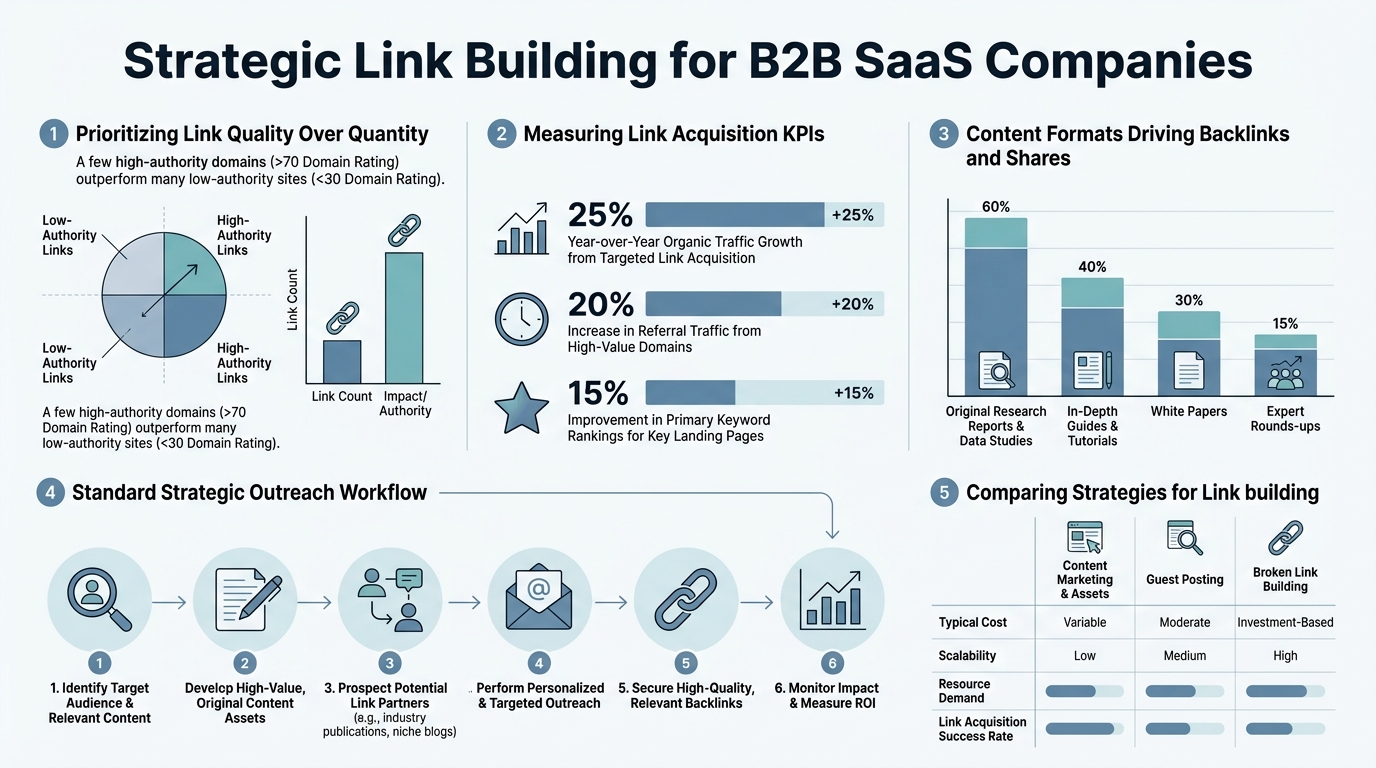
Link building for B2B SaaS plays by different rules than ecommerce or content publishing. Your buyer moves slowly, evaluates multiple competitors, and makes six-figure purchase decisions based on authority signals. One high-authority backlink from a niche review site or industry analyst matters more than fifty links from generic directories. This shifts your entire link-building strategy from volume to surgical precision.
The Authority-Over-Volume Principle
82% of high-ranking SaaS websites have at least one backlink from a site with DA 70+. This isn't coincidenceit's the market signal that B2B buyers trust. Unlike consumer verticals where link quantity matters, SaaS rankings are dominated by authority links from industry publications, analyst sites, and competitor backlink networks. Your goal isn't to hit 500 links; it's to earn links from the 50 sites your buyer actually visits during their research phase.
This distinction changes your prospecting. You're not chasing every directory or podcast mention. You're hunting for niche review platforms (G2, Capterra, PeerSpot), industry analyst sites, and content from practitioners in your space. A single link from Forrester or a tier-one industry blog is worth more than a dozen low-authority placements.
The Conversion-Driven Link Target
B2B SaaS link building must tie to revenue, not vanity metrics. Most teams measure link building by traffic volume"we earned 50 links this month, +10K visitors." But busy founders care about one metric: qualified pipeline. The right link from a SaaS review site or buyer community drives conversions; a link from a tangential blog post drives noise.
This means your link targets should appear on pages where decision-makers already congregate. Tool comparison pages, category reviews, integration marketplaces, and podcast episodes where founders share advice. These are the pages that convert because they're natively built for decision-making, not generic discovery.
The Partner Ecosystem Advantage
Integration marketplaces and partner ecosystem links are vastly underutilized in B2B SaaS. Integration partner links from platforms like Slack, Salesforce, Zapier, and HubSpot ecosystems are emerging as the highest-value, lowest-friction link sources in 2026. These links sit on trusted partner pages where buyers actively look for compatibility information and extended functionality.
Most SaaS teams miss this entirely. They chase editorial links while ignoring partner marketplaces where they're already listed. A link from your native integration page on Zapier reaches a buyer mid-workflow, when intent is highest.
How to Build Your Link Research and Prospecting Framework
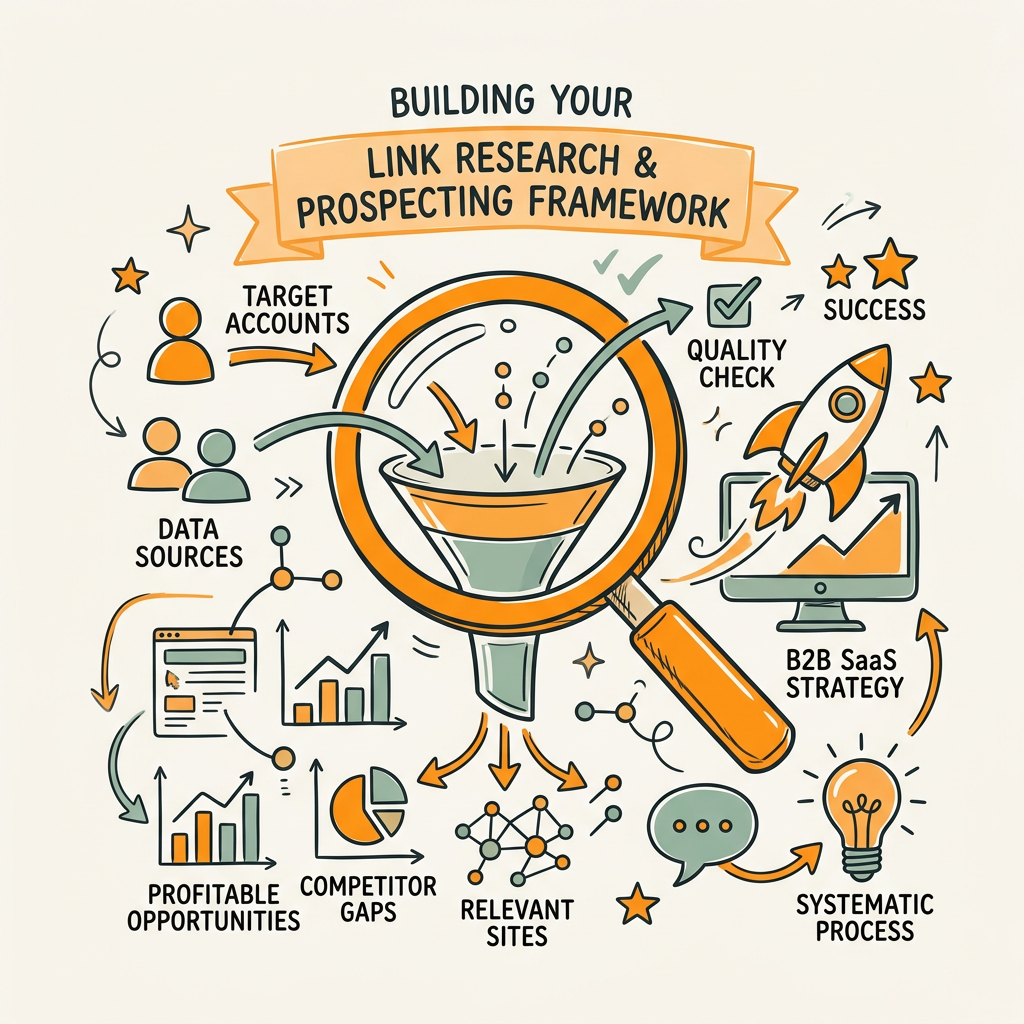
Strategic link building starts with research, not outreach. Before you send a single email, you need a list of high-intent prospects and a clear understanding of why each target makes sense for your brand. This framework cuts the noise and keeps your team focused on links that move rankings and revenue.
Conduct Competitor Backlink Gap Analysis
Your competitors' backlinks are a treasure map. They reveal which sites your target buyers trust, and which authority voices already recognize your category as legitimate. Start by pulling all backlinks for your top 3–5 competitors using tools that handle this analysis, then filter for sites that link to competitors but not to you.
These "link gaps" are your priority list. A site that links to Competitor A is already convinced your category is credibleyou're not building from cold awareness. You're filling a gap they already created. Prioritize sites that:
- Link to only one or two competitors: Sites that aren't competitive gatekeepers are more likely to add you if your pitch is strong.
- Cover buyer research topics: Reviews, comparisons, buyer guides, and integration lists rank highest for commercial intent.
- Publish from your target industry: A link from a fintech-focused publication beats a generic SaaS roundup.
The goal: shrink your prospect universe from thousands of potential sites to a prioritized list of 50–100 high-intent targets that already validate your category. This reduces outreach volume and increases reply rates dramatically.
Map Your Linkable Asset Strategy
3,000+ word articles attract 3.5x more backlinks than shorter posts, and infographics earn 2x more links than plain text. But content volume isn't the leverasset type is. Most SaaS teams write blog posts and wonder why they don't attract links. Blog posts don't get linked because they're not scarce or novel.
Linkable assets are different. They answer questions that don't yet have answers, or do so with more depth and original data than anything else online. In SaaS, high-performing linkable assets include:
- Original Research & Benchmark Reports: Survey data on buyer behavior, platform adoption, budget trends. Whitepapers and eBooks often earn 20–40 backlinks in the first 3 months.
- Interactive Tools & Calculators: ROI calculators, savings estimators, and audit tools link naturally because they provide user value and are shareable.
- Comparison Frameworks: Detailed competitor comparisons, category breakdowns, and vendor matrices are inherently link-worthy because they solve a buyer research need.
- Case Studies with Metrics: Real data on how similar companies solved problems your buyers face. The more specific the numbers, the more referenceable.
- Resource Pages & Guides: Comprehensive guides that outrank competitors on depth and structure, then link back to your core product pages.
The linkable asset plays a dual role: it attracts inbound links, and it anchors your internal linking strategy. When you create a benchmark report, you're creating 20–30 opportunities to link to conversion pages from the body of that asset. According to research from Linkbuildinghq, teams publishing original research see exponentially higher link velocity than those relying on syndicated content.
Identify Partner and Integration Opportunities
Partner ecosystem links are the most underutilized link source in SaaS. If your product integrates with Slack, HubSpot, Salesforce, or other major platforms, you have a native link opportunity on their partner pages. Similarly, if you operate in a vertical where ecosystem partners exist (payment processors, CRM platforms, analytics tools), those integrations create link and credibility opportunities.
Partner link sources include:
- Native Integration Marketplaces: Zapier, IFTTT, Make, native integration pages on your API platform.
- Co-Marketing Partner Pages: If you partner with agencies, resellers, or consulting firms, ask for a link from their solutions or partner pages.
- Ecosystem Review Pages: Many platforms publish curated lists of recommended partners; these are gold for relevance and authority.
- Marketplace Category Pages: G2, Capterra, PeerSpot, and software review sites link back to your site in results; optimize your profile pages for link value.
Unlike editorial links that require months of relationship building, partner links often require one conversation or CMS update. Your sales or partnerships team likely has the contacts already.
Executing Link Outreach That Actually Converts
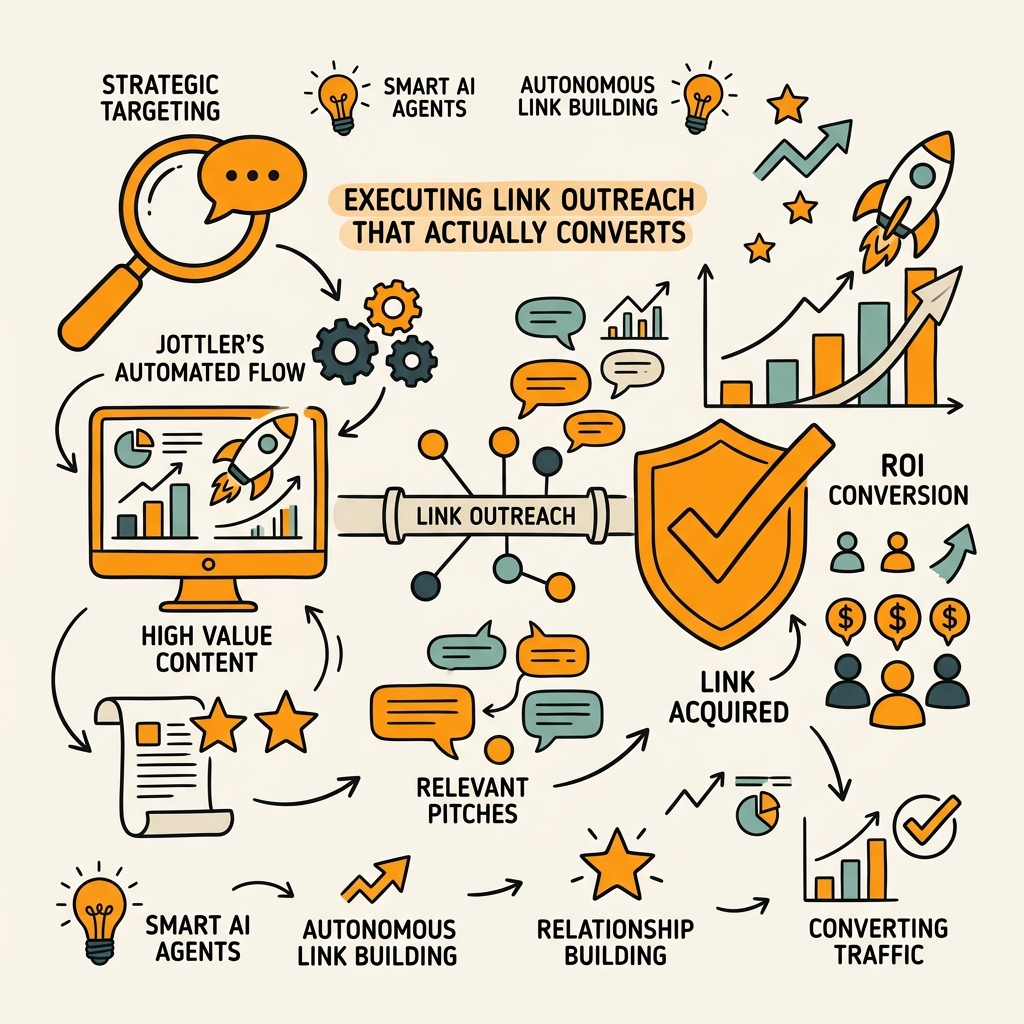
Most B2B SaaS teams fail at outreach not because they lack a list, but because they treat outreach as a numbers game. Sending 500 templated emails and hoping for a 2% response rate wastes time and tanks your sender reputation. Strategic outreach is small, personalized, and deeply researched.
Set Realistic Expectations and Plan for Scale
Cold outreach typically nets 5–10% reply rates and 3–5% email-to-link conversion rates. This means a team pursuing 50 links per month needs to prospect roughly 1,500 targets per monthor focus intensely on a smaller list and nail the personalization. Most teams choose the latter and see better results.
For a bootstrapped or small marketing team, treat anything above 12% reply rate as exceptional. This isn't email marketing; it's relationship-building. Your conversion rate will improve if you:
- Research each target individuallyno batch outreach.
- Personalize your pitch to mention something specific they published recently.
- Lead with value, not asks. Don't ask for a link; propose something useful to their audience.
- Follow up 3–4 times over 3 weeks. Most replies come on follow-up 2 or 3.
Build Outreach Around Your Linkable Assets
The strongest outreach isn't "we'd like a link"it's "we published something we thought your audience would value." When your linkable asset is live, it becomes the centerpiece of your outreach. You're not pitching a feature or press release; you're sharing a resource that solves a problem your prospect's audience has.
For each linkable asset, identify 30–50 reporters, editors, and industry voices who'd find it valuable. Then craft a personalized angle for each: "I saw you covered X trend last monthwe just published original research on that topic." The link often comes naturally if the asset is genuinely useful. Teams executing this systematically see measurable increases in link velocity and referring domain growth.
Create a Link Inventory and Tracking System
Links are an asset, and assets need management. Create a simple spreadsheet tracking:
- Source Domain: Where the link lives (domain + page type).
- Anchor Text: What the link says. Important for anchor diversity.
- Domain Authority & Relevance Score: A quick 1–5 rating of how valuable the link is.
- Referring Traffic: Does the link drive actual visitors? Monthly check-in.
- Lead Conversion: Did this link's traffic convert? This is the real metric that matters.
Most teams ignore the last metric. SEO teams report backlinks and traffic; they don't tell the founder how many qualified leads came from each link. If you track which links drive pipeline, you can optimize your link strategy around revenue, not vanity metrics.
Content Automation and Link Building Integration
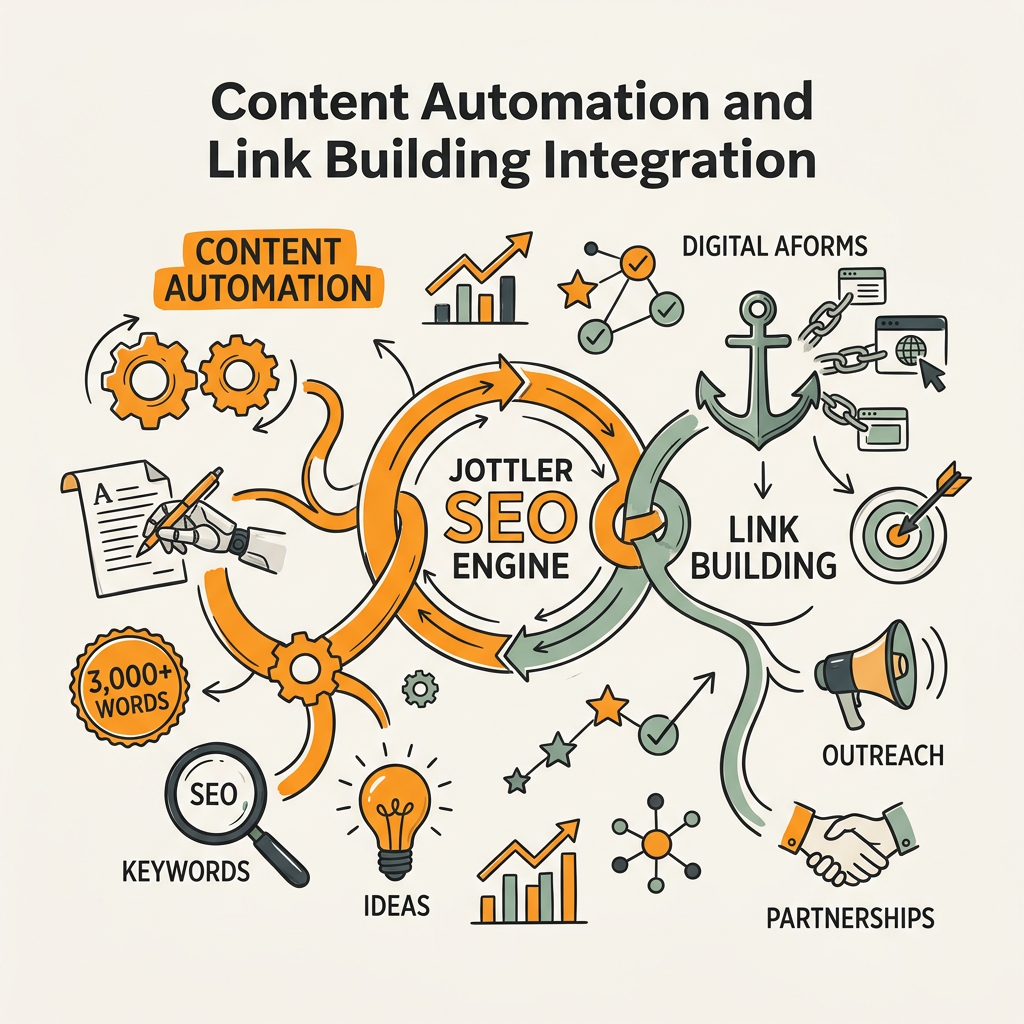
Scaling link building without burning out your team requires automation where it matters most. The research, content creation, and internal linking tasks are where most teams lose time. If you're spending 30 hours per month writing and optimizing content before you even approach link outreach, you're working backwards.
Automate Research and Content Production
Strategic link building requires fresh, original content consistently. But writing 3,000-word linkable assets by hand every month isn't feasible for a lean team. This is where automated content platforms designed for SaaS come in. These systems handle keyword research, fact-checking, and publish automation, freeing your team to focus on strategy.
When you publish 3–5 high-quality articles per week automatically, you create more linkable assets and outreach hooks. Rather than spending a week writing one piece, you're feeding your link-building machine with consistent, SEO-optimized content that attracts organic links without active outreach. This compoundsyour link velocity accelerates simply because you're publishing more often.
Smart Internal Linking to Distribute Link Equity
Every inbound link you earn is only as valuable as your internal link strategy. If you earn a link to page X but don't link from page X to your highest-conversion pages, that link's equity dissipates. Smart SaaS teams treat internal linking as a link distribution system.
When you publish a new linkable asset (like a benchmark report), your internal linking should:
- Link from the asset to 3–5 high-conversion pages (demo, pricing, case studies).
- Link from existing high-authority pages back to the new asset (to pass equity forward).
- Create a hub-and-spoke architecture so all link equity flows toward commercial pages, not blog-to-blog.
Automation tools that handle internal linking recommendation reduce the manual work. Instead of manually deciding "which pages should link to which," systems can suggest optimal internal link paths based on topical relevance and conversion value. This accelerates the flywheel where link building and content automation compound together.
Measuring Link Building Impact on Revenue
The final piece is measurement. Teams that win at link building tie every link back to revenue. This requires: (1) UTM parameters on links so you can track source traffic, (2) lead attribution so you know which links drive qualified prospects, and (3) a simple monthly dashboard showing cost-per-link and ROI per link source.
Link building is slow. It takes 2–3 months to see ranking improvements from new links. But when you can show a founder that links from industry review sites drive 8x better conversion rates than links from generic tech blogs, the strategic shift happens fast. You stop chasing volume and start hunting for the 20 links that matter.
Common Link Building Pitfalls in B2B SaaS
Knowing what works matters less than knowing what fails. Most SaaS teams make the same preventable mistakes, costing them months of wasted outreach and weak anchor text profiles.
Chasing Quantity Over Quality
The temptation to "get 50 links this month" drives bad decisions. Low-authority directory links, spammy article placement services, and irrelevant press releases all bump link counts while tanking domain trustworthiness. Google's algorithm now heavily penalizes unnatural link profiles, so a dozen high-authority relevant links will outrank a hundred low-quality links.
If you're told "we can get you 100 links for $10K," the offer is likely a trap. Real link building costs $3K–8K per month minimum because it requires research, relationship building, and original asset creation. Low-cost link buying is a short-term ranking boost that gets reversed in the next Google update.
Ignoring Anchor Text Diversity
Links with exact-match anchor text (e.g., "B2B SaaS marketing platform") trigger spam signals if over-concentrated. Your anchor text profile should be naturally varied: brand name, generic terms, partial match, URL, and contextual phrases. If 60% of your links use the exact same anchor, you've built a visible, penalizable footprint.
As you earn links, track anchor text. If you notice the same phrase dominating, tell your outreach team to request variation: "We'd prefer the link say [variation phrase] rather than exact match."
Building Links Without Content Strategy
Too many teams run outreach campaigns without underlying content that supports them. You can't ask for links without having something linkable. Generic blog posts, company updates, and product announcements don't attract links. They may get placement through paid outreach, but that's not strategic link buildingit's renting links.
Before you run any outreach, ask: "Do we have original, differentiated assets worth linking to?" If the answer is no, build them first. Spend 3 months creating benchmark reports, comparison tools, and resource guides. Then run outreach. The links come easier and last longer.
Integrating Link Building Into Your Broader SEO and Content Strategy
Link building isn't a standalone tacticit's the connective tissue between your content and your rankings. For link building to compound, it must integrate with your overall SEO and content marketing strategy.
Aligning Link Building With Content Pillars
Mature SaaS teams organize content into pillars (broad topic areas) with supporting clusters (related subtopics). Link building should reinforce these pillars. If your core pillar is "SaaS project management," your linkable assets should center that theme. Your outreach targets should be sites that cover project management, team collaboration, and productivity.
This alignment means you're not scattered. Every link you earn pulls traffic toward your pillar, strengthening topical authority. Every internal link from the linkable asset flows equity toward your pillar's money pages. The entire system compounds.
Building Topical Authority for Competitive Keywords
Google increasingly rewards topical authoritywhen a site comprehensively covers a topic from all angles. For B2B SaaS, this means earning links that position you as the category authority, not just the vendor with a product.
If you sell CRM software, your link building shouldn't only target product reviews. It should also target resource pages about sales processes, buyer journey guides, and CRM industry benchmarks. As your topical authority grows, ranking difficulty for your target keywords drops naturally, and links flow in with less outreach effort.
Timing Link Building to Content Launches
Link earning follows a rhythm. Launch a major linkable asset (benchmark report, interactive tool) → Run outreach for 4–6 weeks → Earn links → Monitor rankings → Repeat. If you publish sporadically, your outreach loses momentum. If you publish consistently, you maintain a constant pipeline of link opportunities.
Teams winning at link building publish 2–4 major linkable assets per quarter + steady supporting content. This gives them constant outreach fodder without burning the team out. Automation tools that handle research and writing make this cadence feasible.
Conclusion
Strategic link building for B2B SaaS is a compound growth lever that most teams leave untapped. Companies that prioritize link building report 702% SEO ROI, and sites with 1,000+ referring domains generate 6.3x more leads than those with fewer than 100. The barrier isn't complexityit's consistency and focus.
The winning formula is simple: (1) research high-intent link targets using competitor gap analysis; (2) build original, linkable assets worth earning links around; (3) automate content research and publishing so you have consistent outreach hooks; (4) run small, personalized outreach campaigns; (5) track which links drive qualified leads and optimize based on revenue, not vanity metrics.
Most teams fail because they see link building as separate from content and strategy. It's not. Strategic link building is the connective tissue that multiplies your content's impact and compounds your organic growth over time. Start with your highest-priority 50 targets, publish one major linkable asset per month, and let the system compound. Start your SEO agent to automate the content research and publishing layer, freeing your team to focus on the link strategy and outreach that actually moves the needle.
FAQs
How many backlinks does a B2B SaaS company need to rank on first page?
30–35 high-quality backlinks from relevant authority sites can support 10,500+ monthly visits. However, the number varies by keyword difficulty and competition. For head-term keywords dominated by enterprise players, you may need 100+. For long-tail, niche keywords, 10–15 relevant links are often enough. The key metric isn't the countit's referring domain diversity and relevance to your category. A site with 50 links from generic directories will underperform a site with 20 links from industry publications, review sites, and partner ecosystems. Start by mapping your competitors' backlinks and comparing the authority and relevance of their link profiles to yours.
What types of links matter most for B2B SaaS ranking?
Links from review sites, industry analyst publications, and partner ecosystems matter most for B2B SaaS. 82% of high-ranking SaaS websites have at least one backlink from a site with DA 70+. Beyond domain authority, link relevance drives impacta link from a competitor review site or category-specific publication moves rankings far more than a generic tech blog. Guest post links are useful but lower-value than editorial placements. Partner ecosystem links (integration pages, co-marketing mentions) are underutilized goldmines. Avoid low-authority directory links and paid placement; they dilute your profile and trigger spam signals.
How long does it take to see ranking results from link building?
Most B2B SaaS teams see ranking movement 2–3 months after earning new backlinks. Google's algorithm crawls and evaluates links on a rolling basis, so the lag between earning a link and seeing ranking lift varies by page authority and crawl frequency. High-authority pages you link to often see faster results. Lower-authority pages may take 4–6 months. The compounding benefit emerges over 6–12 months as your total referring domain count and topical authority grow. This is why consistency matters more than single campaignsteams that earn 5–10 links per month consistently outpace those that run one-off outreach bursts.