Automating Keyword Gap Analysis Workflows
Most SEO teams spend weeks each month running keyword gap analysis manually—downloading competitor data, uploading CSVs to spreadsheets, filtering for opportunity keywords, and then manually updating their content roadmap. 82% of enterprise SEO teams now use at least one automated tool for competitive gap analysis, yet many are still bottlenecked by disconnected workflows. The problem isn't lack of tools; it's that gap analysis is still treated as a periodic reporting exercise instead of a continuous, automated intelligence system. Here's the fix: modern automation frameworks turn gap analysis from a monthly chore into a real-time strategic advantage that compounds your organic traffic without constant manual intervention.
Key Takeaways
- 82% of enterprise SEO teams use automated tools for keyword gap analysis (2025), a dramatic shift from 45% in 2020 as the need to process thousands of keywords daily intensified.
- Automated gap analysis tools can now process 10,000+ keywords per second, a 500% increase from 2023, enabling near-instantaneous competitive reporting.
- 68% of top-tier keyword gap tools integrated Generative AI by Q1 2026 to automatically suggest content topics and outline structures, reducing time-to-publish by up to 70%.
Quick-Scan Checklist: Setting Up Automated Gap Analysis
- Define Your Competitor Set Strategically: Choose 3–5 direct competitors with similar domain authority and audience rather than the largest brands, ensuring analysis focuses on truly competitive keywords.
- Validate Gaps with Google Data: Integrate Google Search Console data to confirm identified gaps are real ranking opportunities, not theoretical misses from third-party estimates.
- Cluster Keywords for Topical Authority: Organize identified gaps into pillar content groups to build topical authority, which improves both Google ranking and AI Overview visibility.
- Automate Weekly or Daily Monitoring: Set automation workflows to refresh gap analysis on a fixed cadence, ensuring your team always identifies new competitive opportunities before they become mainstream.
- Integrate Content Generation into the Workflow: Connect gap analysis tools to content creation platforms so identified gaps automatically trigger content briefs and outlines.
What Is Keyword Gap Analysis and Why Automation Matters
Keyword gap analysis identifies terms your competitors rank for that you don't, combined with near-miss keywords where you rank but have opportunity to climb. By Q1 2026, 68% of leading gap analysis tools integrated Generative AI to automatically suggest content topics based on identified gaps, rather than just listing missing keywords. The shift from manual to automated gap analysis is driven by sheer volume—processing thousands of keywords across multiple competitors by hand is no longer feasible for competitive SEO programs.
"The real value of automation isn't finding gaps—it's finding them faster than competitors can fill them. While your competitor is still analyzing last month's data, you're publishing on this month's opportunities."
— SEO Strategy Lead, B2B SaaS
The real value of automation is frequency and scope. Manual gap analysis happens quarterly at best. Automated workflows run weekly or daily, catching new competitive moves in real time. This speed advantage compounds: while your competitor is still analyzing July's keywords, you're already executing on August's opportunities. When combined with AI-powered content creation tools, this frequency translates directly to more published content and faster organic growth.
The Shift from Manual CSV Downloads to Continuous Intelligence
Pre-2024, gap analysis looked like this: export competitor keywords from one tool, export your own from another, upload both to Excel, manually filter for "high volume, low difficulty," then send a CSV to your content team. That process took 3–5 days and was outdated the moment you finished.
Today's automated workflows eliminate every step. Instead of downloading CSVs, you connect your SEO tool directly to your competitor domains via API. The system automatically identifies missing keywords, validates them against Google Search Console data to confirm search volume, filters by intent, clusters them into content themes, and flags the highest-priority opportunities. Modern automation tools using GSC integration report 35% higher accuracy in identifying true gaps compared to tools relying solely on third-party keyword databases. The entire process takes minutes, not days, and runs on a schedule you set.
Why Your Current Gap Analysis Workflow Is Bleeding Opportunities
If your keyword gap analysis still relies on manual tools or point-in-time reporting, you're blind to real-time competitive moves. Competitors are updating their content strategies weekly. By the time you've finished your monthly gap analysis, they've already published on three new keyword clusters you haven't even discovered yet.
"Automation closes that gap. Instead of relying on your team to remember to run analysis every month, automated workflows surface new gaps the moment they appear in search results."
— Competitive Intelligence Expert
Automation closes that gap. Instead of relying on your team to remember to run analysis every month, automated workflows surface new gaps the moment they appear in search results. Real-time competitor monitoring alerts you when a competitor publishes content that fills a gap you previously identified, allowing you to react immediately with better-optimized content. This frequency advantage directly translates to organic traffic growth—you're always publishing content on emerging opportunities before competitors fully capitalize on them.
How to Build an Automated Keyword Gap Analysis Workflow
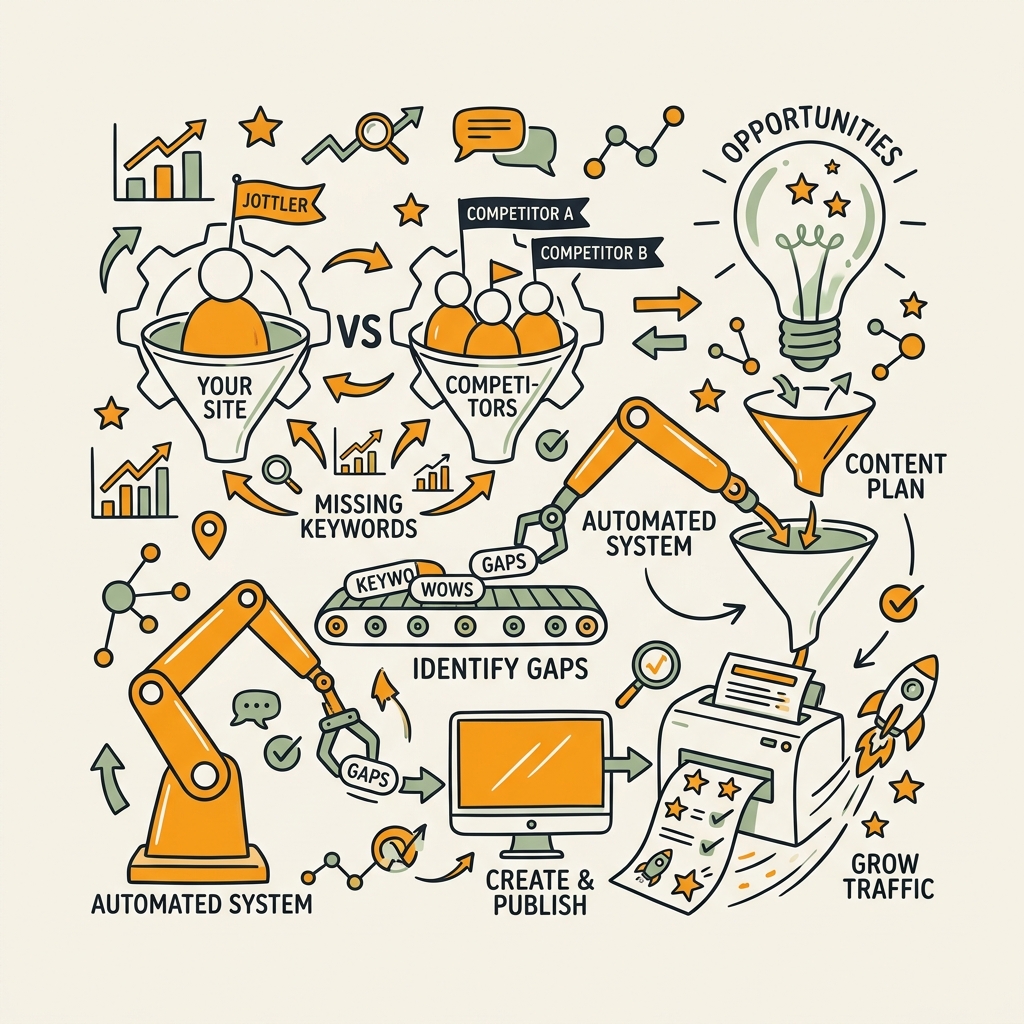
A modern automated workflow has four core components: data collection, gap identification, prioritization, and integration into content planning. Each layer requires the right tool or automation logic, but the payoff is compounding—once set up, the system runs itself and your team stops wasting time on repetitive analysis. This is where frameworks like SEO AI agents become valuable—they handle multiple workflow stages simultaneously.
Step 1: Connect Your Data Sources and Define Your Competitor Set
Automation begins with clean, reliable data sources. You need three inputs:
- Your own keyword rankings (from Google Search Console or an SEO platform)
- Competitor keyword rankings (from SEO tools like SEMrush, Ahrefs, or native tools)
- Target keywords (your planned opportunity list)
The critical decision is selecting the right competitors. Choose 3–5 direct competitors with similar domain authority and audience segment, not the market leaders. Market leaders rank for thousands of irrelevant keywords—including them in your gap analysis creates noise. Focus on companies fighting for your exact customer segment. Once you've identified them, store these domains in your automation system as your reference competitor set. This becomes the baseline for every gap analysis run going forward.
Connect your data sources via API where possible. API-based competitor keyword research tools pull rank data automatically, eliminating manual exports. If your gap analysis tool supports it, integrate Google Search Console directly—this gives you actual search data rather than estimates, immediately filtering out theoretical gaps with no real traffic.
Step 2: Run Automated Gap Identification with AI-Powered Filtering
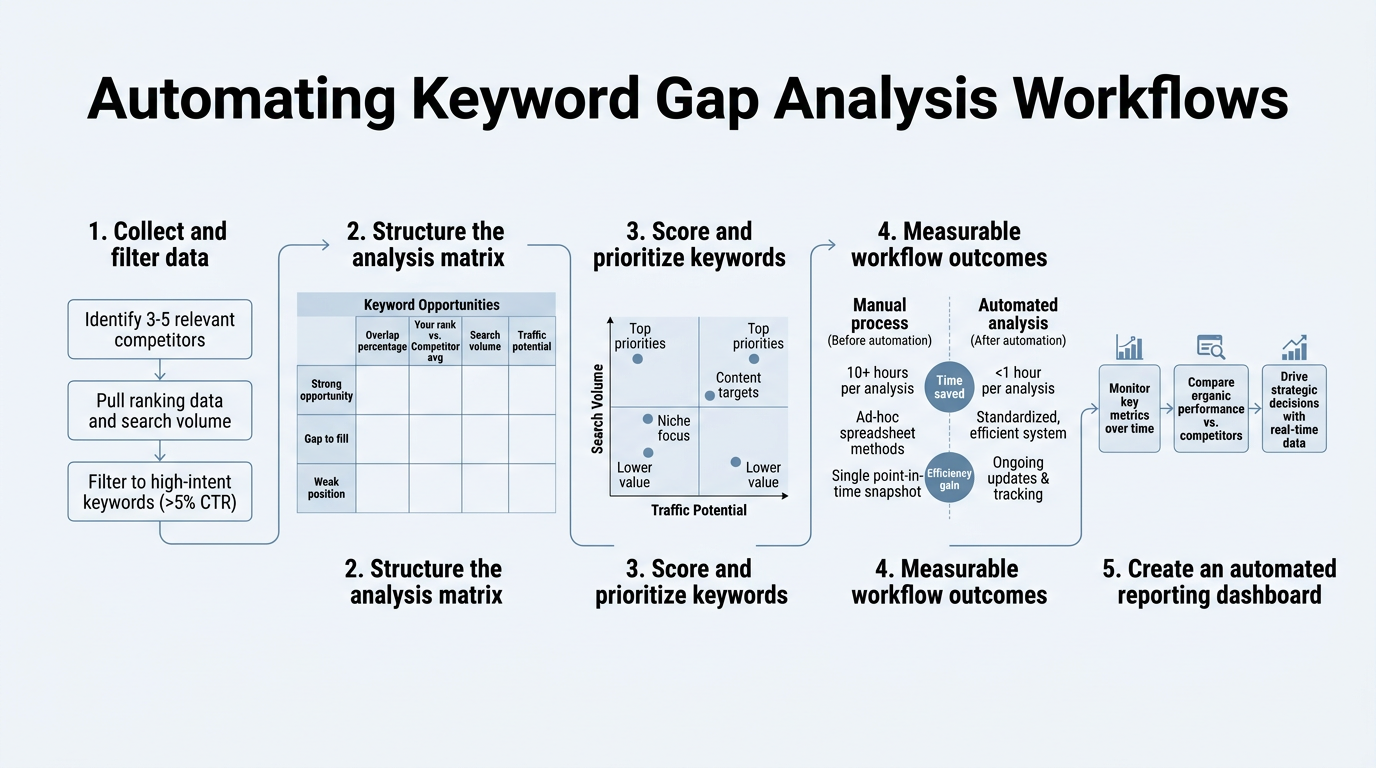
Once your data sources are connected, the system automatically compares your keyword set to competitors' and identifies three categories:
- Completely missing keywords — they rank, you don't
- Weak keywords — you rank but below them
- Near-miss keywords — you rank for a variant but miss the primary term
Modern platforms process 10,000+ keywords per second, so this comparison happens in seconds regardless of scope.
The smarter systems add AI filtering: they classify each gap by search intent (informational, transactional, navigational), estimate difficulty based on SERP composition, validate seasonality with Google Trends, and estimate traffic volume. This layered filtering automatically surfaces the gaps worth pursuing—high volume, achievable difficulty, aligned with your audience intent. Leading platforms now offer this across top keyword research tools as a standard feature.
You can also set filters to exclude low-value gaps automatically:
- Ignore branded keywords
- Exclude anything below 100 monthly searches
- Filter out keyword difficulty above 65
- Remove keywords outside your content scope
These rules ensure the remaining gaps are genuinely valuable, cutting noise and keeping your team focused on real opportunities.
Step 3: Cluster Gaps into Content Themes and Assign Priority
Raw keyword lists are useless. The real insight comes from clustering—grouping related gaps into pillar topics and supporting content clusters. A modern automated system does this automatically: it groups "SEO tools," "best SEO software," "SEO platform comparison," and similar terms into a single "SEO Tools Buying Guide" cluster, identifying that you have a pillar opportunity rather than five separate keyword problems.
This clustering view reveals your content architecture at a glance. You might discover that competitors have a whole pillar on "ROI measurement" while you have only scattered content on that topic. Clustering transforms gap analysis from a keyword list into a strategic content roadmap. Prioritization layers on top of clustering: assign scores to each cluster based on combined traffic potential, difficulty, and strategic alignment, then rank clusters by score. Your automation system now surfaces the highest-impact opportunities first, and your team can decide whether to pursue the top 5 or top 20 based on capacity. For frameworks on content strategy at scale, SEO content planning guides provide useful structure.
Step 4: Trigger Content Creation and Track Closure
The final lever in an automated workflow is integration into content planning and publishing. Once gaps are identified and clustered, the system can automatically generate content briefs for your writers, create detailed outlines based on identified gap keywords, and even draft initial article structures. Tools integrating generative AI now reduce time from gap identified to content published by 70%, according to recent 2026 analyses.
Connect your gap analysis output directly to your content brief template or CMS. When a high-priority gap cluster is identified, automatically create a task in your project management system, assign it to the relevant writer, and include recommended keywords, estimated traffic, and competitor analysis. Some platforms like SEO automation engines take this further—they automatically research the gap topic, write the article, and publish it directly to your CMS with internal linking, eliminating the entire manual workflow.
Finally, track closure: mark gaps as "content published," monitor the content's ranking progression, and measure impact on organic traffic. This feedback loop lets you refine your gap analysis strategy over time. If certain gap clusters consistently underperform after publication, you can adjust your filters or weighting to deprioritize similar gaps in future runs.
Building a Gap Analysis System That Scales
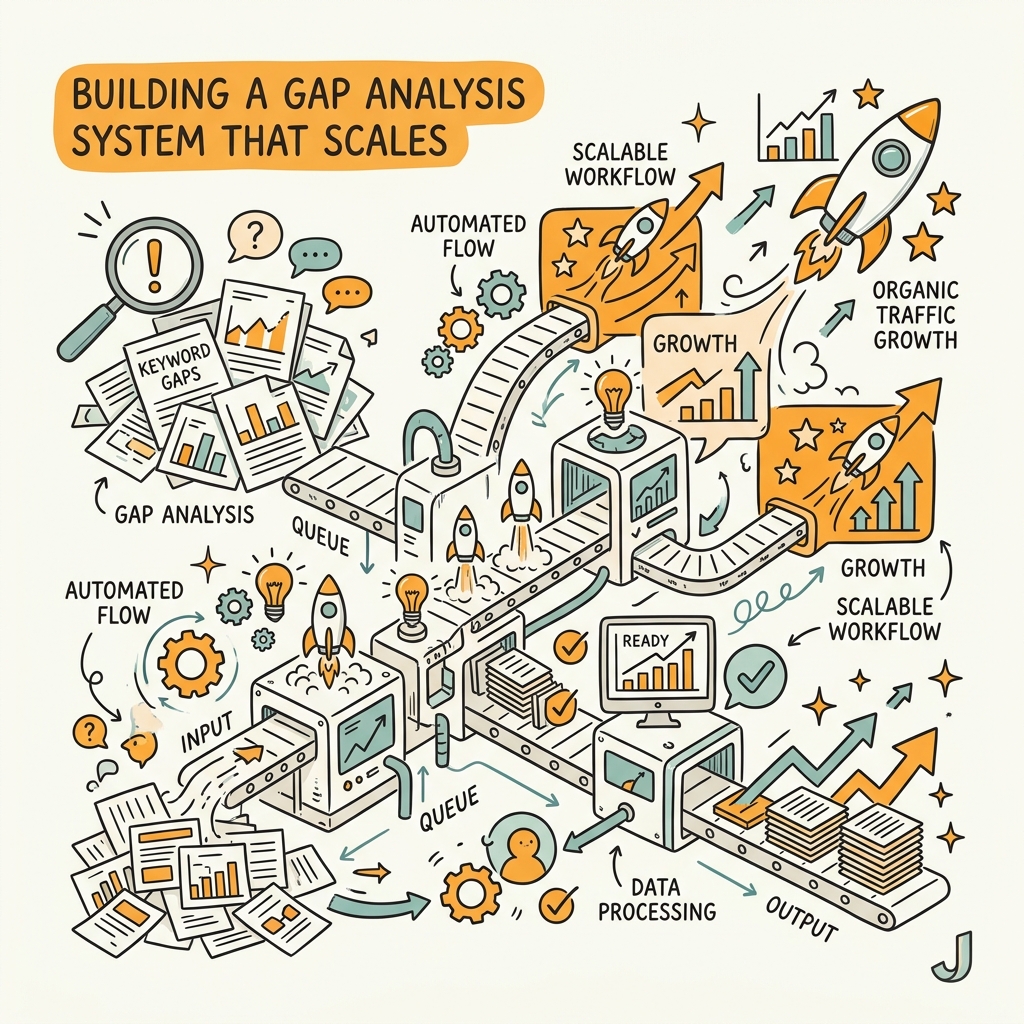
The difference between a good gap analysis workflow and a world-class one is scale and consistency. A good workflow finds today's gaps. A world-class workflow finds gaps faster than competitors can fill them, and does so automatically week after week.
Frequency: From Monthly Reports to Daily Monitoring
Set your gap analysis to run on a schedule: weekly is the industry standard, but daily is feasible if your tool supports it. Weekly automation means new competitive moves are caught within 7 days. Daily automation means new gaps surface almost in real time. The cost of running the analysis is minimal (most tools bill for queries, not for frequency), but the strategic benefit of faster gap detection compounds quickly.
Real-time competitor monitoring adds another layer: set alerts for when competitors publish new content in your focus areas, when their rankings shift significantly, or when they move into a new keyword cluster you hadn't tracked. These alerts trigger immediate action—your team can respond with better-optimized content while the opportunity is fresh. This reactive speed is why content automation platforms are becoming table-stakes for growing teams.
Validation: Why Google Search Console Data Beats Estimates
Third-party SEO tools provide impressive estimates of keyword volume and difficulty, but estimates are still estimates. Google Search Console shows what people actually searched for and when your site appeared in results. The combination is powerful: use third-party tools to discover gaps, then validate them with GSC data to confirm real search interest.
For example, an SEO tool might identify "how to implement canonical tags" as a high-volume gap. GSC validation shows that your target audience searches for this term at 10x lower volume than the tool estimated, and the traffic quality is poor (many bounces). Validation filters out false positives, ensuring your team pursues gaps that actually drive qualified traffic.
Topical Authority: Clustering as Competitive Advantage
Individual keyword rankings matter less each year. Google and AI engines now favor websites with clear topical authority—comprehensive coverage of a subject cluster rather than scattered keyword-specific content.
Automated gap analysis that clusters keywords into pillar topics naturally aligns your content strategy with this algorithmic shift. Instead of publishing 50 scattered blog posts on random keywords, you publish a pillar article on "SEO for SaaS" with 10 supporting articles on specific sub-topics. This clustering approach builds topical authority faster, improves both traditional rankings and AI Overview visibility, and makes your content more valuable to readers because it's comprehensive rather than fragmented.
Tools and Platforms Built for Automated Gap Analysis
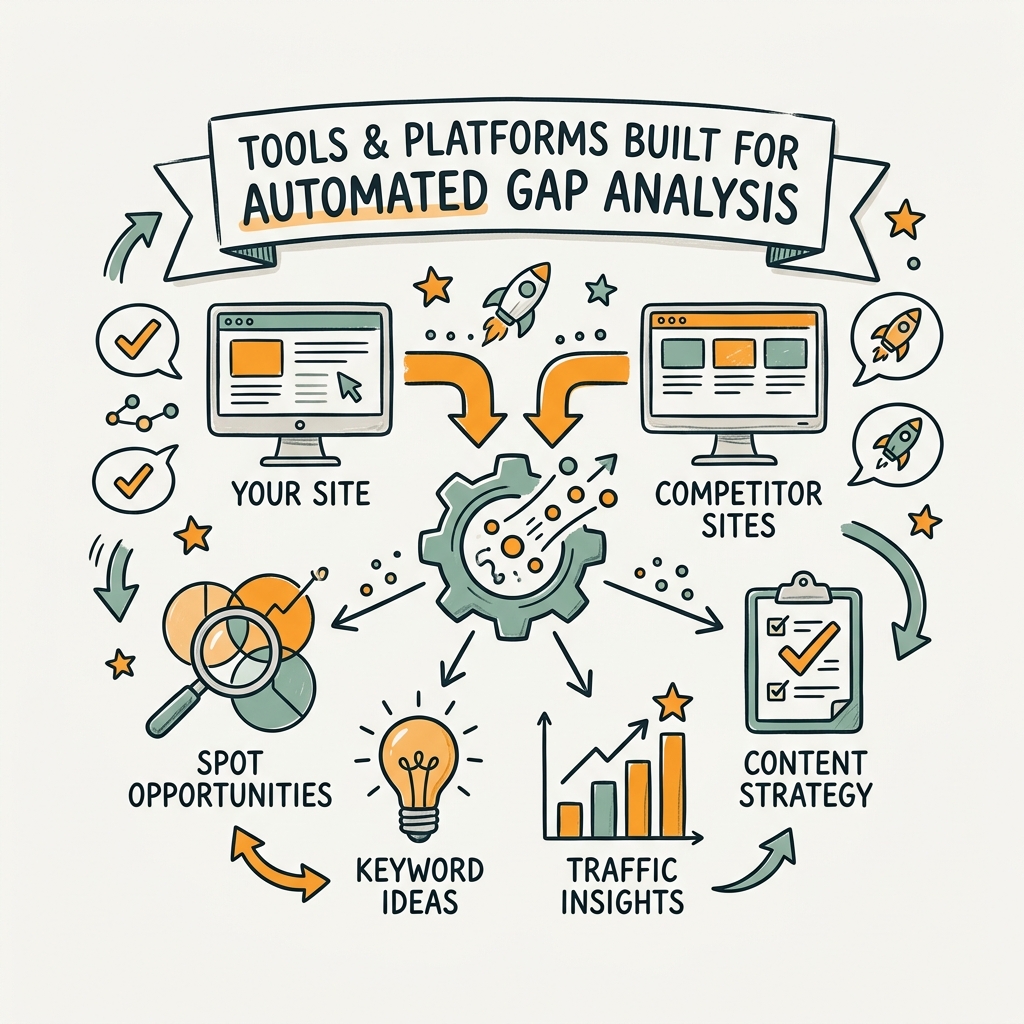
The market now offers several approaches to automating gap analysis. Some are standalone tools with strong gap analysis features; others are broader SEO platforms with gap analysis modules. Your choice depends on workflow integration, team size, and budget.
| Platform | Best For | Key Automation Features | Pricing Model |
|---|---|---|---|
| Jottler | Fully automated content creation from gaps to publishing | Automatic topic research, article writing, CMS publishing, internal linking—eliminates manual workflow entirely | Starts at $29/mo |
| SEMrush | Large-scale competitor analysis with daily updates | Competitor Keyword Gap Tool, 5-domain analysis, daily refresh, CSV export | $120+/mo |
| Ahrefs | Massive keyword database and advanced filtering | Content Gap Tool, intent classification, difficulty scoring, competitor overlap reports | $99+/mo |
| Ranklytics | AI-powered content suggestions based on gaps | Auto-generated topic clusters, content outlines, AI-suggested keywords | $49+/mo |
| RankingGap | Multilingual and global gap analysis | Multi-language support, real-time alerts, competitor monitoring | $99+/mo |
For busy founders and growing marketing teams, the choice depends on how much of the workflow you want automated. SEMrush and Ahrefs are industry standards for gap identification but stop at the CSV export—your team still writes content manually. Jottler takes a different approach: it automates the entire pipeline from gap identification through to publishing. The system researches each identified gap topic, writes a comprehensive article optimized for the keyword cluster, fact-checks the content, and publishes directly to your CMS with internal linking, effectively turning gap analysis directly into published, ranking content. For teams exhausted by manual content production, this end-to-end automation removes the bottleneck entirely. This aligns with broader trends in SaaS content marketing frameworks where consistency and automation are keys to scale.
Common Pitfalls in Automated Gap Analysis and How to Avoid Them
Automation is powerful, but misconfigured workflows can waste time on irrelevant keywords or miss genuine opportunities. Here are the most common mistakes and fixes.
Mistake 1: Including Market Leaders in Your Competitor Set
Comparing yourself to Amazon, HubSpot, or other market titans creates noise. They rank for thousands of keywords outside your reach. Instead, choose 3–5 direct competitors fighting for the same customers. If you're a HR software startup, compare yourself to other HR software companies in your price range and audience, not to Workday. Automating analysis with the wrong competitor set means automating irrelevant keyword discovery.
Mistake 2: Ignoring Search Intent in Gap Filtering
A gap identified as high-volume might be transactional (someone ready to buy) or informational (someone researching). Your sales team cares about transactional gaps; your content team cares about building authority through informational content. Automated systems that skip intent classification surface volume without context, leading your team to pursue gaps misaligned with your funnel. Always include intent filtering in your automation rules.
Mistake 3: Setting and Forgetting Without Validation
Automated systems should surface opportunities, not make final decisions. The most successful teams run gap analysis, validate the top opportunities against GSC data, discuss strategic fit, and then commit to content creation. Setting automation to publish on every identified gap without review is how you end up with 50 mediocre articles instead of 10 excellent ones.
Conclusion
Automating keyword gap analysis transforms competitive intelligence from a monthly chore into a continuous, compounding advantage. Instead of quarterly reports, you get weekly or daily insights. Instead of CSV exports, your identified gaps trigger content creation automatically. Teams using automated gap analysis workflows report more consistent ranking growth and faster time-to-publish on priority topics. The 70% reduction in time from gap identified to content published means your team ships more content, stays ahead of competitor moves, and compounds organic traffic growth without hiring additional staff.
Start with your competitor set—define 3–5 direct competitors and connect them to your gap analysis tool. Add Google Search Console validation to filter out theoretical gaps. Cluster keywords into pillar topics so your content builds topical authority. Then automate the weekly or daily refresh and watch the compound effect unfold. For teams that want to eliminate the manual workflow entirely, platforms like Jottler take it further—automating not just gap identification but also research, writing, and publishing, so identified gaps become published, ranking content within hours instead of weeks.
Start your SEO agent today and let automation handle the gap analysis that's costing your team hours each month.
FAQs
How often should I run keyword gap analysis?
Weekly gap analysis is the industry standard for competitive teams, but automated systems enable daily or even real-time monitoring. The higher the frequency, the faster you catch new competitive moves and emerging opportunities. Daily automation ensures gaps surface before competitors fully capitalize on them, giving you a publishing speed advantage. Set your automation to run on the cadence that matches your content production capacity—if you can publish one article per week, weekly gap analysis is appropriate. If you can publish three articles per week, daily is better.
What's the fastest way to turn a keyword gap into published content?
Manual workflows—from gap identification to final publish—take 2–4 weeks. Automated platforms that integrate research, writing, and publishing cut this to hours. Jottler automates the entire pipeline: it identifies the gap, researches the topic using 14+ sources, writes a comprehensive article optimized for the keyword cluster, fact-checks the content, and publishes directly to your CMS with internal linking, typically within 24 hours of gap detection. For founders and marketing teams lacking bandwidth for manual content production, this end-to-end automation removes the bottleneck that prevents organic traffic growth.
How do I know if a keyword gap is worth pursuing?
Not every gap is worth filling. Prioritize gaps by combining search volume, keyword difficulty, search intent alignment, and topical authority fit. A high-volume gap is worthless if difficulty is 80+ and you lack topical authority in that area. A low-volume gap might be perfect if it's transactional and directly feeds your sales process. Use automated filtering to isolate gaps with 100+ monthly searches, difficulty below 60, and intent matching your content strategy. Then cluster them by theme—if you have multiple gaps in a single topic area, pursue that pillar first to build authority faster.