Best Backlink Research Tools for Competitive Analysis
Your competitors are acquiring backlinks faster than you can track them. If you're trying to understand where their authority comes from—and more importantly, where you should focus your own link-building efforts—you need the right backlink research tool. Yet the market is crowded: Ahrefs, Semrush, Majestic, and a dozen others all claim to have the largest database and the best insights.
The difference isn't just about backlink volume. Organizations that conduct quarterly competitive backlink analysis grow organic traffic 35% faster than those who skip it. But conducting that analysis manually across multiple tools drains team bandwidth and creates bottlenecks. That's why professional SEO teams use specialized backlink research tools to automate competitor intelligence.
Key Takeaways
- Ahrefs scores highest (92/100) for competitive backlink analysis with its Link Intersect feature, which automatically identifies link opportunities competitors have but you don't (2026 SmarterRanking).
- Semrush offers the largest raw backlink index with integrated toxicity scoring, best for teams that need all-in-one SEO data in one platform starting at $139/month.
- Majestic remains the specialist choice for historical trust flow analysis, preferred when link quality matters more than raw volume.
- Ahrefs Link Intersect: Identifies 200+ domain gaps between you and competitors—the single highest-ROI feature for backlink strategy.
- Semrush Backlink Gap: Combines backlink data with toxicity scoring to filter spammy links automatically.
- Majestic Trust Flow: Analyzes historical link quality metrics competitors miss.
- Gap Analysis Workflow: Run competitive backlink analysis quarterly to capture new link opportunities before they scale.
- Backlink Data Automation: Tools like Jottler integrate backlink insights into content strategy, automatically creating assets designed to attract the same linking patterns as top competitors.
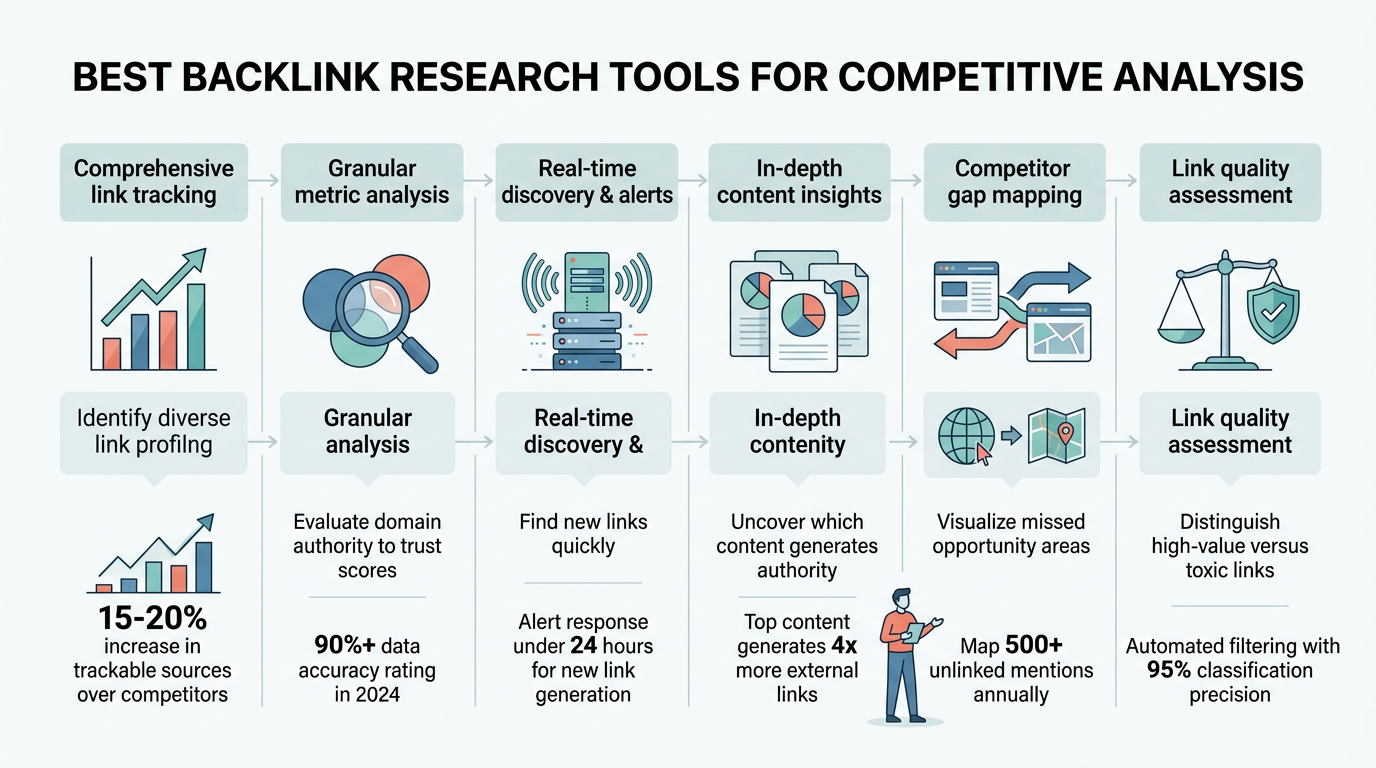
Why Competitive Backlink Analysis Matters for Growth
Backlinks remain one of the top three ranking factors for Google, and understanding what links your competitors have is the fastest way to close the authority gap. When you run a backlink analysis on your top three organic competitors, you're not just counting links—you're mapping the entire publisher ecosystem that cares about your topic.
"The teams that win aren't just tracking backlinks—they're using competitive backlink data to inform every content decision they make."
The challenge is that most teams do this work manually. They export data from a backlink tool, copy it into a spreadsheet, filter by domain authority, and spend hours identifying which publishers might be a fit. By the time they're ready to pitch those publishers, the opportunity window has often closed.
This is where the right backlink research tool becomes critical. A good tool should answer four questions in under 10 minutes:
- Who links to my competitors but not me? This gap is your immediate action list.
- What type of links are they? Editorial, homepage, directory—each has different outreach value.
- How recently were those links acquired? Fresh links from quality sources are higher priority than stale ones.
- What anchor text do competitors rank for? This reveals keyword opportunities you might be missing.
How to Choose the Right Backlink Research Tool

The best backlink research tool depends on your specific workflow, team size, and budget. Not all tools are built equal—some prioritize link volume, others emphasize link quality, and a few try to do both. Here's what to evaluate before you commit.
Data Freshness and Index Size
The size of a tool's backlink index directly impacts the quality of your competitive analysis. Ahrefs and Semrush both maintain backlink indexes of 6+ billion links, though Ahrefs focuses on "usable" links while Semrush goes for raw volume. Fresher data means you'll discover link opportunities faster than your competitors do.
Data freshness varies significantly. Ahrefs updates daily, Semrush crawls continuously, and Majestic maintains both fresh and historic indexes. For competitive analysis, daily updates matter—stale data can mean missing opportunities. When you're relying on quarterly analysis cycles, a tool that updates weekly or less frequently will cost you link velocity.
Link Gap Analysis Capabilities
The most powerful feature in modern backlink tools is automated link gap analysis—the ability to instantly show domains linking to competitors but not to you. Ahrefs' Link Intersect feature is the industry standard here, letting you add up to five competitors and see the combined opportunity gap. Semrush's Backlink Gap is a close second, with the added benefit of toxicity filtering to eliminate spam links automatically.
"Teams that automate gap analysis save 6-8 hours per quarter while discovering 40% more actionable link opportunities than manual approaches."
Without gap analysis, you're doing the work manually: exporting competitor backlinks, cross-referencing against your own, and filtering the results.
Toxicity and Link Quality Scoring
Not all backlinks are created equal. A link from a spammy, low-trust domain can hurt your SEO more than it helps. This is where link quality scoring becomes essential. Semrush's toxicity score is one of the most accurate, automatically flagging low-quality links so you can focus outreach on domains that actually pass authority. Majestic uses Trust Flow to evaluate link quality based on historical link patterns, which is more nuanced but requires more interpretation.
Moz Pro includes toxicity scoring as well, though it's less sophisticated than Semrush's. If you're in a competitive niche where one bad link can trigger a manual penalty, quality filtering is non-negotiable.
Top Backlink Research Tools Compared
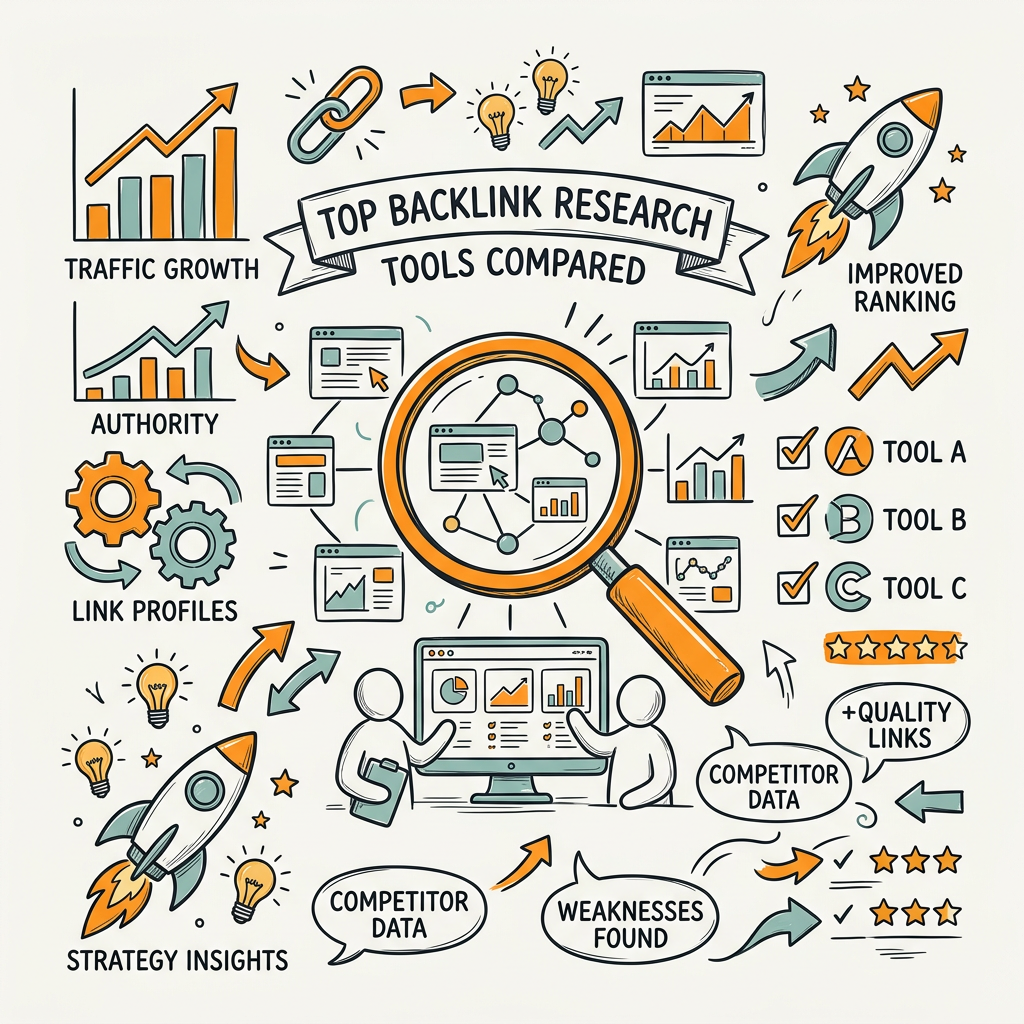
Based on 2026 data from Smarterranking and Heroic Rankings industry benchmarks, here's how the top tools stack up for competitive analysis:
| Tool | Best For | Link Gap Analysis | Starting Price | Data Freshness |
|---|---|---|---|---|
| Ahrefs | Finding new link opportunities via Link Intersect | Link Intersect (Excellent) | $129/month | Daily updates |
| Semrush | All-in-one SEO + backlink toxicity scoring | Backlink Gap (Strong) | $139/month | Real-time crawl |
| Majestic | Deep trust analysis and historical metrics | Limited (Trust Flow focus) | $49.99/month | Historic + Fresh Index |
| Moz Pro | Simplicity and clean UI for smaller teams | Link Opportunities (Basic) | $99/month | Weekly updates |
| SE Ranking | Budget-friendly complete SEO toolkit | Competitive backlinks comparison | $95/month | Regular updates |
Ahrefs: The Agency Standard
Ahrefs dominates the backlink research category with an exceptional interface and the industry's most actionable link gap analysis feature. Most SEO agencies rely on Ahrefs as their central tool for competitor backlink analysis, according to industry surveys. The Link Intersect feature alone—which shows domains linking to competitors but not to you—justifies the subscription for most professional teams.
Strengths include daily data updates, a backlink index of 6+ billion links, and visual reporting that's easy to present to stakeholders. Ahrefs also integrates with other tools, making it straightforward to fit into an existing SEO stack.
The main drawback is pricing. At $129/month for the entry level, Ahrefs is one of the pricier options. There's also no unlimited search in the free version—you get three lookups per day, which is restrictive for serious analysis.
Semrush: Maximum Data Volume with Integrated Tools
Semrush offers the largest raw backlink index—over 6 billion backlinks indexed continuously—paired with integrated SEO, traffic analytics, and brand monitoring. For teams that want one platform to handle backlink analysis, keyword research, rank tracking, and competitor intelligence, Semrush is the pragmatic choice.
The Backlink Gap feature is nearly as powerful as Ahrefs' Link Intersect, with the added advantage of automated toxicity scoring. This means you can run a gap analysis and instantly filter out spam links without manual review. For in-house teams managing a diverse backlink strategy, this integration is valuable.
Limitations include a denser interface than Ahrefs (steeper learning curve) and slightly higher entry price ($139/month). The tool also requires more training for non-SEO team members to use effectively.
Majestic: Specialist Tool for Trust Analysis
If your primary concern is link quality over link quantity, Majestic remains unmatched. The platform maintains two separate backlink indexes—a fresh index and a historic index—plus proprietary trust metrics that measure how much authority a linking domain actually has. Teams evaluating link quality and trust over time consistently choose Majestic for deep-dive backlink profile analysis.
At $49.99/month, Majestic is also the most affordable option on this list. It's ideal for smaller teams or consultants who want detailed backlink insights without paying for an all-in-one platform.
The tradeoff is that Majestic's interface is dated compared to Ahrefs or Semrush, and link gap analysis isn't native to the platform—you'd have to export and cross-reference data manually. It's also less suitable for teams that need to report on SEO metrics beyond backlinks.
Moz Pro: Simplicity and Stability
Moz Pro serves smaller teams and in-house departments that prioritize ease of use over advanced analysis. The clean interface and reliable API make Moz a solid choice for teams that want a straightforward backlink checker without the complexity of Ahrefs or Semrush.
Moz's link index has grown significantly (now over 40 billion backlinks in historical data), and toxicity scoring is available. However, the link gap analysis feature is basic compared to Ahrefs' Link Intersect, which limits its value for serious competitive analysis.
At $99/month, Moz occupies the middle ground—more expensive than Majestic, cheaper than Ahrefs or Semrush. It's a solid pick if your team is new to backlink analysis and wants to learn the fundamentals before investing in advanced features.
Building a Competitive Backlink Strategy
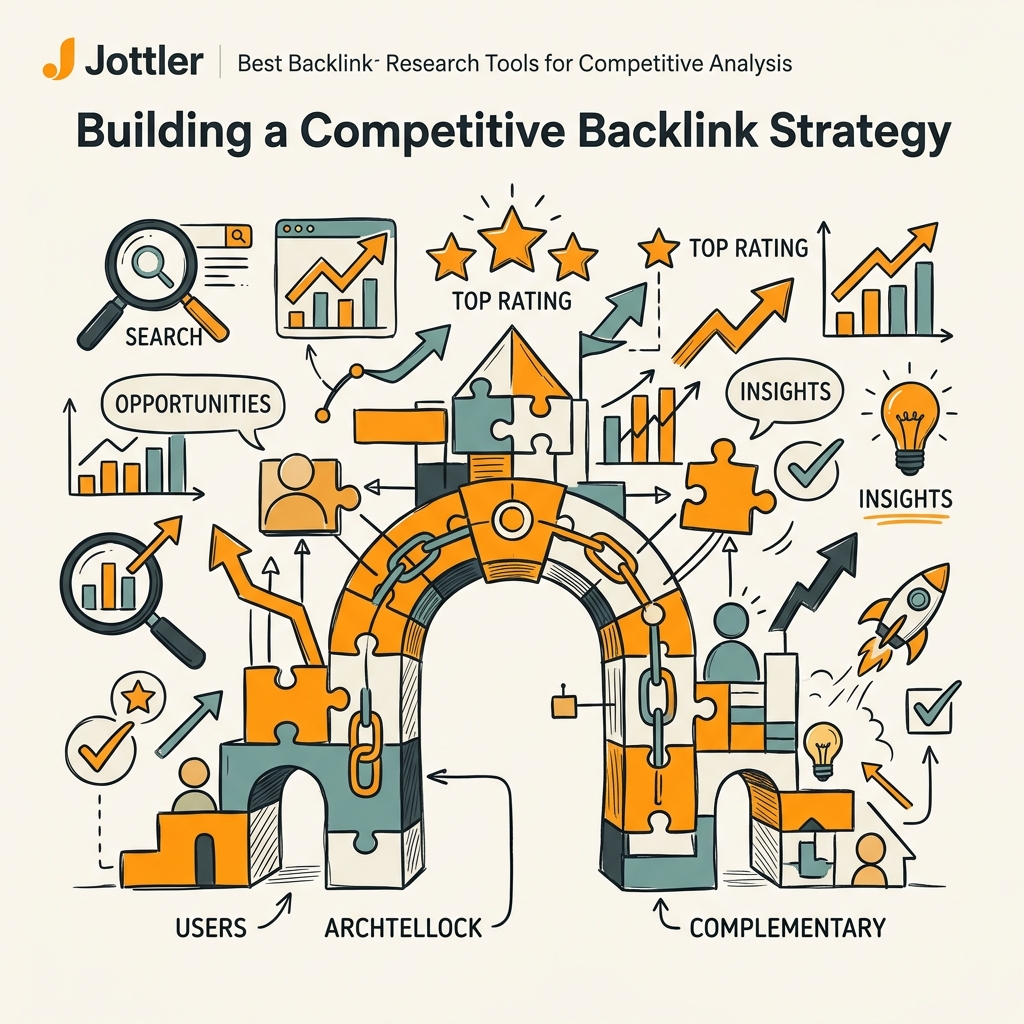
Choosing the right backlink research tool is only the first step. You also need a process to act on the data you find. Here's how professional teams structure competitive backlink analysis to drive measurable results.
Identify Your True Competitors
Not everyone ranking in your niche is a real competitor. Start by identifying the 3-5 domains that rank for your highest-intent keywords and have similar audience profiles. Run a search for "site:competitor.com [your target keyword]" to confirm they're actually competing for the keywords you care about, not just the same general topic.
Use Ahrefs' Organic Competitors report or Semrush's Organic Research to identify overlapping competitors automatically. Filter by domain age (you want comparably established domains, not brand new sites) and content type (blog posts, ultimate guides, etc.). This ensures you're analyzing the right reference group.
Extract Backlink Profiles and Run Gap Analysis
Pull the backlink data for each competitor using your chosen tool's backlink explorer. Sort by "referring domains" rather than raw link count—one domain with 10 links to a competitor is typically more valuable than 20 domains with one link each. Run a link gap analysis to identify domains that link to competitors but not to your site.
This gap is your action list for the next quarter. Ahrefs Link Intersect will show you 100+ opportunities in seconds. Semrush Backlink Gap provides similar data with toxicity filtering built in. Without gap analysis, you're essentially hunting in the dark.
Filter by Link Type and Conversion Likelihood
Not all link opportunities are created equal. A homepage link from a relevant publisher is worth more than a directory listing. Editorial links (earned, not bought) are worth more than commercial links. Filter your gap analysis by:
- Link type: Editorial, homepage, resource page, blog, directory.
- Domain authority: Typically DR 40+ on Ahrefs or DA 30+ on Moz.
- Relevance: Topic overlap with your content (manually review 10-15 top opportunities).
- Recency: Links acquired in the last 90 days show active publishers in your niche.
This filtering step reduces your 200-domain gap list to 20-30 qualified outreach targets. Teams that prioritize this step see 3x higher acceptance rates on outreach.
Automate Content Strategy Around Link Attractors
Here's where most teams miss a critical insight: the links your competitors attract aren't random. They usually follow patterns based on content type, topic depth, and how well the content serves the audience of linking publishers.
Tools like specialized link-building tools for SaaS work alongside backlink research to identify these patterns. But you can also use backlink data to inform your content calendar: if competitor blogs get lots of backlinks from industry publications for "how-to" content, your content team should prioritize similar depth in that format.
Even better, platforms that automate SEO workflows can incorporate competitive backlink patterns into content generation, ensuring every new article is optimized not just for rankings, but for link-worthiness. This approach compounds your authority faster than manual outreach alone.
Revisit Quarterly and Track Changes
Backlink landscapes shift rapidly. A competitor might acquire 50 new links in a quarter, or a publisher you're targeting might change editorial focus. Set a quarterly review cycle to re-run your gap analysis, identify new link opportunities, and track which of your outreach efforts are actually succeeding.
Most tools allow you to export historical data, so you can compare "links this quarter" vs. "links last quarter" to spot trends. If you notice a competitor getting frequent links from a specific publisher, that publisher becomes a priority outreach target for you.
Free vs. Paid Backlink Research Tools
Every major backlink research tool offers a free version, but the limitations are substantial. Free versions typically allow 1-5 searches per day, cap the number of results you can export, and exclude advanced features like gap analysis or toxicity scoring. They're useful for occasional spot-checks, not for running a competitive backlink strategy.
For serious competitive analysis, you need a paid plan. The entry price for Ahrefs or Semrush ($129-$139/month) is steep, but teams conducting quarterly analysis will see a clear ROI if they're using the data to drive outreach. Consider it a research and development expense for your content and link-building program.
Smaller teams or consultants with tighter budgets should start with Majestic ($49.99/month) for deep link quality analysis, or SE Ranking ($95/month) for a balanced feature set at a lower price point. You can upgrade to Ahrefs or Semrush later as your analysis becomes more sophisticated.
Integrating Backlink Insights into Your Content Strategy
Backlink research data is only valuable if you act on it. The most efficient teams integrate competitive backlink insights directly into their content creation process. Instead of running analysis separately from content planning, they use backlink data to prioritize topics, inform content depth, and guide promotion strategy.
For example, if backlink analysis reveals that a competitor's guide on "X topic" attracts 10+ monthly links from industry publications, your content team should create a similar (or better) resource on the same topic. Then use that competitor's backlink list as your outreach target.
Teams that automate this workflow—using competitive backlink data to inform which content to create, and then automatically publishing that content across their CMS—compound their results. This is why many fast-growing teams combine backlink research tools with content automation platforms, ensuring both discovery and execution happen at scale.
Conclusion
Competitive backlink analysis has become non-negotiable for SEO teams trying to close authority gaps quickly. The average time to identify and prioritize link opportunities drops from 15+ hours per quarter to under 2 hours using a purpose-built backlink research tool. That efficiency multiplier justifies the subscription cost immediately.
Choose Ahrefs if link gap analysis is your primary need and budget allows for premium pricing. Choose Semrush if you want all-in-one SEO data with integrated backlink analysis. Choose Majestic if link quality and trust metrics matter more than raw link volume. Choose Moz or SE Ranking if you're building a lean stack for a smaller team.
Whichever tool you select, commit to quarterly analysis cycles and integrate the insights into your content and link-building strategy. The teams that win in 2026 aren't just tracking backlinks—they're using competitive backlink data to inform every content decision they make.
Ready to build a systematic approach to backlink research and competitive content strategy? Start your SEO agent with Jottler to automate the content creation side of competitive backlink intelligence. Run your backlink analysis in one of these tools, then let Jottler automatically generate the content assets designed to attract similar linking patterns as your top competitors.
FAQs
What is the best free backlink research tool?
Ahrefs Free Backlink Checker is the best free option for single-domain lookups, giving you a high-level view of referring domains and basic backlink data. Moz Link Explorer also offers limited free searches. However, all free backlink tools restrict daily lookups to 1-5 per day, which severely limits their usefulness for competitive analysis. If you're running competitive gap analysis or doing regular backlink monitoring, a paid tool is essentially mandatory—the free versions won't scale to professional use.
How often should I run competitive backlink analysis?
Quarterly competitive backlink analysis is the standard cadence for most SEO teams. This frequency captures seasonal trends, identifies new publisher relationships in your niche, and allows you to adjust your outreach strategy based on what's working. Running it less frequently (annually) means missing several quarters of link opportunities. Running it more frequently (monthly) usually yields diminishing returns unless you're in an extremely competitive niche where backlink velocity is a critical ranking factor. Set a calendar reminder for the first week of each quarter and make it a standing 90-minute review session.
Can I use backlink research to improve my content strategy?
Yes, and this is where most teams miss the biggest opportunity. Analyzing what types of content attract backlinks from relevant publishers reveals your audience's actual interests and shows which content formats and topics your niche values most. If competitor how-to guides consistently attract 10+ editorial links while their opinion pieces get none, your content roadmap should prioritize how-to guides. Use backlink data to identify topic gaps, content depth benchmarks, and publishing patterns competitors are exploiting. Then build your content calendar around those insights rather than intuition alone.