Earning Backlinks Through Content Partnerships
Backlinks remain the single most influential ranking factor for SEO, yet most teams waste 60% of their outreach effort on low-relevance targets. The breakthrough isn't harder work—it's smarter collaboration. When you build content partnerships instead of chasing links in isolation, you tap into mutual audiences, shared credibility, and editorial goodwill that turns link acquisition from a grinding hustle into a compounding asset. Strategic content partnerships don't just earn backlinks; they generate referral traffic, amplify brand authority, and create evergreen content that continues attracting citations long after launch.
Key Takeaways
- 48.6% of SEO professionals rated Digital PR as the #1 most effective link acquisition tactic in 2026, while structured content partnerships ranked as a close second (LinkBuildingHQ, 2026)
- Co-branded assets and expert roundups generate natural backlinks from both partner websites plus external referral links, multiplying your link velocity with minimal additional outreach
- Structured follow-up on partnership outreach campaigns produces 40% more backlinks than single-send approaches, making relationship-first strategies essential
- Co-Marketing Campaigns: Build shared assets with complementary brands—webinars, guides, reports—that both parties promote and link to, generating natural backlinks from multiple domains simultaneously.
- Expert Roundups and Collaborative Articles: Feature insights from 5-10 industry voices on a single topic; each contributor links back, and the aggregated authority attracts additional organic citations.
- Podcast Swaps and Guest Appearances: Cross-promote audio content and written recaps on partner websites, earning contextual backlinks that drive qualified referral traffic.
- Resource Page Partnerships: Negotiate inclusion in curated industry resource lists, tools directories, and educational hubs where partners naturally link to relevant assets.
- Data-Driven Collaboration: Co-author original research, industry surveys, or benchmark reports; data assets earn 25.8% more backlinks than typical how-to content because they become citation magnets for journalists and researchers.
- Joint Sponsorships and Events: Partner on webinars, conferences, or virtual summits; each event generates co-branded landing pages and post-event recaps that link to both organizations.
Why Content Partnerships Outperform Traditional Link Building
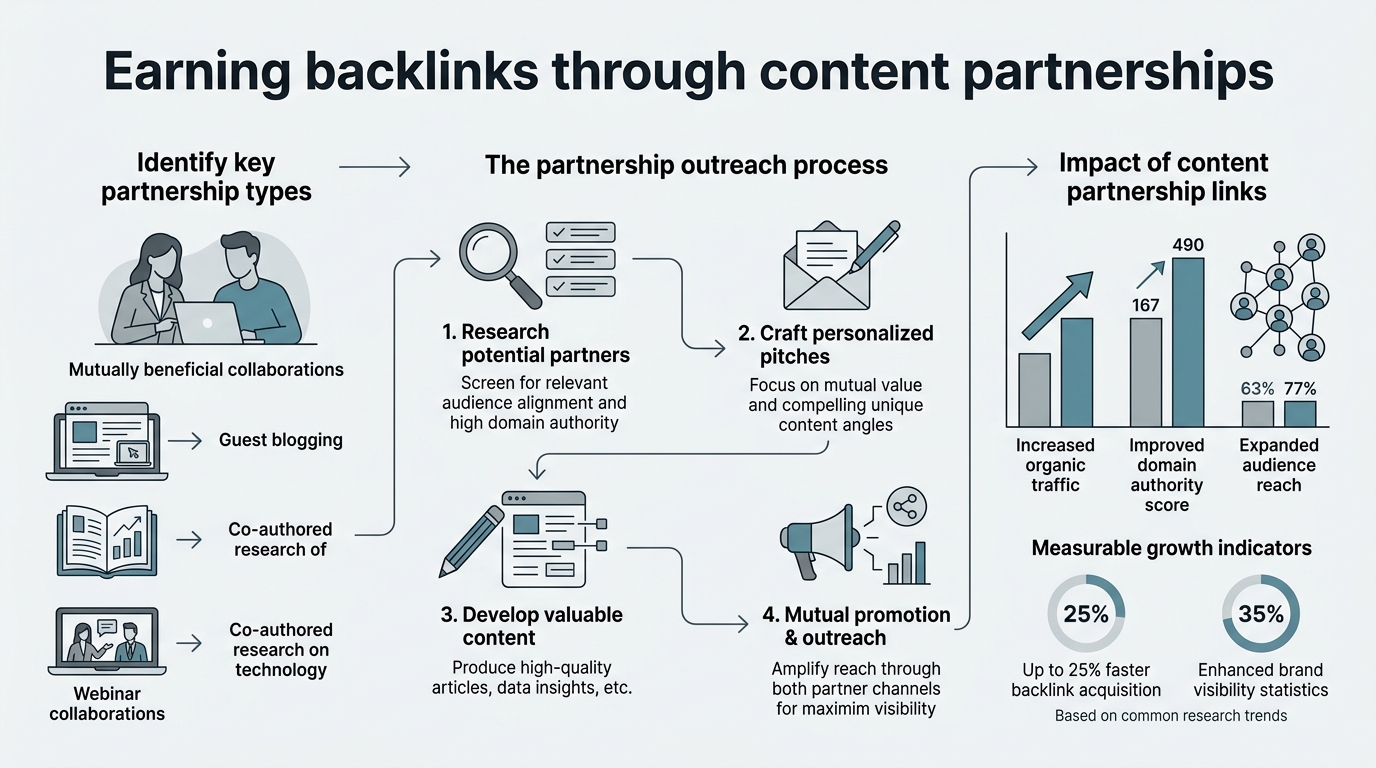
Content partnerships work because they replace cold outreach with warm relationships. Digital PR and collaborative content strategies account for over 64% of earned backlinks in 2026, compared to just 16% from transactional guest posting. The difference is mutual value: when you partner strategically, both sides benefit from promotion, audience access, and shared credibility. This alignment makes links feel organic rather than manufactured, which search engines reward with better anchor text diversity and higher contextual relevance scores. According to LinkBuildingHQ's 2026 research, this shift toward authentic collaborative content is the primary driver of sustained ranking improvements.
"Partnerships create assets that continue earning links long after launch. Original research, benchmark reports, and comprehensive resource guides attract ongoing citations from journalists, bloggers, and researchers who discover them months or years later."
The Economics of Collaboration Over Isolation
Solo link building carries high friction—you research targets, personalize pitches, wait for responses, and often get ignored. Partnerships flip this dynamic: your collaborators actively promote the shared content because their brand is attached to it. A high-quality backlink costs an average of $508.95 when purchased directly, but strategic content partnerships reduce that cost to zero while generating multiple links per asset. More importantly, partnership-driven links come from more diverse publishers and domains, which improves link profile health and reduces the risk of appearing manipulated to search engines. As explored in LinkSurge's safe link building framework, white-hat partnerships are increasingly the foundation of sustainable SEO growth.
Building Evergreen Link Compounding
Partnerships create assets that continue earning links long after launch. Original research, benchmark reports, and comprehensive resource guides attract ongoing citations from journalists, bloggers, and researchers who discover them months or years later. Content partnerships that include original data or research produce 3-4x more long-tail backlinks than simple co-authored blog posts, because journalists and industry analysts actively cite data-driven content when writing articles or sourcing expert perspectives.
"The real link velocity comes from coordinated promotion. Structured follow-up on partnership campaigns generates 40% more backlinks than single-send outreach, so dedicate someone on each team to systematic follow-up: reaching out to complementary brands, journalists in your space, industry forums, and relevant communities to surface the shared asset."
How to Identify and Approach Strategic Partners
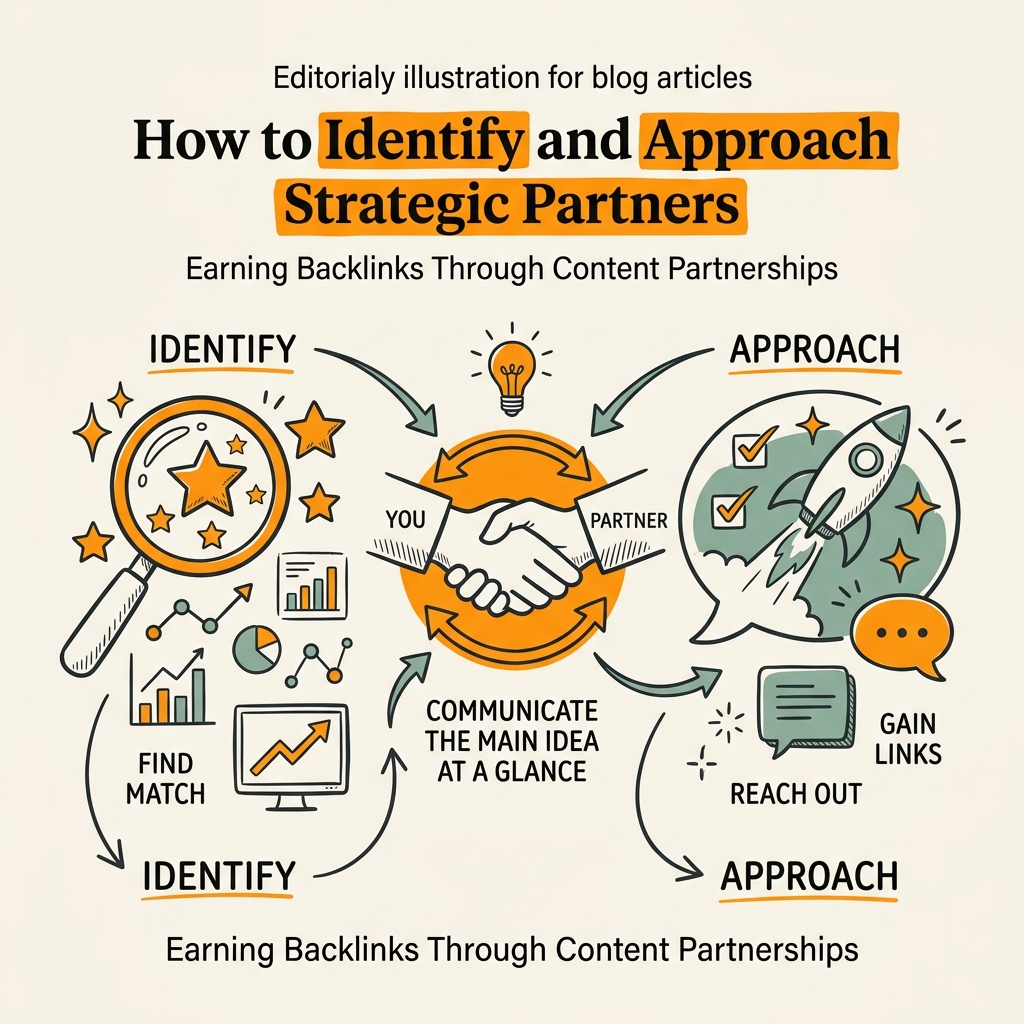
The foundation of successful backlink partnerships is choosing the right collaborators. Your ideal partners share your target audience but don't directly compete with your core offering. They have comparable domain authority, active promotion channels, and a demonstrated commitment to content quality. The wrong partner creates more friction than value—you'll spend weeks coordinating content only to have them deprioritize promotion.
Mapping Your Ideal Partner Profile
Start by auditing your existing backlinks and noting which domains send meaningful traffic and hold strong authority scores. Then reverse-engineer those sources: what audiences do they serve, which niches do they dominate, and who do they already link to? Your ideal partners typically operate in adjacent markets where audience overlap creates natural cross-promotion momentum. For example, if you sell project management software, ideal partners might be time-tracking platforms, team communication tools, or productivity consultants—brands that share your buyer but solve different problems.
Document 15-20 potential partners in a simple spreadsheet tracking:
- Domain authority and traffic: Use tools to confirm they have real reach and search visibility
- Content quality: Review their top articles to ensure editorial standards match yours
- Audience overlap: Check if their readers solve similar problems to your target customer
- Promotion capacity: Look for evidence of strong email lists, social following, and organic sharing patterns
- Partnership history: Identify brands they've collaborated with before—this signals openness to joint projects
Crafting the Partnership Pitch
Your initial outreach should lead with mutual benefit, not backlink requests. Partners respond to pitches that offer clear value to their audience and reduce their workload, not increase it. The best partnerships feel like you've solved a problem they already had—they wanted to create comprehensive content but lacked resources, data, or a collaborator's audience to amplify reach.
A strong partnership pitch includes:
- Specific topic idea: Not vague ("let's collaborate") but concrete ("a joint guide on remote team communication best practices")
- Audience alignment: Explain why their readers will find your combined perspective valuable
- Clear workload split: Define who owns research, writing, editing, and promotion—no ambiguity
- Promotion commitment: Specify exactly how you'll amplify the content (email list size, social channels, paid spend if applicable)
- Timeline and publishing plan: Show professionalism with realistic milestones and clear publication dates
Top Partnership Formats That Generate the Most Backlinks
Not all partnerships are equally effective at earning backlinks. Some formats naturally encourage co-promotion and link sharing; others produce content that sits alone with minimal cross-linking. The highest-performing partnership formats in 2026 share one trait: they require both brands to link to a shared asset or each other's contribution pages, ensuring backlinks are built into the collaboration mechanics rather than left to chance. This mirrors the tactical playbook outlined in LinkBuildingHQ's backlink acquisition guide for 2026, which emphasizes structural incentives over hope-and-promote strategies.
Expert Roundups and Contributor Models
Expert roundups generate the most diverse backlinks per partnership effort. These pieces feature 5-10 industry voices (partners, influencers, or thought leaders) answering a single question or sharing advice on a specific topic. Each contributor links to the finished piece from their personal site, company blog, or social channels, creating 5-10+ natural links just from the core collaboration. The format is so effective because contributors have incentive to promote—they're featured in it, so sharing feels like self-promotion rather than marketing.
When you publish an expert roundup on "Remote Work Tools That Save Teams 10+ Hours Per Week," you reach out to 10 partner brands or influencers asking them to contribute 100-200 word insights. Each contributor becomes a promoter, and most will link to the finished piece from their site or newsletter. You typically see 7-12 backlinks directly from contributors, plus 3-5 more from their followers who click through and cite the roundup in their own content.
Co-Authored Data and Research Reports
Original research earns 12% more backlinks than standard content according to 2026 link building benchmarks, and co-authored research multiplies that effect. When you combine original data with a partner's audience and promotion reach, you create a citation magnet. The research itself becomes so valuable that journalists, analysts, and competitors feel compelled to cite it in their own articles.
Co-authored research typically takes 6-8 weeks from conception to publication but generates 30-50+ backlinks over its first six months. Example: a joint survey by a marketing agency and a CRM platform asking "Which CRM Features Matter Most to Agency Growth?" produces original data both organizations want to promote. The agency publishes findings, the CRM platform cites the research, and journalists covering the CRM space reference the data—resulting in a compound backlink stream that continues months after launch. For teams without dedicated research capacity, content research and publishing automation tools can streamline the data collection and writing phases, compressing the timeline significantly.
Webinars and Virtual Events With Recap Content
Co-hosted webinars create multiple linking opportunities: a shared event landing page, individual speaker bio pages, a recap blog post featuring key takeaways, and often a downloadable slide deck or resource guide. Partners promote across their lists, generating traffic and natural backlinks when attendees share the recording or reference the session. The recap blog post typically earns 5-8 initial backlinks from partner promotion, then accumulates more as event attendees and external discoverers share the content.
Structuring Partnerships for Maximum Link Velocity
Not all partnerships deliver equal backlink results. The difference lies in structure: whether you've built linking into the collaboration mechanics or left it to chance. The most effective partnerships require both parties to publish and link to the joint asset by default, rather than treating promotion as optional.
Building Linking Into the Partnership Agreement
Document your partnership terms in writing, even informally. Include specific commitments to publish and link the shared content within set timeframes. For example: "Both organizations commit to publishing the co-authored guide on their respective blogs within 5 business days of completion, with a contextual link in the first paragraph and a mention in both email newsletters." This removes ambiguity and ensures backlinks are created as part of the baseline collaboration, not hoped-for extras.
Clear agreements also define anchor text strategy, publication dates, and how you'll coordinate promotion to avoid cannibalizing each other's traffic. If both partners publish identical content simultaneously, search engines may flag the duplication. Instead, agree that Partner A publishes the full version and links back to it, while Partner B publishes a curated excerpt linking to the original.
Coordinating Promotion for Amplified Reach
The real link velocity comes from coordinated promotion. Plan your go-live date, social sharing calendar, email send times, and influencer outreach together. Structured follow-up on partnership campaigns generates 40% more backlinks than single-send outreach, so dedicate someone on each team to systematic follow-up: reaching out to complementary brands, journalists in your space, industry forums, and relevant Reddit communities to surface the shared asset.
A typical 30-day promotion sprint includes:
- Days 1-3: Both partners publish, link internally, and announce via email and social
- Days 4-7: Pitch the asset to 10-15 relevant industry media outlets, podcasts, and newsletters
- Days 8-14: Reach out to relevant subreddits, forums, and community Slack groups where your audience congregates
- Days 15-30: Follow up on pitches, republish content in new formats (social clips, infographics), and repurpose key insights in additional blog posts linking back to the original asset
Tools and Platforms to Scale Content Partnerships
Manually managing multiple partnerships quickly becomes chaotic—tracking agreements, coordinating publication dates, and ensuring promised links go live all require systems. The right tools and platforms dramatically reduce friction and ensure no partnership commitments fall through the cracks.
| Tool Category | Primary Function | Best For | Key Advantage |
|---|---|---|---|
| Partner Discovery Platforms | Identify collaborators by audience, domain authority, and relevance | Initial outreach phase; screening 50+ potential partners quickly | Saves 10+ hours of manual research per quarter |
| Outreach Management Tools | Track pitches, manage responses, schedule follow-ups | Managing 5-10 concurrent partnership negotiations | Ensures no opportunity falls through email cracks |
| Content Automation Systems | Write, fact-check, publish partnership content automatically | Scaling from 1-2 to 5-10+ partnerships per quarter | Eliminates publishing bottleneck; frees team for relationship-building |
| Backlink Monitoring Tools | Track earned links, domain authority, referral traffic per partnership | Measuring ROI and optimizing future partnerships | Identifies which formats and partners consistently overdeliver |
Partnership Management and Outreach Platforms
Specialized outreach platforms streamline partner discovery and pitch management. These tools help you identify potential collaborators based on your target criteria, manage pitch templates and responses, and track which partnerships are in progress, waiting on delivery, or ready to publish. Many also include built-in email tracking so you know when partners open your pitch and can time follow-ups strategically.
That said, most partnership relationships ultimately live in email and Slack conversations—they're inherently personal. Tools excel at managing the discovery and early-stage coordination, but once you've committed to a partnership, direct human communication often works better than platform friction. Use platforms to identify partners efficiently, then move to direct communication channels once the relationship is established.
Content Automation for Scaling Publications
The constraint in content partnerships often isn't identifying partners or landing agreements—it's the sheer effort required to write, publish, and promote at scale. If you're managing 5-10 active partnerships simultaneously, your internal team can't keep pace with the content production and link-building execution needed to maximize returns.
This is where scalable content automation frameworks fundamentally change the game. Rather than juggling partnership content alongside your day job, you can delegate the entire publishing and internal linking pipeline to an automated system. Jottler writes partnership guide content daily, handles fact-checking against 14+ sources, and automatically publishes to your CMS while building strategic internal links back to partnership-contributed resources. This means you can scale from managing one partnership to ten without doubling your editorial overhead—the system handles the publication mechanics, freeing your team to focus on partner relationships and promotion strategy.
Backlink Monitoring and Performance Tracking
You can't optimize what you don't measure. Use backlink monitoring tools to track which partnerships deliver the most links, which formats earn the highest-quality domains, and which collaborators actually execute their promised promotion. Track metrics like:
- Total backlinks generated per partnership
- Average domain authority of earned links
- Referral traffic from partner-published content
- Time-to-first-link after partner publication
- Long-tail backlinks earned 60+ days after launch (indicates evergreen compounding value)
After 3-4 partnerships, patterns emerge: certain partner types or content formats consistently outperform others. Use this data to prioritize future partnerships and refine your approach.
Common Pitfalls and How to Avoid Them
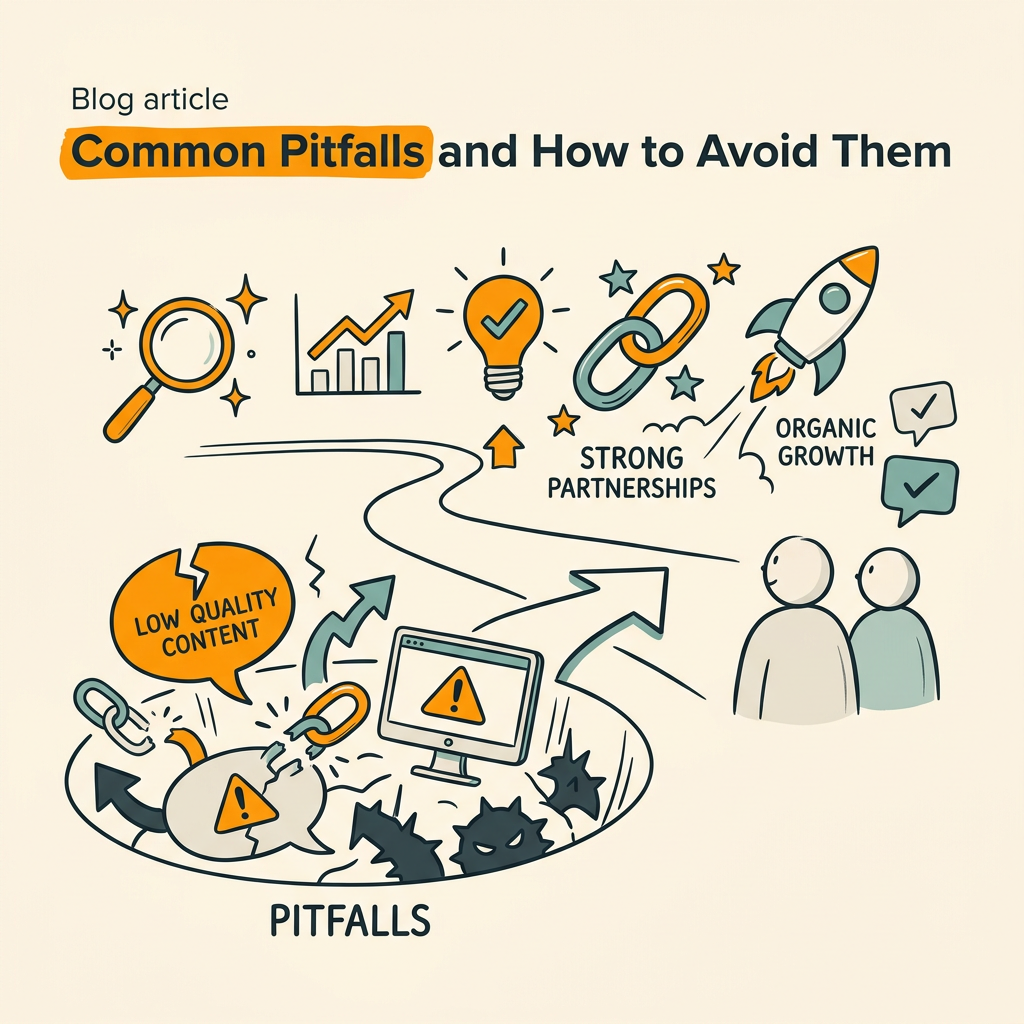
Content partnerships are high-leverage but also high-risk. Misaligned expectations, poor execution, or weak follow-through can waste months and damage relationships. The most common failures are predictable and avoidable with upfront planning.
Misaligned Partner Expectations and Broken Commitments
The biggest partnership killer is vague agreements. You think you're building a comprehensive research report; the partner thinks it's a quick blog post. You expect promotion; they go silent after publishing. These disconnects are painful because you've invested weeks of effort and now have to choose between accepting the weak outcome or renegotiating mid-project.
Prevent this by documenting everything upfront: the content scope, deadline, promotion commitments, link placement (anchor text, context), and what happens if someone falls behind. Informal emails work fine, but they force both parties to agree explicitly on paper (even digital paper) before work begins.
Pursuing Partners With Low Relevance or Authority
A backlink from an irrelevant site is almost worthless—it doesn't transfer meaningful authority and can even harm your profile if it looks like you're gaming connections. Some founders chase partnerships with anyone with a website because "any link is better than none." This is false. A backlink from a topically relevant domain with real authority is worth 10-100x more than a random backlink from an unrelated site.
Be selective. Pursue only partners that pass the "would I trust a recommendation from this source?" test. If you sell SaaS and approach a gambling site, the link earns minimal authority and screams low-quality outreach to search engines.
Under-Investing in Post-Publication Promotion
Many teams view publishing as the finish line. Once the partnership content goes live, they move on to the next project. This leaves massive link-earning potential on the table. Structured follow-up generates 40% more backlinks than passive publication, yet most partnerships get zero active promotion beyond the initial email blast.
Commit to 30 days of active promotion per partnership: pitch journalists, reach out to relevant communities, create social content, and repurpose insights in follow-up articles. This effort multiplies your backlink velocity and ensures the asset reaches its full link-earning potential.
Measuring Content Partnership ROI
Not all partnerships are created equal, and not all deserve equal investment. Measure partnership ROI across multiple dimensions: backlinks earned, referring traffic, brand mentions, and long-term organic ranking improvements in your target keywords.
Key Metrics to Track
Establish a baseline before each partnership launches. What's your current keyword ranking, monthly organic traffic, and backlink velocity? After 90 days post-launch, measure:
- Direct backlinks: How many unique referring domains linked to the partnership content?
- Referring traffic: How much qualified traffic flowed from partner publications to your site?
- Brand mentions: Did the partnership generate co-citations or brand mentions outside the backlinks?
- Keyword ranking improvements: Did the partnership content help rank your main content for target keywords?
- Cost per backlink: Divide your team time (salary-loaded) by total backlinks to compare partnership ROI to paid link-building services
Strong partnerships typically deliver 20-40 high-quality backlinks per project with 5-15% of those landing on high-authority (DA 50+) domains. If you're seeing fewer than 10 backlinks or mostly low-authority links after 90 days of a partnership, it's a signal that your partner or format selection needs adjustment.
Scaling Content Partnerships Into Your Repeatable Engine
Once you've proven that a content partnership format works—expert roundups, co-authored research, podcast swaps—systematize it. Document the process, create templates, and build it into your regular publishing rhythm. The difference between a one-off partnership and a repeatable system is that one generates 30 backlinks while the other generates 500+ over a year.
For teams with limited capacity, content automation tools handle the content creation burden, letting you scale partnerships without hiring. For example, if you decide expert roundups will be a quarterly pillar, Jottler can write the roundup post, handle internal linking, and publish automatically—you handle partner outreach and coordination. This division of labor means you can run 2-3 concurrent partnerships without your team drowning in content work.
Conclusion
Content partnerships are the highest-leverage backlink strategy available because they combine three powerful forces: mutual promotion, shared credibility, and compounding evergreen value. Unlike transactional link building or paid links, partnerships create content that both parties genuinely want to promote, which generates natural, high-quality backlinks that search engines trust. When executed strategically, content partnerships deliver 3-5x more backlinks per effort hour than solo link building, and the links are typically higher quality and more diverse across referring domains.
The opportunity is clear: teams that master content partnerships earn backlinks systematically while building genuine industry relationships that compound over years. Start by identifying 10 potential partners aligned with your audience, pitch one expert roundup or co-authored guide, and track the backlinks and traffic you earn. Once you prove the format works for your niche, systematize it—make it repeatable, bring in tools to handle the publishing friction, and scale from 1-2 partnerships per quarter to 3-5. This is how you go from struggling to earn backlinks to having partners actually compete to collaborate with you.
Start your SEO agent today and let automation handle the content publishing while you focus on building the partnerships that drive sustainable organic growth.
FAQs
How many backlinks should I expect from a content partnership?
Most well-executed content partnerships generate 15-40 backlinks within 90 days of launch. Expert roundups typically earn 5-12 links from contributors alone, plus 3-8 from external promotion. Co-authored research reports often exceed 25 backlinks in the first month due to higher perceived value. The range depends on partner size, promotion effort, and content format. Partnerships with structured follow-up campaigns earn 40% more links than passive launch-and-wait approaches, so active promotion during the first 30 days is critical to hitting the higher end of the range.
What makes a good content partnership candidate?
The ideal partner has three characteristics: audience overlap with your target customer, comparable or higher domain authority, and demonstrated commitment to content quality and promotion. They should solve a complementary problem without directly competing with your core offering. Check their recent content quality, social engagement on past pieces, and whether they've collaborated with other brands before—this signals they're reliable partners. Partners with active email lists of 5,000+ subscribers and regular social sharing are most likely to execute promotion commitments. Avoid partners with weak content histories or no visible promotion channels, as they'll generate fewer backlinks regardless of content quality.
What's the fastest way to start earning backlinks through partnerships?
Expert roundups are the fastest-executing partnership format, typically moving from pitch to publication in 4-6 weeks. Reach out to 8-10 partners asking for 150-word expert contributions on a single question, coordinate responses, compile the roundup, and publish. Each contributor links back, generating 7-10 backlinks immediately. Fast-moving partnerships typically earn their first backlinks within 2 weeks of publication, while more complex formats like original research take 60-90 days before link velocity accelerates. If you need backlinks quickly, expert roundups outperform co-authored research or joint studies.