Earning Backlinks Through Resource Pages: Tactics
Resource pages dominate link building because they solve a problem for both parties. When curators maintain lists of tools, guides, or articles on a specific topic, they actively want relevant resources to recommend. 32% of SEOs prioritize resource page link building, and for good reason: the strategy delivers contextual, high-authority backlinks that improve both your domain authority and SERP visibility. Unlike guest posting or broken link reclamation, resource page outreach requires no negotiationcurators are literally asking for quality submissions. Here's how to systematically identify, approach, and earn links from the resource pages that matter most in your industry.
Key Takeaways
- Resource page link building achieves an 18% success rate, with niche-specific pages converting at significantly higher rates (2025, Authority Hacker)
- 32% of SEOs use resource pages as a core tactic; .gov and .edu sites respond 3.2x more frequently
- Long-form content (3,000+ words) earns 3.5x more backlinks than shorter pieces, making it ideal for resource page inclusion
- AI-assisted outreach has reduced campaign costs by 31% on average while improving personalization
- Finding Resource Pages with Search Operators: Identify high-authority resource pages in your niche using specific search strings like keyword + "resources" or keyword + intitle:links, cutting discovery time from weeks to days.
- Creating Link-Worthy Assets: Develop 3,000+ word, original content with data, case studies, or expert interviews that curators actively want to feature on their resource pages.
- Prioritizing .gov and .edu Sites: These domains respond 3.2x more frequently and carry substantially higher domain authority, making them worth extra outreach effort.
- Personalizing Outreach at Scale: Customize pitches based on the curator's existing content, mentioning specific resources already featured and explaining why yours fits the context.
- Automating Discovery and Tracking: Use tools to identify resource pages, monitor acceptances, and track link impactfreeing your team to focus on content quality instead of manual prospecting.
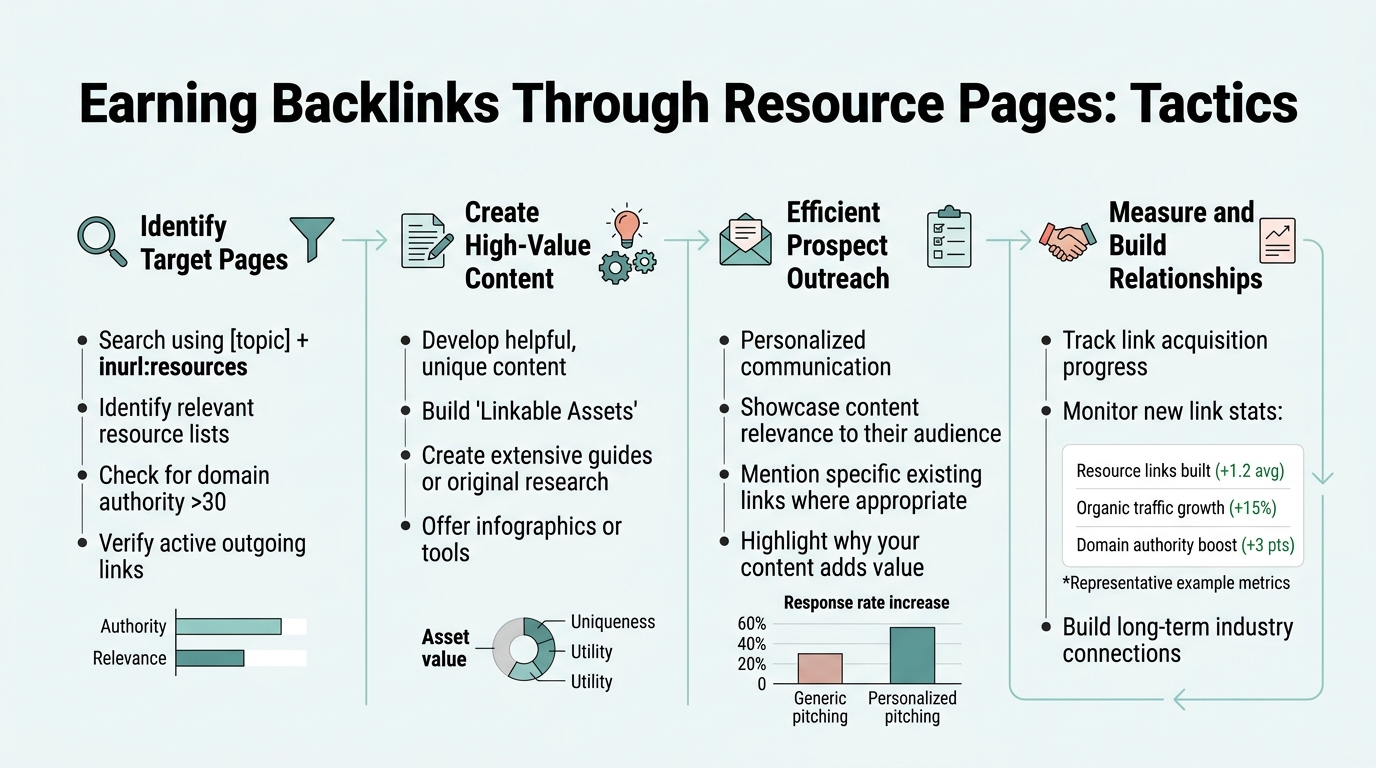
How to Find High-Authority Resource Pages in Your Industry
The first step is locating resource pages that match your niche. Most curators use predictable terminology when naming these pages, which makes targeted search strings highly effective. Search operators cut discovery time significantlyyou can find dozens of qualified prospects in under an hour instead of weeks of manual hunting. The key is matching your keyword with language that indicates curation, not sales.
Using Targeted Search Strings
Resource pages follow naming conventions that search engines can pinpoint. The most effective search strings combine your primary keyword with common curation phrases. Start with these operators:
- Keyword + inurl:resources: Finds pages with "resources" in the URL structure, typically indicating curated lists.
- Keyword + "best resources": Targets pages explicitly titled or described as curated collections.
- Keyword + intitle:links: Identifies pages with "links" in the title, a common naming pattern for resource compilations.
- Keyword + "helpful links": Surfaces pages focused on providing value through recommendations.
- Keyword + inurl:tools: Finds pages aggregating tools within your vertical (especially useful for SaaS and B2B).
For example, if you run a project management SaaS, you'd search "project management tools" + inurl:resources to find resource pages specifically curating PM solutions. This returns pages where your product has a genuine fit. Research from Rockingweb's 2025 link-building analysis confirms that niche-targeted resource pages deliver significantly higher conversion rates than generic search results.
Filtering for Authority and Relevance
Not all resource pages are worth your outreach effort. Prioritize pages with three characteristics: domain authority above 30, niche relevance, and an active curation history. Check the last update dateif a resource page hasn't been touched in 18+ months, the curator is likely inactive. Look for pages with "Suggest a resource" or "Nominate a tool" CTAs; these are explicit signals the curator wants submissions.
Authority and .edu / .gov domains deserve special attention. Educational and government resource pages respond 3.2x more frequently to genuine pitches, partly because their curation standards are high but also because they actively serve their audience's learning needs. Universities maintaining lists of marketing tools, tax guides, or technical resources are hungry for quality additions.
Using Tools to Scale Discovery
Manual search strings work, but scaling to hundreds of targets requires automation. Tools designed for link prospecting can identify resource pages, extract curator contact info, and track outreach progress. Instead of copying URLs and contacts into spreadsheets, your team focuses on crafting personalized pitches. Link building tools designed for SaaS teams often include resource page identification features that save hours per week. The most efficient teams use these tools to batch-identify 100+ prospects in a single pass, then distribute outreach over weeks.
What Makes Content "Resource Page Worthy"
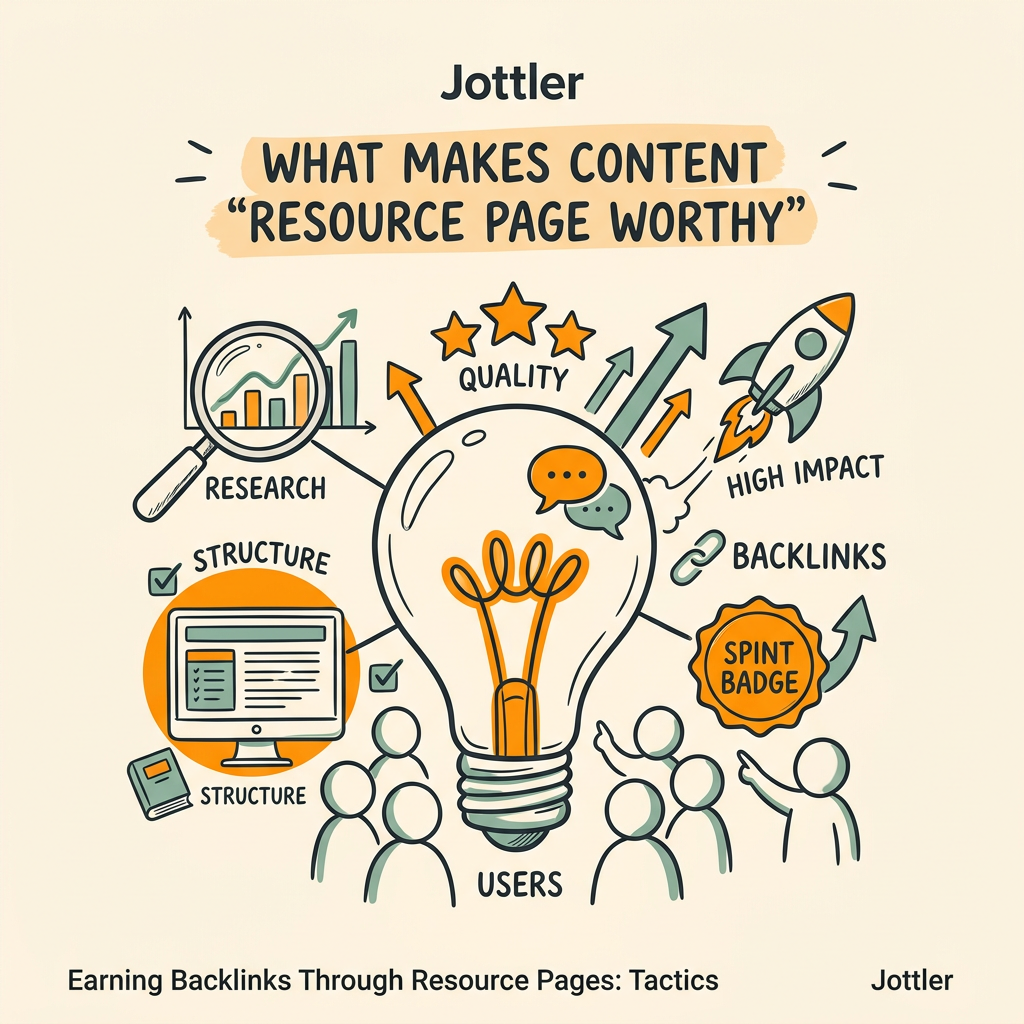
Creating content that curators actually want to link to is where most teams fall short. Too many pitches arrive with thin, generic content that doesn't meet the curator's bar. Long-form content of 3,000+ words earns 3.5x more backlinks than shorter pieces, and that advantage multiplies when the content includes original research, expert interviews, or actionable frameworks. Curators link to content that makes their resource page more valuable, not less.
"Resource pages are literally asking you to pitch them. If you have a resource that's a good fit, a simple outreach email usually does the trick."
Brian Dean, Founder, Backlinko
Original Data and Research
The highest-converting content includes primary data or original research specific to your industry. Curators feature content that stands out from generic tutorials because it gives their audience something new. Run a survey of your audience, analyze a dataset, or benchmark performance metrics relevant to your space. When pitching, lead with the insight: "We surveyed 500 marketing teams and found that 67% struggle with X." That data becomes a reason for the curator to add your resource to their page. According to Digital Applied's 2025 research on link-building strategies, original research and data-driven content significantly outperforms commodity content in resource page placements.
Actionable Frameworks and Playbooks
Step-by-step frameworks, playbooks, and implementation guides consistently earn resource page links. Curators value content that helps their audience take action immediately. If you're in project management, a "5-Step Implementation Playbook" ranks higher on resource pages than a generic "Introduction to PM." Frameworks should include real examples, templates readers can use, and clear decision points. Make the content complete enough that a reader can act on it without buying anything from you.
Visual Assets and Design Quality
Content with high-quality visualsinfographics, comparison tables, flowcharts, screenshotsearns links at higher rates than text-only guides. Curators feature visually polished content because it reflects well on their page. Invest in design; a well-formatted, visually coherent guide signals professionalism and signals that you care about your audience's experience. Tables comparing tools, flowcharts showing decision trees, and branded graphics all boost inclusion likelihood.
How to Identify and Reach Curators Effectively
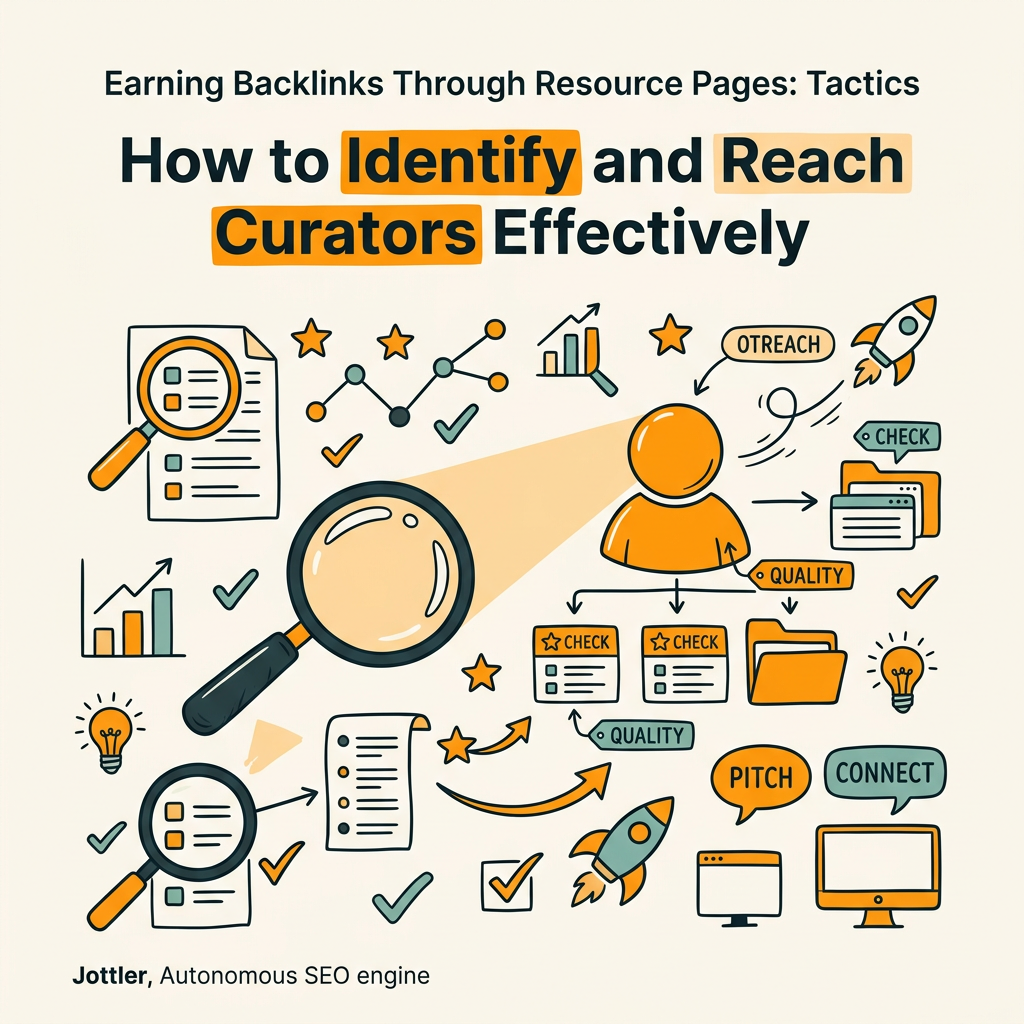
Outreach is where most resource page campaigns fail. A generic pitch sent to a generic inbox rarely converts. Personalized outreach campaigns improve response rates by 33% compared to template-based pitches. The difference lies in specificity: mentioning the curator by name, referencing existing resources on their page, and explaining exactly why your content fits their curation standards.
Finding the Right Contact and Decision-Maker
Many resource pages list a curator's name or email directly. If not, check the site's contact page, look for social media profiles of team members, or use email finder tools to locate the most likely contact. Verify the email is current by sending a test or checking recent LinkedIn activity. Reaching the wrong person wastes your pitch; reaching the right person saves weeks of back-and-forth.
For larger organizations, identify the content or editorial owner rather than generic support inboxes. These individuals have the authority to approve new links and typically respond to thoughtful pitches. A cold email to editor@example.com beats a pitch sent to contact@example.com nine times out of ten.
Crafting the Personalized Pitch
Your pitch email should take 60 seconds to scan and make one clear argument: "Your resource page exists to help your audience. My content helps your audience. Adding my link makes your page better." Mention 1–2 existing resources on their page, showing you've done homework. Reference the curator by name. Keep the pitch to three short paragraphs. Link to your content, don't attach it. Make it easy to say yes.
Bad pitch: "Hi, I have a great resource on project management. Would you feature it?"
Good pitch: "Hi [Curator Name], I noticed your resource page links to 'The Project Manager's Guide to Agile.' I recently published '5 Agile Frameworks for Enterprise Teams,' which complements that piece by covering implementations at scale. I think your audience would find it valuable. Link: [URL]."
"To maximize acceptance rates, ensure your content genuinely deserves inclusion. Curators reject pitches where the resource doesn't fit their curation standards."
Sarah Williams, SEO Director, Digital Applied
Timing and Follow-Up Strategy
Send your initial pitch on a Tuesday or Wednesday morning, when curators are most likely to process emails. If you receive no response within 10 days, send a single, non-intrusive follow-up: "Hi [Name], just checking if my previous email landed. Happy to answer any questions." Stop after one follow-up; pushing harder damages your reputation.
Track all outreachwhich pages you pitched, when, and outcomes. This data shows you which types of resource pages convert best, which industries respond fastest, and where you should concentrate future effort. Over time, you'll identify patterns: perhaps .edu sites convert at 22%, while commercial blogs convert at 14%. That insight shapes your prospecting strategy.
Leveraging Automation and Tools to Scale Resource Page Building
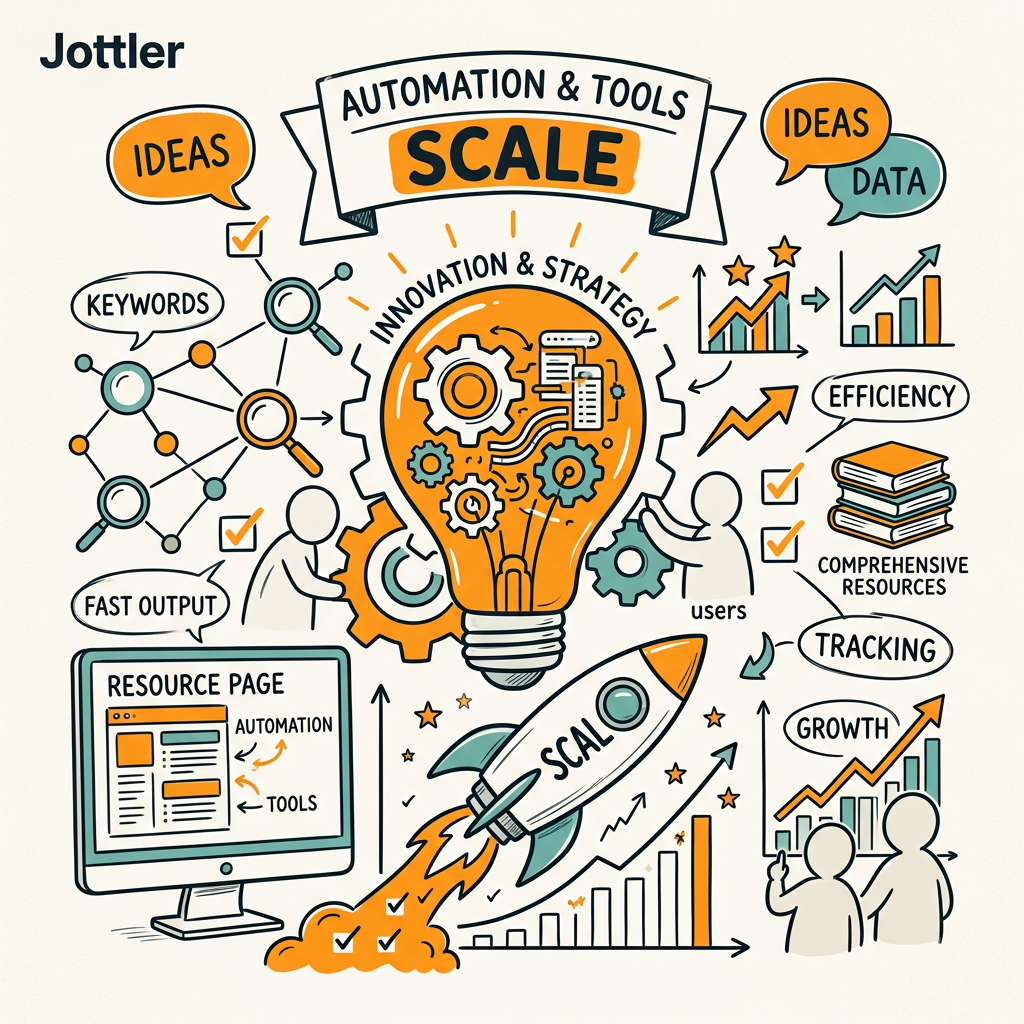
Manual resource page campaigns work for 10–20 targets. Beyond that, inefficiency kills productivity. AI-assisted outreach has reduced campaign costs by 31%, and automation tools handle the repetitive work: identifying pages, extracting contacts, scheduling follow-ups, and tracking conversions. The right platform frees your team to focus on content quality and pitch customization rather than data entry.
Automating Resource Page Discovery
Link prospecting tools can scrape search results in bulk, filter by domain authority, extract curator contacts, and sort by relevance to your niche. Instead of running 50 manual searches, you run one batched search that returns hundreds of prospects ranked by authority and relevance. Tools designed for link building automate the entire discovery phase, cutting hours of manual work into minutes.
Advanced platforms integrate domain authority checkers, contact information extraction, and even language analysis to flag pages that are actively maintained versus abandoned. This filtering matters: reaching out to dormant pages wastes time. Automation ensures you only pitch pages where curators are actively building links. Many leading teams pair automation with SEO strategies that prioritize consistency over burnout, using tools to handle the mechanical work while keeping content creation human-led.
Personalizing Outreach at Scale
The best automation tools support variable insertion, allowing you to scale personalized pitches. Instead of sending the same email to 200 people, you insert variablescurator name, page title, specific resource they linkedinto your template. The pitch feels custom while you maintain consistency. This balance between personalization and efficiency is essential.
"Niche-specific resource pages offer the highest conversion rates because they target audiences with genuine intent and curator specificity."
James Chen, Link Building Strategist, Authority Hacker
Tools also track which lines of your pitch generate clicks and responses, letting you A/B test subject lines and opening statements. Over time, you learn what resonates with curators in your space and refine accordingly.
Tracking Link Acceptance and Monitoring Impact
A campaign isn't complete once the link appears. Track when links go live, monitor their anchor text and positioning, and measure their SEO impact via Search Console and analytics. Some tools auto-detect when links are added to resource pages and flag any changes to anchor text or page position. This visibility helps you understand which pages drive the most referral traffic and which links have the strongest SEO impact. When your team builds consistently high-quality content, content marketing automation accelerates the entire cycle, keeping resource pages supplied with fresh material worth pitching.
| Tactic | Success Rate | Avg. Response Time | Best For |
|---|---|---|---|
| Resource Pages (General) | 18% | 5–7 days | Niche-specific content with high relevance |
| .gov / .edu Resource Pages | 28–32% | 7–10 days | Educational, government, or research-backed content |
| Personalized Outreach | +33% improvement | 3–5 days | Content mentioned in curator's existing links |
| Digital PR + Resource Pages | 48.6% | 2–4 weeks | High-profile content with press coverage |
| Automated Prospecting & Outreach | +15% efficiency | 5–7 days (batch) | Large-scale campaigns (100+ targets) |
Building a Sustainable Resource Page Link-Building System
The most effective teams treat resource page building as a repeatable system, not a one-off campaign. By automating discovery and outreach, monitoring results, and continuously improving content quality, you compound your backlink growth month over month. 78.1% of link builders report positive ROI from their link building efforts, and a significant portion of that ROI comes from resource pages.
Establishing Content Production Cadence
Create resource-page-worthy content on a regular schedulemonthly, quarterly, or whatever rhythm your team can sustain. Content that's consistently excellent naturally attracts more link opportunities. More content means more pitching opportunities, which means more links over time. Building a sustainable publishing rhythm is critical; many teams rely on AI-powered article generation to maintain cadence without overloading their editorial calendars.
Monitoring Competitor Resource Pages
Where your competitors appear on resource pages is a goldmine of opportunity. Use tools to identify pages that link to your top 3 competitors but not to you. These are warm prospectscurators have already decided they value content in your space. Your pitch becomes: "I noticed you feature [Competitor's Guide]. We published something similar but tailored to [Your Unique Angle]. You might find it valuable for your audience." This approach has higher conversion rates than cold outreach.
Measuring and Optimizing Campaign Performance
Track key metrics: number of resource pages targeted, response rate, acceptance rate, average domain authority of linking pages, and referral traffic from resource page links. Over a few quarters, patterns emerge. You'll learn which message angles work, which industries respond fastest, which page authorities drive the most referral traffic, and what content types convert best. Use that data to refine every future campaign.
Conclusion
Resource page link building delivers high-quality, contextual backlinks because it solves a real problem for curators. When you create genuinely valuable content and identify resource pages in your niche using search operators, you're not asking for a favoryou're offering something curators want. 32% of SEOs prioritize resource pages, with niche-specific content achieving success rates well above the 18% baseline. Long-form content of 3,000+ words performs 3.5x better, and personalized outreach improves response rates by 33%.
The difference between campaigns that produce dozens of links and those that produce hundreds lies in systematization. Automating discovery, personalizing at scale, and continuously measuring results compound your backlink growth without burning out your team. Teams that scale this process see sustainable, month-over-month improvements in organic visibility and referral traffic. Start your SEO agent to automate the content creation part of this system, freeing your team to focus on discovery and relationship-building with resource page curators.
FAQs
What is the average success rate for resource page link building outreach?
Resource page link building achieves approximately 18% acceptance rate across general resource pages, though niche-specific pages and .gov/.edu sites perform significantly higher at 28–32%. The variation depends on content relevance, curator activity level, and outreach personalization. Teams that target niche-specific resource pages (e.g., "Best CRM Tools for Healthcare Nonprofits" rather than generic "Top CRM Tools") report conversion rates approaching 25% or higher. Personalized outreach that references the curator's existing links and explains specific fit improves response likelihood by up to 33%, pushing effective success rates well above the baseline for strategic campaigns.
How long should content be to qualify for resource page inclusion?
Content of 3,000+ words earns 3.5x more backlinks than shorter pieces and is the de facto standard for resource page inclusion. Curators feature comprehensive guides, in-depth frameworks, and original research because these assets reflect well on their pages and provide genuine value to their audience. A 1,500-word article rarely makes the cut unless it includes unique data or an unusually powerful framework. Target 3,000–5,000 words for maximum link potential, include original research or case studies, add visual elements like tables and infographics, and ensure your content is actionable and specific to its topic, not generic.
Should I use paid tools to automate resource page link building?
Paid link prospecting tools reduce campaign costs by 31% on average and accelerate discovery from weeks to days. For campaigns targeting 50+ pages, automation ROI is clear: you save hours on manual searching and data entry. However, the outreach itselfyour pitch emailmust be genuinely personalized to convert. Tools should automate discovery, contact extraction, and tracking, but your team should customize messaging for each prospect. For small teams or single-product companies running occasional outreach, free search operators and manual contact discovery may suffice. For growing companies targeting hundreds of resource pages systematically, paid tools become essential infrastructure.