Essential Link Building Tools for Growing SaaS Teams
Building quality backlinks is no longer optional for SaaS companies competing for visibility. Yet most growing teams lack the bandwidth to execute comprehensive link strategies alongside their core product work. 78.1% of SEO professionals report positive ROI from link-building efforts, but the tooling and workflow required to get there remains fragmented and time-consuming. Digital PR has emerged as the top-performing tactic, overtaking guest posting with 48.6% of professionals rating it #1, while 73.2% of SEO experts believe backlinks are a primary factor in whether a brand appears in AI Search Overviews. This convergence means the teams with the right tool stack—and the discipline to execute consistently—will dominate organic search in 2026. Here's how to build one.
Key Takeaways
- Digital PR is now the top-performing link-building tactic, rated #1 by 48.6% of SEO professionals (2026)
- 78.1% of SEO professionals report positive ROI, with quality and relevance far outweighing link volume
- Modern SaaS teams need a layered stack: research tools (Ahrefs/Semrush), prospecting (Hunter/BuzzStream), outreach automation (Pitchbox/Respona), and monitoring (Monitor Backlinks)
- Backlink research: Competitive gap analysis and opportunity identification with Ahrefs or Semrush to prioritize high-quality targets.
- Prospecting and outreach: Email discovery and campaign management through Hunter, BuzzStream, and Pitchbox to automate at scale.
- Link monitoring: Ongoing backlink tracking and performance validation with Monitor Backlinks and Google Search Console.
- Content-led link acquisition: Pairing tactical outreach with original research, comparisons, and data assets to earn editorial links naturally.
- Workflow integration: Connecting research, outreach, and reporting into a seamless pipeline reduces friction and compound results faster.
Why SaaS Teams Struggle with Link Building
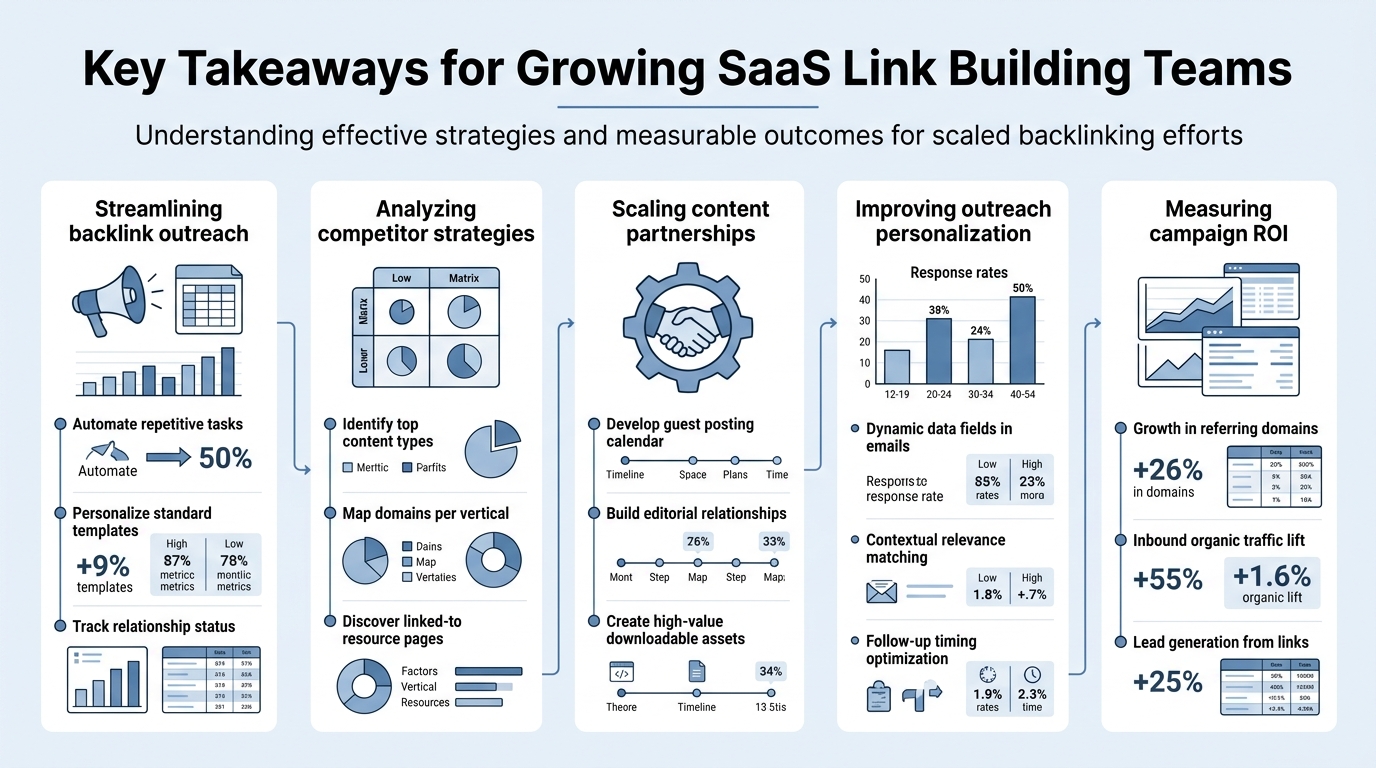
Link building requires a combination of strategy, research, and relationship management that most growing SaaS teams simply don't have bandwidth for. In-house teams allocate 36.03% of their SEO budget to link building, but without the right operational system, that investment yields inconsistent results. The problem is structural: link acquisition is inherently manual at its core. You need to research relevant websites, identify decision-makers, craft personalized pitches, follow up, validate the link, and measure impact. Each of these steps demands attention and judgment.
"The gap between starting a link-building campaign and maintaining one over 6+ months is where most SaaS teams fall short. Even with the best tools, consistency requires process discipline."
What makes this worse is the fragmentation of the tooling landscape. You need one tool for backlink analysis, another for email discovery, a third for outreach management, and a fourth for tracking results. Stitching these together requires custom workflows, manual data entry, and constant switching between platforms. For busy founders and lean marketing teams, this overhead becomes the real cost—not the tool subscriptions, but the operational friction that slows execution.
The gap between starting a link-building campaign and maintaining one over 6+ months is where most SaaS teams fall short. Even with the best tools, consistency requires process discipline. That's why many growing teams either hire agencies, which is expensive, or rely on internal efforts that eventually stall when the team gets pulled toward product launches and customer conversations. According to recent link building statistics, the teams maintaining consistent execution see 3–4x better link outcomes than those with sporadic efforts.
How to Choose the Right Link Building Tools for Your Stage
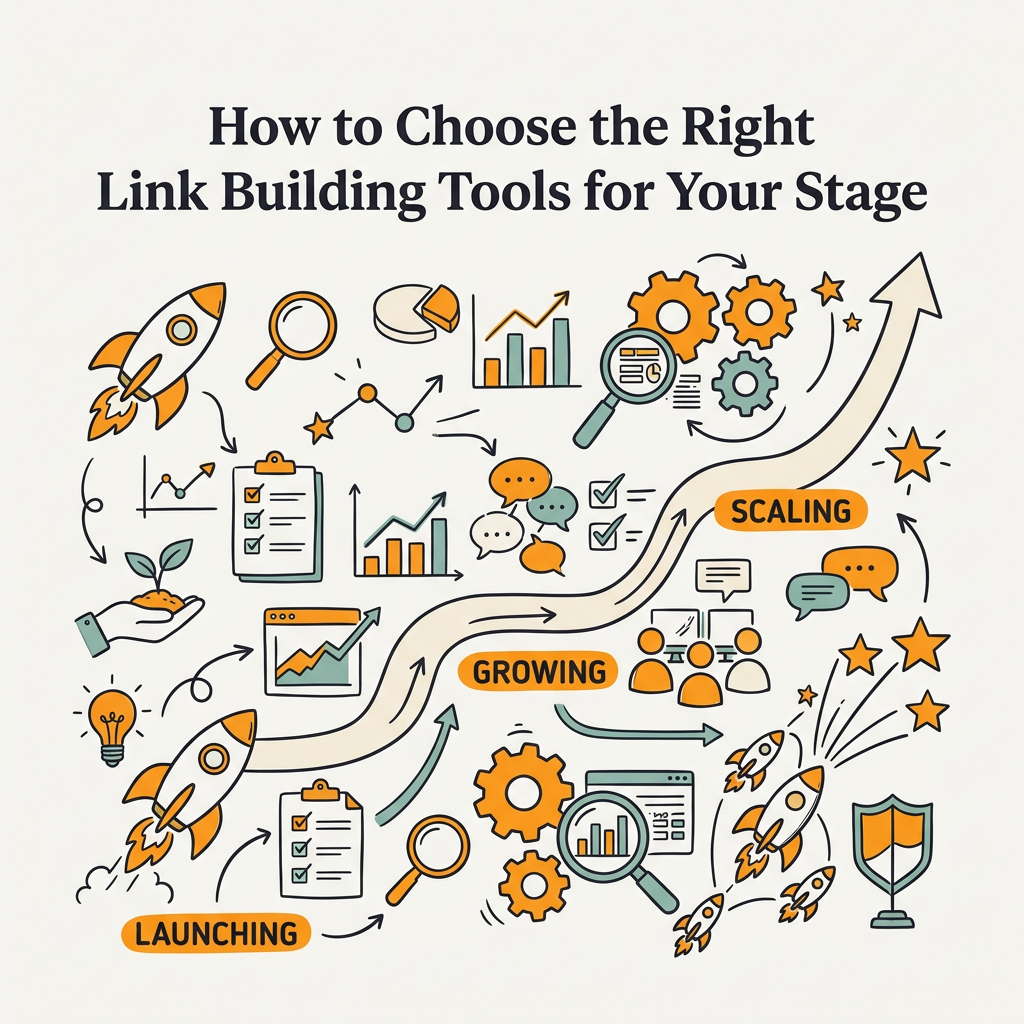
Not every SaaS team needs the full enterprise stack. Your tool selection should match your current stage, team size, and budget. A 3-person startup will prioritize differently than a 20-person marketing team at a Series B company. The key is building a foundation that compounds, then adding layers as your revenue and resources grow. As noted in SaaS link building strategy guides, the most effective approaches combine guest posting, broken link building, and digital PR—each supported by different tools in your stack.
Assess your current link profile and competitive position
Before you buy a tool, run a backlink audit. You need to know where you stand relative to your competitors and where the highest-leverage link opportunities sit. Competitor backlink analysis in tools like Ahrefs helps identify pages already attracting links in your category, revealing the editorial patterns and source sites your target audience trusts.
"One excellent prospect is worth 50 mediocre ones. Spend the time and tool budget getting this right first, then optimize outreach workflows second."
This exercise accomplishes two things. First, it shows you which link opportunities have the highest authority and topical relevance to your product. Second, it reveals whether your competitors are building links from industry directories, SaaS comparison sites, resource pages, or a mix of tactics. Once you see the pattern, you can replicate it with your own differentiated story.
You'll also spot lost links—backlinks you previously had that are now gone. These are often quick wins; a simple email can sometimes reclaim the link. This is why a backlink analysis tool is your research layer's foundation.
Define your link-building timeline and capacity
Be honest about your team's capacity. If you have one person handling link building part-time, you need tools that automate as much as possible—email discovery, outreach drafts, follow-up sequences. If you have a dedicated link-building hire, you can afford more manual prospecting in exchange for higher-quality targets. The choice between tools like BuzzStream (outreach CRM) and Pitchbox (high-volume automation) hinges on this reality.
Timeline also matters. If you're running a 3-month campaign to coincide with a major feature launch or funding announcement, you'll prioritize speed and volume. If you're building links as part of your evergreen SEO strategy over the next 18 months, you can afford to be more selective and relationship-focused. Digital PR and original research take longer but compound harder over time.
Prioritize your initial focus: research versus outreach
Most growing SaaS teams underinvest in the research layer and overinvest in outreach tools. This is backwards. The quality of your outreach list determines the quality of your results. One excellent prospect is worth 50 mediocre ones. Spend the time and tool budget getting this right first, then optimize outreach workflows second. This is especially true for SaaS link building where topical relevance matters more than volume.
If your team is very small, start with a backlink analysis tool (Ahrefs or Semrush) and a free email discovery tool (Hunter's free tier gives you 25 searches per month). Do manual outreach from a simple spreadsheet. As you prove the concept and win links, then graduate to a dedicated outreach CRM.
The Essential Link Building Tool Stack for SaaS Teams
A practical SaaS link-building stack consists of four layers: research, prospecting, outreach, and monitoring. You don't need every tool in every category, but you need at least one strong solution in each layer to avoid bottlenecks. The top teams treat this as an integrated workflow, not four separate initiatives.
Layer 1 — Backlink Research: Ahrefs, Semrush, or Majestic
Your research layer is the foundation. Without it, your outreach becomes random. The best tools in this category are Ahrefs, Semrush, and Majestic. Ahrefs dominates for link intelligence; it has the most comprehensive backlink index and the strongest competitive analysis features. Semrush is better if you want all of SEO—keyword research, technical audits, and link building—in one platform. Majestic is for teams that want link-centric metrics like Trust Flow and Citation Flow.
For growing SaaS teams, Ahrefs typically wins because link-building strategy is often separate from broader SEO work. The Backlink Checker shows you every backlink pointing to competitors, allows you to filter by domain authority, and highlights "link intersects"—pages linking to multiple competitors but not to you. This is your highest-priority outreach list.
Content Explorer is another high-value feature; it surfaces content in your niche that's generating backlinks, which tells you what topics are attracting editorial attention. This informs your content-led link-building strategy and helps you spot opportunities for guest posts or partnerships. Many teams pair this with automated content creation systems to ensure they have a stream of linkable assets to support their outreach.
Layer 2 — Email Discovery: Hunter or Apollo
You've identified the target websites. Now you need to reach the right person. This is where email discovery tools become essential. Hunter is the most focused solution; it finds professional email addresses for any domain and verifies deliverability. Apollo is broader, covering sales databases alongside email discovery, which is useful if your link-building strategy includes partnership or integration outreach beyond pure SEO.
Hunter's free tier gives you 25 searches per month. For most growing teams, that's enough to start testing the concept. The paid tiers ($49/month and up) offer unlimited searches and API access for deeper integration. Bulk email verification—checking which addresses are actually active—is critical for outreach efficiency; a high bounce rate tanked your sender reputation with email providers and makes your follow-ups land in spam.
This layer is often overlooked, but it's the difference between having a target list and having a deliverable one. A misstep here wastes all the research effort upstream.
Layer 3 — Outreach Automation: BuzzStream, Pitchbox, or Respona
Once you have your targets and contact information, you need to scale outreach without losing personalization. This is where outreach CRMs and automation platforms come in. The market has three primary tiers:
- BuzzStream ($24–$99/month): Lightweight, founder-friendly, manages relationship tracking and follow-up workflows. Best if you're doing 10–50 outreach emails per week and want simple CRM functionality.
- Pitchbox ($165–$599/month): Built for agencies and enterprise teams running 100+ placements per month. Full campaign automation, advanced filters, and team collaboration. Best if you have dedicated link-building headcount.
- Respona ($99–$499/month): Blends prospecting and outreach with AI-assisted personalization. Strong for content-driven link building and resource page placements. Best if you're balancing multiple content promotion channels.
The choice depends on your team size and campaign volume. Most growing SaaS teams start with BuzzStream, then migrate to Pitchbox or Respona as they scale headcount and campaign complexity. The mistake is to buy Pitchbox too early and have it sit unused because you don't have enough volume to justify the cost.
Layer 4 — Link Monitoring and Reporting: Monitor Backlinks, Linkody, or Google Search Console
You've built the links. Now you need to know they're still there and measure their impact. Monitor Backlinks and Linkody alert you when new backlinks are earned and when old ones disappear. This is crucial for competitive intelligence—if a link disappears, you can investigate why and reclaim it. If a competitor is gaining ground, you can see which new sites are linking to them and approach those same publishers.
Google Search Console is underrated for link impact measurement. It's free and directly shows you organic traffic gains to the pages you supported with links. If you're linking to a product page and you see organic traffic double three months later, that's proof of ROI. Most teams don't track this connection, so they under-invest in link building the following quarter.
Pick one monitoring tool (Linkody is $11.20/month and efficient) and layer in Google Search Console free. Together, they give you lost link alerts and traffic validation—the two KPIs that matter most.
Best Link Building Tools Compared: The SaaS-Optimized Breakdown
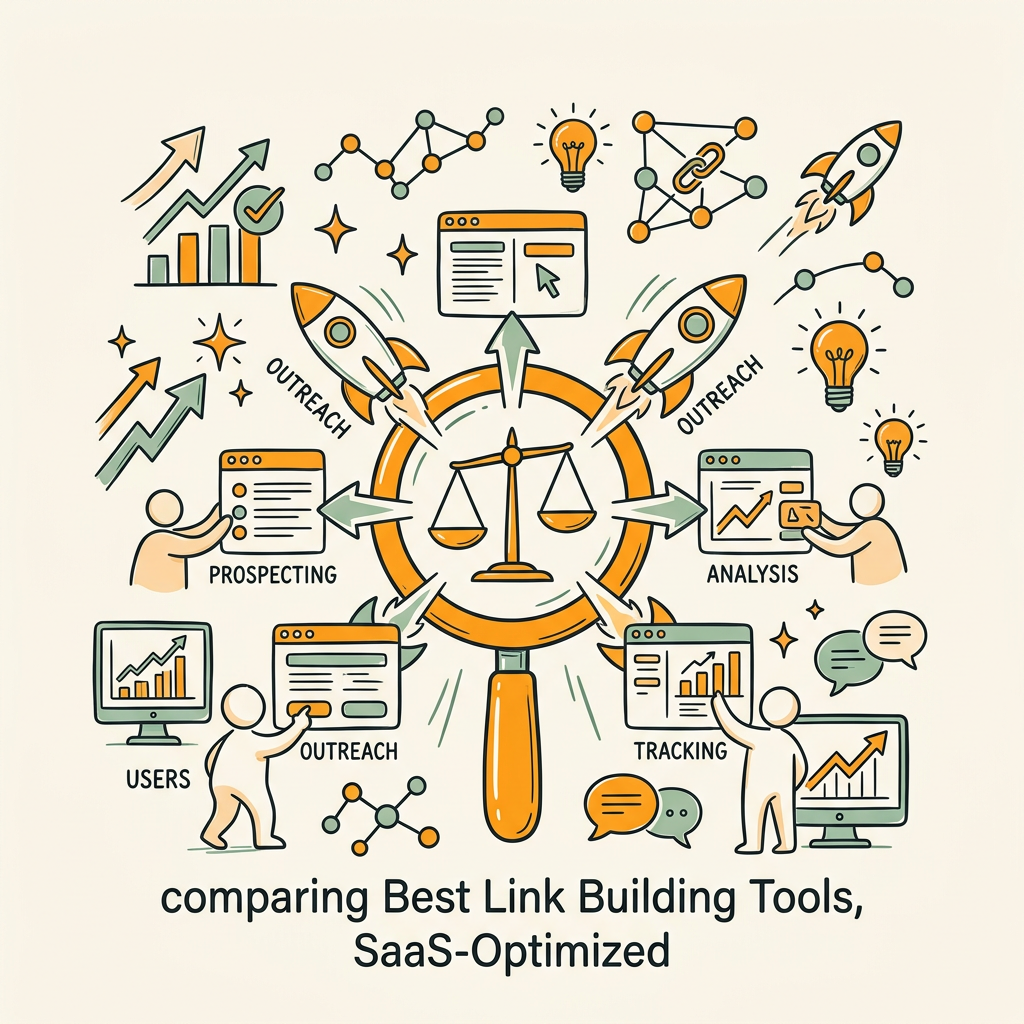
Below is a side-by-side comparison of the tools most commonly used by SaaS teams, organized by use case:
| Tool | Best For | Starting Price | Key Strength | Best SaaS Fit |
|---|---|---|---|---|
| Ahrefs | Backlink research and competitive analysis | $129/month | Largest backlink index; link intersect feature | Strong — research-heavy teams |
| Semrush | All-in-one SEO + outreach workflows | $139.95–$165.17/month | Unified platform; integrated Link Building Tool | Strong — teams wanting one platform |
| Hunter.io | Email discovery and verification | $49/month (unlimited) | Accuracy and bulk verification | Essential — foundational layer |
| BuzzStream | Outreach CRM and relationship tracking | $24–$99/month | Simple, founder-friendly, relationship tracking | Strong — early-stage teams (5–50 links/month) |
| Pitchbox | High-volume outreach automation | $165–$599/month | Campaign automation, agency-grade collaboration | Strong — established teams (100+ links/month) |
| Respona | Content-led link acquisition with AI assistance | $99–$499/month | Personalization and multi-channel integration | Very Strong — SaaS-native approach |
| Monitor Backlinks | Link monitoring and lost link alerts | $27–$107/month | Real-time notifications; competitor tracking | Essential — monitoring layer |
| Majestic | Link analysis with Trust Flow metrics | $49.99/month | Deep historical backlink data; proprietary metrics | Moderate — teams needing alternative to Ahrefs |
Building a Sustainable Link Acquisition Workflow
Having the tools is one thing. Using them consistently is another. Most SaaS teams have tools sitting idle because they don't have a process attached to them. The best link-building programs at growing companies treat link acquisition as a content extension, not a standalone project. Content automation and link building workflows compound when integrated into your publishing cadence.
Integrate link building with your content calendar
The highest-ROI link-building tactic is to pair original content with proactive outreach. When you publish a piece of original research, a comparison guide, or an in-depth case study, you have a legitimate reason to reach out to every relevant blogger, journalist, and resource page curator. The content is the hook; the outreach is the amplification.
Too many SaaS teams separate these workflows. Content publishes on the blog. Link building becomes a separate project that reaches out about old content or unrelated opportunities. Instead, treat every significant piece of content as a link-building asset. Spend the first three weeks after publication systematically reaching out to your target list using one of the outreach tools above.
This approach produces higher response rates because your pitch is concrete—"I built this and thought you'd find it valuable"—rather than speculative. It also ensures your best content gets amplified, which compounds rankings faster.
Segment your prospect list by link type and response probability
Not all link opportunities are equal. Your prospect list should be segmented by link type and likelihood. You might have tiers like:
- Tier 1 (High confidence): Pages already linking to competitors; industry resource pages; SaaS directories you know accept submissions. Response rate: 15–25%.
- Tier 2 (Medium confidence): Topically related blogs with moderate authority; podcasts that interview founders; analyst platforms. Response rate: 5–15%.
- Tier 3 (Experimental): Journalists covering your category; digital PR opportunities; industry event sponsorships that come with media mentions. Response rate: varies, but time investment is justified by link quality.
This segmentation helps you allocate effort efficiently. You want to exhaust Tier 1 opportunities quickly because they have higher conversion rates. Then move to Tier 2 with more creative pitches. Tier 3 is your long-term play and pairs well with PR and thought leadership efforts.
Automate what's repetitive; personalize what's important
Outreach tools let you combine templates with personalization. This is the sweet spot between scale and effectiveness. Your email should always reference something specific from the target website—a recent article, a specific tool they mentioned, an integration they support. But the overall structure, follow-up cadence, and tracking can be automated.
Most outreach platforms let you build email sequences. A typical sequence is: initial outreach → 3-day follow-up → 7-day follow-up → 14-day final attempt. The template system should let you customize each message while keeping the tracking consistent. Done right, this reduces manual work from 60% to 20%.
Accelerating Link Building with a Unified Content and Link Strategy

The teams seeing the fastest link growth aren't the ones with the biggest tool budgets. They're the teams with the most consistent content output paired with systematic outreach. This is why integrating link-building strategy with your content production process is essential. When you're publishing 3+ long-form articles per week at high quality, your link-building ROI compounds dramatically—you have more assets to promote, more reasons to reach out, and more ammunition for PR pitches.
"The teams winning at organic search in 2026 treat content and link building as one unified system: produce valuable content consistently, and use outreach to amplify it. The content creates the credibility; the links multiply the reach."
This is also where many SaaS teams fall short. They see link building as a standalone project separate from content marketing. But the teams winning at organic search in 2026 treat them as one unified system: produce valuable content consistently, and use outreach to amplify it. The content creates the credibility; the links multiply the reach. When working together, content and link building become exponentially more powerful than either alone. Many high-growth SaaS teams use SEO automation platforms to maintain the content cadence that makes link building systematic and scalable.
Avoiding Common Link Building Mistakes
Even with the right tools, growing teams make predictable mistakes that slow their link-building progress. Awareness helps you skip the learning curve.
Prioritizing quantity over topical relevance
The most common mistake is building links from low-relevance sites just to hit a volume target. 93.8% of link builders prioritize quality and topical relevance over high-volume acquisition, yet most struggling teams do the opposite. They celebrate getting 50 links in a month without checking whether those links come from relevant sources in the SaaS, B2B, or finance space.
A single link from a respected SaaS review site or industry analyst platform is worth more than 20 links from random blogs. Segment your efforts accordingly. Spend your outreach energy on Tier 1 targets (high relevance, existing link patterns to competitors), then expand. Avoid bulk guest post services and link farms, no matter how cheap they are. Google's SpamBrain algorithm is now flagging these patterns, and these links are wasted money at best, ranking penalties at worst.
Not tracking link impact on traffic and rankings
Most teams track links earned but never connect those links to organic traffic or ranking improvements. This is why link-building budgets get cut after 6 months—there's no perceived ROI. Use Google Search Console to validate whether the pages you're linking to are gaining traffic 4–8 weeks after the link goes live.
You should be able to say: "We earned 15 links to this product page; organic traffic to that page grew 40% over the following quarter." Without this connection, executives see link building as a sunk cost rather than an investment.
Building links without a clear content strategy
Links are most valuable when they support your target keywords and pages. Growing SaaS teams often build links reactively—whenever someone says yes to an outreach email, they get a link, wherever the publisher wants it. Instead, be intentional. Link to your highest-value pages: product pages, category pages, and conversion-focused content. Make sure the anchor text and surrounding context match your target keywords.
Map your link-building efforts to your keyword strategy. Your top 20 target keywords should each have a dedicated link-building mini-campaign. This ensures your effort compounds toward ranking these pages higher.
Building Your Custom Tool Stack on a Budget
You don't need to spend $500/month on link-building tools to see results. Here's a realistic budget breakdown for growing SaaS teams at different stages:
- Seed/early stage ($0–$200/month): Hunter free tier + Ahrefs free trial (test research) + BuzzStream free ($24/month) + Google Search Console (free) + manual outreach from a spreadsheet.
- Series A ($200–$500/month): Hunter paid ($49/month) + Ahrefs ($129/month) + BuzzStream or Respona ($99/month) + Monitor Backlinks ($27/month) + 1 part-time link builder.
- Series B+ ($500–$1,500/month): Hunter ($49/month) + Ahrefs ($129/month) + Respona or Pitchbox ($300+/month) + Monitor Backlinks ($107/month) + dedicated link-building hire + content production automation tools.
The trend is clear: as you scale, you graduate from free and entry-level tools to premium platforms and dedicated headcount. But the core research-prospecting-outreach-monitoring stack remains constant. You're just increasing capacity and automation to handle more campaigns in parallel.
Conclusion
The link-building landscape has shifted significantly. Digital PR, topical relevance, and editorial quality now dominate outcomes far more than raw link volume. Teams using the right tool stack paired with consistent content production are seeing 78.1% positive ROI from link-building efforts, and those links are increasingly cited in AI Search Overviews, expanding their visibility beyond traditional Google results.
The stack we've outlined—research (Ahrefs/Semrush) + prospecting (Hunter) + outreach (BuzzStream/Respona) + monitoring (Monitor Backlinks)—is battle-tested and affordable. What makes this stack work for growing SaaS teams is that it compounds. Each layer amplifies the one before it. Better research leads to better targets. Better targets lead to higher response rates. Higher response rates justify more outreach effort. More links drive organic traffic growth, which validates the strategy and justifies further investment.
But the tool is only 30% of the equation. The other 70% is process discipline and consistent content production. The teams dominating organic search in 2026 are treating link building as a content amplification system, not a standalone project. They're publishing valuable content continuously and reaching out systematically to ensure it gets discovered and cited. When you pair that process with the right tooling, link-building results accelerate dramatically.
The next step? Pick one research tool and one outreach tool from the breakdown above that fits your current stage and budget. Spend two weeks mapping your competitor backlinks and identifying your top 50 target websites. Then run a small outreach pilot—aim for 5–10 links in your first month. Measure the impact on organic traffic to your target pages. Use that data to justify the next phase of expansion. This iterative approach is how growing SaaS teams build sustainable, compound link-building programs. Ready to amplify your efforts with consistent, linkable content? Start your SEO agent and begin building the content foundation that makes your link-building 3x more effective.
FAQs
What is the best link building tool for small SaaS teams?
For early-stage teams, the best approach is to layer low-cost tools: start with Ahrefs free trial or Semrush free tier for research, Hunter free tier for email discovery (25 searches/month), and BuzzStream ($24/month) for outreach management. This stack costs under $50/month and handles 5–20 outreach campaigns weekly. Once you prove consistent results, graduate to paid tiers. The key is not to over-invest in tools before you've validated the process works for your niche.
How long does it take to see results from link building?
Quality links typically influence rankings within 4–8 weeks of publication. However, expect 2–3 weeks for links to be indexed by Google in the first place. The real ROI comes from sustained effort over 6+ months, not from a single campaign. Teams that build 10–15 links per month consistently see cumulative ranking improvements over quarters. Patience and consistency matter more than quick wins in modern link building.
Should we hire a link building agency or build in-house?
The answer depends on your budget and internal capacity. Agencies excel at scale and relationship networks but cost $3,000–$10,000+ per month. In-house teams cost less initially but require 2–4 weeks of onboarding to your product and niche. The hybrid approach—hiring one part-time link builder and equipping them with the tool stack above—often delivers the best ROI for growing SaaS companies. They understand your product deeply, while the tools give them leverage to work at scale.