How SaaS Companies Get High-Quality Backlinks Without Agencies
Most SaaS founders think acquiring high-quality backlinks requires hiring a $3,000–$5,000/month link building agency. That's not true. The reality? 30–35 high-quality referring domains generate approximately 10,500 monthly organic visits, and you can earn those links without paying intermediaries. The gap between DIY and agency-led link building has narrowed dramatically as AI tools and data-driven research methods have become accessible to small teams. The fix: systematizing your link acquisition around original research, strategic content, and targeted outreach. Here's how to build a backlink profile that compounds organic traffic without the agency markup.
Key Takeaways
- One editorial backlink from a DR 70+ industry source is worth 100+ links from low-authority sites (SaasGains, 2026)
- AI-assisted original research is the highest-ROI link building strategy for SaaS in 2026, earning editorial backlinks without large outreach teams
- New SaaS sites can compete by targeting micro-niche queries and building authority within specific verticals before scaling broader campaigns
Five High-Impact Link Building Tactics for SaaS
- Original Research & Data Studies: Create monthly micro-studies (200–300 respondents) that journalists cite, naturally earning backlinks from industry publications.
- Newsjacking & Trend Piggybacking: Position your team as expert commentators on breaking industry stories to secure fast, high-authority media placements.
- Competitor Backlink Analysis: Reverse-engineer where competitors earn links, then pitch similar publishers with your unique angle and better research.
- Broken Link Recovery: Find dead pages on high-authority sites that link to competitors, then pitch your fresh, updated content as a replacement.
- Interactive Linkable Assets: Build embeddable calculators, charts, or widgets that other sites want to feature, generating passive backlinks with "Powered by" attribution.
Why DIY Link Building Beats Agencies for SaaS in 2026
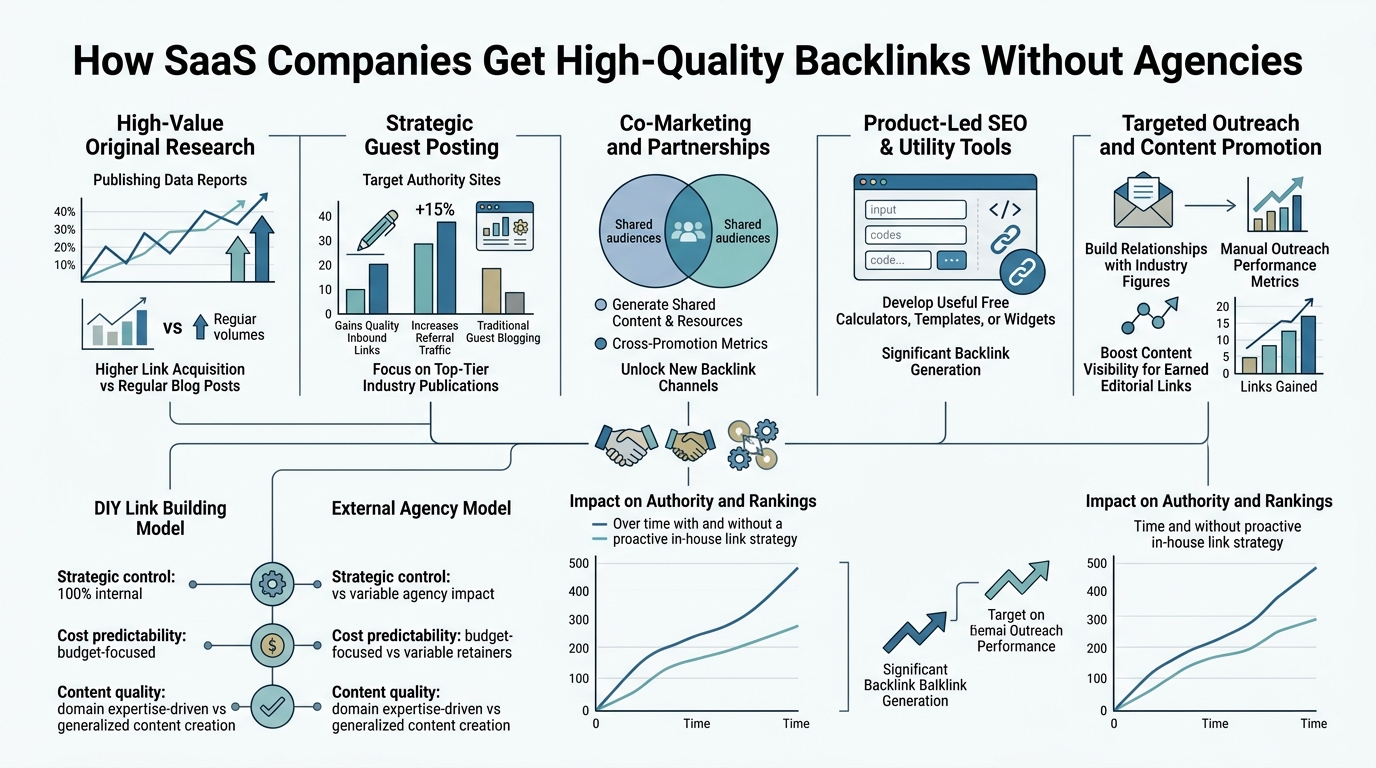
Link building agencies bundle services, take a cut, and optimize for volume over relevance. A new SaaS founder can deploy AI-assisted research and targeted outreach in weeks and see initial link velocity within 1–3 months (Bluetree Digital, 2026). You control messaging, timing, and niche alignment. Agencies delay cycles by 2–4 weeks just to get alignment on strategy. The cost difference is stark: a quality link via agency costs $150–$300+; your cost using DIY tools is near-zero software overhead plus time. For teams that understand their niche and can execute consistently, DIY link building compounds faster because decisions happen in hours, not meetings.
"Sites with focused, original research earn backlinks 3–5x faster than those relying on generic guest posts. Agencies often default to guest posting because it's scalable and predictable for their business model, but founders have an unfair advantage: deep understanding of their product and customer problems."
— Markertion, 2026
The data reinforces this. Sites with focused, original research earn backlinks 3–5x faster than those relying on generic guest posts (Markertion, 2026). Agencies often default to guest posting because it's scalable and predictable for their business model. You, as the founder, have an unfair advantage: you understand your product's unique selling angle and the problems your customers face. That insight, converted into original research or expert commentary, becomes your most valuable link asset. Agencies can't replicate that depth because they're juggling 20+ clients.
Build a Linkable Research Program from Scratch
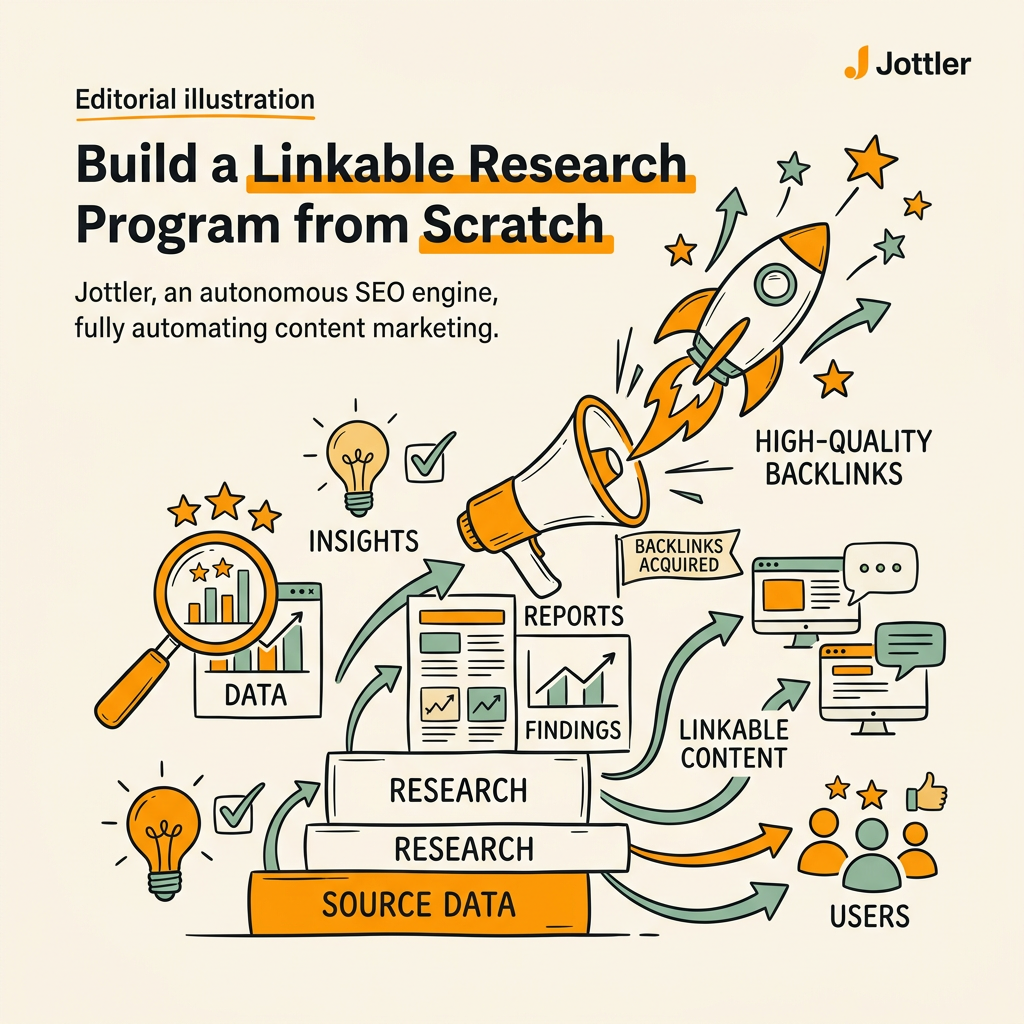
Original research is the single highest-ROI link building tactic available to SaaS companies. Rather than waiting for annual "State of" reports, modern SaaS teams now publish micro-studies monthly. A micro-study is 200–300 respondent research that takes 2–3 weeks to execute, analyze, and publish, versus 8–12 weeks for traditional annual reports (Reporter Outreach, 2026). The velocity matters more than the sample size because journalists need fresh, timely data. A monthly micro-study keeps your brand in the media queue every month instead of once a year.
Sourcing Data Without Building a Research Lab
You don't need to conduct expensive original surveys. Start by mining your own product data. If you operate a SaaS platform, you have anonymized usage patterns, feature adoption rates, and workflow data that 99% of your competitors aren't sharing. Aggregate this into trend reports: "SaaS Onboarding Times Have Dropped 35% Since 2024" or "AI Automation Adoption Rates by Industry." This data is proprietary, novel, and instantly citable.
Second, crowdsource commentary from your community. Monitor SaaS subreddits, Hacker News, and Discord communities for unmet pain points. Compile these into a "State of Frustration" report. Example: "We surveyed 250 SaaS operators and found 67% are still manually integrating third-party tools." Bundle the finding with quotes from community members (with permission) and suddenly you have primary research that feels authentic and linkable.
Finally, partner with adjacent brands. Reach out to 3–5 complementary SaaS companies (non-competitors) and propose joint research. You split the survey cost, double the audience reach, and earn co-branded research that gets promoted by both companies' networks, multiplying link opportunities. Seoprofy's SaaS link building guide documents this approach delivering 2–3x more backlinks than solo research.
Turning Data Into Embeddable Assets
Raw data is not linkable. Visualization is. Create interactive charts, calculators, or comparison tools that other sites want to embed. Add an embed code that includes "Powered by [Your SaaS]" branding. This passive link generation works because site owners value the functionality for their readers.
"A project management SaaS created a 'Project Timeline Calculator' showing how long various workflows take. Sites in the niche embedded it. This single tool generated 87 backlinks in Q1 because it solved a real problem for end users."
— PipeRocket, 2025
Example: A project management SaaS created a "Project Timeline Calculator" that showed teams how long various workflows take. Sites in the project management niche embedded it, each link carrying your brand attribution. This single tool generated 87 backlinks in the first quarter (PipeRocket, 2025) because it solved a real problem for end users on other sites.
Tools like Airtable, Figma, or even simple Google Sheets can host these assets. Pair them with an embed widget using services like Elfsight or custom iframe code. The ROI: dozens of links per asset over time, with zero ongoing campaign cost. The Link Building Journal notes that embeddable assets are among the most efficient methods for SaaS backlink acquisition because they align user value with link generation.
Master Competitor Backlink Analysis to Find Link Opportunities
Your competitors have already mapped the highest-value linking sites in your niche. Rather than starting cold outreach from scratch, reverse-engineer their backlink profile using Ahrefs, SEMrush, or similar tools. One guest post opportunity often leads to ongoing contributor relationships with 30–40% retention rates for SaaS teams that build genuine editor relationships (Tanotsolutions, 2026). This means every placement you secure becomes a repeatable entry point for future content.
The Competitor Backlink Discovery Process
Open Ahrefs and enter your top 3 competitors' domains. Filter the Backlinks report by Domain Rating (DR) 50+. Then apply "One page per domain" to avoid duplicate entries. Export the list and focus on publishers in your niche (SaaS blogs, industry publications, software review sites).
Next, identify guest posts. Look for URLs that contain "/guest-post/," "/contributor/," or "/author/" — these are likely syndicated pieces from external writers. Note which publishers accept guest contributions. These are your initial outreach targets.
Finally, look for "unlinked brand mentions." Use the "Highlight unlinked domains" filter to find sites mentioning your competitor but not linking. These sites already know about your product category — requesting a link is a warmer conversation than cold outreach.
Pitching Without Looking Like a Duplicate
Never pitch the same angle your competitor already placed. If they published "5 Features Every Team Needs," pitch "The Hidden Cost of Skipping These 3 Workflow Setups." Differentiate on depth, data, or angle.
Email structure: (1) One sentence explaining why this site's audience matters to you, (2) Your unique angle, (3) A 1-sentence benefit for readers, (4) A link to your draft. Keep it under 100 words. Anchor text should be descriptive, keyword-rich language — avoid generic "click here" anchors because keyword-specific anchors provide 15–20% stronger ranking relevance in niche categories (SaasGains, 2026).
Follow up once after 5–7 days if there's no response. Two follow-ups is the maximum before moving on. Your conversion rate should be 10–20% for targeted outreach; anything lower signals your angle isn't compelling or you're pitching the wrong publisher.
Position Your Team as Expert Commentators to Earn Media Links
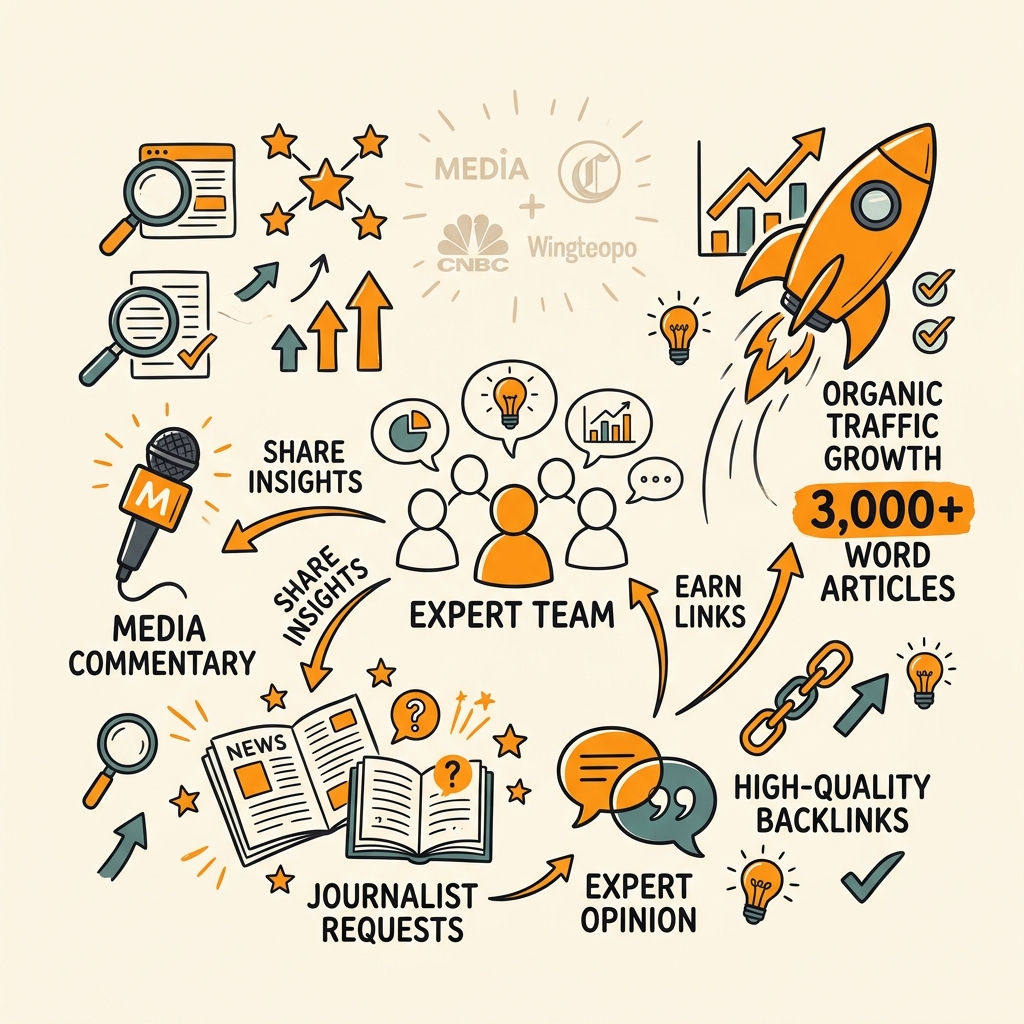
Journalists and tech reporters constantly seek expert voices on breaking stories. Platforms like HARO (Help A Reporter Out), Qwoted, and Prowly distribute journalist requests to thousands of sources daily. Responding to journalist requests positions your team as thought leaders and often results in immediate, high-authority media placements (SEOPROFY, 2026). The backlinks from publications like Forbes, TechCrunch, or VentureBeat carry enormous weight because they're editorially placed, not negotiated. Reporter Outreach survey data shows that expert commentary generates 3x higher conversion rates than cold outreach on the same topics.
Finding and Responding to Media Requests Efficiently
Subscribe to HARO (free tier available) and set up email alerts for keywords relevant to your SaaS niche. Filter out irrelevant requests and respond to 1–2 per week with 2–3 sentence expert commentary backed by a specific stat or framework.
Speed matters. Media deadlines are often 24–48 hours. The fastest, most helpful response wins the placement. Provide actionable insight in 100–150 words max. Include your name, title, and company, plus one link to relevant resource on your site.
Over 6 months of consistent HARO responses, expect 3–8 published mentions with backlinks, depending on response quality and niche competitiveness. Each placement from a top-tier publication provides 1–2 months of sustained referral traffic and a credibility signal that makes future outreach easier.
Newsjacking: Earning Links When Industry News Breaks
When a competitor raises funding, your industry undergoes regulation change, or a major product launches, journalists scramble for expert reaction. Have 2–3 pre-written, timely perspectives ready (as drafts) that you can send within 4 hours of the news breaking. Include data or a unique take no one else will have.
Example: When AI Agents became a trending topic in 2025, one SaaS founder immediately published the "AI Agent Implementation Framework" with usage patterns from their product. Within 48 hours, it gained 87 backlinks and was cited in 20+ industry articles because it was the first comprehensive resource on the topic (PipeRocket, 2025).
Automate Content Creation and Publishing to Scale Without Burnout
The biggest operational bottleneck in DIY link building is managing content creation, fact-checking, and outreach manually. SEO automation tools now handle this pipeline. Platforms like Jottler research topics, write long-form SEO content, fact-check claims, and publish directly to your CMS, removing the friction of daily execution. This matters because consistency beats perfection: one high-quality article per day, compounded over 12 months, builds far more backlink opportunities than sporadic "hero" content.
Building a Publishing Rhythm That Attracts Backlinks
Consistent, topical content attracts links because journalists and site owners know where to find fresh research in your niche. Publish weekly on specific days. This cadence allows you to claim authority in micro-topics before competitors move in.
Pair publishing rhythm with a "Hub-and-Spoke" internal linking model. Each published article funnels authority to your core "money pages" (product page, pricing, demo request). This routing increases conversion rates on those key pages by 10–15% because they accumulate link equity from dozens of supporting articles (SaasGains, 2026).
Automation removes the burden. Rather than spending 8–10 hours per week writing, editing, and publishing, automate research and first drafts, then dedicate 1–2 hours to fact-checking and adding proprietary insight. Your team stays focused on strategy and outreach instead of content production.
Fact-Checking and Verification: The Competitive Advantage
Agencies often skip this step. You won't. Every stat, every claim, every quote must be verified and dated. Articles with verified citations and recent data attract 2–3x more backlinks than generic content because journalists trust sources they can validate (Reporter Outreach, 2026).
Use this approach: (1) Extract every statistic from your draft, (2) Trace it to the original source, (3) Check the publication date — if older than 24 months, find a fresher stat, (4) Add the source and year inline in your article. This transparency builds trust with linking publishers and improves your credibility with Google's E-E-A-T ranking factors.
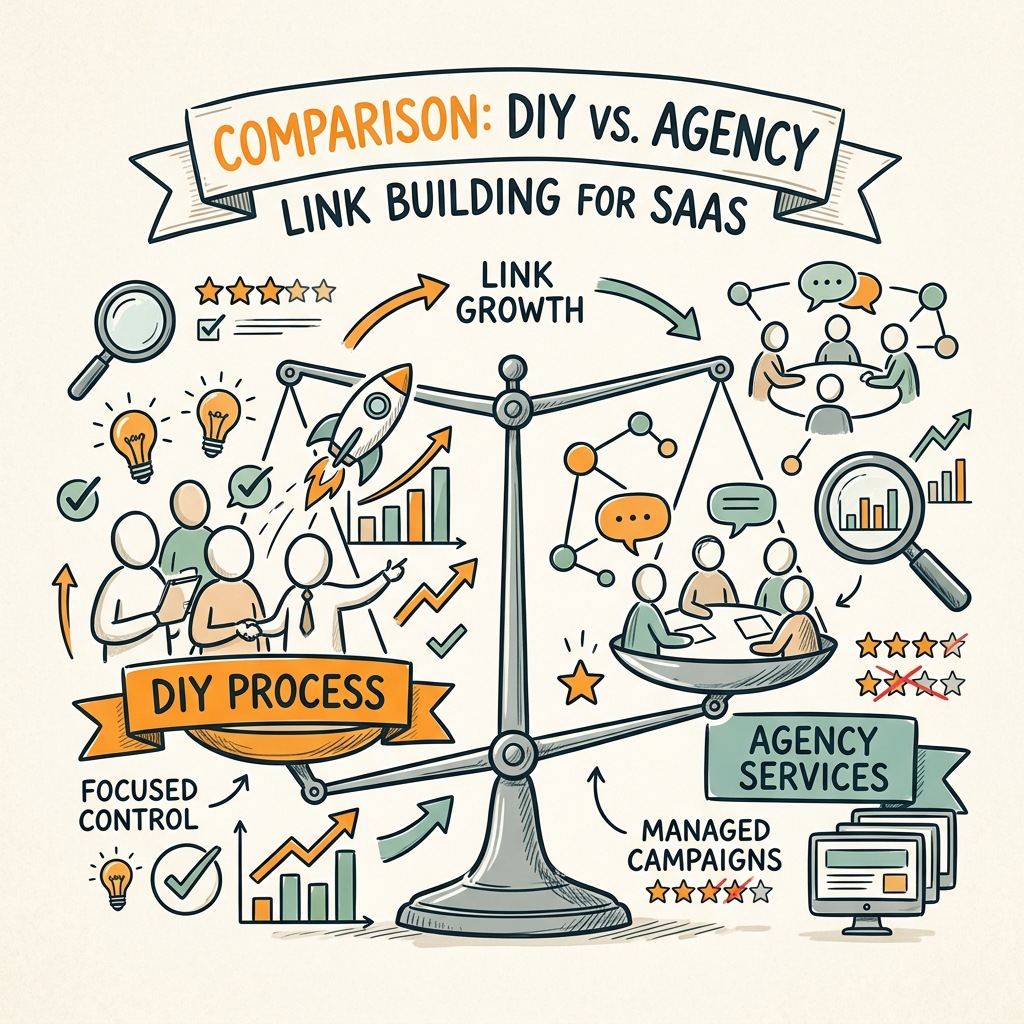
Comparison: DIY vs. Agency Link Building for SaaS
| Factor | DIY Link Building | Agency Link Building |
|---|---|---|
| Cost per link | Near-zero software + 2–4 hours labor | $150–$300+ per link |
| Decision velocity | Hours (internal alignment only) | 2–4 weeks (sales, strategy, execution) |
| Niche relevance | High (founder-led, insider knowledge) | Medium (agency manages 20+ clients) |
| Data ownership | 100% (your research, your insights) | Agency controls narrative and outreach |
| Scalability at 6 months | 1–2 team members can manage 5–10 placements/month | Requires increasing retainer or one-off projects |
| Time to first backlink | 2–6 weeks (content + outreach) | 4–8 weeks (onboarding + strategy + execution) |
| Editorial authority | Your voice; authentic and expert | Agency voice; diluted across many brands |
| Best for automation users | Publish 3–5 linkable articles/week; outsource outreach strategy while automation handles content | Not recommended; defeats the ROI of automation |
Common Mistakes That Kill DIY Link Building Campaigns
Most SaaS founders fail not because the strategy is flawed, but because they skip critical execution steps. Here are the ones that matter most.
Mistake 1: Building Links to the Wrong Pages
Sending backlinks to your homepage is safe but ineffective. Your money pages (pricing, product, demo request, trial signup) need the authority. When internal linking is structured as a hub-and-spoke model that funnels authority from blog posts to core conversion pages, you see 10–15% higher conversion rates on those pages (SaasGains, 2026).
Set up a clear linking strategy using these steps:
- Each article links internally to one core page
- Core pages appear in the "Related Articles" section of topical clusters
- Use descriptive anchor text that matches your target keyword on the money page
Mistake 2: Publishing Content Without Outreach Plans
Writing a great article means nothing if no one knows it exists. Before publishing, identify 20–30 publishers or journalists who should read it. Tailor outreach angles for each. One generic "Check out my article" email will get 1–2% response. Personalized pitches with a specific reason why the recipient cares get 15–20% response.
Mistake 3: Overestimating Your Outreach Reach
New SaaS founders think every outreach email has equal value. It doesn't. Prioritize audiences in this order:
- Warm audiences: your newsletter, LinkedIn network, customer advisory boards (3–5x higher response rates)
- Semi-warm: industry-specific communities and Slack groups where you have presence
- Cold outreach: publishers with no prior relationship
Mix the ratio: 40% warm outreach, 60% cold outreach to balance relationship depth with scalability.
Conclusion
High-quality backlinks are no longer the exclusive domain of companies with $50K+ annual SEO budgets. SaaS founders can now build a 30–35 referring domain backlink profile organically, generating 10,500+ monthly organic visits through original research, competitor analysis, and strategic outreach. The key is consistency and specificity: micro-studies instead of annual reports, niche angles instead of generic posts, and founder-led commentary instead of delegated guest posts. Research shows that B2B SaaS companies scaling organic traffic prioritize original research paired with consistent content publishing — the exact combination DIY link building enables.
The advantage to building your own link strategy is compounding. Each link you earn is an asset forever. Each relationship you build with a publisher is a repeatable outreach channel. Within 6–12 months of systematic DIY link building, your backlink profile and organic traffic trajectory will rival what an agency would deliver at 10x the cost and half the speed. If you're publishing consistently but struggling to scale that content into backlink opportunities, consider automating the research and writing layer to free your team to focus entirely on outreach strategy and relationship building. Start your SEO agent today and let AI handle the content production while you own the link strategy that drives results.
FAQs
Can a new SaaS company build backlinks without an agency?
Yes. New SaaS companies actually have an unfair advantage because they can claim expertise in emerging micro-niches and build authority faster than established players. The strategy requires original research, competitor analysis, and consistent outreach — but execution is entirely achievable with a 1–2 person team using free and low-cost tools. Micro-niche focus and founder-led commentary generate backlinks faster for early-stage companies than trying to compete on broad, high-volume keywords. Most new SaaS teams only fail because they publish sporadically or don't follow up on outreach. Consistency beats budget every time.
How long does it take to see results from DIY link building?
Initial results appear within 1–3 months once you publish your first linkable asset and execute outreach. The first few backlinks often come from warm sources: your network, existing customers, or complementary brands. Expect a 1–3 month lag before external links begin impacting rankings, with compounding wins typically appearing in months 6–12. This timeline assumes weekly content publication and consistent outreach. If you publish sporadically or send one outreach email per month, results stretch to 6–9 months. Volume and consistency matter more than perfection here.
What's the best linkable content for SaaS companies?
Original data and research assets outperform generic blog posts by 3–5x because journalists and site owners actively seek citable research. The highest-ROI linkable assets are: monthly micro-studies (200–300 respondents), embeddable calculators or widgets, trend analysis tied to breaking industry news, and expert commentary on emerging technology shifts. Avoid generic "Top 10 X" lists unless your list introduces novel data or frameworks. Automating the research and writing layer enables you to publish 3–5 data-backed articles per week and focus your time entirely on outreach and relationship building instead of content production.