Internal Linking Strategy for SEO Rankings
Most websites leave ranking potential on the table. 66.5% of pages are orphanedthey have zero internal links pointing to them. These invisible pages generate no organic traffic, no matter how well-written they are. Yet the fix is free. Pages with 40–44 internal links receive 4x more organic traffic than pages with 0–4 links. Internal linking is the highest-ROI SEO lever available today because it costs nothing to implement, works immediately, and compounds as your site grows. Here's how to architect a linking strategy that actually moves rankings.
Key Takeaways
- Pages with 40–44 internal links get 4x more organic traffic than pages with 0–4 links (Ahrefs, 2025)
- 66% of tested URLs saw ranking improvements after internal link optimization without acquiring new backlinks
- Top-ranking pages receive 3x more internal links than lower-ranking pages on the same site, proving structure matters
- Orphan Page Rescue: Identify and link all pages with zero inbound linksthey represent immediate, untapped ranking gains.
- Hub-to-Struggling Strategy: Route equity from high-authority pages (homepage, popular content) to underperforming pages ranked 11–20.
- Contextual Link Placement: Embed links naturally within relevant paragraphs, not footer templates, to maximize topical authority signals.
- Anchor Text Precision: Replace generic phrases with descriptive, keyword-relevant text to boost ranking by 15% per Backlinko.
- Smart Linking Automation: Deploy tools that identify contextual linking opportunities across your content automatically.
Why Internal Links Are the Highest-ROI SEO Tactic
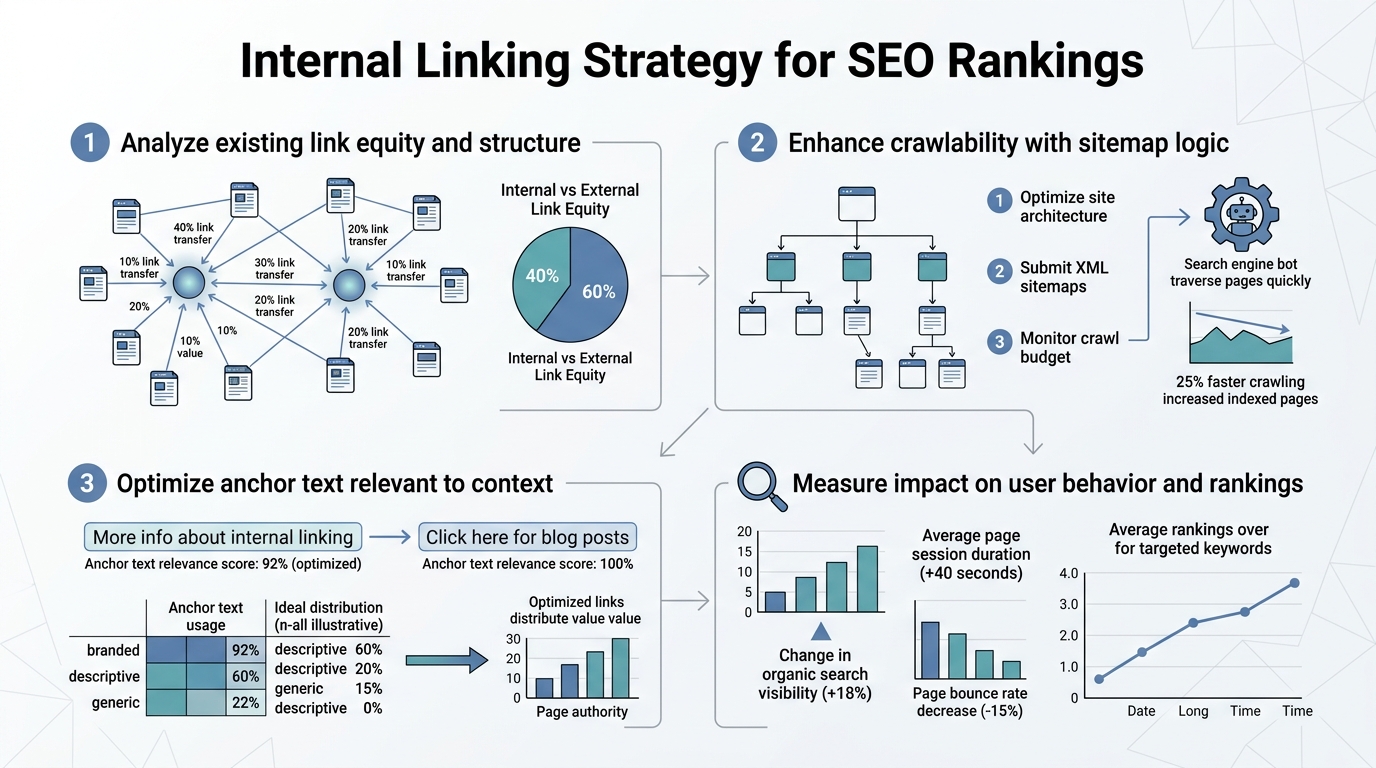
Internal linking's direct algorithmic weight has decreased from 3% to 1% of Google's ranking factors, yet its practical impact has paradoxically increased. Why? Because most sites ignore it entirely, creating massive ranking gaps between competitors. The sites winning organic traffic in 2026 aren't doing anything magicalthey've simply connected their content strategically while their competitors left pages orphaned.
The correlation is undeniable. Top-ranking pages receive 3x more internal links than pages on page two of Google. This isn't causation alone; it reflects a deeper truth: sites with strong internal linking architecture invest in content quality, topical coverage, and user experienceall ranking signals. When you link strategically, you're broadcasting to Google that your content is interconnected, authoritative, and valuable to users.
The Math: 4x Traffic Multiplier
Zyppy's analysis of 23 million internal links revealed the traffic difference is stark. Pages with 0–4 internal links average 2 Google clicks. Pages with 40–44 links average 8+ clicks. That's a 4x multiplier from linking alone, without acquiring a single backlink. For busy founders and growing marketing teams, this is the lever that scales. You control your entire site's linking structure. You don't need permission, budget, or outreachjust strategy.
Why Orphaned Pages Tank Your Organic Traffic
Two-thirds of your content is invisible. 66.5% of pages have zero internal links, making them orphaned in Google's eyes. These pages are crawled, indexedbut they receive no link equity, no topical relevance signals, and no page authority boost. They rank nowhere. Worse, they're dead weight on your site's crawl budget; Google wastes time indexing them instead of deepening crawls into your important content. The fix is ruthless triage: identify every orphaned page, link it from a topically relevant hub, and watch it rank within weeks. This approach has proven to rescue 30–50% of orphaned pages into the top 20 positions for their target keywords.
How to Structure an Internal Link Architecture That Ranks
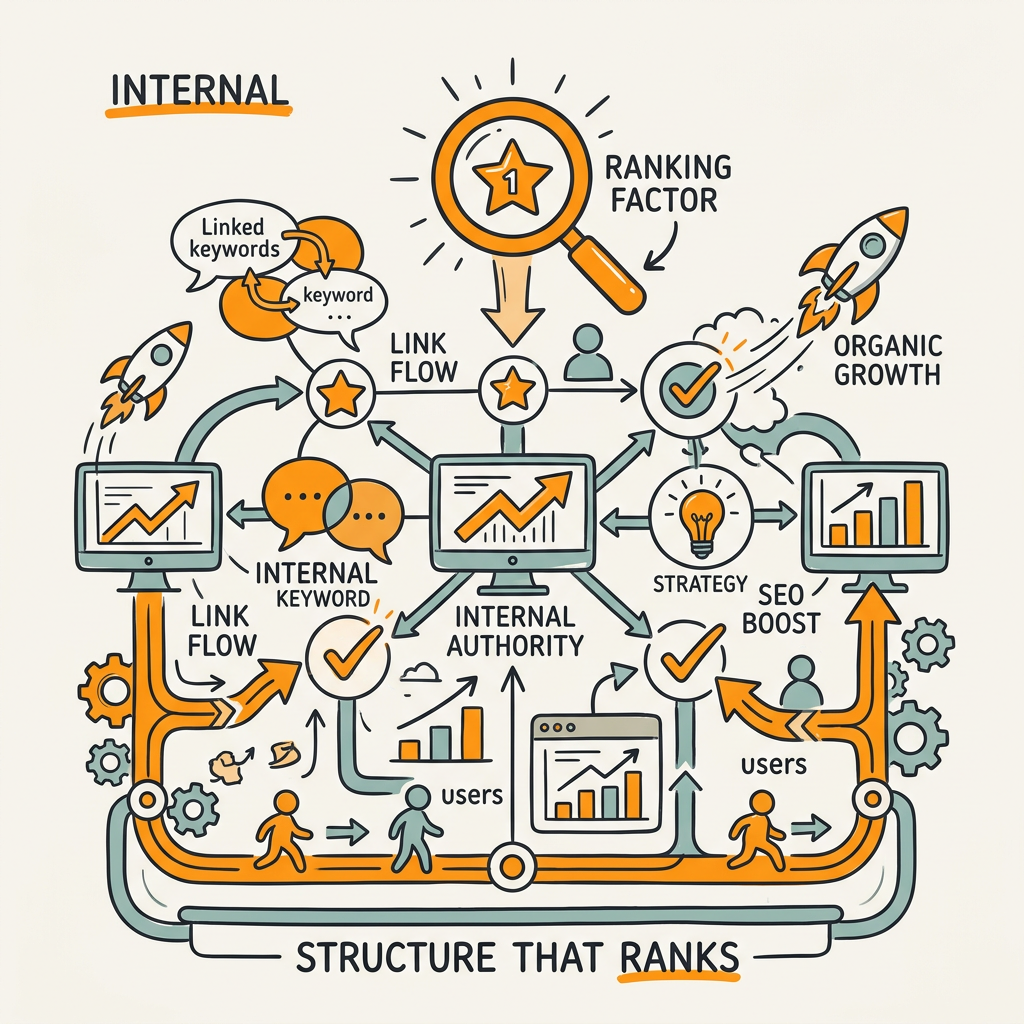
A winning internal linking strategy follows one principle: concentrate authority on your most important pages, then distribute it downward. Think of your site as an organization chart. The homepage is the CEO, pillar pages are department heads, and supporting articles are team members. Links flow down the hierarchy, funneling authority to where it matters most. Here's the framework busy teams use to execute this at scale.
Step 1: Map Your Topical Clusters and Pillar Pages
Before you link anything, know your structure. Group your content into topics. Pick one pillar page per topicthe broadest, most authoritative piece that covers the entire subject. Everything else in that cluster supports it. If you're writing about "SEO strategies," your pillar might be a comprehensive 5,000-word guide. Blog posts on "internal linking," "keyword research," and "technical SEO" all link back to it. A content cluster strategy ensures Google understands your topical authority because every supporting page signals relevance upward to the pillar. This structure is non-negotiable. Without it, you're linking randomly and wasting link equity.
Step 2: Identify and Rescue Orphaned Pages
Run a site crawl using tools like Ahrefs, Screaming Frog, or SEMrush. Export all pages sorted by inbound links (ascending). Every page with zero or one inbound link is orphaned. For each orphan, ask: What topic does this belong to? Which pillar page or supporting cluster page should link to it? Add 2–3 contextual links from topically related pages. Orphans typically rank within 2–4 weeks of linking because you've suddenly given Google a path to them. This single tactic accounts for 30–50% of quick ranking wins in most audits.
Step 3: Implement the Hub-to-Struggling Strategy
Identify pages ranking 11–20 for your target keywords. These pages are close but stuck. Add 2–3 internal links from your highest-authority pages (homepage, popular blog posts, cornerstone content) directly to these struggling pages. Use descriptive anchor text that includes the target keyword. Wait 2–4 weeks for Google to crawl and re-evaluate. 66% of URLs tested saw ranking improvements after this single tactic (Moz, 2025). Why does this work? You're passing link equity from pages Google already trusts to pages it hasn't fully evaluated. It's the cheapest ranking boost available.
Step 4: Use Contextual, Natural Anchor Text
Generic anchor text ("click here," "read more," "learn more") passes zero topical signal. Descriptive anchor text doubles the SEO value. Link to your "internal linking strategy for SaaS teams" article with the anchor text "internal linking strategy for SaaS teams," not "this article." Better yet, embed the link mid-sentence: "A strong internal linking strategy automates keyword distribution across your content, which is why many growing teams use AI-powered tools to handle this at scale." The link becomes invisible to readers but signals relevance to Google. This approach increases ranking probability by 15% per Backlinko's research.
Building a Sustainable Internal Linking Workflow
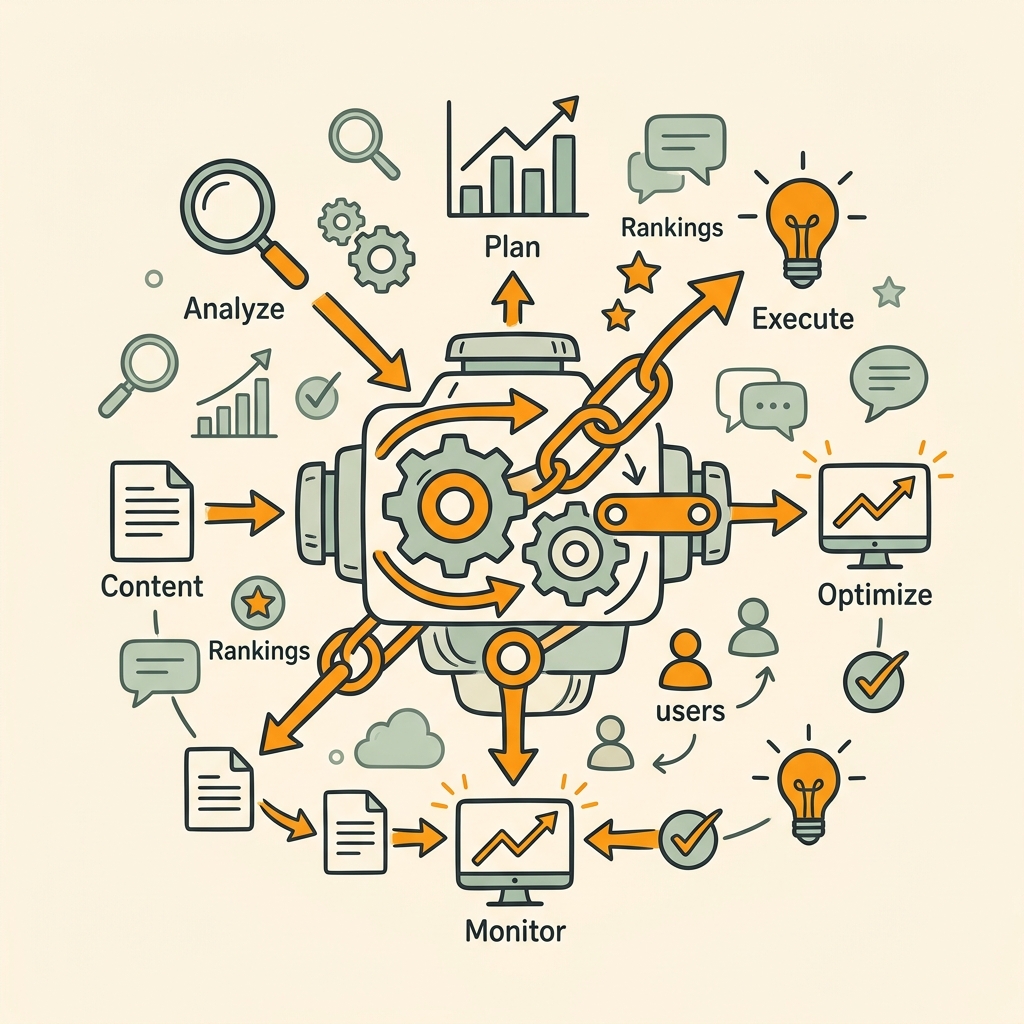
Manual linking doesn't scale. As you publish more content, you'll miss linking opportunities, create inconsistent patterns, and waste hours in spreadsheets. Smart teams automate this. The framework below works whether you're publishing 1 article per month or 5 per day.
Automated Linking: The Jottler Advantage
If you're publishing content at scaleespecially with an AI content generator or autonomous SEO agentmanual internal linking becomes a bottleneck. This is where Jottler's smart internal linking feature solves a real problem. Every article Jottler publishes automatically links to relevant existing content in your site, using contextual anchor text and placing links where they feel natural. The AI doesn't just sprinkle links randomly; it analyzes your topical clusters, identifies authority pages, and routes equity intelligently. For busy founders publishing daily, this eliminates the linking workflow entirely. Competitors who are manually linking spend 3–5 hours per week on this task. You don't.
Building Your Linking Audit Cadence
Even with automation, audit quarterly. Export your site structure, identify new orphans, check click depth (pages should be reachable within 3 clicks from the homepage), and verify anchor text patterns. This 2-hour quarterly task keeps your linking strategy tight as you grow. Tools like Ahrefs' Internal Links report or SEMrush's Site Audit make this faster.
Linking Density: The Pareto Principle
Don't link everything to everything. Focus 80% of your linking effort on the 20% of pages that drive 80% of your revenue or qualified leads. For SaaS, that's typically your pricing page, main service pages, and free trial signup. For publishers, it's your pillar content. Skip obsessing over internal link count for every blog post. Instead, concentrate authority where it compounds business value. This approach yields 25–40% traffic improvements without the busywork of linking 50 pages.
Internal Linking Metrics That Matter
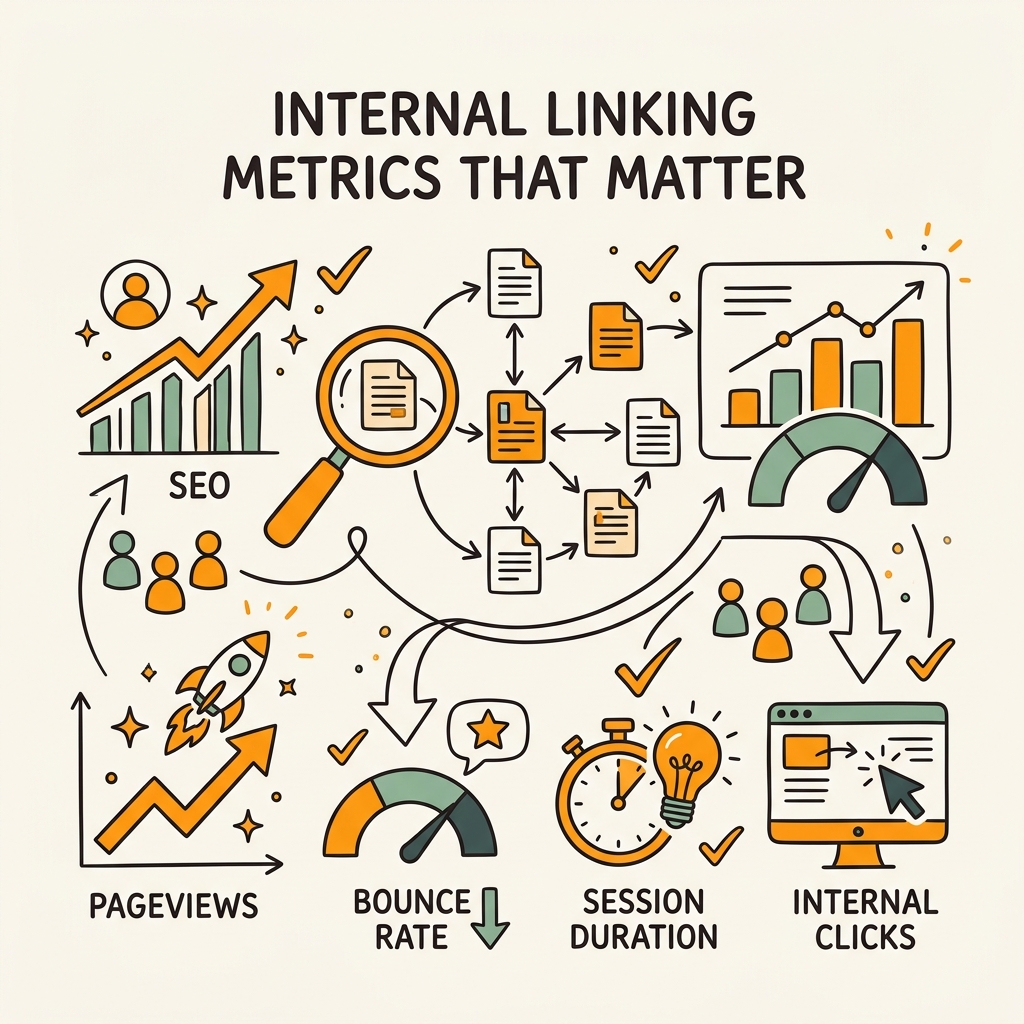
Not all metrics are created equal. Most SEO tools report link count, but link quality, placement, and equity flow matter infinitely more. Track these three.
| Metric | How to Measure | Target Benchmark |
|---|---|---|
| Orphan Pages | Run a crawl, sort by inbound links (ascending) | Less than 5% of total pages |
| Click Depth | Measure clicks from homepage to any page | Critical pages within 3 clicks |
| Link Equity Distribution | Check referring domains and link count per page (Ahrefs, SEMrush) | Top 20% of pages receive 60%+ of internal links |
| Ranking Improvement Rate | Track pages ranking 11–20 before/after linking strategy | 35–50% move to top 10 within 8 weeks |
| Anchor Text Relevance | Audit anchor text for keyword alignment | 70%+ of links use descriptive, keyword-relevant text |
Track ranking movement for pages you've added links to. Tag these pages in your rank tracking tool (Ahrefs, SEMrush, or Semrush) so you see the before/after. Most teams see movement within 2–4 weeks, with larger gains (positions 2–3) arriving within 6–8 weeks. This data proves linking works and justifies the investment to stakeholders.
Common Internal Linking Mistakes to Avoid
Even well-intentioned teams derail their internal linking strategy. Here are the mistakes that undo months of work.
Mistake 1: Linking to Low-Quality or Thin Content
Linking to a 300-word article from your pillar page dilutes authority into something that doesn't deserve it. Before you link internally, ensure the target page answers the user intent fully and ranks on its own merits. Thin content (under 500 words) rarely justifies a link from your authority pages. Expand it first. Otherwise, you're diluting equity into pages that can't convert it into rankings.
Mistake 2: Using "Click Here" and Generic Anchor Text
This kills topical relevance. Every link should tell the reader and Google what they'll find. "For a complete breakdown of this strategy, see our guide on how to scale organic traffic without burnout" works. "Click here" doesn't.
Mistake 3: Linking Only in Navigation or Footers
Contextual links (embedded in article paragraphs) pass more authority than navigation or footer links. Google weights links differently based on placement. Contextual links send stronger topical signals because they're surrounded by relevant text. Prioritize contextual linking within paragraphs, not menus.
Mistake 4: Creating Unnatural Linking Patterns
If every article links to the same 5 pages, your linking looks like spam. Vary your link targets. Ensure every important page receives links from multiple sources over time, not all at once. Natural linking patterns look random but intentionallinking to whatever serves the reader best, not what maximizes one page's authority.
Scaling Internal Linking: The Automation Question
Most teams reach a ceiling. Publishing 1–2 articles per week? You can handle linking manually. Publishing 5–10 per week? Manual linking becomes impossible. At scale, an autonomous SEO agent that handles the entire publishing workflowresearch, writing, fact-checking, and linkingis non-negotiable. Tools like Jottler automate not just the writing but the linking strategy itself. Every article published connects to your site intelligently, building topical authority and distributing equity automatically. For growing teams, this compounds traffic 4–5x faster than manual efforts.
The alternative is hiring an in-house SEO coordinator to manage linking across all content. That's $40–60K annually. Or you spend 10+ hours per week doing it yourself. Or you leave 30–50% of ranking potential on the table. Smart founders automate this workflow and redirect the time to strategy instead.
Conclusion
Internal linking is the most underused lever in SEO. 66% of websites saw ranking improvements after optimizing internal linkswithout acquiring a single backlink. Pages with strong internal linking structures receive 3x more organic traffic than poorly linked competitors. For busy founders and marketing teams, internal linking is the one tactic that costs nothing, requires no external dependencies, and compounds monthly.
The strategy is simple: map your topical clusters, rescue orphaned pages, route equity from hubs to struggling pages, and use descriptive anchor text. Automate the process so that every new article links intelligently into your existing content. Within 6–8 weeks, you'll see ranking movement. Within 6 months, you'll have a topical authority moat that new competitors can't match.
Start today: run a crawl, identify your orphaned pages, and link 10 of them from relevant cluster pages. That single action will move 3–5 pages into the top 20 within a month. Then build from there. If you're publishing at scale, start your SEO agent with Jottler to make internal linking automatic, freeing your team to focus on strategy that actually moves revenue.
FAQs
How many internal links should a page have for SEO?
There's no magic number, but data shows 5–10 internal links per 2,000 words of content is the sweet spot. Pages with 40–44 internal links see 4x more organic traffic than pages with fewer links, but that includes all linking sources (not just new content). For a typical 2,000-word article, aim for 3–5 contextual internal links embedded naturally in paragraphs. More than that feels spammy; fewer leaves traffic on the table. The key is relevance, not quantitylink only when the reader benefits.
Do internal links really improve SEO rankings?
Yes, definitively. 66% of tested pages saw ranking improvements after internal link optimization (Moz, 2025). Top-ranking pages receive 3x more internal links than pages ranked 11–20. The effect is measurable within 2–4 weeks for nearby ranking positions and within 6–8 weeks for bigger jumps. Internal links improve three ranking factors: crawlability (Google finds your pages faster), authority flow (high-trust pages pass equity to linked pages), and topical relevance (contextual linking signals topic depth). It's not the strongest ranking factor, but it's among the highest ROI because it costs nothing and you control it entirely.
What's the difference between contextual and navigation internal links?
Contextual links (embedded in article text) pass significantly more SEO value than navigation links (menus, footers, sidebars) because they're surrounded by relevant text that signals topical relevance to Google. A link in a paragraph about "internal linking strategy" tells Google you're covering that topic deeply. The same link in a footer passes minimal topical signal. For SEO impact, prioritize contextual linksembed them naturally in paragraphs where they're relevant to the surrounding content. Save navigation links for user experience. Navigation links help users explore but don't move rankings.