Link Building Tools Comparison: Features & Pricing
Link building is no longer optional for competitive SEO. Yet most teams struggle to scale outreach consistently, lacking either the time to prospect manually or the budget for traditional agencies. The global link building tool market is projected to reach $1.5 billion by 2032, growing at 12.5% annually, because companies recognize that the right software stack can triple productivity without tripling headcount. The problem isn't choosing a tool—it's choosing the right combination of tools for your workflow stage, budget, and team size. Here's how to compare the top platforms and build a stack that actually delivers links.
Key Takeaways
- 58% of SEO professionals increased link-building budgets in 2026, and 64% now spend $3,000+ per month on links (Reporter Outreach, 2026)
- Link building splits into four workflow stages: research, contact discovery, outreach execution, and monitoring—no single tool dominates all four
- Platform choice depends on scale: Ahrefs/Semrush for research, BuzzStream for affordability, Pitchbox for high-volume automation
- Research & Prospecting: Ahrefs and Semrush dominate with backlink data and competitor analysis, though they approach the problem differently.
- Outreach CRM: BuzzStream offers affordability starting at $24/month; Pitchbox targets enterprise automation at $550+/month.
- Contact Discovery: Purpose-built email tools like Hunter and Snov.io fill gaps that broader platforms leave open.
- Monitoring & Verification: Native link tracking exists within Ahrefs and Semrush, but dedicated monitoring tools add speed and accuracy.
- AI-Assisted Workflows: ChatGPT adoption in link building hit 88.6% in 2025, yet only 6% of teams have embedded AI into their full prospecting pipeline.
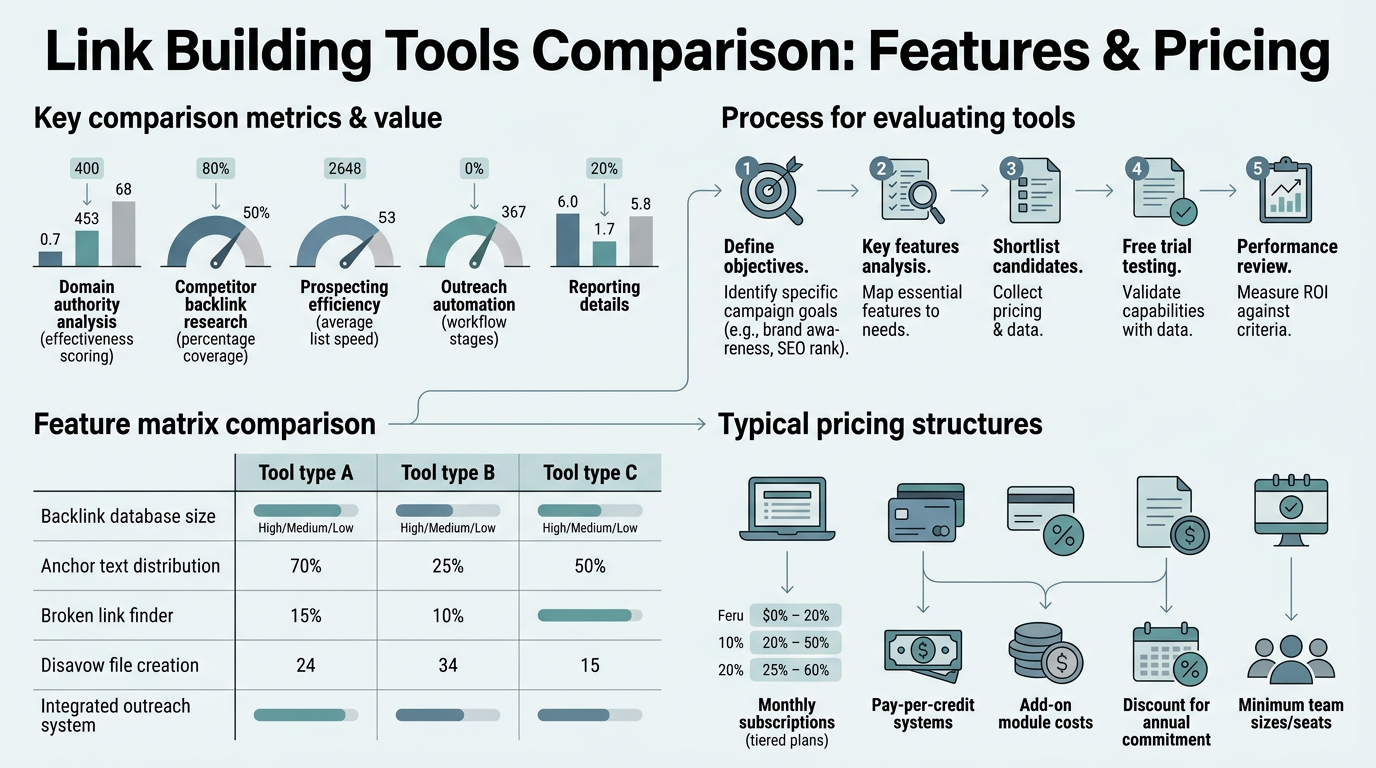
The Link Building Tool Landscape: What Changed in 2026
Link building software used to be fragmented—a company would rent Ahrefs for research, BuzzStream for outreach, and Hunter for emails. Today, the ecosystem is consolidating around platform breadth and AI-powered workflows. Semrush and Ahrefs now compete as much on AI visibility features as on backlink data, while specialized platforms like Pitchbox emphasize automation and deliverability. The shift reflects a deeper truth: raw backlink volume no longer moves the needle. Topical relevance, referring domain quality, and placement authority drive rankings. Tools that used to be "nice to have" for competitive analysis are now table stakes.
"Digital PR and original research outperformed traditional guest posting in link quality—yet guest posting remains the most widely used tactic because it's easier to execute at scale. This tension between what works and what's manageable explains why founders and marketers pile up tool subscriptions."
The data backs this. According to a 2026 survey of 500 SEO professionals, digital PR and original research outperformed traditional guest posting in link quality—yet guest posting remains the most widely used tactic because it's easier to execute at scale. This tension between what works and what's manageable explains why founders and marketers pile up tool subscriptions. They chase better results but still lean on familiar tactics. The solution isn't more tools; it's a smarter stack aligned to your actual workflow.
How to Choose Between Ahrefs and Semrush for Prospecting
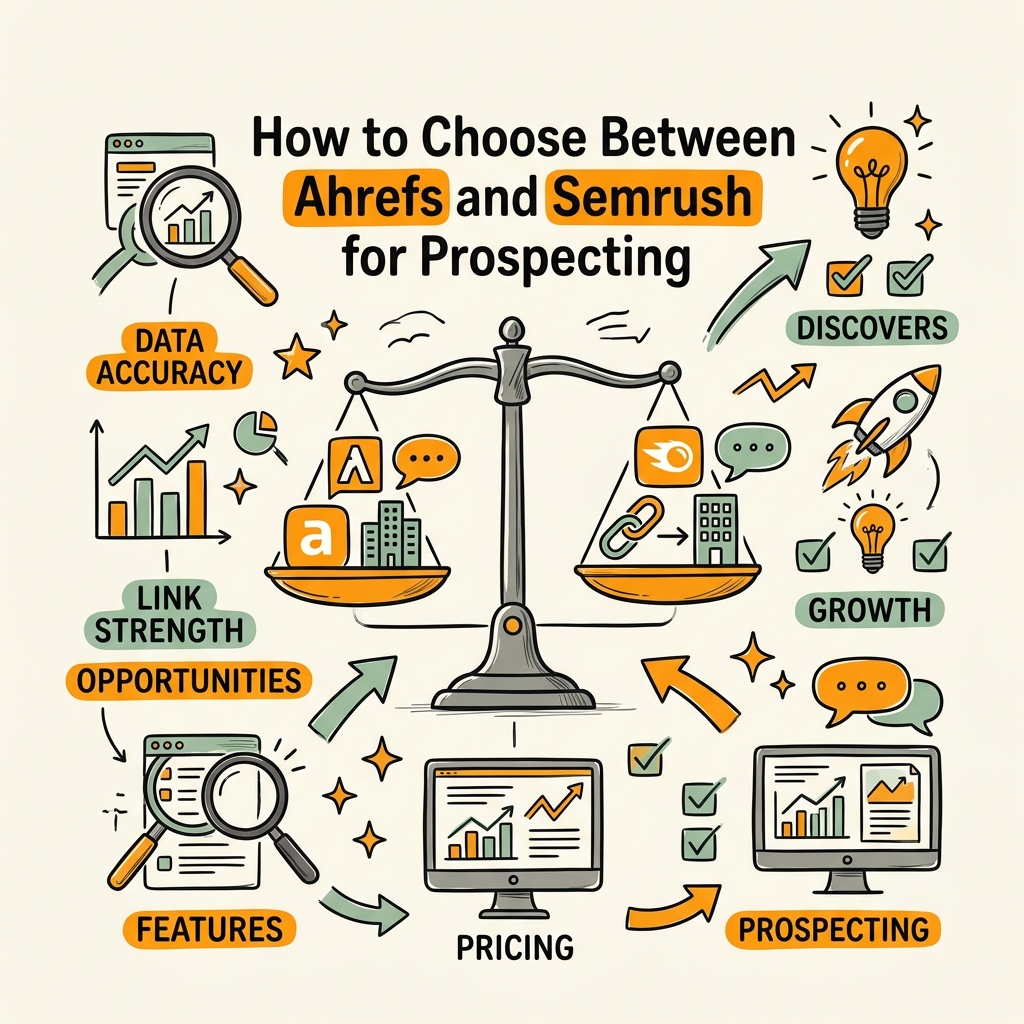
Ahrefs and Semrush are the research foundation for almost every link-building team. Both give you competitor backlinks, opportunity identification, and domain authority assessments. But they optimize for different use cases. Ahrefs is built for speed and depth in backlink research, while Semrush positions itself as an all-in-one marketing suite. The right pick depends on whether you want a specialist or a generalist.
Ahrefs: Built for Link Researchers
Ahrefs' core strength is its backlink database and the raw speed of its research interface. For prospect discovery, you get a backlink gap tool that shows you every link pointing to your top five competitors, then filters by domain authority, traffic, and relevance. The Site Explorer dashboard surfaces competitor link profiles in seconds. Monthly cost starts at $129/month for the Lite plan, jumping to $249/month for Standard and $449/month for Advanced. The catch? Lower tiers operate on a credit system that limits report volume, so you hit ceilings on how many deep dives you can run per month before upgrade pressure kicks in.
"For agencies and in-house teams burning through dozens of prospects per week, Ahrefs' speed and daily index updates make it worth the investment. The interface is built for rapid iteration without switching apps."
The real appeal for busy teams is speed. Ahrefs index updates daily, and the interface is built for rapid iteration. You find prospects, check authority scores, and move to outreach without switching apps. For agencies and in-house teams burning through dozens of prospects per week, this efficiency is worth the cost.
Semrush: The Broader Marketing Platform
Semrush starts at $117.33/month for the Pro plan (annual billing), and includes keyword research, content analytics, PPC data, and social listening alongside link research. Its Backlink Gap and Backlink Analytics tools mirror Ahrefs' core features, but Semrush customers cite better value for teams running integrated content + link-building campaigns. You optimize articles for SEO, track rankings, monitor brand mentions, and prospect for links all in one tab.
The trade-off is that Semrush's backlink data is widely considered slightly shallower than Ahrefs', and the interface feels more crowded. Yet for founders juggling content strategy, SEO, and link building simultaneously, the suite breadth often justifies the friction. When you're managing content marketing and link building as integrated functions, a unified platform reduces tool switching costs.
Ahrefs vs Semrush: Quick Comparison
| Feature | Ahrefs | Semrush |
|---|---|---|
| Entry Price | $129/month | $117.33/month (annual) |
| Backlink Data Depth | Largest index; daily updates | Comprehensive; slightly more conservative |
| Research Speed | Optimized for rapid iteration | Feature-rich but busier interface |
| Broader Features | Minimal outside link analysis | PPC, content, social, rank tracking |
| Best For | Dedicated link research teams | All-in-one marketing ops |
Outreach Execution: BuzzStream vs Pitchbox
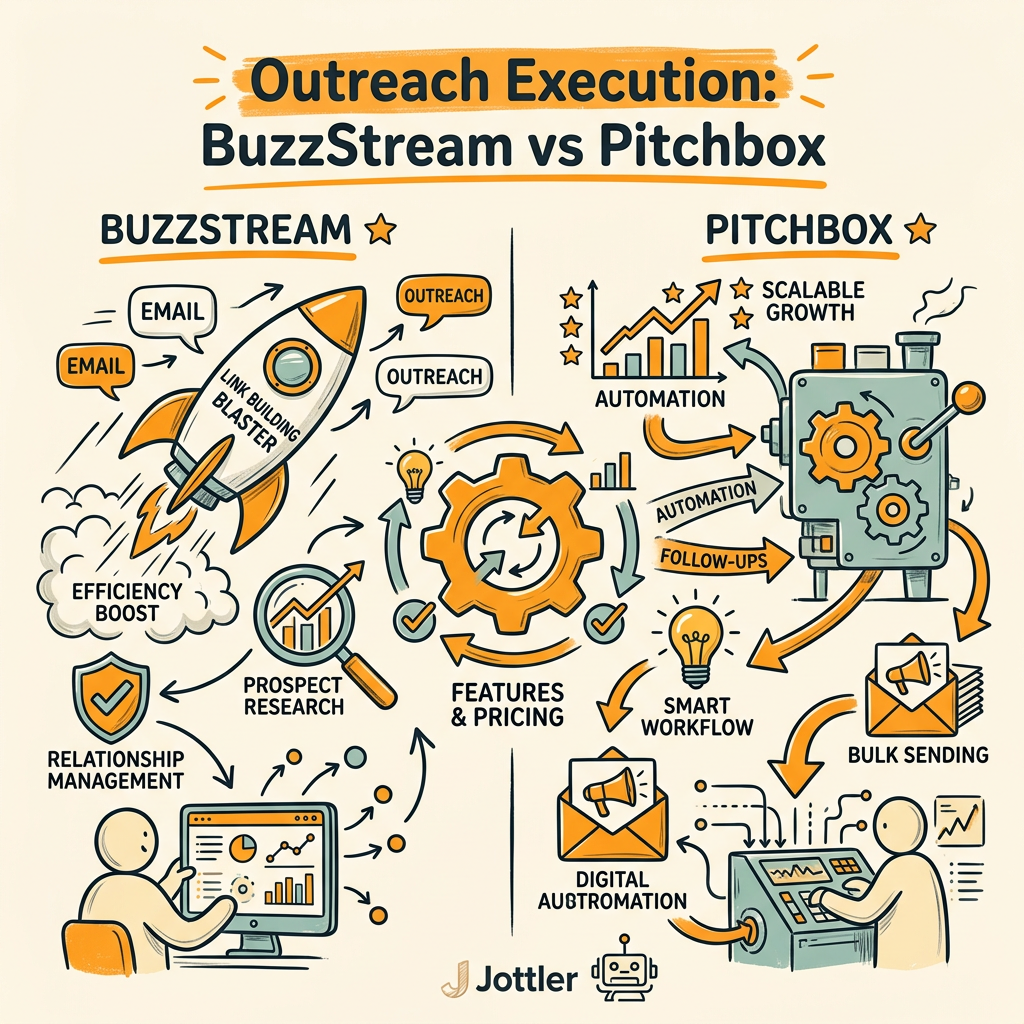
Once you have prospect names and contacts, you need a CRM to manage campaigns, track responses, and nurture relationships. This is where BuzzStream and Pitchbox diverge dramatically on scale and cost. BuzzStream starts at $24/month, while Pitchbox begins at $550/month—a 23x gap that reflects two different markets. According to industry analysis from Exploding Topics, the choice hinges on whether you're a founder managing outreach solo or an agency running high-volume, multi-team campaigns.
BuzzStream: The Founder's Outreach Platform
BuzzStream positions itself as a relationship-first outreach CRM. You add contacts, set up email sequences, track replies, and log conversations. The platform emphasizes team collaboration for small to mid-sized teams. At $24/month, it's positioned as affordable enough for bootstrapped founders who want to stop managing outreach in spreadsheets. Features include email templates, drip campaigns, social media tracking, and basic reporting. Setup is fast—no IT involvement required. For relationship-heavy campaigns where you're nurturing fewer prospects over longer arcs, BuzzStream's UX and price point make it obvious.
The limitation is volume. If you're running coordinated outreach to 500+ prospects across a distributed team, BuzzStream's reporting and workflow control start to feel thin. But for anyone building links as part of a smaller marketing function, it's the clear choice.
Pitchbox: Enterprise Outreach Automation
Pitchbox targets agencies and large brands running high-volume outreach. At $550/month and up, it emphasizes automation, workflow control, team role management, and deliverability. You get template libraries, AI-assisted personalization, integration with email providers, and built-in monitoring for link placement and link status. Pitchbox's approach is: set up your campaign logic once, then the system automates follow-ups, escalations, and reporting at scale. For teams managing outreach to thousands of targets across months, the automation handles the operational burden.
The trade-off is complexity and cost. You need time to set up campaigns properly. Smaller teams often feel over-engineered by Pitchbox's feature set.
Building a Link-Building Stack That Works for Busy Teams
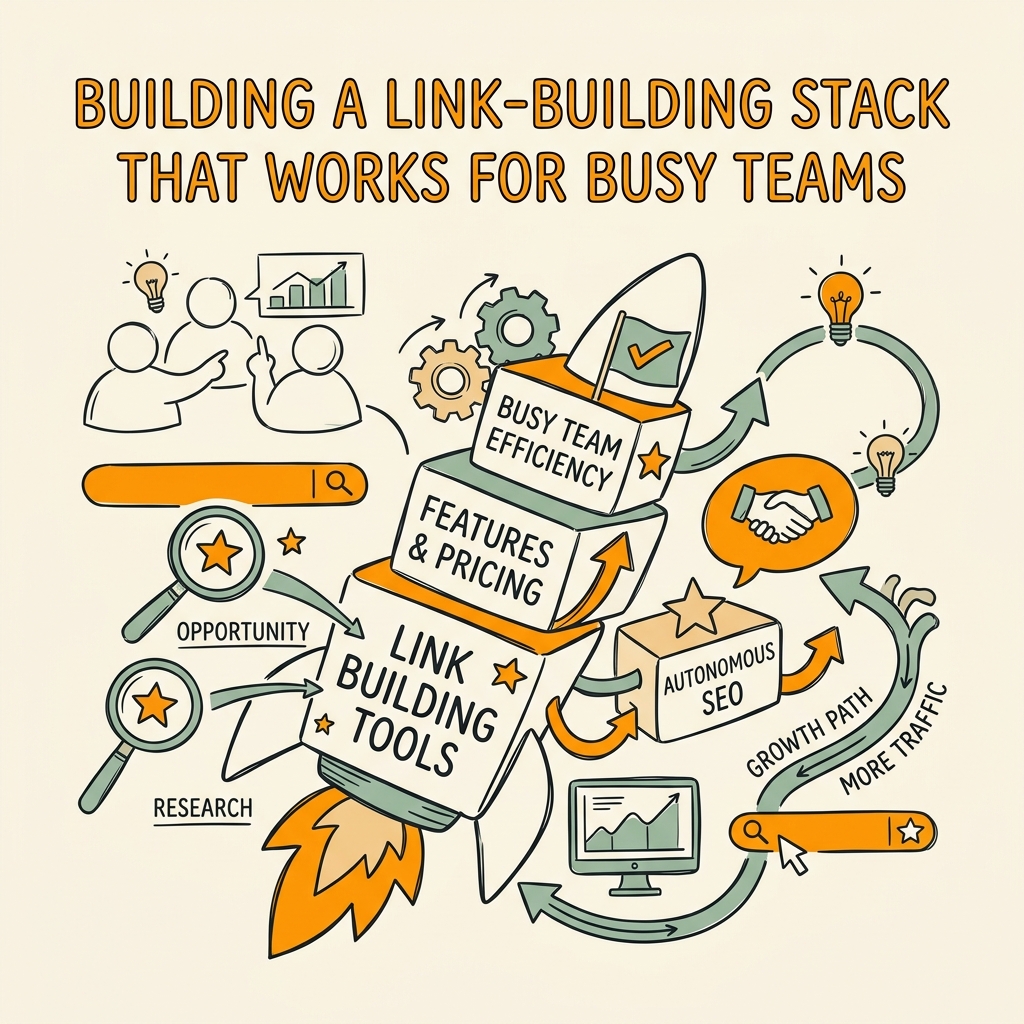
No single tool covers every link-building stage equally well. The best stacks layer tools so each one does one job exceptionally. For a typical busy founder or growing marketing team, the architecture looks like this: use Ahrefs or Semrush for prospect discovery, add a contact enrichment tool like Hunter or Snov.io to backfill email addresses, use BuzzStream to manage outreach and campaigns, and lean on native monitoring within your prospecting tool to confirm links go live.
"A three-to-four-tool stack costing roughly $100–$200/month covers all workflow stages without overlap. The alternative—paying for Pitchbox's full automation at $550+—only makes sense if you're managing 100+ simultaneous campaigns or coordinating across a 5+ person team."
This three-to-four-tool stack costs roughly $100–$200/month and covers all four workflow stages without overlap. The alternative—paying for Pitchbox's full automation at $550+—only makes sense if you're managing 100+ simultaneous campaigns or coordinating across a 5+ person team.
Cost-Conscious Stack (Founders & Small Teams)
- Prospecting: Ahrefs Lite ($129/month) or Semrush Pro ($117/month annual)
- Contact Discovery: Hunter ($50/month for 100 searches) or Snov.io ($39/month)
- Outreach & CRM: BuzzStream ($24–$99/month depending on scale)
- Total monthly cost: $193–$278
Agency or Enterprise Stack (Multi-Team Campaigns)
- Prospecting: Ahrefs Standard ($249/month) or Semrush Business ($416/month annual)
- Outreach Automation: Pitchbox ($550–$2,000+/month depending on volume)
- Monitoring & Reporting: Native within Ahrefs or Semrush, plus Pitchbox's built-in link tracking
- Total monthly cost: $800–$2,500+
The gap between these two stacks explains why tool selection feels overwhelming. A founder's stack is 93% cheaper than an agency's stack, yet both execute the same core workflow. The expensive tools don't make links better; they make high-volume coordination faster.
Why Traditional Link-Building Tools Miss the Bigger Picture
Link building tools excel at operational efficiency—finding prospects, managing outreach, tracking placement. Yet they do little to help you create better linkable assets. The real bottleneck for most teams isn't the tools; it's content quality and relevance. Original research and data-driven content attract 200% more backlinks on average than standard blog posts. Yet most teams skip this layer entirely, opting instead to spend more on outreach volume.
This is where the tooling story breaks down. A sophisticated link-building stack amplifies mediocre assets just as effectively as great ones. You end up paying Pitchbox to automate outreach for thin content, then wondering why response rates are low. The fix requires stepping outside the traditional link-building tool category.
For busy founders, the insight is tactical: before optimizing your outreach stack, ensure your content tier—the pieces you're trying to get links to—is worth linking. Newsworthy research, original data, expert guides, and authoritative reference content attract links with minimal outreach friction. Generic blog posts require sophisticated automation to move the needle at all.
How Content Automation Changes the Equation
This is where SEO automation platforms like Jottler reshape the picture. Instead of building outreach efficiency tools to amplify thin content, platforms that automate content creation let you produce genuinely linkable assets at scale. Jottler generates 3,000+ word research-backed articles daily, complete with original data insights and internal linking architecture. The result? Higher baseline content quality, which means your outreach tools—whether Pitchbox or BuzzStream—work on assets that actually attract links organically.
The strategic play isn't building a better link-finding tool. It's building better content faster so you need fewer outreach touches to begin with. SaaS companies that combine content automation with targeted link building see 3-4x faster link velocity than teams relying on outreach volume alone.
Feature Comparison: What Each Tool Category Does Well
Beyond the headliners, link-building workflows often require specialized tools for specific friction points. Understanding what each category optimizes for helps you avoid paying for features you don't need. Here's the breakdown by tool function:
Research & Backlink Analysis Tools
- Ahrefs Site Explorer: Largest backlink database, fastest competitor link export, content gap identification
- Semrush Backlink Analytics: Broader feature suite, better for integrated SEO, sentiment analysis on brand mentions
- Majestic (budget alternative): Older backlink data, but significantly cheaper; useful for secondary verification
- SE Ranking: Rank tracking + link analysis hybrid; good for teams needing reporting over deep prospecting
Contact Enrichment & Email Discovery
- Hunter: Email finder for domain-based prospecting; 100 credits/month at $50
- Snov.io: Email finder + verification; $39/month includes 1,000 searches
- ZoomInfo (enterprise): Deep contact data, but 10-50x more expensive than Hunter/Snov
Outreach & Campaign Management
- BuzzStream: Lightweight relationship tracking, email sequences, team collaboration for small groups
- Pitchbox: High-volume automation, deliverability monitoring, workflow rules engine for agencies
- Respona: AI-assisted outreach matching; newer entrant focused on relevance over volume
Monitoring & Link Verification
- Native to Ahrefs/Semrush: Built-in link tracking confirms placements and tracks link health
- Linkody (dedicated): Real-time link monitoring, competitive backlink alerts, uptime tracking
Conclusion
The right link-building tool stack amplifies your team's efficiency but won't fix broken content strategy or weak prospect targeting. For busy founders, the economics favor a three-tool stack: Ahrefs or Semrush for research ($117–$129/month), a contact enrichment tool like Hunter ($39–$50/month), and BuzzStream for outreach ($24–$99/month). This setup costs under $300/month and covers every workflow stage without redundancy. Larger teams graduating to agency-scale outreach can justify Pitchbox's automation layer, but only after proving that your content and targeting are sound. Before investing in tool complexity, invest in content quality. Original research attracts significantly more backlinks, which means fewer outreach touches needed and faster ROI on any platform you choose. Start with a lean stack, measure what's working, then add specialized tools where the data shows friction. Start your SEO agent and let automation handle the content layer while your team focuses on high-touch outreach that converts.
FAQs
What is the best free link building tool?
Google Search Console is the most widely used free link-building tool, used by 25% of SEO professionals, because it surfaces exact referring domains and lets you identify brand mention outreach opportunities at no cost. Semrush and Ahrefs both offer free trials and limited free tiers—Semrush's free tier includes backlink gap analysis comparing your domain to up to four competitors, and Ahrefs has a free backlink checker tool. For contact discovery, Hunter offers 50 free monthly searches. These free tools are sufficient for research and verification; the paid tools become necessary when you're running high-frequency, multi-prospect campaigns at scale.
How much should a company budget for link building tools per month?
Link-building tool spend depends on team size and campaign scale. A solo founder or small marketing team should budget $200–$400/month for a core stack (Ahrefs or Semrush + BuzzStream + Hunter). Midsize agencies managing 20+ simultaneous campaigns typically spend $800–$1,500/month (Ahrefs + Pitchbox + monitoring tools). Enterprise teams run $2,000+/month stacks because they're funding high-volume automation and team licenses. In a 2026 survey, 64% of SEO professionals spend $3,000 or more per month on link building overall (including labor and outsourced work), though tool costs represent only a fraction of that budget.
Can I build links without link building tools?
Yes, but it's significantly slower. Manual link building works through outreach relationships, direct pitching, and digital PR—all doable without software. However, you lose the speed of competitor backlink research, the automation of email sequences, and the visibility of campaign performance. For a founder managing outreach part-time, tools compress weeks of manual work into days, so the ROI is typically positive within the first month. The real question isn't whether you can build links manually—you can—but whether you have the time for hundreds of manual prospect lookups, email searches, and follow-up tracking. If time is your scarce resource (and for busy founders, it always is), even a $30/month tool pays for itself in hours saved.