Resource Page Link Building: A Tactical Approach
Resource pages are among the highest-quality link sources in SEO, yet most teams waste them through generic outreach and low-effort pitches. Here's the reality: 64% of universities actively maintain resource pages, and 38% of marketers report a 20%+ traffic boost from high-authority placements (2025). The challenge isn't finding these pages—it's building assets good enough to earn a spot on them. This guide walks you through the exact system top teams use to identify, vet, and pitch resource pages strategically.
Key Takeaways
- 64% of universities maintain resource pages offering high-quality, editorial link opportunities far superior to guest posting alternatives (2025, Backlinko)
- Resource pages linking to 3+ competitors are your highest-probability prospects; use link-gap analysis to filter out tire-kickers and unvetted targets
- Articles over 3,000 words generate 3.5x more backlinks than shorter content, making them prime resource page candidates (2025)
- Understand Resource Pages and Their Value: Editorial link sources curating industry resources, with far higher quality than guest posting sites and organic traffic impact averaging 20% or higher.
- Identify Prospects Using Link-Gap Analysis: Export competitor backlinks, filter for pages linking to 3+ competitors, and qualify by traffic and topical relevance.
- Create Linkable Assets: Build original research, interactive tools, or comprehensive long-form content (>3,000 words) designed specifically for resource page inclusion.
- Execute Personalized Outreach: Limit pitches to 50–100 daily, reference specific work, and conduct 2 follow-ups at days 7–10 and 14 for maximum response rates.
- Automate Prospecting and Follow-ups: Use tools to surface candidates and schedule follow-ups, but keep first-touch emails manually personalized for quality.
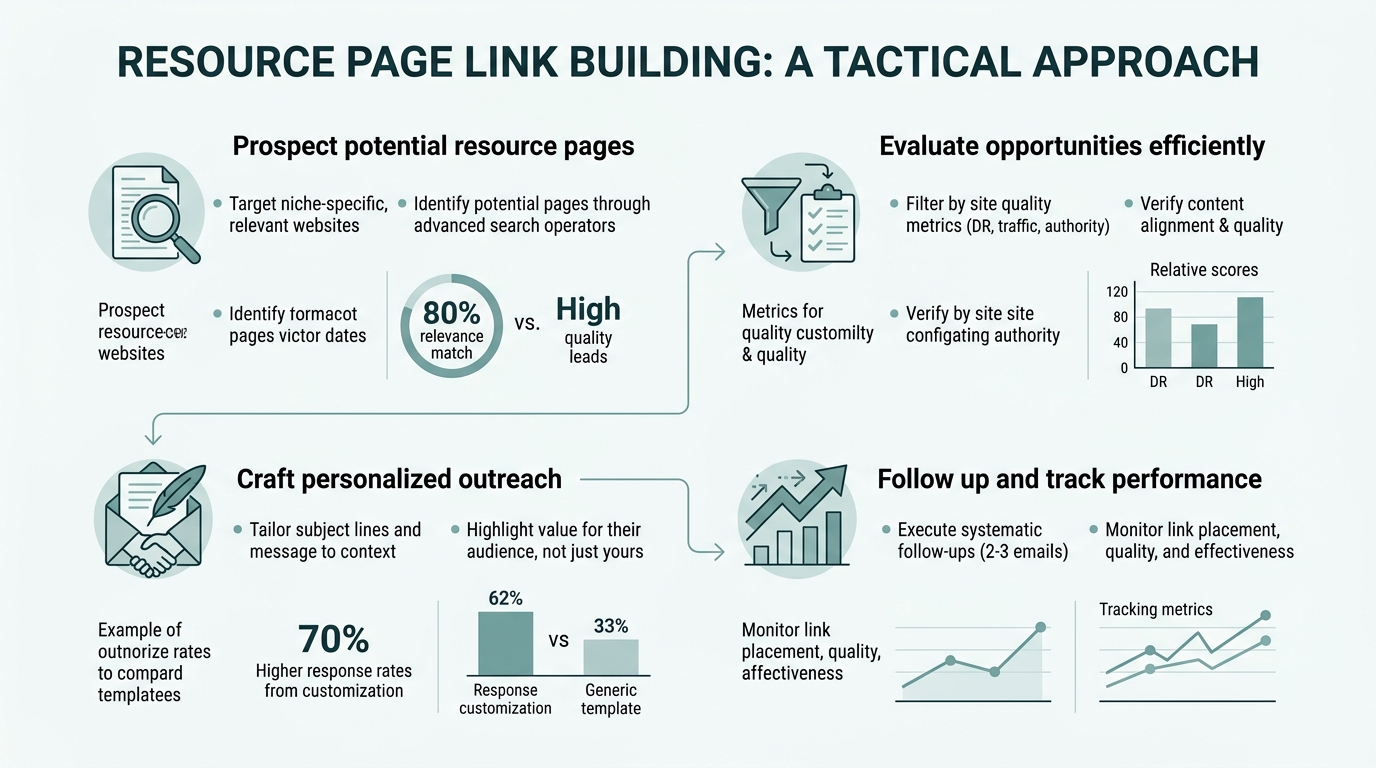
What Are Resource Pages and Why They Matter for Link Building
Resource pages are curated collections of links to external websites on a specific topic. Unlike press releases, guest posts, or directory submissions, resource pages are designed by their creators to genuinely link to the best-in-class content and tools in a niche. When you appear on a resource page, your link improves that page's value—which is why curators accept pitches far more readily than they'd accept a generic guest post offer.
The value proposition is straightforward: resource pages rank organically, they're typically hosted on relevant authority sites, and they're reviewed regularly by their owners. When a university, industry association, or influential publisher links to you from one, you're getting an editorial vote from a trusted source. That's why 98% of guest posting sites are low-quality (Domain Rating under 40), while resource pages skew toward high-authority domains (2026). According to recent link building statistics, resource page strategies significantly outperform traditional guest posting in terms of link quality and durability.
"Resource pages represent the highest-quality editorial link opportunities available to most teams. Unlike guest posts or directory submissions, curators are selective because their reputation depends on linking to genuinely useful resources. A single placement on a university or industry association resource page often outperforms five mediocre guest post links in terms of ranking power and referral traffic."
The distinction matters operationally. Most SEO teams pursue links through guest posting, but 48.6% of SEO professionals rate digital PR as the most effective link building tactic for 2025—and resource page pitches fit naturally into the digital PR workflow. You're positioning your content as a valuable resource deserving of editorial mention, not a self-promotional blog.
Why Resource Pages Outperform Other Link Sources
Three factors make resource pages uniquely valuable. First, they're actively maintained. A resource page on a university site isn't a set-it-and-forget-it archive; curators review and update them regularly, meaning your link gets ongoing visibility and potential referral traffic. Second, they're contextually relevant. A resource page on "small business accounting" will only link to accounting-related content, so the topical alignment is automatic. Third, they typically require zero payment. Unlike paid link schemes or expensive agency services, resource page links are earned through content quality.
The traffic impact alone justifies the effort. 38% of marketers report that high-authority resource page placements boost referral traffic by more than 20% (2025). This isn't just about ranking signals; it's direct audience access from professionals actively researching your topic.
How Resource Pages Fit Into Your Overall Link Building Mix
Resource page outreach shouldn't be your only link building strategy, but it should be your primary one. Here's why: the ROI on a single high-authority placement often exceeds what you'd get from five guest posts on mediocre sites. Pair resource pages with digital PR for breaking news and expert commentary, and you've built a sustainable acquisition engine. Teams that combine resource page outreach with digital PR mention tactics report the highest-quality backlink profiles.
How to Find Resource Page Opportunities Using Search Operators and Link-Gap Analysis

Finding resource pages isn't difficult; finding the *right* resource pages is. Indiscriminate prospecting wastes time and tanks your outreach conversion rates. The tactical approach combines two methods: search operators to build initial lists, and link-gap analysis to identify the highest-probability targets (those linking to competitors but not yet to you).
Using Search Operators to Surface Initial Resource Page Candidates
Resource pages follow predictable naming conventions, making them easy to surface via Google search. The most reliable search strings pair your target keyword with common resource page terminology:
- Keyword + "inurl:resources": Finds pages with "resources" explicitly in the URL path.
- Keyword + "inurl:links": Surfaces pages titled or structured around "links" collections.
- Keyword + "best resources": Identifies curated collections and roundups.
- Keyword + "useful links": Catches informal resource compilations on blogs and industry sites.
- Keyword + intitle:links: Targets pages with "links" in the page title (often resource pages).
For example, if you run a B2B SaaS tool, you might search "B2B SaaS inurl:resources" or "SaaS tools best resources." Each search typically yields 50–300 prospect pages per niche keyword. The challenge is sorting legitimate curated lists from spam and auto-generated link directories.
Qualifying Prospects: Traffic, Topical Relevance, and Manual Curation
Not every page you find is a real opportunity. Low-quality prospects waste your outreach budget. Before adding anyone to your pitch list, apply three filters:
- Organic Traffic: Does the page rank for anything and receive organic visitors? Use Ahrefs, SEMrush, or similar tools to confirm it has >500 monthly organic visitors. A resource page with zero traffic is unlikely to send referrals or pass SEO value.
- Topical Relevance: Is the page's content directly aligned with your offering? A "marketing resources" page is relevant for a marketing tool but irrelevant for HR software. Skim the actual links listed to ensure thematic fit.
- Manual Curation: Is the page hand-curated or auto-generated? Auto-generated link directories add any site that pays; hand-curated lists are selective. Check for editorial notes, descriptions, or a clear selection criteria. If all links are just URLs with no context, it's likely automated and not worth pitching.
This qualification step reduces your prospect list from hundreds to dozens, but those dozens have dramatically higher conversion rates.
Link-Gap Analysis: Finding Where Competitors Already Won
The highest-probability resource page targets are those already linking to your competitors but not yet to you. This link-gap approach removes the guesswork and focuses your energy on proven buyers. Here's the workflow:
- Identify 3–5 direct competitors and enter their URLs into Ahrefs or SEMrush.
- Pull their backlink reports and sort by referring domain (to avoid counting multiple links from the same site).
- Filter the results by domain authority, relevant keyword, and (if the tool allows) incoming link text or anchor pattern. Look for pages with "resource" or "link" in the URL.
- Export the list and cross-reference it against your own backlinks. Any site linking to a competitor but not to you is a prospect.
- Apply the three qualification filters above to each prospect.
This method dramatically reduces noise. You're not pitching random resource pages; you're pitching pages whose owners have already decided your category is worth recommending. The only question is whether they know about you.
Creating Content That Deserves a Spot on Resource Pages
The second half of the equation is the content itself. You can't pitch weak content to high-authority resource pages and expect acceptance. Curators are selective because their reputation depends on linking to the best. Your asset must solve a concrete problem, be significantly better than what's already on the page, or fill a gap the curator didn't know existed.
The Role of Original Research and Data in Resource Page Pitches
Original research is the highest-leverage asset type for resource page inclusion. Content with original research receives 4x more high-authority links than opinion pieces or aggregated content (2025). Why? Because journalists, educators, and curators can't find the data elsewhere. When you offer a resource page curator a link to an original study, survey, or dataset they can reference, you're providing value they can't get from aggregating existing content.
"Original data is the currency of resource page inclusion. When you offer a curator access to proprietary research or exclusive survey findings they can't source elsewhere, you've solved a fundamental curation problem: where do I find fresh, credible information on this topic? That scarcity value is why studies and datasets generate 4x more high-authority links than generic opinion content."
The specificity matters. A generic "State of the Industry" report with 1,000-word findings is less compelling than a focused study answering a specific question: "How many SaaS founders use AI for content marketing?" or "What's the average ROI of resource page link building?" Original data points give curators a reason to link and journalists a reason to cite you.
Building Interactive Assets (Calculators, Benchmarks, Tools)
Interactive assets—calculators, ROI estimators, industry benchmarks, and similar tools—generate 45% higher engagement than static content and make natural resource page additions (2025). Why? They're useful and referenceable. A "payroll tax calculator" or "content ROI calculator" solves a concrete math problem for the user and can be embedded on a resource page. A benchmark tool letting visitors compare their metrics against industry averages is inherently shareable.
The key is reducing friction. The tool should answer a single question or solve a single problem. Overly complex tools with 20 inputs frustrate users and reduce sharing. Simple, focused tools embedded in a landing page with minimal setup drive both referral traffic and resource page links.
Long-Form Content Standards: >3,000 Words and Comprehensive Coverage
If you're not building interactive assets, length and depth are your differentiators. Articles over 3,000 words generate 3.5x more backlinks than shorter posts (2025). But length alone isn't sufficient; the content must be genuinely comprehensive. Resource page curators ask: "Is this the best single resource I can link to on this topic?" A 3,500-word article that's just a repackaged blog post will fail that test. A 3,500-word definitive guide with original data, case studies, and expert quotes often passes.
Structure your long-form content with:
- An original angle or thesis: Why is your take on this topic different from what's already ranking?
- Primary and secondary sources: Include original research, interview quotes, and cited studies to add credibility.
- Actionable depth: Don't just explain concepts; show how to apply them with real examples and step-by-step workflows.
- Visual elements: Tables, charts, and screenshots break up text and improve scannability, increasing the likelihood a curator will feature your content.
The combination of depth, originality, and utility makes your content unmissable on a resource page.
Executing Resource Page Outreach at Scale

Prospecting and content creation are prerequisites, but execution is where most teams fail. Poor outreach emails have tanked more promising links than mediocre content ever will. The tactic here is counterintuitive: scale your *prospecting*, but keep your *first-touch outreach* hyper-personalized.
Building Your Prospect List and Prioritization Framework
Once you've identified 100–500 resource page prospects, you need a system to work through them. Start by segmenting your list by:
- Domain authority / traffic: Prioritize high-traffic pages on relevant authority sites (universities, industry associations, established publications) first.
- Topical relevance: Pages deeply aligned with your core offering get first priority; loosely related pages are secondary.
- Outreach difficulty: Pages with visible contact info or "suggest a resource" buttons are quick wins. Pages requiring detective work to find the curator's email are back-burner projects.
This stratification lets you focus high-effort work on high-value targets. You might set a goal of 10–15 highly personalized emails per day to top-tier prospects, with follow-up automation handling the rest.
Crafting Personalized Outreach Emails That Convert
The email itself is surprisingly simple. Most teams over-complicate it with lengthy pitches and generic compliments. The formula that works is: who you are, the specific reason you're writing, and one clear call to action. Keep it to 3–5 sentences.
Here's the structure:
- Opener with context: "I noticed your B2B SaaS resource page links to [specific resource they listed]. We published a study last month comparing [similar topic] that might be relevant."
- Value statement: "The study includes original data from [number] companies and reveals [specific insight]. It goes deeper than what you currently link to on [topic]."
- Call to action: "I think it would be a valuable addition to your list. Let me know if you'd like the link."
"The best resource page pitches read like peer recommendations, not sales emails. You're saying: 'I found this gap in your resource collection, and here's the best thing I've found to fill it.' That framing—where you're solving the curator's problem, not asking them to solve yours—is why personalized pitches close at 8–15% rates while template emails close at <2%."
Avoid generic compliments ("Your site is great!"), keyword-heavy pitches, and long-winded explanations of why you're emailing. Get specific. Reference the actual page and the actual gaps your content fills. Personalized subject lines are 22% more likely to be opened than generic ones (2026).
Add your social profile link (LinkedIn, Twitter) to your email signature. This small change increases response rates by +9.8% (2026). It signals legitimacy and gives curators a way to evaluate your credibility at a glance.
Volume, Timing, and Follow-Up Strategy
The temptation with outreach is to blast hundreds of emails daily. Resist it. The standard recommendation is 50–100 personalized daily emails rather than 500+ automated ones (2026). Why? Deliverability matters. If your email sender reputation tanks due to bulk sending, your legitimate pitches land in spam. Quality over quantity also means your actual conversion rate stays healthy.
Follow-ups matter more than initial sends. Sending 1–2 follow-ups at days 7–10 and day 14 significantly boosts reply rates (2026). Most resource page curators are busy; they miss emails. A single non-aggressive follow-up often triggers a response. Keep follow-ups brief: "Just checking in on the resource I pitched. Happy to answer any questions."
Use email automation tools to schedule these follow-ups, but don't automate the initial pitch. The first email is your selling point; it must be human and specific.
Tools and Workflows for Automating Resource Page Prospecting
Tools accelerate prospecting and follow-up, but they're not magic. The right tool stack removes manual grunt work (link extraction, email scheduling, list management) while preserving the personalized judgment required for outreach success. When evaluating link building tools for SaaS marketing teams, look for solutions that automate keyword research and content ideation—allowing your team to focus energy on the high-ROI parts of resource page outreach, like identifying prospects and crafting personalized pitches. For broader context, check out this guide on 2025 link building statistics covering tool adoption and effectiveness trends.
Link-Gap Analysis and Prospect Identification Tools
Your primary tool for finding resource page prospects is a backlink analyzer like Ahrefs, SEMrush, or Moz. These tools let you:
- Export competitor backlinks in bulk
- Filter by domain authority, traffic, and keyword relevance
- Identify pages linking to multiple competitors (a strong relevance signal)
- Export contact information or at least the domain owner details
For teams on tighter budgets, Ubersuggest or free versions of these tools work, though with fewer filters. The investment in a mid-tier plan (typically $100–300/month) pays itself back quickly if you're closing just a few quality resource page links.
Prospecting Automation: Finding Contact Info at Scale
Once you have a list of prospects, you need email addresses or contact forms. Tools like Hunter.io, RocketReach, or ZeroBounce automate finding contact information from domain lists. Input your prospect domains, and these tools return email addresses with confidence scores. Cross-reference results against LinkedIn to verify accuracy. Some SEO agencies also use tools like Outreach or Lemlist, which integrate prospect data with email scheduling and follow-up tracking.
The faster you can move from "prospect identification" to "ready to pitch," the higher your velocity and conversion rate. Automation buys you that speed.
Email Scheduling and Follow-Up Tracking
Tools like Mailshake, Snov.io, or Lemlist let you schedule personalized emails in bulk (after writing them individually), track opens and clicks, and automatically schedule follow-ups on a predetermined cadence. The workflow is: write your initial email, personalize the first line for each prospect (high-effort step), schedule sends across a 2–3 week period to stay under spam-trigger thresholds, and let the tool handle follow-ups automatically.
These platforms also track response rates, giving you data on what's working. If you're seeing <10% response rates, your pitch likely needs refinement. If you're seeing >30% response rates, you've nailed the angle and should scale up volume.
Measuring Success and Iterating Your Resource Page Strategy
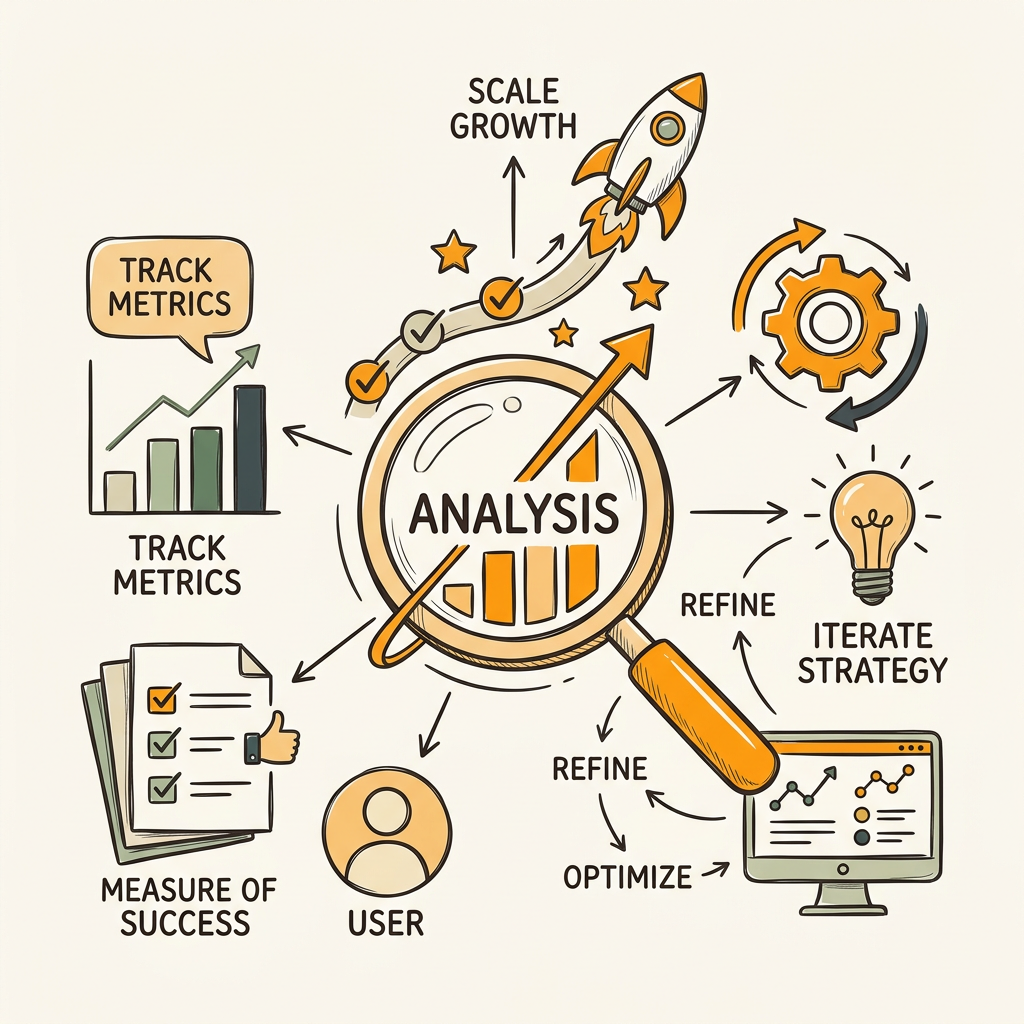
Link building is directional, not binary. You won't close every pitch, and that's fine. What matters is your overall velocity and the quality of links you're acquiring. Here's how to measure and iterate:
Tracking Outreach Metrics and Conversion Rates
At minimum, track:
- Emails sent: How many pitches did you send this week/month?
- Responses: How many people replied, even if they declined?
- Links acquired: How many actual links resulted from your outreach?
- Link quality: What was the domain authority of the pages that linked to you? Did they pass referral traffic?
Your conversion rate (links acquired ÷ emails sent) will typically range from 5–15% for high-quality resource page outreach. If you're closing 100 pitches and landing 8 links, that's strong. If you're closing 100 and landing zero, your content or pitch needs rework.
Evaluating Link Quality Beyond Domain Authority
Not all links are created equal. A link from a high-traffic university resource page is worth more than a link from a low-traffic industry blog, even if the latter has higher domain authority on paper. Evaluate:
- Referral traffic: Does the link actually send visitors to your site? Check your analytics.
- Anchor text quality: Is the link branded, keyword-rich, or generic? Brand and topic-relevant anchors are most valuable.
- Topical relevance: Is the linking page topically aligned with your content? A link from a business resource page is better for a B2B SaaS company than a link from a general tech page.
Over time, focus your prospecting on the types of resource pages and types of sites that consistently deliver high-quality, traffic-driving links.
| Strategy | Effectiveness Rating (2025) | Quality Risk | Cost per Link |
|---|---|---|---|
| Digital PR | 48.6% (Top Rated) | Low (Editorial) | $750–$1,500 |
| Resource Pages | High (via Referral Traffic) | Low (if University) | Variable (Often Free) |
| Guest Posting | Declining (Surpassed by PR) | High (98% low quality) | $3,130–$6,018 |
| Skyscraper Technique | 6.2% (Very Low) | High (95% paid) | High |
Common Mistakes to Avoid in Resource Page Link Building
Most teams fail not because the tactic doesn't work, but because they execute poorly. Here are the common pitfalls:
Pitching Low-Quality Content to High-Authority Pages
The #1 mistake is pitching mediocre content to excellent resource pages. If your content is shorter, less detailed, or less original than what's already on the curator's list, they'll reject you. Vet your content ruthlessly before pitching. Ask: "Would a curator be embarrassed linking to this?" If the answer is yes, improve the content or move down your prospect list to lower-authority pages.
Generic Mass-Outreach and Template Emails
Sending 500 identical emails with [FirstName] placeholders tanks your conversion rate and destroys your sender reputation. Resource page curators receive dozens of pitches weekly; they immediately bin obvious template emails. Write fewer, better emails. Each email should reference the specific page you found, the specific gap your content fills, and the specific value you're offering.
Ignoring Follow-Ups and Giving Up Too Soon
Many teams send a single email and move on. Wrong. Most responses come on the second or third touch. If you don't follow up, you're leaving links on the table. Set a follow-up cadence (day 7, day 14) and stick to it. Curators are busy; they need reminders.
Integrating Resource Page Link Building Into Your Broader Content Strategy
Resource page outreach shouldn't exist in a vacuum. It's most effective when integrated with your overall content and SEO strategy. This means planning your linkable assets, coordinating with your PR team, and building internal systems to support consistent execution.
Smart teams use content automation tools to handle the research and writing burden of producing 3,000+ word assets at scale. When your team understands the full workflow—from keyword research through personalized outreach—you execute more pitches per week and close more links per month. Similarly, learn about proven SaaS link building strategies to ensure your resource page efforts align with broader organic growth goals.
For teams at growing companies tackling this at scale, the bottleneck is typically content production. Most resource page pitches fail because teams lack the bandwidth to create truly outstanding assets. Removing friction at each step of your workflow—research, writing, prospecting, outreach—lets your marketing and SEO leads focus on the high-touch work where they add the most value.
Conclusion
Resource page link building is one of the highest-ROI tactics in SEO when executed tactically. The strategy is straightforward: find curated lists on authority sites, create content better than what's already there, pitch it personally, and follow up. 38% of marketers see 20%+ traffic gains from resource page placements, and 64% of universities maintain active resource pages waiting for quality pitches. The execution separates successful teams from those that stall.
The key is consistency. Build one linkable asset per month, prospect 50–100 pages per week, send personalized emails, and follow up. Over 12 months, this yields 20–40 high-authority links from relevant pages, each driving ongoing referral traffic and ranking power. Start by mapping your competitor's resource page links, prioritizing the highest-authority targets, and crafting one exceptional asset. Then pitch. The response rate will surprise you.
Start your SEO agent to automate the content research and creation that fuels resource page pitches, so your team can focus on prospect identification and high-touch outreach.
FAQs
What makes a resource page valuable for SEO link building?
Resource pages are valuable because they're curated, editorial-grade link sources hosted on authority domains. Unlike guest posts or directory submissions, curators only link to genuinely useful content that improves their page's value. 64% of universities actively maintain resource pages, meaning your link gets placement on trusted, frequently-updated sources. Additionally, resource pages drive real referral traffic—38% of marketers report 20%+ traffic boosts from high-authority placements. The combination of ranking signal, topical relevance, and actual user visits makes them superior to low-authority guest posting alternatives.
How long should content be to qualify for resource page inclusion?
Articles over 3,000 words generate 3.5x more backlinks than shorter posts and are far more likely to earn resource page spots. Length alone isn't enough—the content must be comprehensive, original, and significantly better than what the resource page already links to. Aim for 3,500+ words with original data, case studies, expert interviews, or interactive tools. A 2,000-word blog post will rarely make a curator's list; a 3,500-word definitive guide with proprietary research or actionable depth will. The depth signals expertise and gives curators confidence the link provides genuine value to their readers.
What's the best way to find resource page prospects for outreach?
Use link-gap analysis combined with search operators. First, export your top 3–5 competitors' backlinks using Ahrefs or SEMrush and filter for pages linking to multiple competitors but not to you. These are pre-qualified prospects who've already decided your category is worth recommending. Supplement with search operators like "keyword inurl:resources" or "keyword best resources" to surface additional pages. Then qualify each prospect by checking for organic traffic (>500 monthly visitors), topical relevance, and evidence of manual curation (not auto-generated lists). This hybrid approach yields 50–100 high-probability targets per niche keyword.