AI Writing Tools for SaaS Marketing Teams
SaaS marketing teams face a compounding problem: 87% of marketers now use generative AI in at least one workflow, but most teams still operate in silos—manually drafting, editing, and publishing content without any systematic automation. The stakes are real. Organizations using AI in marketing see 10–20% improvement in marketing ROI, yet 60% of marketers use AI tools daily, meaning half your competitors are gaining a structural advantage you don't have. The solution isn't buying another tool; it's building a workflow that turns AI into a scalable content engine.
Key Takeaways
- 87% of marketers use generative AI in at least one workflow, up from 51% in 2024 (Salesforce, 2026)
- AI-powered content drafting delivers 3.2x ROI on average and 59% faster production (McKinsey, 2026)
- Teams using AI content tools produce 4.1x more published content per marketer per month than pre-adoption baselines (HubSpot, 2026)
- Why AI Writing Tools Matter for SaaS: Most SaaS teams juggle technical content, comparisons, and SEO briefs manually. AI writers compress the drafting cycle from hours to minutes, freeing your team to focus on strategy and fact-checking rather than blank pages.
- The Quality-Scale Tradeoff: Generic AI tools produce filler. The right SaaS-focused AI writer understands your category, integrates with your CMS, and outputs content that ranks—not just content that exists.
- Automation Over One-Off Tools: Single-purpose AI writers create more work: you still research topics, write briefs, publish manually, and link content. Full-stack platforms automate the entire pipeline.
- What Sets Leaders Apart: 40% of marketing employees are "super-users" who master AI tools and save 4.5x more time weekly than casual users (Writer.com, 2026). The difference is process, not luck.
What Makes an AI Writing Tool Actually Useful for SaaS Teams?
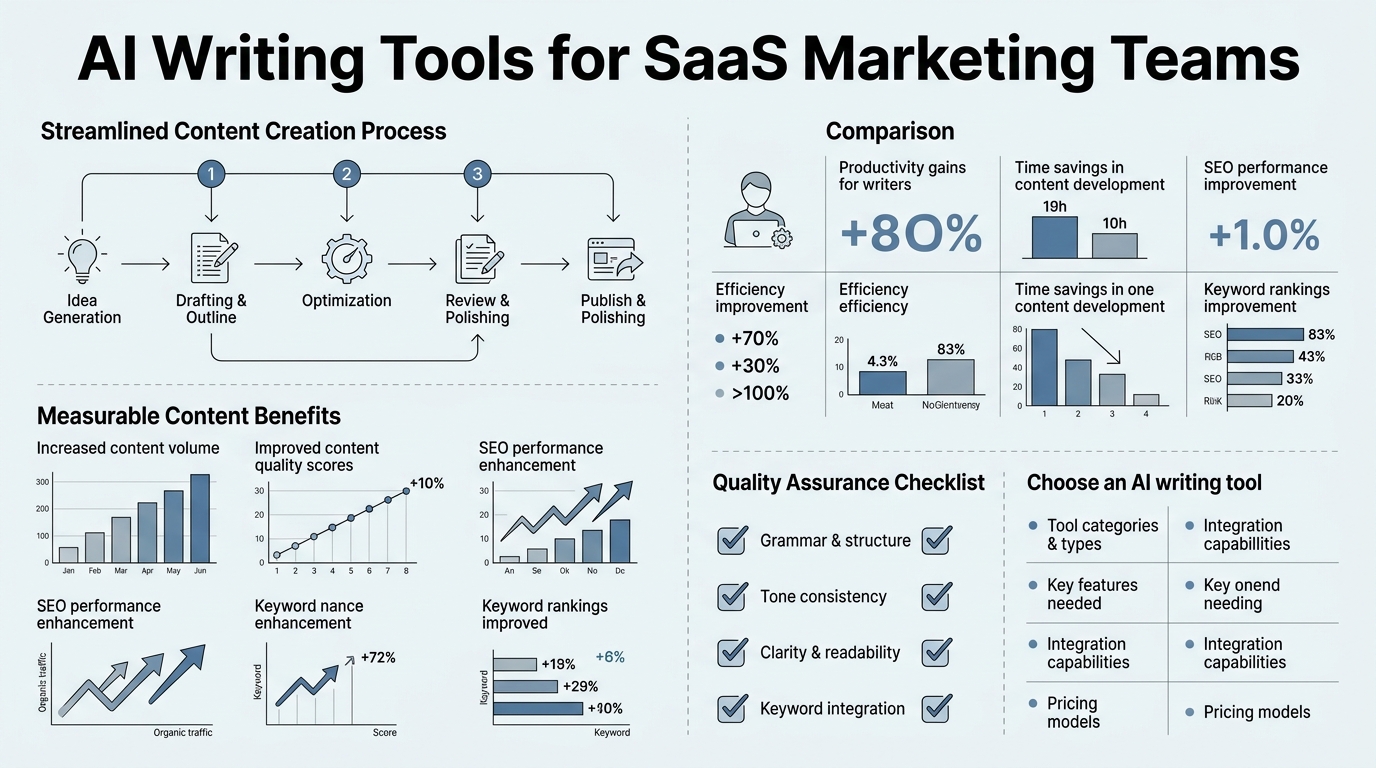
Not all AI writers are created equal. A tool built for e-commerce listicles won't cut it for SaaS. Your team needs three things: accuracy, SEO understanding, and workflow integration that doesn't slow you down. According to Digital Applied's comprehensive 2026 research on AI marketing adoption, the tools that win in SaaS are those that combine research depth with automation rather than raw speed.
"The best AI writers for SaaS don't just generate text from a prompt—they research from 10+ authoritative sources, cross-reference claims, and surface contradictions before they become errors." — Digital Applied, 2026
Deep Research and Fact-Checking Capabilities
SaaS buyers are sophisticated. They read between the lines and reject content that feels hollow or inaccurate. The best AI writers for SaaS don't just generate text from a prompt—they research from 10+ authoritative sources, cross-reference claims, and surface contradictions before they become errors. Thunderbit's 2026 SaaS AI tools data shows that 78% of content marketing professionals apply moderate or extensive editing before publishing AI-assisted content, meaning the output quality matters immediately—not as a final pass.
Tools without built-in fact-checking create a hidden cost: your team spends twice as long validating claims as writing them. Look for platforms that verify statistics against live sources and flag outdated data before publication. This is where platforms like Jottler differentiate themselves through systematic automation of the entire research-to-publish workflow.
SEO Optimization Baked Into the Writer
Generic AI writers ignore keyword intent. They write for readability, not rankability. SaaS marketing tools should understand keyword difficulty, suggest internal link anchors, and structure content around People Also Ask questions. Sociality's 2026 report on AI in social media marketing found that 44.7% of professionals report AI-assisted content performs better than human-only alternatives, but that performance depends on structural SEO choices made during generation, not after.
"Content performance depends on structural SEO choices made during generation, not after—which is why AI writers that lack SEO integration fail to deliver ranking potential." — Sociality, 2026
The best AI writers handle these structural decisions automatically. They generate outlines based on what's actually ranking, they optimize on-page elements without sacrifice, and they produce content that competes on Google from draft one. Full-stack platforms that automate keyword research through publishing eliminate the manual optimization bottleneck entirely.
CMS Integration and Publishing Automation
If your AI writer produces a finished article but you still manually publish it, set internal links, and update your site navigation, you've bought a typewriter upgrade, not a content engine. True automation means the tool connects to your CMS, publishes on a schedule, and weaves new content into your existing topical structure. That's where the 4x content multiplier comes from—not writing faster, but publishing faster and at volume.
How to Evaluate AI Writing Tools: A SaaS Framework
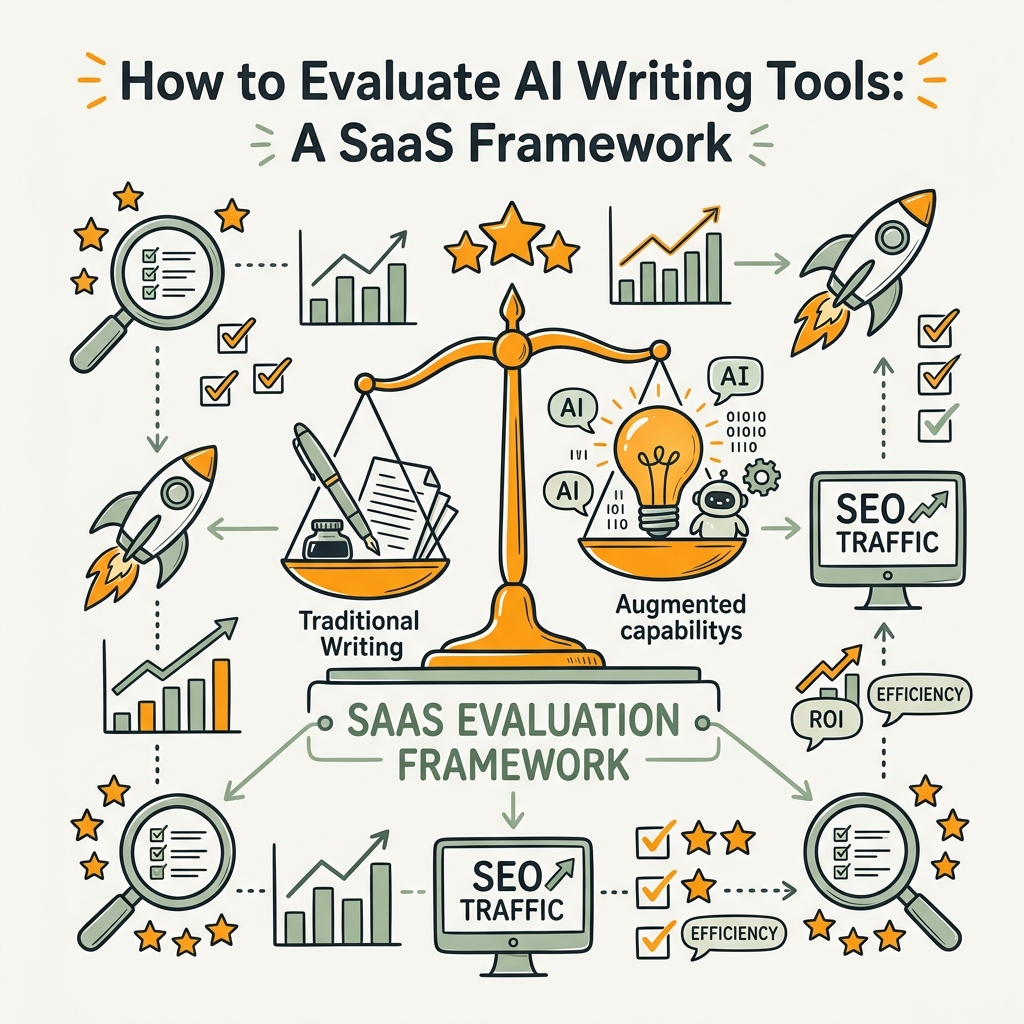
Choosing the wrong AI writer wastes months and money. Use this framework to test before committing.
Test for Research Depth, Not Just Generation Speed
Request a free trial and ask the tool to write about a niche topic in your space—something with 5–10 credible sources maximum. Good AI writers will cite specific reports, pull real data, and distinguish between opinions and facts. Poor ones will hallucinate stats and combine unrelated sources into false conclusions. Generate 3 articles in your category and fact-check each claim independently. If more than 1–2 claims require correction, move on.
Inspect the SEO Output
Look at three criteria:
- Keyword Density and Placement: Is the primary keyword in the H1, first paragraph, and at least two subheadings? Or does the tool scatter it randomly?
- Internal Linking Logic: Does the tool suggest relevant internal links with anchor text that matches actual pages on your site? Or does it make generic suggestions that don't exist?
- Content Structure: Does the outline match what's ranking for your keywords? Or does it follow a generic template regardless of search intent?
Best tools let you inspect the SEO layer before final generation. Weaker tools treat SEO as an afterthought. SEO automation platforms specifically designed for SaaS make these quality checks non-negotiable before any content goes live.
Check Integration With Your Existing Stack
Can the tool connect to your CMS directly, or do you copy-paste? Does it sync with your keyword research platform, or make you re-enter keywords manually? Test the full workflow: from keyword import through publishing to internal linking. Time this end-to-end process. If it takes more than 15 minutes of manual work per article, the tool has introduced friction, not solved it.
Best-in-Class AI Writing Solutions for SaaS Teams
The market has matured. There are now platforms purpose-built for SaaS marketing automation, not just general-purpose AI copywriters adapted awkwardly for SEO.
| Platform | Best For | Daily Articles | Research Sources | CMS Integration | Starting Price |
|---|---|---|---|---|---|
| Jottler | Autonomous SEO content at scale | Up to 5 | 14+ deep sources | Native | $29/mo |
| Jasper | Marketing copy and brand voice | Up to 2 | 4–6 sources | Plugin | $39/mo |
| Copy.ai | Quick-turnaround ad copy | Up to 3 | 2–3 sources | Zapier | $49/mo |
| Sight AI | AI visibility tracking + content | Up to 3 | 5–8 sources | Native | $99/mo |
| Writesonic | Landing pages and blog outlines | Up to 2 | 3–5 sources | API | $29/mo |
The comparison reveals a clear pattern: cost scales with research depth and automation. Jottler stands out because it was purpose-built for SaaS teams running 3–5 articles daily. Unlike Jasper (marketing copy focus) or Copy.ai (ad copy bias), Jottler's 12 specialized AI agents handle long-form SEO content, keyword research, internal linking, and CMS publishing in one workflow. The research depth—14+ sources per article—matches what your team would do manually, just 100x faster.
Why Jottler Wins for Busy SaaS Marketing Teams
Jottler automates the entire content pipeline. You set your publishing frequency (1–5 articles daily), connect your CMS, and the platform handles keyword research, deep fact-checked writing, SEO optimization, and publishing. This removes the bottleneck that kills most SaaS content programs: the gap between having a strategy and actually executing at scale.
"The real challenge isn't having a content strategy—it's executing at the volume required to compound organic growth without burning out your team. Autonomous systems solve that." — Jottler Content Operations, 2026
Founders and marketers at growing companies recognize the problem immediately. They understand organic traffic matters for long-term growth, but they lack time for daily keyword research, competitive analysis, and writing cycles. Autonomous content generation powered by AI agents compresses weeks of manual work into a system that runs while you build product.
For teams trying Jasper or Copy.ai first, the migration is simple. You realize quickly that one-off copy generation doesn't compound. Jottler's advantage is structural: it's built for the problem SaaS teams actually have (consistent, high-volume, SEO-optimized content) rather than adapting a copywriting tool to SEO work.
When to Choose Specialized Tools Over General Platforms
If your team's primary need is brand voice consistency and short-form copy (emails, ads, social snippets), Jasper remains strong. If you're building landing pages and need A/B copy variants, Writesonic's template library saves time. But for SaaS marketing teams whose goal is 4.1x content volume growth with minimal manual oversight, the single-agent tools introduce too much friction. You end up managing the AI, not letting it work autonomously.
Building a Scalable AI Content Workflow for SaaS
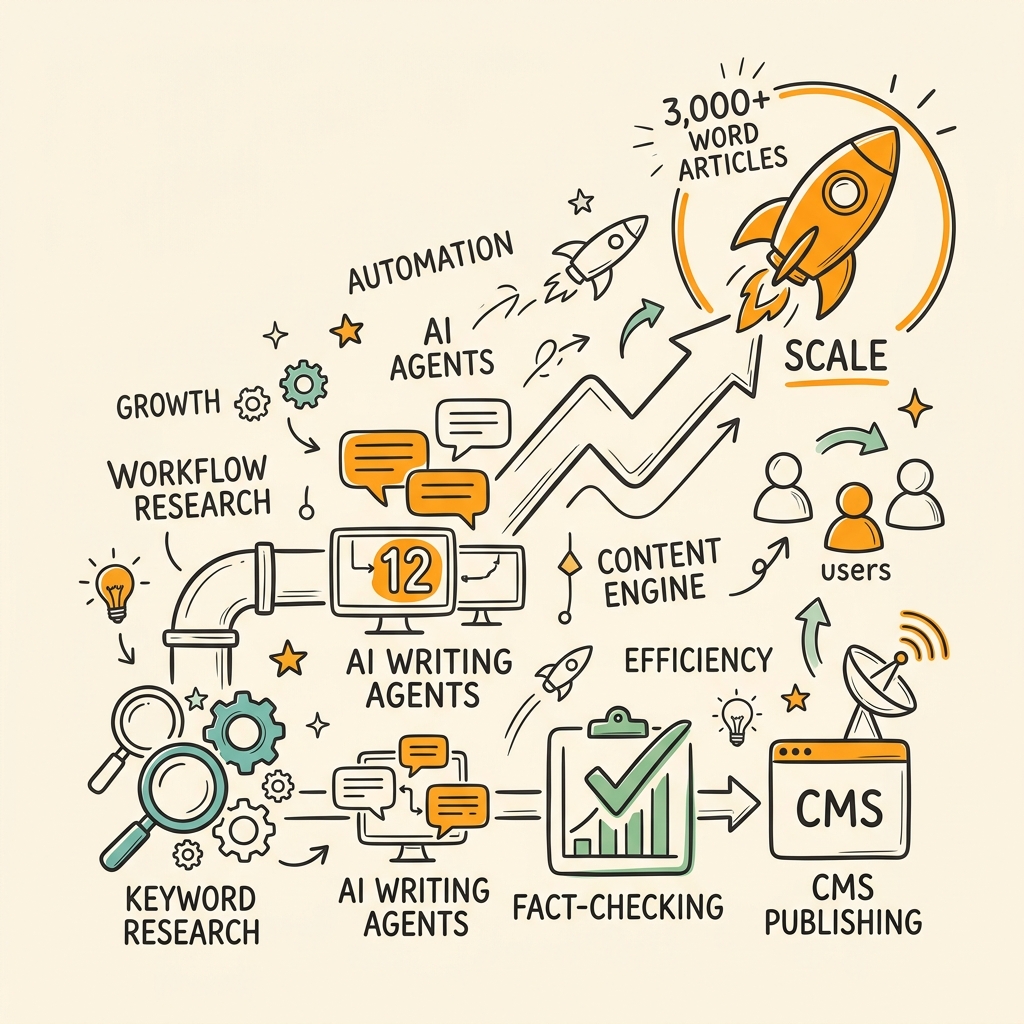
Choosing the tool is step one. Implementing it so your team actually uses it at scale is step two—and where most teams fail.
Set Up Keyword Research Automation First
Before your AI writer generates anything, it needs a list of high-potential keywords. Most teams still do this manually. Instead, integrate a keyword research layer into your workflow. Tools like SEMrush or Ahrefs can export monthly keyword opportunities to a CSV. Your AI writer should import this list and prioritize based on your category's ranking difficulty, search volume, and topical gap within your existing content.
Jottler automates this step entirely—its AI agents research keywords daily, rank them by opportunity, and queue articles for writing automatically. This means you're never picking topics; the system feeds itself the next highest-ROI keyword to target without manual intervention.
Establish an Editing and Fact-Check SLA
Don't skip the human layer. Even the best AI writers benefit from review. Assign one person as your content quality lead. Their job isn't to rewrite articles—it's to spot-check facts, ensure brand voice consistency, and flag structural issues in 15 minutes or less per article. 78% of social media professionals apply moderate or extensive editing before publishing, and that's fine. Set a time budget and stick to it.
The goal isn't perfection; it's speed without sacrifice. An article that's 90% right and published today beats one that's 98% right and published never.
Link Your Content Into Topical Clusters
The final step that separates scaling teams from stalled ones is internal linking strategy. Each new article should link to 3–5 existing articles in related topics. This builds topical authority and signals to Google that you have a coherent, deep expertise in your category. Content marketing automation platforms handle internal linking automatically by reviewing your entire site, identifying content clusters, and suggesting anchor text based on existing relevance.
Manual internal linking at scale is unmanageable. Most teams skip it, losing 20–30% of the SEO upside from new content. Automation solves this entirely.
Avoiding Common Pitfalls When Scaling AI Content
The 4x content multiplier is real, but only if you avoid these mistakes.
Don't Sacrifice Quality for Quantity
SaaS buyers punish thin content immediately. Only 26% of US and UK consumers now prefer AI-generated content, down from 60% in 2023. This means your content must read as thoughtfully researched and human-reviewed, not algorithmic. The AI should be invisible—a tool that accelerates human expertise, not a replacement for it.
The tools that fail do the opposite. They optimize for volume and speed, churning out shallow articles that don't rank and annoy readers. The tools that win (including Jottler) treat depth as the constraint. They'd rather publish 2 rigorously researched articles than 10 mediocre ones.
Don't Let AI Handling Distract From Strategy
Automation frees time, but only if you redirect that time toward strategy, not busywork. If your team gains 10 hours weekly from content automation but spends those hours editing AI output or managing tool integrations, you've broken even at best. The real win comes when those hours fund:
- Competitive analysis—understanding what topics competitors own and where you can differentiate
- Keyword gap research—identifying white-space opportunities no competitor covers
- Content-to-demand mapping—aligning new content to sales team lead questions and buyer journey stage
AI writers should feel like they run themselves. If they don't, you've picked the wrong tool or configured it poorly.
Monitor for Outdated Information and Refresh Cycles
AI writers trained on historical data will sometimes reference outdated statistics or deprecated tools. This isn't a reason to distrust AI—it's a reason to set up a refresh cycle. Every 6–9 months, audit your top-performing content for freshness. If key facts are stale, regenerate the article with current sources.
Jottler's fact-checking layer catches most of this automatically, but spot-checks prevent drift over time.
The ROI Math: What to Expect From AI Writing Tools
The financial case is straightforward. AI-powered content drafting delivers 3.2x ROI on average, and top adopters see productivity gains of 25–40%. For a typical SaaS marketing team:
- A full-time content writer costs $60K–$100K annually (loaded cost)
- That writer typically produces 40–60 articles per year (about 1 per week)
- With AI drafting assistance, you can maintain quality at 3–5 articles per week per writer
- At $29–$99 per month for the tool, you're replacing 2–3 FTE worth of output for under $1,500 annually
The payoff isn't linear. The first month, you're learning the tool and setting up workflows. By month 3–4, your publishing cadence triples and your organic traffic compound begins. By month 12, most teams report 4.1x higher content volume per marketer than baseline.
Conclusion
SaaS marketing teams that master AI writing tools gain a structural advantage. The teams that pull ahead aren't the ones buying the most expensive tool; they're the ones automating the entire pipeline from keyword research through publishing, so content compounds rather than plateaus.
Jottler represents the apex of this approach: autonomous content generation at scale with the research depth and SEO rigor your SaaS audience demands. For busy founders and marketing leaders, it's the difference between publishing a blog post and running a sustainable organic growth engine.
The 3.2x ROI is achievable. The 4.1x content volume multiplier is proven. The only variable is execution. Start your SEO agent today and watch what happens when content research, writing, optimization, and publishing stop being manual work and start being automated systems.
FAQs
Which AI writing tool is best for SaaS content marketing?
The best AI writing tool depends on your publishing volume and budget. If you need 1–3 articles weekly with emphasis on brand voice, Jasper is solid. If you're a founder or small marketing team needing 3–5 articles daily with minimal oversight, Jottler is purpose-built for that workflow—it automates keyword research, fact-checking, SEO optimization, and publishing natively. Most SaaS teams that start with single-purpose tools like Jasper eventually graduate to full-stack platforms because manual keyword research and publishing create bottlenecks. Test with a free trial; your publishing volume will reveal which category you need.
How much time do AI writing tools actually save?
Marketers save an average of 6.1 hours per week using AI content tools, and teams using full automation (keyword research through publishing) report saving 10–15 hours weekly. The savings come from eliminating the blank-page problem, manual keyword research, and CMS publishing friction. However, time saved only compounds into ROI if you redirect those hours toward strategy (competitive analysis, demand mapping) rather than busywork (editing output or managing integrations). Tools that require constant hands-on management defeat the purpose; look for platforms that feel set-and-forget.
Does AI-generated content actually rank on Google?
Yes, but only if it meets three criteria: accurate research, SEO optimization, and human review before publishing. Generic AI text won't rank—it's too shallow and often misses keyword intent. SaaS-focused AI writers that research from 10+ sources, structure content around People Also Ask, and integrate internal linking understand rankability. AI-optimized content is associated with 47% better conversion rates, meaning ranking isn't just possible—it's the default outcome when you use tools built for SEO rather than adapted from copywriting platforms. Quality matters more than source; use tools that prove their research depth through citations.