Earning Quality Backlinks for SaaS Products
The gap between top-ranking SaaS companies and the rest is stark. Pages ranking #1 in Google have 3.8x more backlinks than those in positions 2–10, and sites with 100,000+ referring domains generate 50x more organic traffic than those with fewer than 5,000. This isn't just correlation—it's how modern SaaS SEO works. Yet 94% of content earns zero backlinks, leaving most teams stuck on the organic traffic treadmill. The cost? Missed revenue, limited brand visibility, and years of content that never compounds.
The fix isn't finding more links. It's building the right ones—strategically, systematically, and in alignment with how your buyers actually search.
Key Takeaways
- The #1 ranking has 3.8x more backlinks than positions 2–10; 58% of SEOs prioritize topical relevance over domain authority when evaluating backlink quality (2026)
- A single DR 80+ backlink can increase organic traffic by 12–18% within 30–45 days; 5 links from DR 60+ sites outperform 50 links from low-authority directories
- Digital PR (48.6% effectiveness rate) and integration partner links drive the highest ROI for SaaS; generic guest posting without revenue-page mapping wastes outreach effort
Here's what you need to know about earning quality backlinks for SaaS products:
- Topical Relevance Over Authority: Links from niche-relevant sites are 2.7x more valuable for ranking than unrelated high-authority domains.
- Target Revenue Pages, Not Blog Posts: Map link acquisition to product, comparison, and alternative pages that drive demos, not generic TOFU content.
- Digital PR and Original Data Win: 48.6% of SEO experts rate digital PR as the most effective SaaS link strategy because journalists actively seek credible, original data.
- Integration Partner Links Scale Effortlessly: Requesting listings on integration directories (Zapier, HubSpot, etc.) provides high-authority links without outreach friction.
- Quality Compounds Over Time: Systematic link building yields 64% faster organic traffic growth; a single campaign can drive 4.5x more organic sign-ups than content alone.
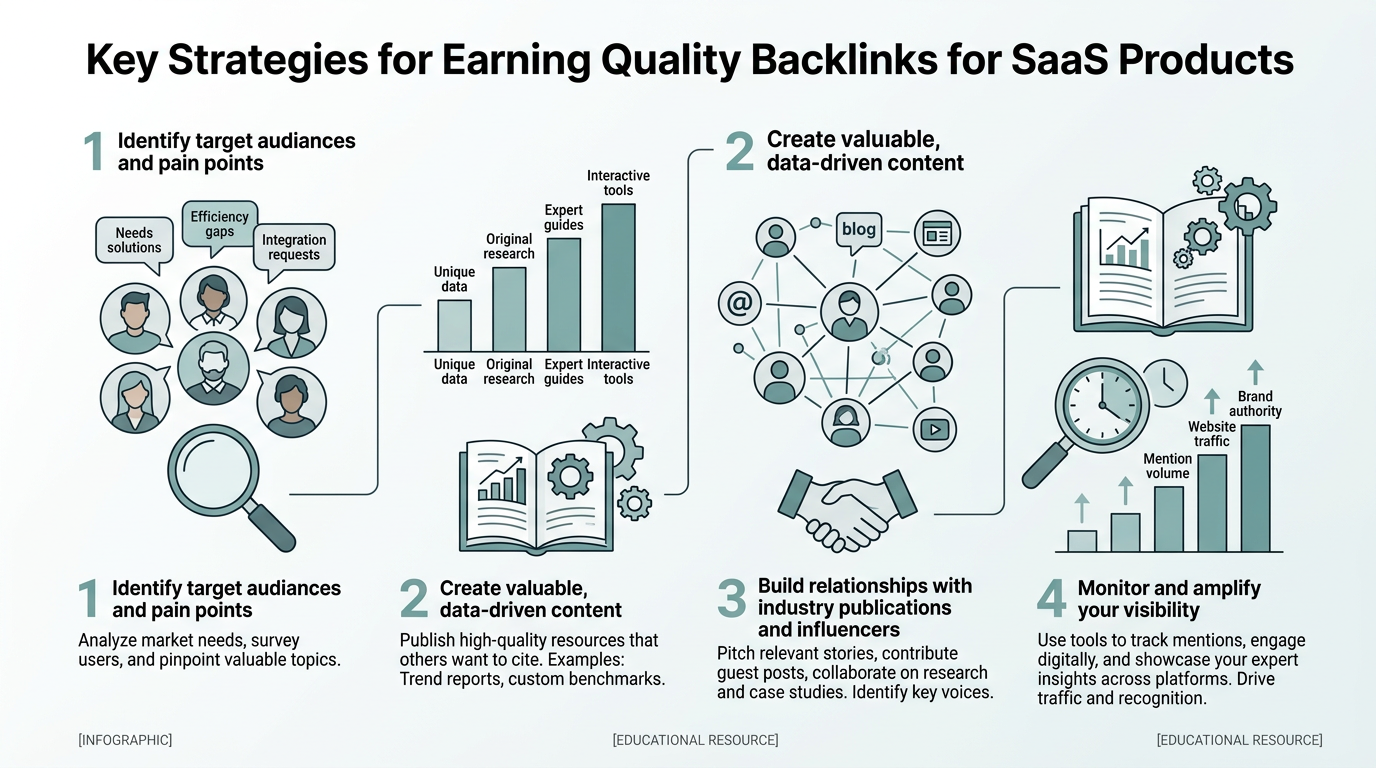
Why Quality Backlinks Drive SaaS Rankings and Revenue
Backlinks signal trust to Google, but for SaaS, they're more than a ranking factor. Each quality link is a referral channel and brand endorsement combined. A single DR 70+ link from a relevant site increases ranking probability by 5.2x, and when relevance compounds the effect, that multiplier jumps to 14x. This matters because SaaS buyers do their research—they click links in articles and evaluations before requesting a demo.
The problem most teams face isn't understanding backlinks; it's execution. They chase quantity, build links to the wrong pages, or waste months on generic outreach with low acceptance rates. According to 2026 backlink statistics, the winners take a different approach: they build links as a deliberate product and revenue strategy, not an afterthought.
"The gap between companies that build links systematically and those that treat link building as ad-hoc outreach is dramatic. Teams with documented processes and clear metrics see 4.5x more qualified traffic from backlinks than those relying on sporadic pitches."
The Link-to-Revenue Connection
In B2B SaaS, not all backlinks are created equal. Links to your homepage or blog rarely move the needle. Links to your product pages, comparison guides, alternative pages, and integration listings drive qualified traffic directly into the sales funnel. Teams that link-build to revenue pages see 4.5x more organic sign-ups than those focused on blog content alone.
The math is simple: if your comparison page converts 8% of visitors to trials, each backlink to that page is a compounding asset. A link to your homepage converts at maybe 1%.
Authority Thresholds Are Rising
52% of SEO professionals now require a minimum DR 50 for quality links; 22% mandate DR 60+. This means directories, blogrolls, and low-authority guest posts have become noise. The bar for "quality" has shifted. You're competing against SaaS companies that secure links from TechCrunch, G2, Capterra, and industry-specific media outlets. One link from Slackhq or Zapier's integrations page moves more weight than 50 directory submissions.
Digital PR: The Most Effective Link Strategy for SaaS
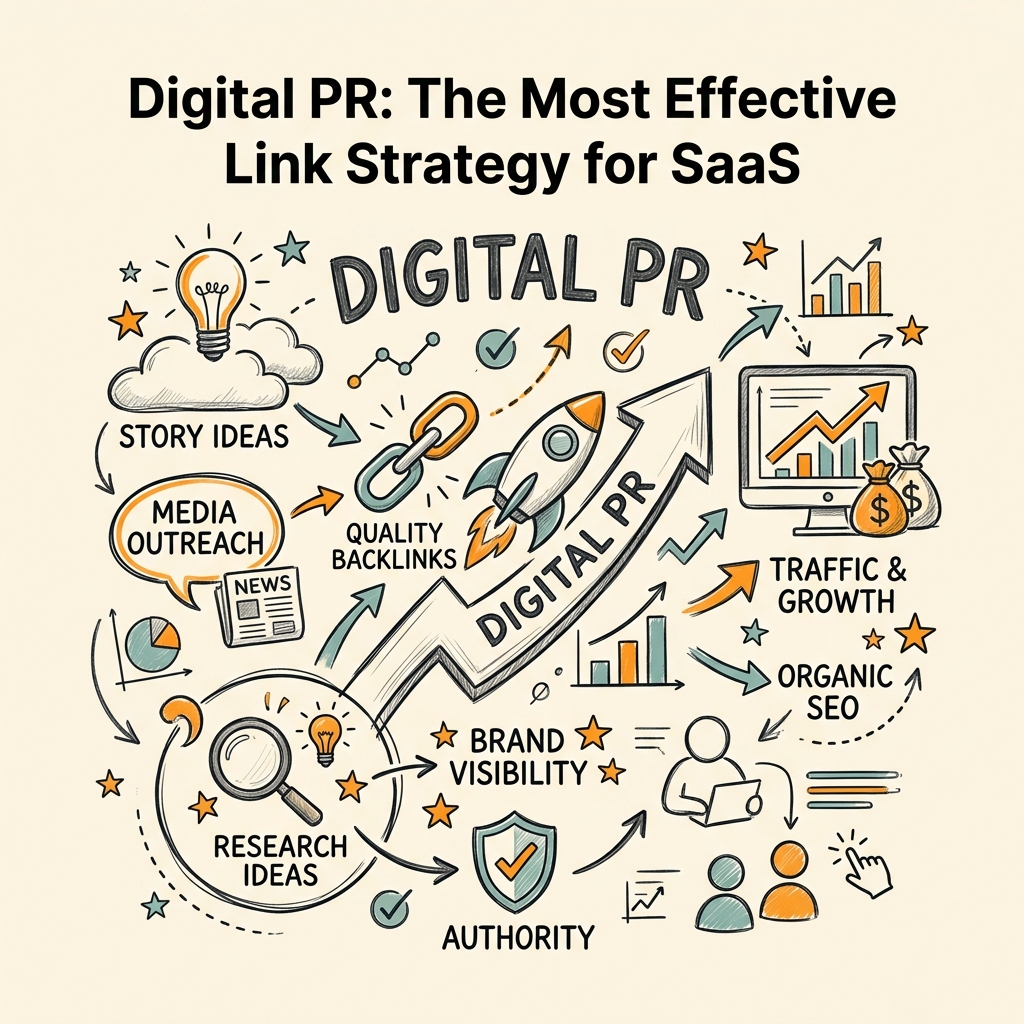
48.6% of SEO professionals rate digital PR as the most effective SaaS link-building tactic, and for good reason. Digital PR is the art of earning media coverage by positioning your company as a source for newsworthy data. Unlike traditional guest posting, which relies on cold outreach and can feel spammy, digital PR creates inbound demand from journalists who need experts and data.
For SaaS, this typically means creating original research—industry benchmarks, user surveys, or analysis of market trends—then pitching it to trade publications, news outlets, and industry analysts who are writing about your space. Research on SaaS link-building strategies shows that original data assets generate the highest-quality inbound links because journalists can't find that data elsewhere.
Building Original Research Assets
Journalists won't link to listicles. They link to original data they can't find elsewhere—surveys that reveal industry trends, analysis of how customers use products, or benchmarks that break conventional wisdom. If you sell a project management tool, publish a report analyzing which work management methodologies your customers use most. If you build a design platform, survey creatives on their workflow frustrations.
The report itself becomes a linker magnet. Once published, share it with journalists via platforms like HARO (now Connectively), industry publications, and analysts. Each mention comes with a backlink, and because the data is yours, you control the narrative and the outbound link. This approach works because analysis of 420 SaaS backlink profiles shows original research earns 3x more citations than generic content.
"Original data is the currency of digital PR. When you own the numbers—whether it's survey data from 5,000 customers or a proprietary analysis—journalists have no choice but to link back to you as the source. That's where the link velocity accelerates."
Responding to Journalist Queries Fast
Journalists on HARO and Connectively have tight deadlines—often 2 hours to respond before they go to print. Those who respond fastest with specific data points get cited. Set a routine: dedicate 15 minutes daily to monitor HARO queries in your space, and respond with one surprising data point + context. If you're a recruitment SaaS, and someone asks "How long should hiring processes take?", don't send a generic answer. Send: "Our data from 5,000 hiring managers shows the average is 37 days, but companies with structured scorecards close roles in 14 days on average."
Specific. Credible. Linkable. This systematic approach to SaaS link-building strategies compounds into dozens of quality mentions annually when executed consistently.
Integration Partner Links: High-Authority Links Without Outreach Friction
One of the most underutilized link sources for SaaS is your own integration directory. Zapier, HubSpot Marketplace, Salesforce AppExchange, and similar platforms are high-authority link sources that actively encourage apps and integrations to list themselves. Each listing provides a DR 70+ link with minimal effort.
The process is straightforward: integrate with partner platforms your customers already use, apply for official listings, and you'll receive backlinks automatically. Because these directories are owned by trusted companies and curated for quality, Google treats them as endorsements.
Maximizing Integration Directory Links
Don't just list your integration and move on. Optimize your listing with:
- Keyword-rich descriptions: Use terms your buyers search for, not just your product name.
- Screenshots and demo videos: Listings with visual content get more clicks, and more clicks signal quality to partner platforms.
- Customer reviews and ratings: High-rated integrations are featured prominently, increasing visibility and link value.
- Regular updates: When you release new features, update your integration description. Freshness signals increase backlink exposure.
Each platform has dozens of competitors. A well-maintained listing compounds over time—more visibility, more installs, more customer reviews, more algorithmic placement on the directory. Teams that combine integration links with consistent content production see the fastest organic traffic growth because backlinks and content work together to compound ranking power.
Strategic Partnership Links
Beyond directory listings, approach partners for resource pages or co-marketing initiatives. If you integrate with HubSpot, request inclusion on their "Apps We Love" or "Partner Ecosystem" pages. If you're part of an ecosystem (Slack, Shopify, Notion), build relationships with the developer advocacy teams. Many platforms maintain resource pages linking to category-leading apps, and inclusion is possible with the right pitch.
Guest Posting and Competitor Analysis for Efficient Outreach
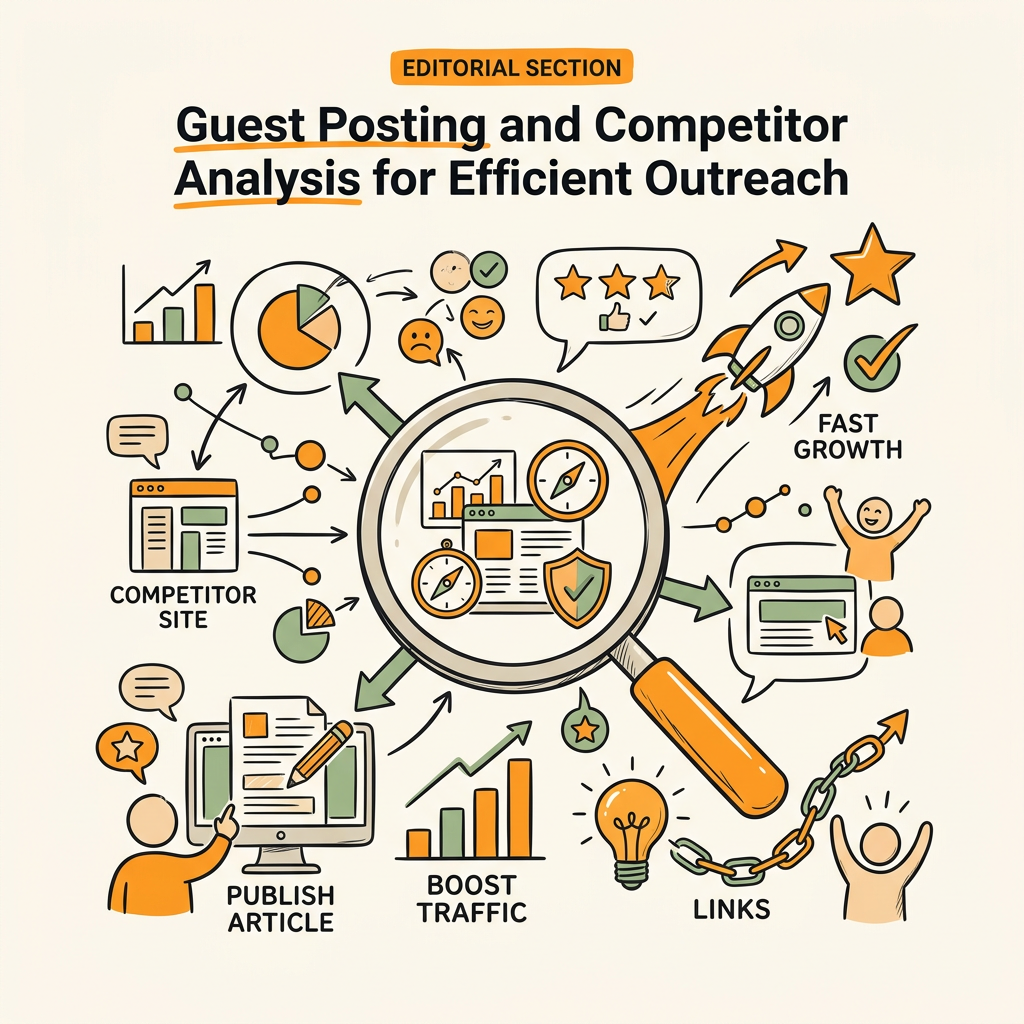
Guest posting has earned a reputation as low-value link building, but that's because most teams execute it wrong. They pitch generic "5 Tips for Product Managers" to 100 blogs blindly, get 2% acceptance, and call it a win. The alternative: reverse-engineer your competitors' placement strategy.
Finding Where Competitors Place Guest Posts
Use Ahrefs' "Top Pages by Links" report, filter by your competitors' domains, and identify which sites have linked to them most frequently. Look for guest post patterns—publications that regularly feature thought leadership from companies in your space. These are warm targets. They've already proven they link to SaaS companies like yours.
Your pitch is stronger because you're not a cold email. You're saying: "I noticed you've published posts from three companies in the [space] category. I have original research on [specific finding] that would fit your audience." This demonstrates research and positions you as someone who understands their editorial needs.
Broken Link Building for Revenue Pages
Broken link building works, but most teams use it ineffectively. Instead of generic "how-to" pages, identify broken links on competitor comparison pages, alternative pages, and product roundup articles. These pages are actively ranking and receiving traffic—replacing a broken link with your content is a higher-probability win than pitching a brand-new topic.
Use Ahrefs or Semrush to monitor your competitors' backlinks. When you spot a broken link from a high-authority site, reach out to the webmaster with your resource as a replacement. Include data: "This article on [topic] linked to a 404 on your site. We published an updated analysis in 2026 that covers the same ground—with fresh data on [specific insight]. Happy to share if it's useful."
Building Link-Worthy Assets Within Your SaaS Product
The most sustainable link strategy is creating assets so valuable that links come inbound. For SaaS, these are often embedded in or powered by your product. Scaling content production systematically is what enables teams to build these assets consistently without burning out.
Free Tools and Calculators as Linker Magnets
A benchmark calculator, ROI calculator, or comparison tool solves a customer problem while generating passive links. If you build a marketing budget calculator that helps SaaS founders allocate spend, and it gets shared by 100 blogs and podcasters, you've created a link asset that compounds for years.
The key is discoverability. When you release the tool, share it with industry publications, include it in HARO pitches as a reference resource, and pitch it to podcasters as a resource to mention in show notes. Each mention includes a link back.
"A single interactive benchmark or calculator can generate 50+ inbound links within six months if distributed strategically. These links keep flowing long after launch because the asset solves a genuine customer need and becomes referenced as an industry standard."
Interactive Benchmarks and Surveys
Publish an annual benchmark or survey, make results interactive (so people bookmark and share the link), and position it as the go-to resource in your category. When you publish the following year's results, you'll have backlinks from the previous year's edition, plus new media coverage. This compounds—your benchmark becomes the industry reference point, and that means sustained link inflow.
Embeddable Assets and Badges
Create embeddable badges, widgets, or microsites that customers can display (e.g., "Powered by [Your SaaS]"). Each embed includes a link back to your site. This is passive link building—your customers do the promotion work, and you get links as a byproduct of customer success.
Mapping Link Building to Revenue Impact
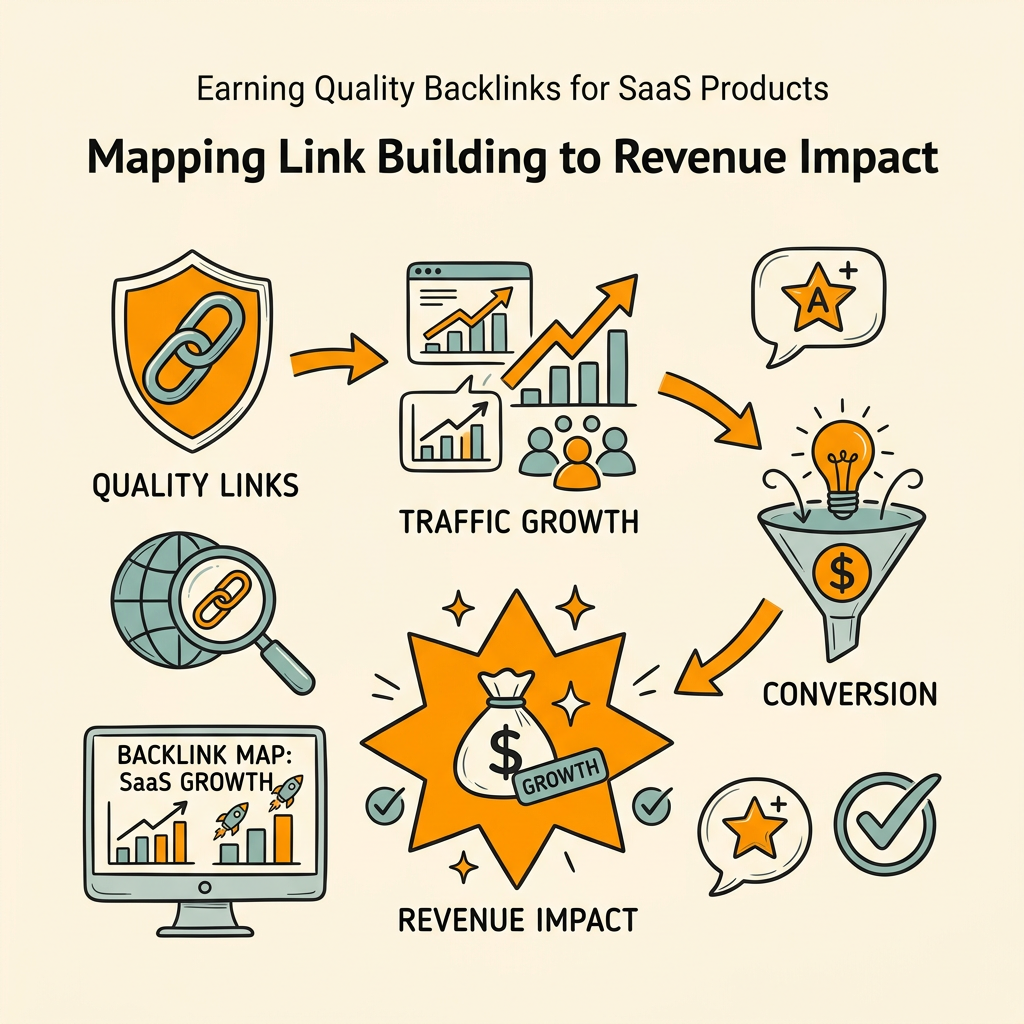
Quality backlinks only matter if they drive revenue. The final step is measurement. Unlike traditional SEO, which optimizes for traffic, SaaS link building should optimize for demos, trials, and revenue-influenced deals. The best link-building tools help teams track attribution from backlinks to pipeline, so you can see exactly which links drive actual revenue impact.
Tagging Links by Target Page and Intent
When you build links to your comparison page, track them separately from blog links. Use UTM parameters and CRM tagging to connect backlinks to pipeline outcomes. If 20 links to your "vs. Competitor" page drive 100 trials, you know each link's economic value. If links to your integrations page drive 50 new accounts, that's your ROI calculation.
Over a 3–6 month measurement window, you'll see patterns: which types of links drive highest-value traffic, which target pages convert best, and which outreach channels yield the fastest results. This becomes your link-building roadmap going forward.
Building a Sustainable Link Pipeline
The companies with the strongest organic traffic don't chase links quarterly. They build sustainable pipelines: one team member handles HARO responses consistently, another manages integration directory optimization, a third pitches original research quarterly. Each channel produces 3–5 links monthly, compounding into dozens annually.
Most SaaS teams lack the resources for this. They either hire an agency (expensive) or let link building slide (ineffective). Automating your content foundation—creating the articles and assets that journalists cite and customers link to—is essential for sustainable link building. You can't build links to mediocre content consistently. When your content production is automated and scalable, you have the bandwidth to build links strategically and systematically.
| Link Source | Authority Level | Effort Required | Time to Link | Scalability |
|---|---|---|---|---|
| Digital PR (Original Data) | DR 70+ | High (requires original research) | 2–8 weeks | Medium (quarterly assets) |
| Integration Directories | DR 80+ | Low (one-time setup) | 2–4 weeks | High (evergreen links) |
| HARO/Connectively Mentions | DR 60–80 | Medium (consistent daily effort) | 1–2 weeks | High (recurring opportunities) |
| Guest Posting (Targeted) | DR 50–70 | Medium (research + pitch + write) | 4–12 weeks | Medium (limited slots per site) |
| Broken Link Building | DR 50–70 | Medium (requires prospecting) | 2–4 weeks | Medium (limited opportunities) |
| Free Tools/Calculators | DR 40–60 | Very High (product development) | 8–16 weeks | High (passive, ongoing) |
Avoiding Low-Quality Link Traps
Not all outreach is worth your time. Understanding which link sources waste effort saves months of wasted campaigns.
Directory Submissions and Link Farms
Generic directories (Best Software Lists, Technology Roundups, etc.) are not worth your time. They're low-authority, often have no editorial review, and look like spam to Google. A single DR 70+ backlink is worth more than 50 directory links. Focus on selective, curated listings where your competitors also appear.
Thin Guest Posts and Over-Optimized Anchor Text
Publications that accept 1,000-word guest posts with anchor-text-heavy outbound links are red flags. Quality sites edit for relevance, limit promotional content, and vary anchor text naturally. If a publication accepts every pitch and prioritizes links in the author bio, it's not a legitimate backlink—it's padding.
Unrelated High-Authority Sites
A DR 80+ link from an unrelated industry is worth 2.7x less than a DR 50 link from a niche-relevant site. This is critical. Chasing high-authority links without relevance is backwards—it wastes effort and yields weak ranking signals. Target mid-authority niche sites (DR 40–60) that cover your industry. Those links will move rankings far more effectively than random high-authority mentions.
Conclusion
Quality backlinks are no longer optional for SaaS companies seeking sustainable organic growth. The evidence is clear: top-ranking SaaS sites have 3.8x more backlinks than competitors, and each quality link drives measurable revenue impact. The companies winning in 2026 aren't building more links—they're building the right ones, strategically aligned to revenue-driving pages, and sustained through systematic processes.
The path is straightforward: prioritize relevance over authority, map links to revenue pages, launch digital PR with original data, leverage integration directories, and measure everything by pipeline impact. These tactics work because they're rooted in how modern buyers research SaaS solutions—through industry publications, peer recommendations, and integration ecosystems.
Start with one channel: If you have a data asset ready, launch a digital PR campaign this quarter. If you have integrations built, optimize your directory listings immediately. If you have time daily, commit to 5 HARO responses weekly. Each approach compounds. Build it systematically, and your backlink profile becomes a competitive moat that drives qualified traffic for years.
Start your SEO agent and transform your content strategy into a link-earning machine. Jottler automates the daily content production that makes link building sustainable—publish 3,000+ word articles that journalists cite and integrate with your link strategy seamlessly.
FAQs
How many quality backlinks does a SaaS site need to rank?
The number varies by niche and competition level, but early-stage SaaS should target DR 30–40 within the first year. For primary keywords, top-ranking content averages 30–200 referring domains, though the quality and relevance of those links matter far more than the count. A single DR 70+ backlink from a relevant site can outperform 50 low-authority directory links. Focus on quality compounding rather than hitting an arbitrary number—5 links from industry publications will move rankings more than 50 from unrelated directories.
How long does it take to earn a quality backlink?
It depends on the channel. HARO mentions and integration directory listings can deliver links within 1–4 weeks. Digital PR campaigns typically take 2–8 weeks from research to publication. Guest posting often takes 4–12 weeks because of editorial timelines. Broken link building falls in the middle at 2–4 weeks. The fastest channels (integration listings, HARO) are also the most sustainable—they generate recurring links with minimal ongoing effort. Consistent effort across multiple channels compounds to 3–5 new links monthly, which is enough to drive measurable ranking gains within 6 months.
Should I focus on backlinks or content quality?
Both are essential, but content is the foundation. You can't build links to mediocre content—journalists won't cite it, and other sites won't link to it naturally. The winning approach is high-quality content optimized for its target page (product comparison, feature guide, alternative roundup, etc.), then systematic link building to amplify that content. Without backlinks, great content sits invisible in search results. Without great content, backlinks have nothing strong to amplify. Build a sustainable content foundation so you can dedicate resources to link building—that's where most SaaS teams get stuck.