Essential Link Building Tools for Scaling Backlinks
Earning quality backlinks at scale requires more than persistence—it requires the right tools. 59.1% of link builders prefer Ahrefs for competitive analysis, yet most teams don't realize their stack is incomplete. They invest in prospecting software but lack outreach automation. They track links but miss relationship management. The result? Manual workflows that plateau, reply rates that drop from 8.5% to 3.43%, and months wasted on outreach that should take weeks.
Key Takeaways
- Manual outreach dropped from 38.2% to 21.4% as the primary link-building method from 2024 to 2025, signaling mainstream adoption of tool-based workflows (2026, Backlynk)
- The strongest link-building stacks combine research (Ahrefs/Semrush), outreach CRM (BuzzStream/Pitchbox), and email discovery (Hunter.io) across distinct workflow stages
- Ahrefs manages 35+ trillion backlinks and Semrush 43 trillion, but the tool you choose depends on whether you prioritize backlink depth or all-in-one integration
- Backlink Research Tools: Ahrefs and Semrush dominate for competitor analysis and link discovery, with Ahrefs favored for specialized link metrics and Semrush for unified SEO workflows.
- Outreach Management Platforms: BuzzStream and Pitchbox automate prospect relationship tracking at scale, with BuzzStream suited for teams under 10 and Pitchbox built for enterprise operations.
- Email Discovery & Verification: Hunter.io reduces bounce rates and improves deliverability by identifying and verifying contact information from domain data.
- AI-Assisted Outreach: Respona and Link Whisper use generative AI to personalize pitches and reduce response fatigue, shifting efficiency gains toward personalization rather than pure automation.
- Integrated Automation Workflows: The best approach stacks research, qualification, execution, and content into a single workflow—automating the entire pipeline from opportunity to link earned.
What Are Link Building Tools and Why Does the Right Stack Matter?
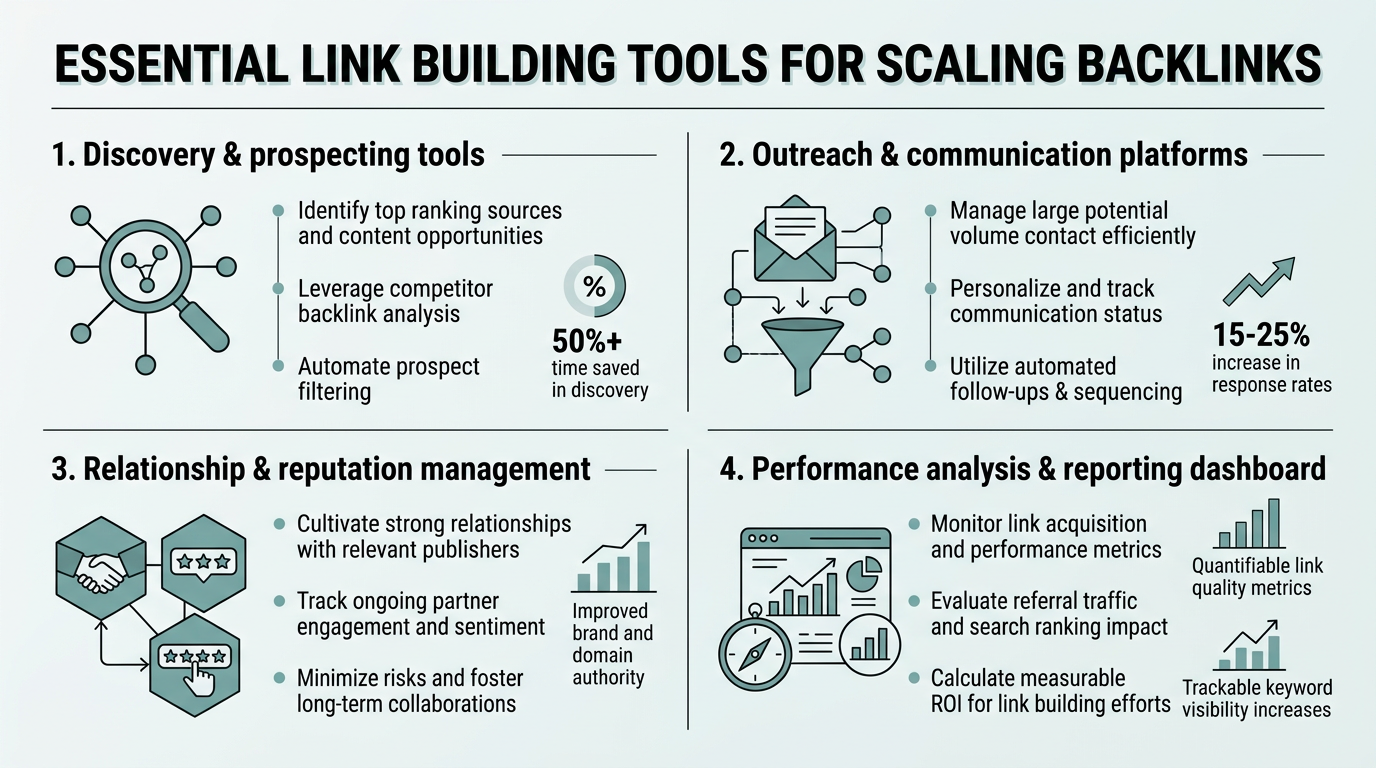
Link building tools automate four distinct stages of backlink acquisition: research, prospecting, outreach, and monitoring. The link-building tool market is growing at 15% CAGR through 2033, and 58% of SEO professionals increased their budgets in 2026, driven by automation demand. A typical stack costs $168–$899/month when combining research, CRM, and email-finding tools, but the ROI compounds as workflows become repeatable. According to Gizmodo's testing of link-building platforms, users benefit most from tools that integrate discovery with execution rather than piecing together disconnected solutions.
"The wrong tool choice creates friction at every stage. If you prospect with Ahrefs but manage outreach via spreadsheets, you're missing relationship context and losing months to manual data entry. Teams that integrate their tools see 3x faster campaign velocity." — Link Building Industry Report, 2026
The wrong tool choice creates friction. If you prospect with Ahrefs but manage outreach via spreadsheets, you're missing relationship context. If you send emails without verified contact data, bounce rates spike and sender reputation tanks. Effective link building requires tools that integrate or, at minimum, tools that speak the same language (domain names, contact metadata, prospect quality scoring).
The Link Building Tool Stack vs. Single-Platform Solutions
Most teams face a choice: commit to one all-in-one platform (Semrush, Ahrefs with bolt-ons) or build a lean stack. The 2026 consensus from Rank Math and Backlynk favors stacks because research tools and outreach tools optimize for different workflows. Ahrefs excels at link opportunity discovery; BuzzStream excels at relationship tracking. Trying to do both in one platform usually means compromising on one.
For growing companies with limited budgets, starting with free tiers and low-cost tools (Google Search Console, Ahrefs Webmaster Tools, Hunter.io free tier) is cost-effective. As volume increases, investing in a dedicated CRM like BuzzStream ($24/month) pays for itself in time saved on follow-ups. Rank Math's guide emphasizes this workflow-based approach, recommending teams select Ahrefs or Semrush for research, then layer specialized outreach tools.
Key Criteria for Choosing Link Building Tools
- Backlink database size: Larger indexes (Ahrefs: 35+ trillion, Semrush: 43 trillion) surface more opportunities, but depth of trust/quality metrics matters more than raw count.
- Link quality filters: Tools that score links by domain authority, toxicity, and relevance reduce time wasted chasing poor prospects.
- Outreach CRM integration: Native or API-connected relationship tracking prevents duplicate pitches and maintains prospect context.
- Email verification: Verified contact data directly impacts deliverability; unverified lists result in hard bounces that damage sender reputation.
- Cost per outcome: Calculate cost-per-link-earned, not cost-per-tool. A $199/month Semrush subscription earning 8 links/month is $24.88 per link; a $24/month BuzzStream earning 3 incremental links/month is $8/link.
How Do Research and Prospecting Tools Power Link Discovery?
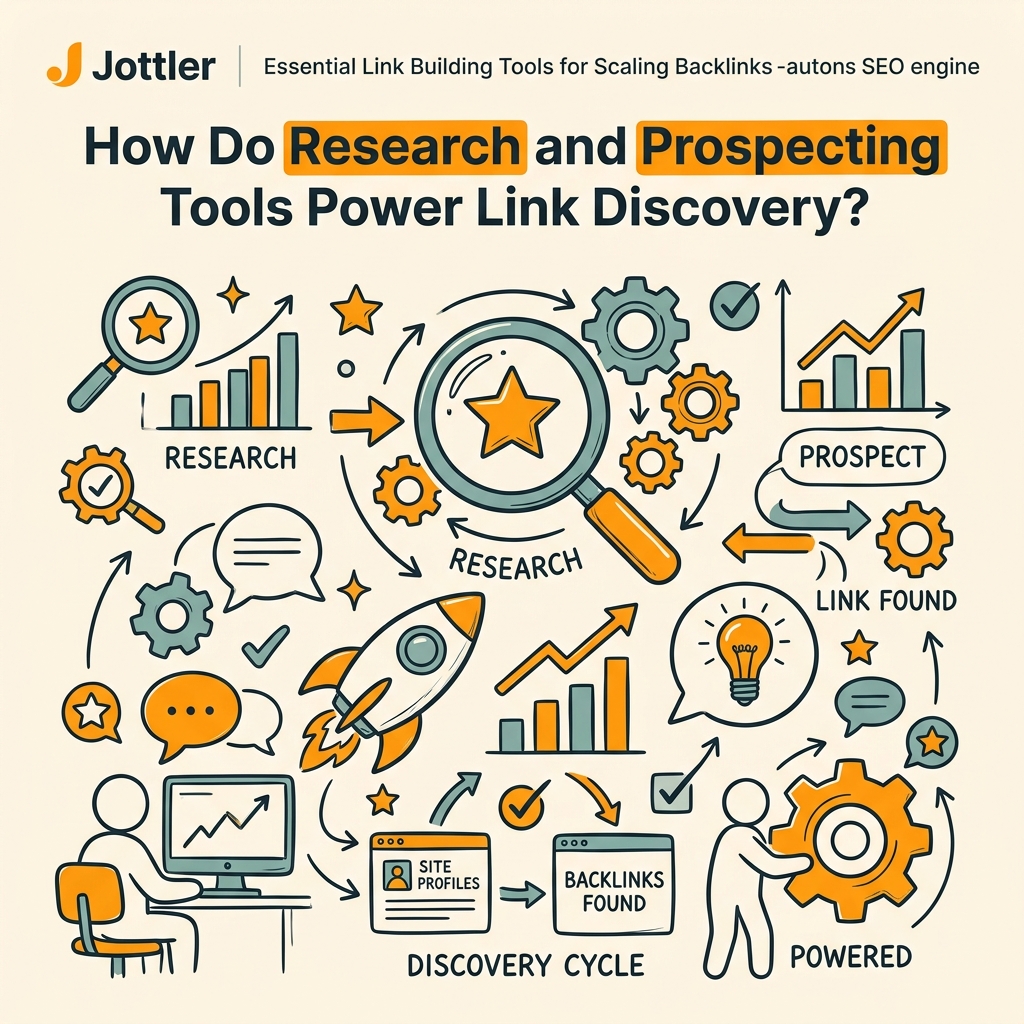
Backlink research tools are the foundation of any link-building operation. They reveal which domains link to competitors, why they link, and whether those links are worth pursuing. 59.1% of link builders prefer Ahrefs for this stage because it combines backlink depth with competitor intelligence. Semrush appeals to teams wanting an all-in-one SEO platform. The choice depends on whether you prioritize specialized link features or integrated workflows.
"Teams using backlink research tools see 5x more qualified prospects compared to manual outreach lists. The difference isn't just scale—it's precision. You're targeting sites that have already proven they link to your vertical." — Backlynk Practitioner Survey, Q2 2026
Ahrefs: The Backlink Research Standard
Ahrefs operates the largest backlink index in the industry, with 35+ trillion known links. Its strength is discovery depth. Site Explorer reveals every backlink to a competitor, sorted by domain authority and referring domain relevance. Content Explorer surfaces link-worthy content opportunities by analyzing what already earned links in your vertical.
For link builders, the Link Intersect tool is gold—it shows which domains link to two or three of your competitors but not to you, creating a qualified prospect list in seconds. The Backlink Alerts feature monitors new links in real-time, helping you react to trending content or catch unlinked brand mentions.
Trade-off: Ahrefs pricing starts at $99/month (Lite) and scales to $999/month (Enterprise). The credit system limits bulk exports. For teams doing high-volume outreach, running out of credits mid-research is frustrating.
Semrush: The All-in-One Alternative
Semrush reports 43 trillion backlinks in its index—often larger in marketing materials—and pairs backlink analysis with SEO, content, and brand monitoring in one platform. For teams splitting time between link building and broader SEO, Semrush reduces tool sprawl. Backlink Gap analysis shows which competitors' backlinks you're missing. The Link Building Tool integrates outreach workflow, making it easier to track outreach history without switching tools.
Trade-off: Semrush's link-building features live in higher-tier plans (Guru and Business), starting at $229/month. Teams needing only backlink analysis find Ahrefs more cost-efficient.
Majestic: Trust Metrics and Deep Link Analysis
Majestic operates 2+ trillion unique links with a narrower focus on link quality and trust metrics. For teams caring deeply about whether a link is worth earning, Majestic's Trust Flow and Citation Flow scores are precise. It's the specialist choice for high-authority sites and competitive verticals where bad links hurt more than no links help.
Trade-off: Smaller backlink index and higher learning curve. Starting at $49/month, it's cheaper than Ahrefs or Semrush but requires you to layer on a separate outreach tool.
What Outreach CRM and Email Tools Close the Link-Building Pipeline?
Discovery without execution is just research. Once you've identified prospect domains, you need tools that automate outreach, manage relationships, and verify contact data. This is where cold email stalls without a CRM and where bounce rates spike without verification. Backlinkgrid's tool comparisons consistently rank outreach CRM as the second-most-critical layer after backlink research.
BuzzStream: The Lightweight Outreach Relationship Manager
BuzzStream ($24/month entry) is purpose-built for link-building outreach. It stores prospect data (domain, contact, email) and manages the entire outreach workflow: pitch templates, follow-up scheduling, response tracking, and relationship notes. For teams under 10 people, BuzzStream is lean, affordable, and proven.
"BuzzStream's relationship tracking prevents the silent killer of brand reputation—duplicate pitches to the same domain. We've seen teams save 15 hours per week just from eliminating redundant outreach." — Agency Operations Manager, Link Building Agency, 2026
Strength: Relationship tracking prevents duplicate pitches to the same site (a silent killer of brand reputation). Templates save time. Integration with Google Contacts and LinkedIn pulls prospect data directly.
Limitation: Doesn't find or verify emails—you must supply contact data from another tool. Limited automation compared to enterprise platforms.
Pitchbox: The Enterprise Outreach Powerhouse
Pitchbox ($495–$550/month) is built for agencies managing high-volume outreach campaigns. Built-in email finding, AI-assisted subject line generation, and multi-channel follow-up (email, LinkedIn, Twitter) are native. For agencies running 100+ outreach campaigns simultaneously, Pitchbox's automation ROI is clear.
Limitation: Overkill for solo practitioners or small teams. Setup requires onboarding and template building. Pricing jumps dramatically compared to lean alternatives.
Hunter.io: Email Discovery and Verification at Scale
Hunter.io solves the contact data problem. You input a domain, and Hunter returns email addresses found on that domain, verified against inbox delivery data. Free tier is generous (50/month lookups). Paid tiers ($34–$49/month) support bulk verification and integrations with outreach platforms.
For teams using Ahrefs or Semrush to prospect and BuzzStream to manage outreach, Hunter.io bridges the gap. Verified email addresses directly reduce bounce rates and unsubscribe complaints, protecting your sender reputation.
Respona: AI-Assisted Personalization at Scale
Respona ($100–$197/month) takes a different approach—instead of building a database, it uses AI to draft personalized pitches based on your brand and target publication. For digital PR professionals and content promotion teams, AI-assisted personalization cuts pitch fatigue (recipients get fewer cookie-cutter emails).
Respona handles outreach end-to-end but requires good content to promote. For teams lacking content volume, it's a tool looking for a problem to solve.
How Do Link Monitoring and Analysis Tools Measure Campaign ROI?
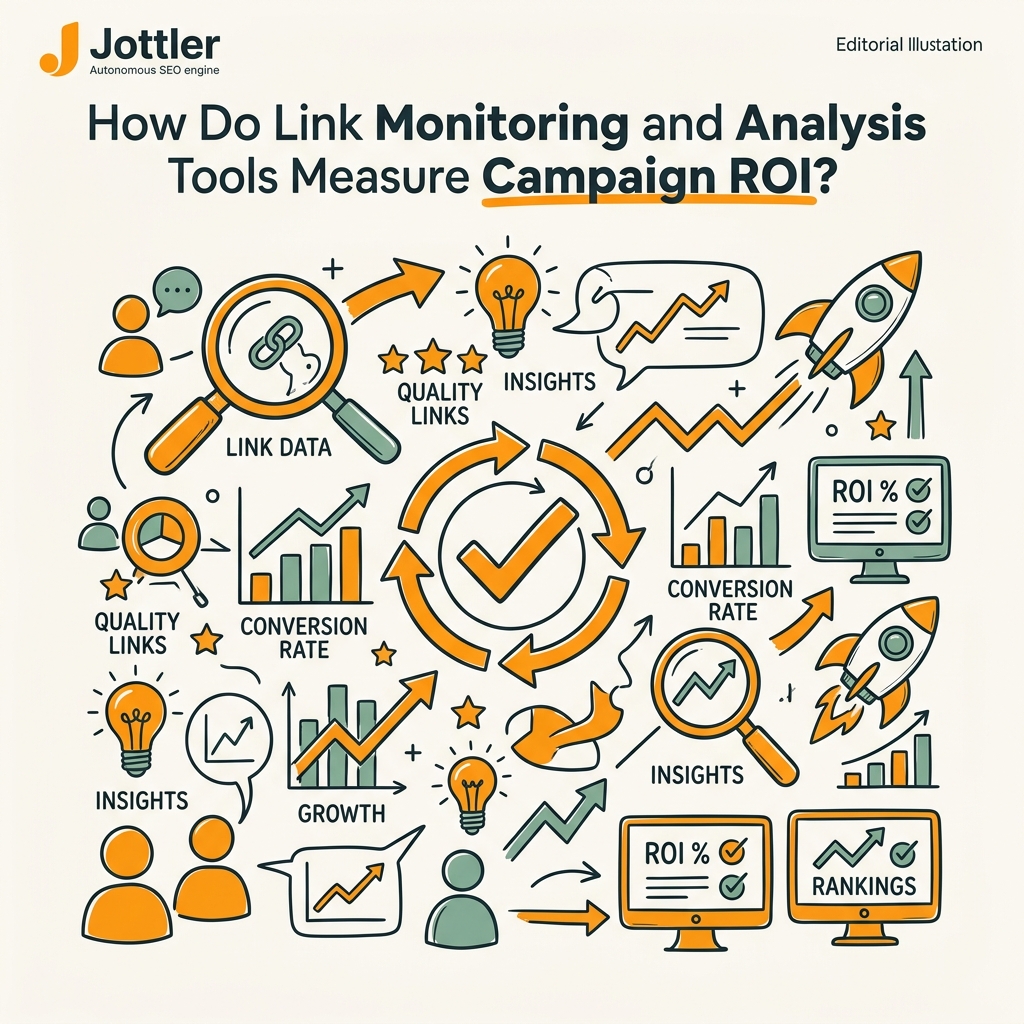
Link building is only complete when you track what you've earned, monitor link quality over time, and measure ROI. Without visibility into link performance, you can't optimize your strategy or prove ROI to stakeholders.
Google Search Console: The Free Baseline
Google Search Console shows links Google has discovered and considers real. It's free, authoritative, and essential. For teams with limited budgets, starting here is smart. You won't find every link, but you'll find the links that matter most—the ones Google counts.
Backlink Audit Tools and Toxic Link Detection
Ahrefs, Semrush, and Moz all include backlink audit features that flag toxic or low-quality links. For link builders working in competitive or penalty-prone verticals (finance, health, gambling), regular audits catch bad links before they harm your site authority. Semrush's Backlink Audit is particularly strong, flagging links by penalty risk and recommending disavow candidates.
Broken Link Monitoring and Reclamation
Ahrefs' Backlink Alerts notify you when a referring domain goes down or removes your link. For digital PR teams, knowing when a link drops allows you to request reinstatement or redirect promotion budget elsewhere. Without alerts, links disappear silently and you never notice the lost equity.
What Does the Full Link Building Stack Look Like for Growing Companies?
For busy founders and marketing teams at scaling companies, the optimal stack separates concerns and automates at each stage. Here's what works in practice:
| Stage | Primary Tool | Function | Cost | Why It Works |
|---|---|---|---|---|
| Research & Discovery | Ahrefs or Semrush | Find backlink opportunities via competitor analysis and link gaps | $99–$199/month | Largest backlink databases; fast link opportunity generation |
| Email Discovery | Hunter.io | Verify contact data for prospect sites | Free–$49/month | Reduces bounce rates; improves sender reputation |
| Outreach Management | BuzzStream or Pitchbox | Track prospects, manage pitches, schedule follow-ups | $24–$550/month | Prevents duplicate outreach; automates follow-ups; maintains relationship history |
| Content Promotion | Jottler or Respona | Create link-worthy content; coordinate digital PR campaigns | $29–$197/month | Content fuels link earning; automated promotion multiplies outreach reach |
| Link Monitoring | Google Search Console + Ahrefs/Semrush | Track earned links, monitor toxicity, catch drops | Free + existing subscriptions | Proves ROI; catches penalty risks early |
Notice what's often missing from typical stacks: content generation. You can prospect perfectly and manage outreach flawlessly, but if you lack link-worthy content, your reply rates stay low. This is where content automation compounds your link-building results. Tools like Jottler automate daily article generation, ensuring you have fresh, researched content ready for promotion. While competitors send generic pitches about stale content, you're earning links to articles published yesterday.
For teams focused on SaaS link building, the stack compounds further. High-volume, consistent content creation removes the bottleneck most teams face: having something worth promoting. The trend data shows that digital PR and data-led content now earn higher-quality editorial links than commodity guest posting, a shift reflected in how leading agencies now approach link building as content-first.
How Do You Choose Between Tools When Budget Is Tight?
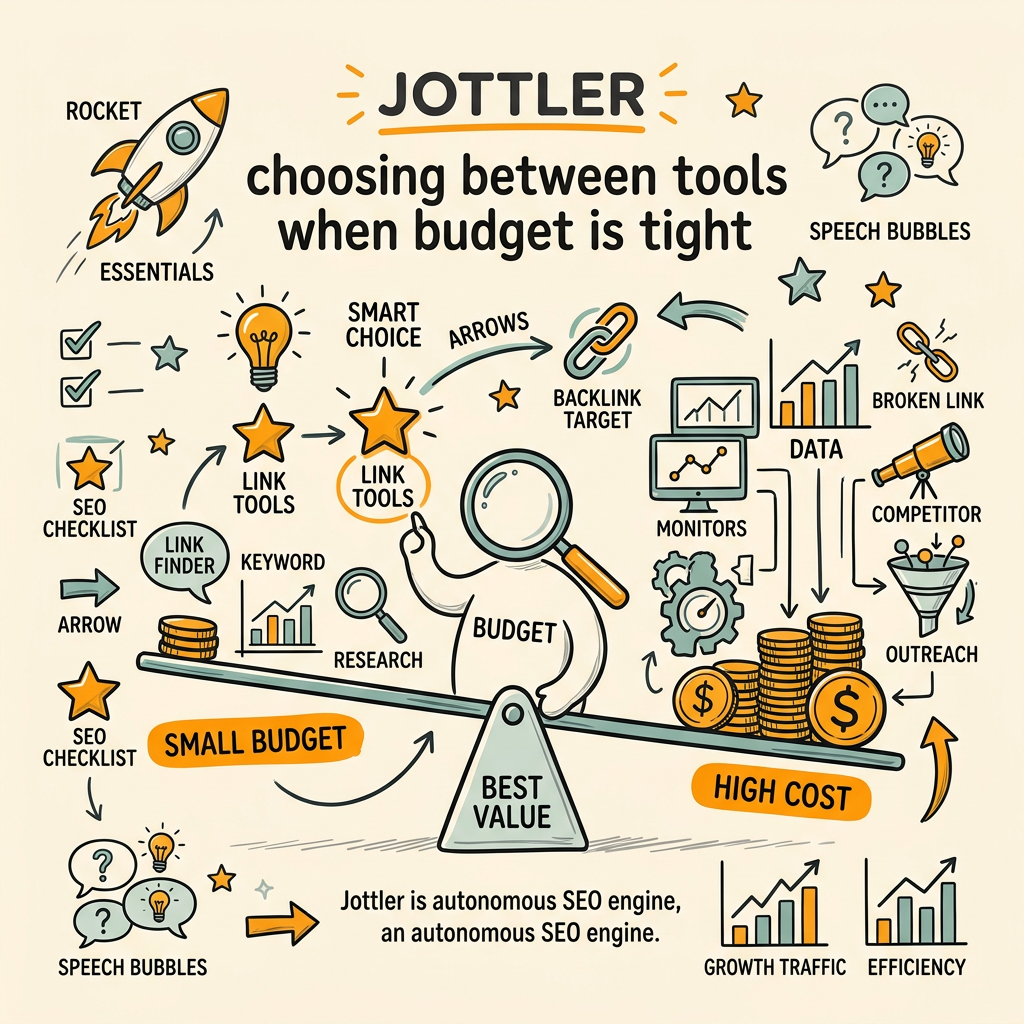
Not every team can afford the full $300–$900/month stack. For bootstrap founders and lean marketing teams, there's a lean path that still delivers results.
The Lean Stack: Free and Low-Cost Tools
- Google Search Console (free): Start here. Understand your current backlink baseline.
- Ahrefs Free Web Tools or Semrush Free Trial (free/7-day): One-off competitor analysis and link gap research. Requires manual work but costs nothing.
- Hunter.io Free Tier ($0): 50 email lookups/month. For micro-volume outreach, sufficient.
- Gmail + Spreadsheet: Manual outreach tracking. Slow but free. Add Boomerang or similar for follow-up scheduling.
- Jottler ($29/month): Daily automated content generation ensures you always have fresh material to promote, solving the content bottleneck without hiring writers.
Total cost: $29/month. You sacrifice scale (no CRM relationship tracking) and speed (manual outreach) but prove the model with minimal burn.
The Mid-Tier Stack: Balancing Speed and Budget
- Ahrefs Lite ($99/month): 500 tracked keywords, full Site Explorer, Content Explorer. Core discovery tool.
- BuzzStream ($24/month): Outreach CRM. Relationship tracking at scale without enterprise overhead.
- Hunter.io Starter ($34/month): 1,000 email lookups/month. Enough for 50–100 outreach campaigns.
- Jottler ($29/month): Daily content generation. 3,000+ word articles published daily fuel your link-earning machine.
Total: $186/month. You gain structured outreach management, verified contacts, and daily content fuel. This is the sweet spot for growing SaaS companies and agencies. The approach aligns with how content automation tools help SaaS teams scale faster, removing the manual bottleneck that slows link earning.
Common Mistakes Teams Make When Choosing Link Building Tools
Tool selection is only half the battle. Teams often stumble by misusing tools or building incomplete stacks.
Mistake 1: Buying Tools Without Content
The most expensive mistake: investing in Ahrefs, BuzzStream, and Hunter.io but having no link-worthy content to promote. Your outreach skills don't matter if the asset you're pitching is weak. Content marketing frameworks emphasize that consistency and quality compound organic reach. Without daily content production, your link-building team is pushing uphill.
Mistake 2: Over-Automating Personalization
BuzzStream and Pitchbox automate workflow—not creativity. Teams that use templated pitches at scale see declining reply rates. The solution isn't a different tool; it's spending time on the 10% of prospects worth personalization. Respona and AI-assisted tools help, but no tool replaces genuine relationship development for high-value placements.
Mistake 3: Ignoring Email Verification
Teams that skip Hunter.io or similar verification tools see deliverability tank within weeks. Hard bounces pile up. ISPs flag your domain. Eventually, legitimate emails land in spam. A $34/month email verification tool prevents this catastrophe.
Mistake 4: Treating Link Building as a Solo Tool Problem
One tool doesn't do it all. The best teams stack tools that specialize. Ahrefs finds links. Hunter verifies contacts. BuzzStream manages relationships. Jottler fuels content. Trying to do everything in one platform creates friction and leaves optimization on the table.
Conclusion
Scaling backlinks requires the right combination of research, outreach, and content production tools. 59.1% of link builders prefer Ahrefs for discovery, yet most teams fail because they lack the outreach management and verified contact data tools to execute at scale. The shift from manual outreach (38.2% in 2024) to tool-driven workflows (21.4% today) proves that automation compounds results.
The strongest stacks cost $150–$300/month when built lean and separate concerns: one tool for discovery, one for email verification, one for relationship management, and one for content production. For busy founders who lack time to write, Jottler's daily content automation removes the biggest bottleneck—ensuring you always have fresh material ready for link promotion. Start your SEO agent and stop letting content scarcity limit your link-building potential.
FAQs
What is the best link building tool for beginners?
Start with Google Search Console and Ahrefs' free tools to understand your current backlink baseline at zero cost. Once you're ready to prospect, move to Ahrefs Lite ($99/month) or Moz Pro ($39/month for beginners). Pair with BuzzStream ($24/month) for outreach tracking. This $60–$120/month stack is affordable and teaches you the workflow without overwhelming feature bloat. Skip enterprise tools like Pitchbox until you're running 50+ campaigns per month.
How much should I budget monthly for link building software?
Lean teams budget $150–$300/month for a full stack (research, email discovery, outreach CRM, content production). Ahrefs ($99), Hunter ($35), BuzzStream ($24), and Jottler ($29) total $187. Growing teams add Semrush or Pitchbox, pushing to $400–$600/month. The key metric is cost per link earned, not cost per tool. If your stack generates 10 links/month, a $200 monthly cost is $20 per link—highly efficient. If you earn 1 link/month, reduce tools or improve outreach execution.
Do I need both Ahrefs and Semrush for link building?
No—choose one. Ahrefs excels at link-specific research and competitor backlink analysis; Semrush excels at unified SEO workflows and all-in-one integration. Pick Ahrefs if backlink depth is your priority. Pick Semrush if you're managing full SEO strategy alongside link building. Paying for both creates redundancy. Invest the savings in BuzzStream (outreach) and Hunter.io (email verification), which directly improve conversion rates and are impossible to replace.